


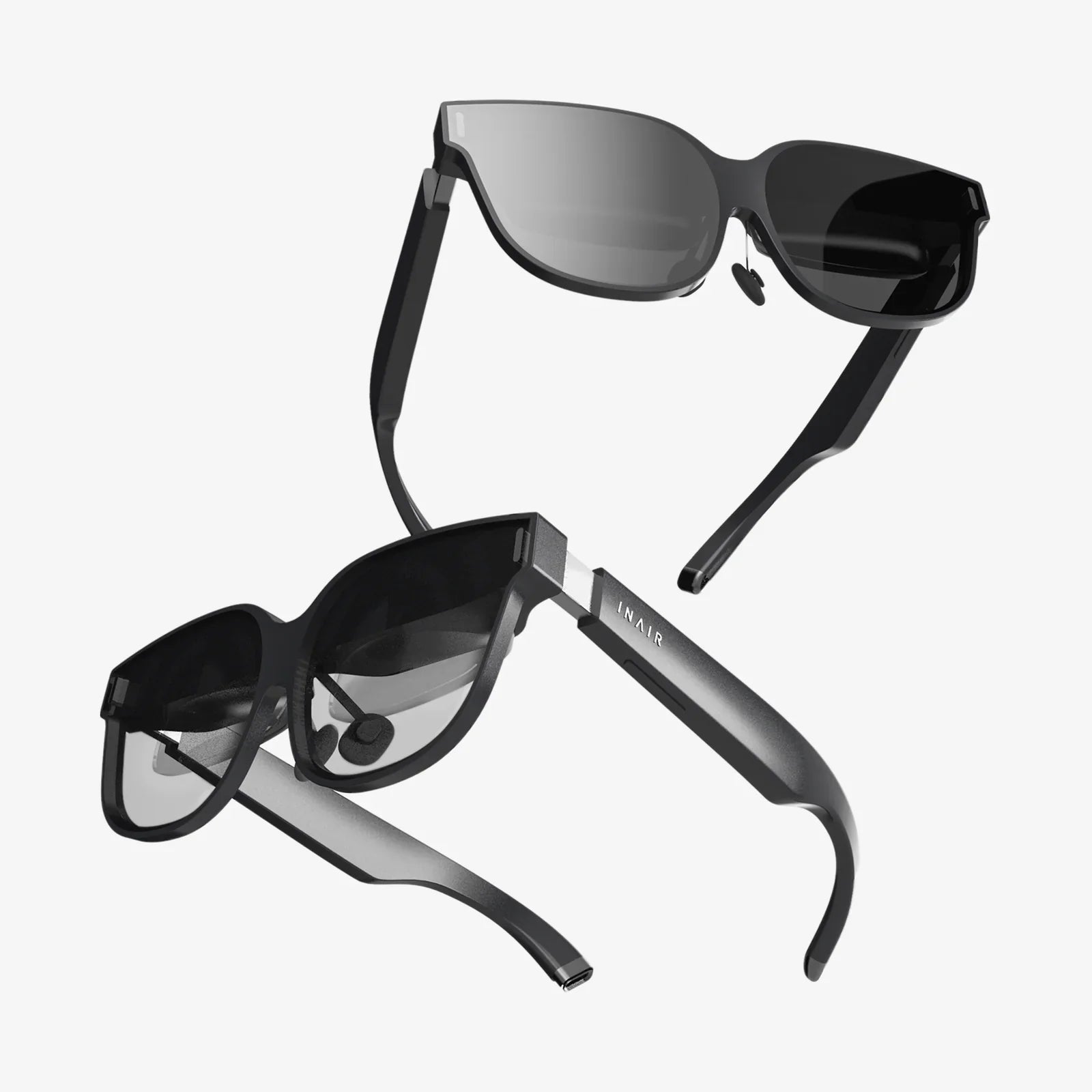
Imagine a world where digital instructions overlay a complex engine you're repairing, where a virtual colleague points to a 3D model during a design review, or where your living room transforms into an immersive gaming landscape or a interactive historical battlefield for learning. This is no longer the stuff of science fiction; it is the burgeoning reality being built today within the US mixed reality headset market, a sector exploding with potential and poised to fundamentally alter our perception of computing.
The Technological Pillars Powering the Experience
At its core, a mixed reality headset is a marvel of modern engineering, a symphony of advanced components working in concert to blend the real with the virtual. Understanding these pillars is key to appreciating the market's trajectory.
Sensing and Mapping: Perceiving the Real World
The magic begins with an array of sophisticated sensors. Cameras, depth sensors, infrared projectors, and inertial measurement units (IMUs) continuously scan the user's environment. This data is processed in real-time to create a precise spatial map, or "digital twin," of the surrounding physical space. This map allows virtual objects to understand their environment—occluding behind real-world furniture, resting convincingly on a physical table, or bouncing off a real wall. This environmental understanding is the bedrock of a believable MR experience, setting it apart from more isolated virtual reality.
Display Technology: Windows to a Blended World
How these blended visuals are presented is another critical frontier. The market primarily features two competing display paradigms. One method uses high-resolution, translucent lenses that allow users to see their physical environment directly, with digital images projected onto these lenses. The other, more advanced approach, utilizes opaque displays paired with high-fidelity, outward-facing cameras that pass through a video feed of the real world, enabling more dramatic visual effects and deeper integration. Both strive for the holy grail: high resolution, wide field of view, and the ability to accurately represent the full spectrum of light and darkness to make digital content indistinguishable from reality.
Processing Power and Latency: The Need for Speed
The computational demand for tracking a user's precise movements, understanding a dynamic environment, and rendering complex 3D graphics is immense. This processing happens through a combination of onboard chipsets and, increasingly, cloud computing resources. The single most critical factor is latency—the delay between a user's movement and the visual update in the headset. Latency of even a few milliseconds can break immersion and cause user discomfort. The relentless march of processor miniaturization and power efficiency is directly enabling smaller, more comfortable, and more powerful devices.
Unlocking Value: Enterprise Applications Lead the Charge
While consumer applications capture the public imagination, the most significant and immediate growth in the US mixed reality headset market is driven by tangible business use cases. Enterprises are adopting MR to solve real problems, boost efficiency, and reduce costs.
Transforming Design, Manufacturing, and Maintenance
In industrial settings, MR is revolutionizing workflows. Designers and engineers can collaborate on life-sized, full-scale 3D prototypes, examining designs from every angle and making iterative changes in real-time without the cost of physical materials. On the factory floor, assembly line workers receive hands-free, contextual instructions overlaid directly onto the machinery they are assembling, drastically reducing errors and training time. For field service technicians, diagnosing and repairing complex equipment is enhanced with remote expert guidance; a specialist can see what the technician sees and annotate the real world with arrows, diagrams, and notes, effectively teleporting expertise to any location.
Revolutionizing Healthcare and Medical Training
The healthcare sector presents some of the most compelling use cases. Surgeons use MR for pre-operative planning, visualizing patient-specific anatomy from CT and MRI scans in 3D space before making an incision. Medical students can practice procedures on incredibly detailed virtual cadavers, and practitioners can use AR overlays to locate veins more easily for injections. Furthermore, MR is being used for physical therapy, providing patients with interactive guides for exercises, and in mental health treatment for exposure therapy in controlled, virtual environments.
Enhancing Remote Collaboration and Workspaces
The shift to remote and hybrid work models has accelerated the need for better collaboration tools. Mixed reality headsets offer a step beyond video conferencing, creating shared virtual workspaces where participants, represented as avatars or holograms, can interact with the same 3D models, data visualizations, and virtual whiteboards as if they were in the same room. This "spatial computing" approach to meetings fosters a deeper sense of presence and can significantly improve the quality of creative and technical collaboration across distances.
The Consumer Horizon: Gaming, Social, and Beyond
The potential for mixed reality in the consumer space is vast, though the path to mainstream adoption is longer and hinges on compelling content and accessible pricing.
The Next Evolution of Interactive Entertainment
Gaming is the primary driver for consumer interest. MR gaming takes gameplay out of the screen and into the player's environment, transforming a living room into a puzzle-filled dungeon, a digital tennis court, or a strategy game board. This genre promotes physical movement and social interaction, as players can see each other and share the same physical space while engaging with digital elements. The success of this segment is entirely dependent on a robust ecosystem of developers creating engaging, exclusive experiences that cannot be replicated on traditional consoles or PCs.
Redefining Social Connection and Content Consumption
Beyond gaming, MR promises new forms of social interaction and media. Imagine watching a sporting event with virtual screens surrounding you and live stats floating in your periphery, or attending a virtual concert where digital effects explode around your physical space. Social platforms built for MR could allow friends to watch movies together on a virtual big screen, play casual games using their coffee table, or simply hang out in a shared virtual space that incorporates elements of their real surroundings, creating a new paradigm for "presence" online.
Navigating the Storm: Challenges and Market Constraints
Despite the exciting potential, the US mixed reality headset market faces significant headwinds that must be addressed for widespread adoption.
The Form Factor and Comfort Conundrum
For many consumers and enterprises, current devices are still too bulky, heavy, and uncomfortable for prolonged use. The ideal MR headset would resemble a pair of everyday eyeglasses—lightweight, socially acceptable, and offering all-day battery life. We are years away from this reality. Achieving this requires breakthroughs in display technology, battery efficiency, and thermal management. Until then, device comfort remains a major barrier to extended use cases.
The Content Chasm and Developer Ecosystem
Hardware is useless without software. The market suffers from a classic "chicken and egg" problem: developers are hesitant to invest heavily in creating high-quality MR content until there is a large installed base of users, and consumers are hesitant to invest in hardware until there is a rich library of compelling content. Building this ecosystem is a slow, expensive process that requires significant investment from technology companies to fund development and incentivize creators.
Privacy, Security, and the Ethical Quandary
MR headsets, by their very nature, are data collection powerhouses. They have cameras and microphones that are constantly scanning and processing the user's environment. This raises profound privacy questions. Who has access to this data? How is it stored and used? The potential for unauthorized surveillance, data breaches, and the creation of detailed behavioral profiles is a serious concern. The industry must establish and adhere to stringent, transparent data ethics policies and robust security protocols to build the essential trust required for these devices to enter homes and workplaces.
The Future Trajectory: Where is the Market Headed?
The road ahead for the US mixed reality headset market is one of convergence, specialization, and integration with other transformative technologies.
We will see a gradual blending of VR and MR capabilities into a single device category, capable of functioning across a spectrum of immersion. The market will also likely segment further, with specific headsets optimized for enterprise-grade durability and precision, while others are designed for consumer media consumption and gaming with a focus on style and comfort.
Most importantly, MR will not exist in a vacuum. Its true power will be unlocked through integration with Artificial Intelligence (AI) and 5G connectivity. AI will provide the contextual intelligence to make interactions more natural and intuitive, while high-bandwidth, low-latency 5G networks will enable cloud rendering, offloading complex processing from the device itself and paving the way for thinner, lighter hardware. This synergy will ultimately dissolve the barriers between our digital and physical lives, creating a seamless fabric of information and interaction.
The journey into this blended world is just beginning. For early adopters and forward-thinking enterprises, the US mixed reality headset market offers a first glimpse into the next computing revolution—one where the boundaries of reality are limited only by the imagination.
Share:
Wearable Mobile Computers: The Dawn of a Seamless Digital Existence
Wearable Mobile Computers: The Dawn of a Seamless Digital Existence