


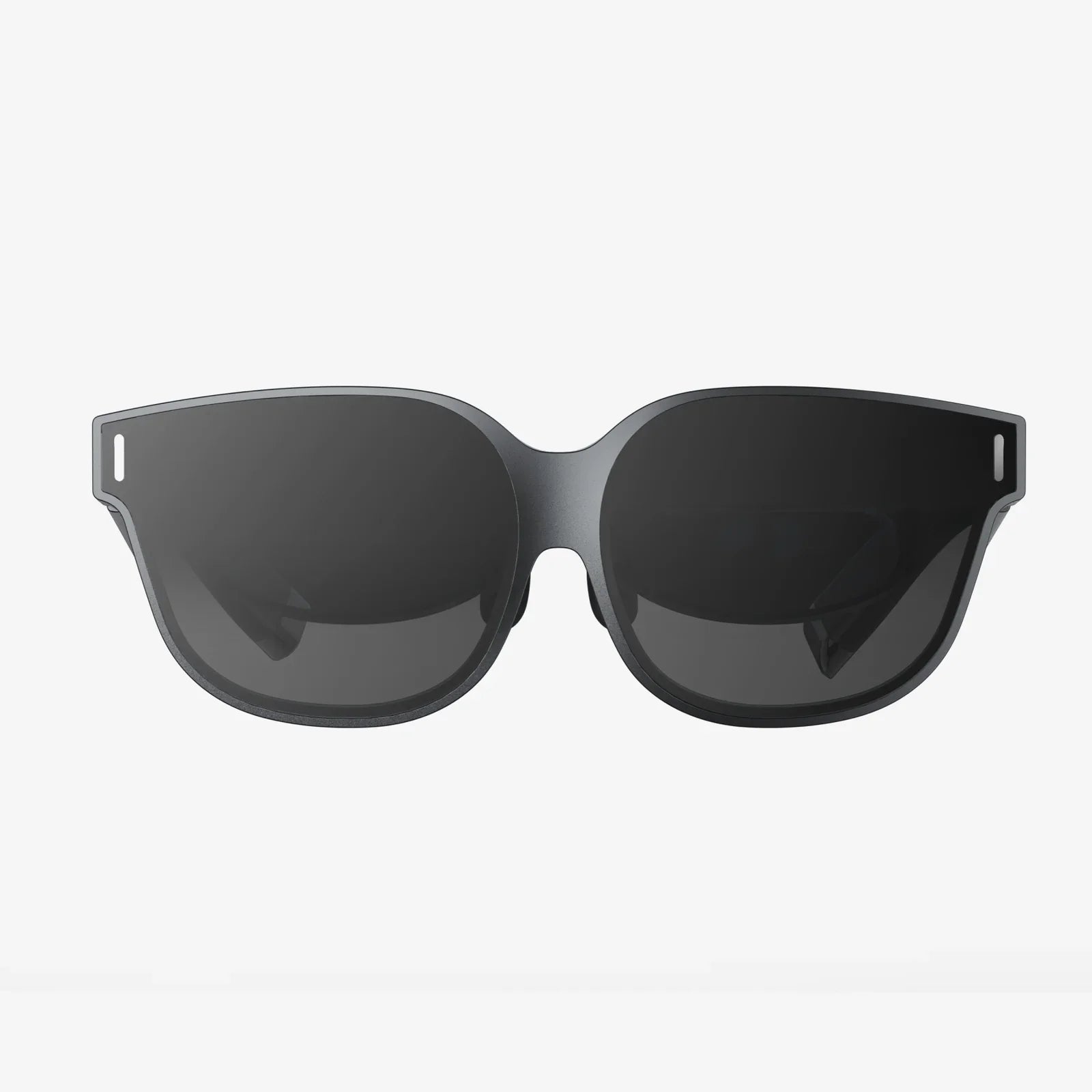
Imagine slipping on a headset and instantly teleporting to the surface of Mars, conducting complex heart surgery on a holographic patient, or watching a prehistoric dinosaur roar to life in your living room. This is no longer the stuff of science fiction; it is the emerging reality being forged by two of the most transformative technologies of our time: Virtual Reality and Augmented Reality. Understanding the virtual and augmented reality definition is the first step toward comprehending a seismic shift in how we interact with information, each other, and the very fabric of our environment.
Demystifying the Core Concepts: A Tale of Two Realities
While often mentioned in the same breath, Virtual Reality (VR) and Augmented Reality (AR) represent fundamentally different approaches to blending the digital and physical worlds. Their definitions, though related, are distinct.
What is Virtual Reality (VR)?
At its essence, the virtual reality definition is the use of computer technology to create a simulated, three-dimensional environment that can be explored and interacted with by a person. Unlike traditional user interfaces, VR places the user inside an experience. Instead of viewing a screen in front of them, users are immersed and able to manipulate and inhabit a 3D world. The goal of VR is to completely replace the user's real-world environment with a digital one, effectively creating a sense of presence—the convincing feeling of being somewhere else.
What is Augmented Reality (AR)?
Conversely, the augmented reality definition describes a technology that superimposes a computer-generated image, video, or 3D model onto a user's view of the real world. AR does not seek to replace reality but to supplement it, layering digital information—text, graphics, audio, and other virtual enhancements—onto our existing environment in real-time. This technology blends digital components into the perceived real world, enhancing one's current perception of reality rather than replacing it. The key differentiator is that AR experiences are anchored to and interact with the physical world around the user.
The Technological Engine Room: How VR and AR Work
Both VR and AR are feats of engineering that combine sophisticated hardware and software to trick the human brain. The magic lies in their ability to synchronize our senses with digital content.
The Anatomy of a VR System
A comprehensive VR system is built on several core components:
- Head-Mounted Display (HMD): This is the helmet or goggles that serves as the primary interface. High-resolution displays are placed mere centimeters from the user's eyes, filling their entire field of view.
- Tracking Systems: To sell the illusion of presence, the system must track the user's head movements (rotational and positional) with extreme precision and low latency. This is typically done using a combination of internal sensors (gyroscopes, accelerometers) and external cameras or lasers.
- Input Devices: These allow the user to interact with the virtual world. They range from simple controllers with buttons and joysticks to advanced haptic gloves that provide tactile feedback, allowing users to 'feel' virtual objects.
- Computational Power: Generating complex, photorealistic 3D environments at a high, consistent frame rate (typically 90 frames per second or higher) requires immense processing power, usually provided by a powerful computer or a self-contained system within the HMD.
The Mechanics of AR Technology
AR systems, while sharing some DNA with VR, have their own unique requirements:
-
Display Technology: AR uses a variety of methods to overlay graphics. These include:
- Smartphone and Tablet Screens: The most accessible form, using the device's camera to capture the real world and the screen to display the augmented view.
- Smart Glasses and Lenses: More advanced wearables that project images directly onto the user's retina or use miniature projectors and waveguides to blend light with the real world seen through transparent lenses.
- Sensing and Mapping: The true genius of AR is its understanding of the environment. Using cameras, depth sensors (like LiDAR), and simultaneous localization and mapping (SLAM) algorithms, the device constructs a 3D map of the surrounding space. This allows digital objects to occlude correctly behind real-world objects, sit stably on surfaces, and interact with the physical geometry of the room.
- Processing: Like VR, AR requires significant processing to analyze the camera feed, map the environment, and render convincing graphics in real-time. This is increasingly handled by powerful mobile chipsets.
Beyond the Hype: The Spectrum of Immersive Experiences
The line between VR and AR is not always rigid. They exist on a continuum known as the Virtuality Continuum, a concept introduced by Paul Milgram and Fumio Kishino in 1994. This spectrum ranges from the completely real environment to a completely virtual one, with Mixed Reality (MR) sitting in between.
- Augmented Reality (AR): Digital overlays on the real world. The physical environment remains primary.
- Mixed Reality (MR): A more advanced form where digital and real objects not only coexist but can interact with each other in real-time. A virtual ball can bounce off a real-world table, for instance.
- Augmented Virtuality (AV): A primarily virtual world where elements of the real world are incorporated, such as a live video feed of your hands manipulating a virtual object.
- Virtual Reality (VR): A fully digital, immersive experience.
This spectrum helps clarify that these technologies are not competitors but complementary tools for different tasks.
Transforming Industries: From Fantasy to Functionality
The applications of VR and AR extend far beyond entertainment. They are revolutionizing how we work, learn, and receive care.
Revolutionizing Education and Training
VR and AR offer unparalleled experiential learning. Medical students can practice intricate surgical procedures on virtual patients without risk. History students can take guided tours through ancient Roman streets. Mechanics can see interactive repair instructions overlaid on the actual engine they are fixing. This "learning by doing" in a safe, controlled, and repeatable environment dramatically improves retention and skill acquisition.
Advancing Healthcare and Medicine
In healthcare, these technologies are saving lives and improving outcomes. Surgeons use AR to visualize patient anatomy, such as CT scans, projected directly onto the patient's body during operations for incredible precision. VR is a powerful tool for pain management, distracting patients during painful procedures. It is also extensively used for exposure therapy, helping patients with phobias or PTSD confront and manage their triggers in a controlled setting.
Empowering Enterprise and Design
Architects and engineers use VR to walk clients through unbuilt structures, making design choices long before construction begins. Automotive designers can evaluate the ergonomics and aesthetics of a full-scale virtual car prototype. Factory technicians wearing AR glasses can see performance data and repair instructions while keeping their hands free to work, drastically reducing errors and downtime.
Redefining Retail and Commerce
AR is changing how we shop. Customers can use their smartphones to see how a new sofa would look in their living room, how a pair of glasses fits their face, or what a new shade of paint would do for a room's ambiance. This "try before you buy" digital experience reduces purchase hesitation and returns, creating a more confident consumer.
Navigating the Challenges and Ethical Considerations
Despite their promise, the path forward for VR and AR is not without significant hurdles and profound questions.
- Technical Limitations: Issues like motion sickness in VR (often caused by latency), the limited field of view in many headsets, the high cost of high-end equipment, and the battery life of wireless devices are still barriers to mass adoption.
- Social and Psychological Impact: As these technologies become more immersive, concerns about isolation, addiction, and the blurring of lines between reality and simulation grow. The concept of the "metaverse"—a persistent network of shared virtual spaces—raises questions about identity, social interaction, and economics.
- Privacy and Data Security: AR and VR devices are data collection powerhouses. They have cameras, microphones, and sensors that map our homes, offices, and even our bodies. How this incredibly intimate data is stored, used, and protected is one of the most critical challenges facing the industry.
- Accessibility and the Digital Divide: Ensuring these powerful tools are available and usable by people with disabilities and across different socioeconomic backgrounds is crucial to prevent a new form of inequality.
The Future is Blended: Where Do We Go From Here?
The trajectory of VR and AR points toward a future of even greater integration into our daily lives. We are moving toward lighter, more comfortable, and more powerful wearable devices—eventually, perhaps, something as commonplace and unobtrusive as a pair of ordinary eyeglasses. The convergence with artificial intelligence will make these interfaces more intuitive and context-aware, anticipating our needs. The development of 5G and future networks will enable complex cloud rendering, offloading processing power and enabling incredibly detailed experiences on lighter devices.
The ultimate goal is not to escape reality but to enhance our human experience within it. We are building a new layer of understanding and interaction atop the physical world—a digital skin that will provide information, foster connection, and unlock creativity in ways we are only beginning to imagine. The journey beyond the screen has just begun, and it promises to redefine the very nature of experience itself.
From revolutionizing how a surgeon plans an operation to enabling a child to walk with dinosaurs, the power encapsulated within the virtual and augmented reality definition is fundamentally altering the human experience, inviting us all to see our world not just as it is, but as it could be.
Share:
Virtual Reality Usage Statistics: The Unstoppable Rise of a New Digital Frontier
Virtual Reality Equipment Price - A Comprehensive Guide to Navigating the Market