


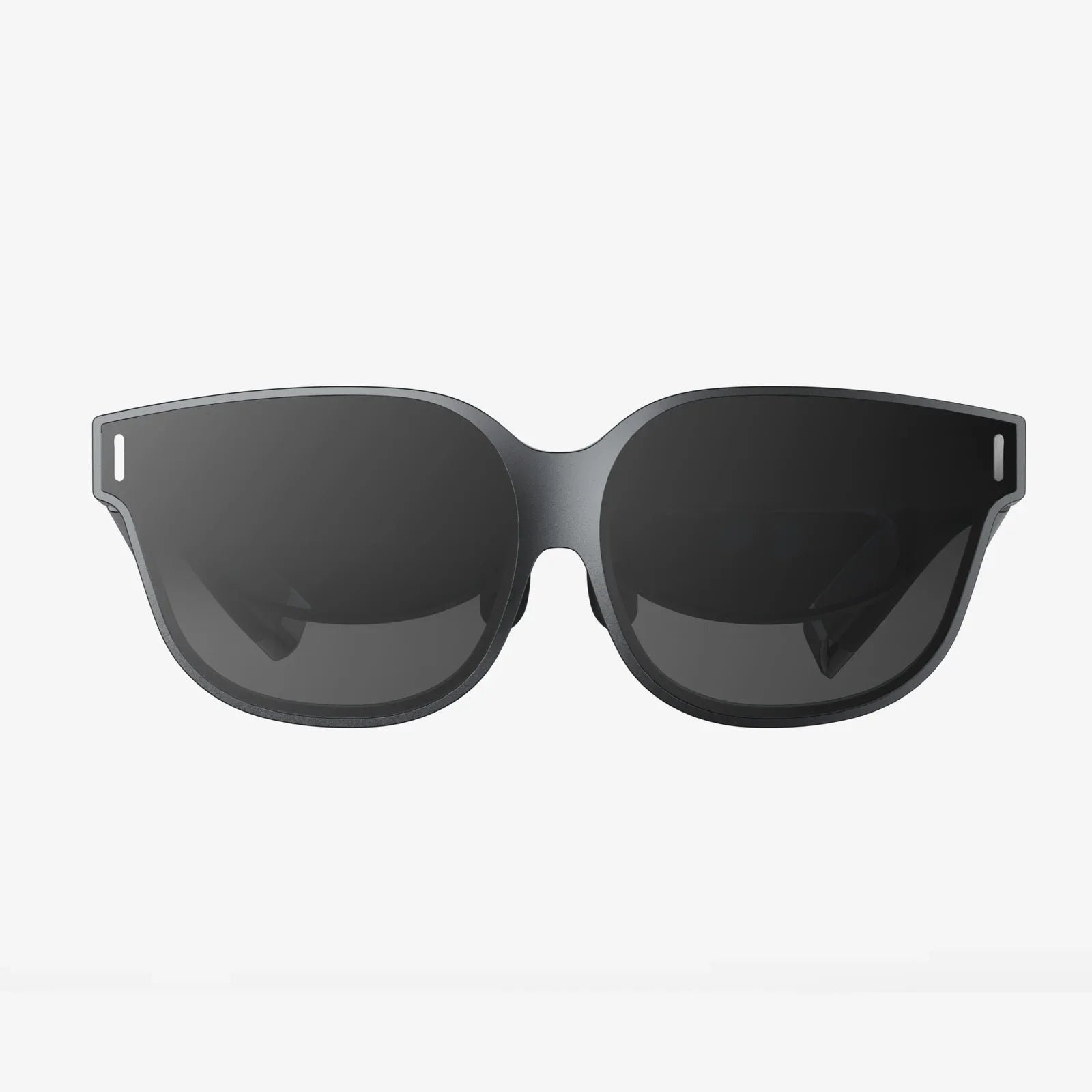
Imagine a world where your computer monitor isn't a piece of glass and plastic on your desk but a vast, high-definition canvas suspended in the air before you. Your applications, browser windows, and creative tools don't compete for space on a limited rectangle; they float around you, organized in three dimensions, accessible with a glance or a gesture. This is the promise of virtual desktop augmented reality, a technological convergence that is quietly building the foundation for the next era of human-computer interaction, and it’s far more revolutionary than simply swapping a physical screen for a virtual one.
The Convergence of Two Realities
To understand virtual desktop augmented reality (VDAR), we must first dissect its components. A virtual desktop traditionally refers to a software-based emulation of a physical computer desktop, often hosted remotely. It’s your operating system, your files, your applications—your entire digital workspace, decoupled from local hardware. Augmented reality (AR), in contrast, is the technology that superimposes digital information—images, data, 3D models—onto the user's view of the real world, allowing both to coexist and interact.
VDAR is the powerful synthesis of these two concepts. It’s the ability to project your entire computing environment, your virtual desktop, into your physical space through an AR headset or a pair of smart glasses. It’s not about escaping reality into a fully virtual world (as with Virtual Reality); it’s about enhancing your reality with the full power of a computer, contextually and spatially aware.
Beyond the Screen: The Core Mechanics of VDAR
The magic of VDAR is enabled by a sophisticated stack of technologies working in concert.
1. The Display Portal: AR Headsets and Smart Glasses
The primary interface for VDAR is a wearable display. These devices use advanced optics, such as waveguides or micro-LED projectors, to beam light directly into the user's eyes, creating the illusion that digital objects exist in the real world. Early iterations were bulky, but current and next-generation devices are trending toward a form factor resembling standard eyeglasses, making them suitable for all-day wear. These devices are equipped with a suite of sensors—cameras, depth sensors, accelerometers, gyroscopes—that act as their eyes and ears, constantly mapping the environment and tracking the user's head and hand movements.
2. The Digital Brain: Processing and Rendering
Rendering a stable, high-resolution virtual desktop in three-dimensional space is computationally intensive. There are two primary approaches. Some systems leverage the processing power of a nearby host computer, streaming the virtual desktop environment to the headset wirelessly with ultra-low latency. This offers high fidelity but tethers the user to a powerful machine. The other, more futuristic approach utilizes on-device processing or edge computing, where the headset itself, or a companion processing unit, handles the rendering. This allows for true mobility and untethered freedom, a critical step for mainstream adoption.
3. The Interface of the Future: Spatial Interaction
This is where VDAR fundamentally diverges from traditional computing. Instead of a mouse and keyboard, interaction is spatial. Users can manipulate windows and applications with hand tracking, using natural pinching and dragging motions to resize, move, or close them. Voice commands become a primary input method, allowing users to launch apps or search for files without lifting a finger. Gaze tracking allows the system to infer intent—where you look determines which window is active. This creates an intuitive, multimodal interface that feels less like operating a machine and more like directing a symphony of digital content.
A Day in the Life: The Transformative Applications
The theoretical is impressive, but the practical applications of VDAR are what will cement its place in our lives.
Revolutionizing the Workspace
The most immediate impact will be on knowledge workers. Imagine a developer who can code on a vast, curved virtual monitor while keeping documentation and a communication app pinned to the wall beside them. A financial analyst could have live data streams, charts, and news feeds arranged around them in a panoramic command center, spotting correlations that would be missed by alt-tabbing between applications. The concept of "screen real estate" becomes virtually unlimited. Furthermore, your perfect multi-monitor setup becomes portable. A coffee shop, a library, or a airport lounge can be instantly transformed into your ideal, personalized office, with all your tools arranged exactly as you like them.
Unleashing Creativity and Design
For creators, VDAR is a paradigm shift. A graphic designer can sketch on a virtual tablet while their tools and color palettes hover beside the physical sketchbook. An architect can place a 3D model of a new building onto a physical empty lot, walking around it at scale to assess its design and relationship to the environment. A musician could have a virtual mixing board and synthesizer controls arrayed around their physical instruments, creating a seamless production suite. This blends the tactile feedback of the physical world with the infinite malleability of the digital one.
Enhancing Learning and Collaboration
Education becomes immersive. A medical student can study human anatomy with a life-sized, interactive 3D model of the human heart floating in their classroom. A mechanic-in-training could see repair instructions and torque specifications overlaid directly on the engine they are working on. Collaboration, too, is redefined. Remote teams can meet in a shared virtual space, interacting with the same 3D models, diagrams, and whiteboards as if they were in the same physical room, all while seeing each other's avatars and real-world surroundings, preserving crucial non-verbal cues.
Navigating the Obstacles: Challenges on the Path to Adoption
Despite its immense potential, the path to ubiquitous VDAR is fraught with significant hurdles that must be overcome.
The Hardware Hurdle: Comfort, Battery, and Form Factor
For VDAR to replace the laptop, the hardware must be as comfortable and unobtrusive as a pair of everyday glasses. Current technology is not there yet. Challenges include achieving all-day battery life, reducing weight, eliminating motion blur, and providing a wide field of view without sacrificing resolution. The visual experience must be flawless—text must be razor-sharp to read for hours, and virtual objects must be perfectly anchored in space without jitter or drift to prevent user fatigue and nausea.
The Software Conundrum: Building a Spatial Ecosystem
An operating system designed for a 2D screen cannot simply be projected into 3D space. We need entirely new operating systems and application frameworks built from the ground up for spatial computing. How do you design a file manager or a web browser for a 3D environment? How do applications communicate and share data spatially? A robust ecosystem of developers needs to be built to create these new experiences, which will take time and significant investment.
The Social and Psychological Hurdle: The "Cyborg" Stigma
Walking around in public with a digital display over your eyes will be socially awkward for many, at least initially. There are concerns about privacy—both for the user being recorded by headset cameras and for bystanders. Furthermore, constantly overlaying digital information onto the world could lead to new forms of distraction and a diminished capacity to be present in the moment. Establishing digital etiquette and norms for this new medium will be a societal challenge.
The Invisible Fabric of Tomorrow
The ultimate endpoint of VDAR is not a world where everyone wears obvious headsets, but one where the technology becomes so miniaturized and integrated that it fades into the background. The goal is invisible computing—processing power and digital information available on demand, contextually relevant, and accessed through intuitive interfaces, without a dedicated "device" to fiddle with. Our entire environment could become the interface, with any surface capable of becoming a display and any gesture capable of triggering an action.
This future suggests a fundamental rewiring of our relationship with technology. The computer will cease to be a destination—a thing we sit down in front of—and will instead become a pervasive, intelligent layer enhancing our perception and augmenting our capabilities. It will be less a tool and more a partner, helping us navigate information, make decisions, and express our creativity in ways we are only beginning to imagine. The boundary between the digital self and the physical self will become increasingly porous, leading to new forms of expression, communication, and ultimately, human experience.
The revolution won't arrive with a bang, but with a quiet hum of processors and a flicker of light in a pair of sleek glasses. It starts the moment you drape a browser window over your morning coffee, pin a video call participant to your empty sofa, or leave a virtual sticky note on your physical fridge. Virtual desktop augmented reality is the key that will unlock this seamless fusion, turning every room into a potential command center, every surface into a potential canvas, and every user into the conductor of their own personalized, augmented world. The screen that has bounded our digital lives for decades is about to shatter, and the possibilities on the other side are infinite.
Share:
Immersive Augmented Reality: Bridging Our Digital and Physical Worlds
Immersive Augmented Reality: Bridging Our Digital and Physical Worlds