


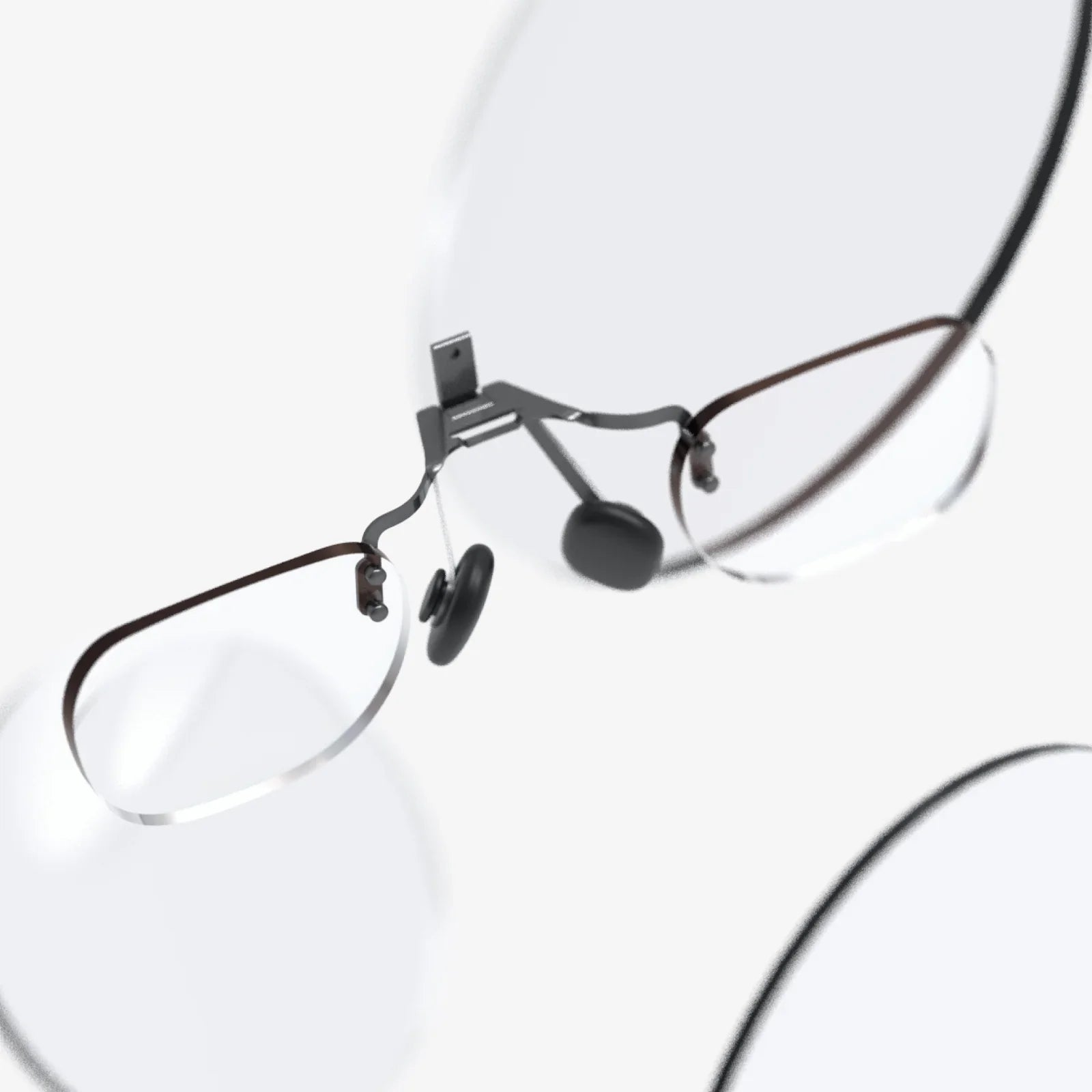
Imagine trying on a dozen pairs of designer frames without leaving your sofa, or overlaying digital navigation arrows onto the real streets of London. This is no longer science fiction; it’s the present reality for tech-savvy consumers across the United Kingdom. The market for virtual glasses in the UK is exploding, merging the nation's rich history of optical innovation with a bold, digital future. This comprehensive guide will take you through everything you need to know about this transformative technology, from the simple act of buying your next pair of spectacles online to stepping into a fully realised augmented world.
The Digital Try-On Revolution: A New Way to Shop for Eyewear
For decades, purchasing new glasses involved a time-consuming process: travelling to a physical store, waiting for an available optician, and trying on frame after frame under harsh lighting, often with limited selection. Virtual try-on technology has utterly dismantled this model. Using sophisticated augmented reality (AR) powered by your smartphone or computer camera, these platforms allow you to see a hyper-realistic, 3D rendering of how hundreds of different frames will look on your face from the comfort of your home.
The technology behind this is remarkably complex yet incredibly user-friendly. Advanced facial mapping algorithms instantly detect over a dozen key points on your face—the distance between your pupils, the width of your nose bridge, the curve of your temples—to ensure a perfect and proportional fit. The rendering accounts for lighting, skin tone, and even the subtle shadows cast by the frames themselves. This means UK shoppers can confidently assess not just the style but the precise scale of a pair of glasses, eliminating the guesswork that once plagued online shopping. It has democratised eyewear shopping, making a vast array of styles accessible to those in remote Scottish Highlands villages and bustling London boroughs alike.
Beyond Fashion: The Practical Applications in the UK Market
While virtual try-on for retail is the most visible application, the utility of virtual glasses technology in the UK extends far beyond e-commerce. The healthcare and optical sectors are leveraging this innovation for enhanced patient care and professional efficiency.
Optometrists and opticians are beginning to use similar AR tools during consultations. A patient can virtually ‘try on’ different lens options, such as photochromic lenses that darken in sunlight, to see a simulation of how they will perform before making a purchase. This is particularly useful for explaining complex lens features to patients, leading to higher satisfaction and better understanding of their eyewear choices.
Furthermore, this technology is a powerful tool for accessibility. For individuals with mobility issues who find it challenging to visit multiple stores, virtual try-ons offer a liberating shopping experience. It also allows for easier collaboration; you can share your virtual try-on session with friends or family via a link, inviting them to give their opinion in real-time, no matter where they are in the country.
The Hardware Spectrum: From Smartphone AR to Dedicated Wearables
When discussing virtual glasses in the UK, it's crucial to understand the two primary categories of hardware that facilitate the experience.
The first, and most immediately accessible, is smartphone-based augmented reality. This requires no specialised hardware beyond the device already in most people's pockets. Users access a brand's website or dedicated app, grant camera permissions, and are instantly immersed in the try-on experience. This low barrier to entry has been the primary driver of widespread adoption, allowing millions of British consumers to dip their toes into the world of AR without a significant financial commitment.
The second category is dedicated wearable technology—true augmented reality glasses. These are sophisticated pieces of technology that project digital images directly onto the user's field of view through transparent lenses. While not yet as commonplace as smartphone AR, these devices represent the future of the industry. Early adopters in the UK's tech hubs are using them for a range of applications, from visualising architectural plans on a construction site to receiving real-time translation overlays while conversing with tourists. The development of this hardware is a key focus for tech companies, with the goal of creating devices that are as socially acceptable and comfortable to wear as traditional eyewear.
Aesthetics Meets Technology: The Design Evolution
The success of any wearable technology hinges on its desirability. The clunky, geeky prototypes of yesteryear are giving way to a new generation of virtual glasses designed with aesthetics in mind. The UK, with its strong fashion heritage, is a critical market for this evolution. Consumers want technology that complements their personal style, not contradicts it.
Modern designs are sleek, minimalist, and often indistinguishable from high-end traditional frames. Manufacturers are using premium materials like lightweight alloys, acetate, and even sustainable composites to ensure comfort for all-day wear. The technological components—batteries, micro-projectors, sensors, and speakers—are being miniaturised and seamlessly integrated into the arms and hinges of the glasses. This focus on design is crucial for moving the technology from a niche gadget for enthusiasts to a mainstream consumer product that people will be proud to wear on the streets of Manchester, Edinburgh, or Cardiff.
Navigating the UK's Virtual Glasses Marketplace
The UK virtual glasses landscape is a diverse ecosystem featuring established optical retailers, innovative startups, and major tech companies all vying for consumer attention. For the British shopper, this means more choice than ever, but it also necessitates a degree of caution and research.
When engaging with virtual try-on services, it is paramount to use reputable retailers and platforms. Prioritise companies that are transparent about their data usage policies. Understand how your facial mapping data is being stored and used. Reputable companies will have clear, accessible privacy policies and will typically process this data ephemerally for the try-on session rather than storing it indefinitely.
Furthermore, while the virtual fit is highly accurate, it should complement, not replace, professional advice. A virtual tool cannot diagnose eye conditions or assess the precise health of your vision. It is always recommended to have an up-to-date prescription from a registered UK optometrist before purchasing new glasses, even through the most advanced virtual platform.
The Future is Clear: What's Next for Virtual Glasses in the UK?
The trajectory of virtual glasses technology points towards a more deeply integrated and immersive future. We are moving beyond simple try-ons and notifications towards a world where digital information is seamlessly woven into our physical reality—a concept often referred to as the ‘metaverse’ or ‘spatial computing’.
In the near future, we can expect virtual glasses to become powerful contextual computing devices. Imagine walking through the Tate Modern and having your glasses provide information about each painting you look at. Or navigating a new city with directions painted directly onto the pavement in front of you. For professionals, this could mean mechanics seeing repair instructions overlaid on an engine or surgeons accessing vital patient data without looking away from the operating table.
Connectivity will also improve dramatically with the nationwide rollout of 5G and subsequent networks, reducing latency and allowing for more complex data to be streamed to glasses in real-time. Advances in artificial intelligence will make the interactions more intuitive, with digital assistants understanding your context and needs without explicit commands.
The UK, with its robust tech sector, world-class universities, and culture of innovation, is poised to be a significant player in this next chapter. From research labs in Cambridge to design studios in London, British talent is helping to shape the future of how we see and interact with the world.
The line between the physical and digital realms is blurring, and it's being viewed through a new lens. Virtual glasses are not just a tool for trying on a new look; they are a gateway to a richer, more informed, and seamlessly connected life. For anyone in the UK curious about technology, fashion, or the future, now is the time to look closely—the next evolution of sight is already here, waiting for you to put it on.
Share:
Components of Augmented Reality: The Essential Building Blocks of a Digital Overlay
Augmented Reality Market Value: A Deep Dive into the Next Digital Gold Rush