


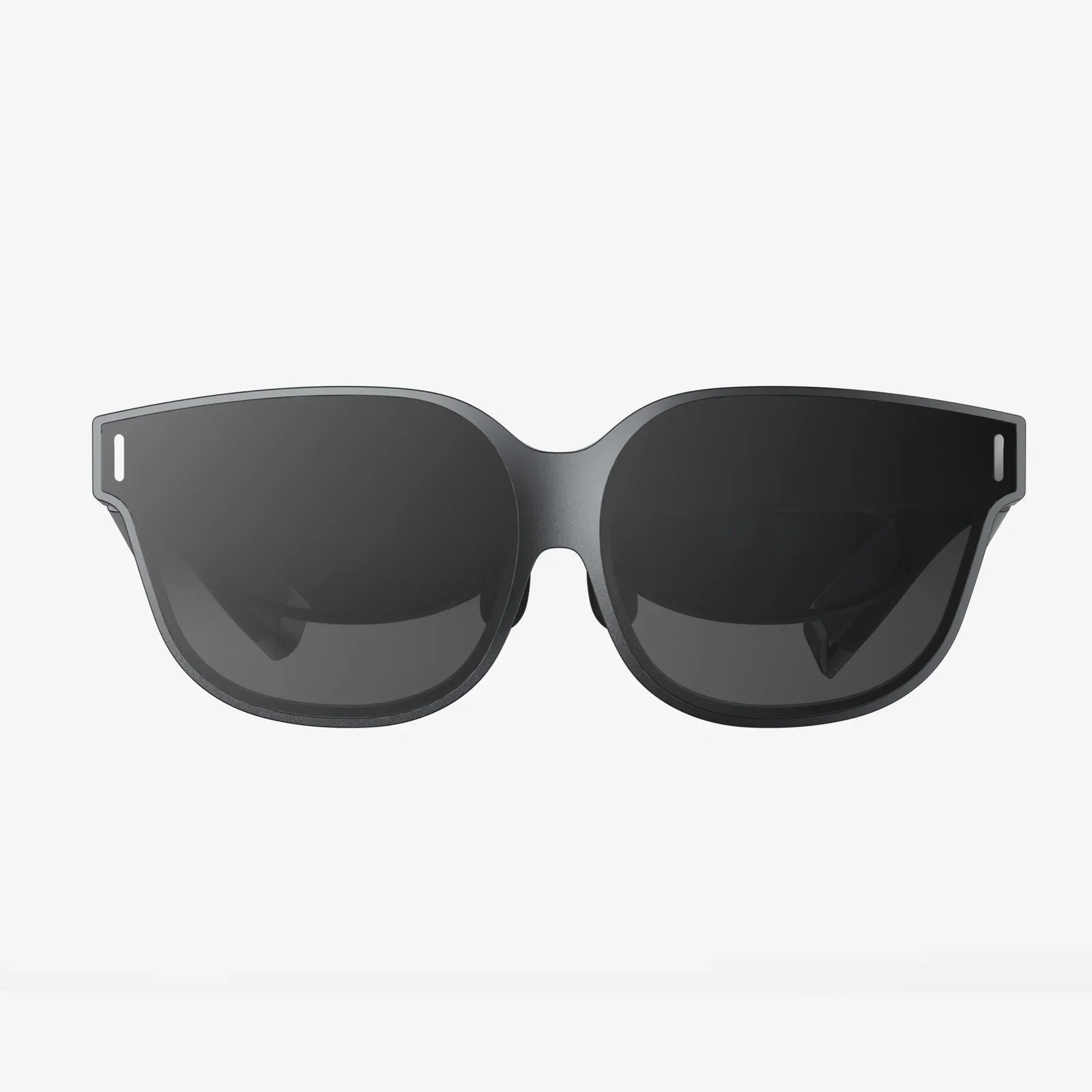
Imagine slipping on a sleek, futuristic headset and instantly being transported from your living room to the edge of a volcano, the front row of a concert, or the cockpit of a starship. This isn't a scene from a science fiction movie; it's the everyday magic made possible by virtual reality glasses for cell phones, the most accessible and affordable gateway to immersive digital experiences. For a fraction of the cost of high-end dedicated systems, these ingenious devices leverage the powerful computer already in your pocket to open up universes of entertainment, education, and exploration. Ready to see what all the fuss is about? Let's dive in.
Demystifying the Magic: How Do They Actually Work?
At their core, virtual reality glasses for cell phones are deceptively simple. They are not, in themselves, powerful computers with advanced graphics processors. Instead, they are a sophisticated combination of optics, housing, and input systems designed to work in perfect harmony with your smartphone.
The fundamental principle is stereoscopy, which mimics how human vision creates depth perception. Your two eyes are spaced apart, so each sees a slightly different image. Your brain then merg these two images into a single, three-dimensional picture. VR headsets replicate this by dividing your phone's high-resolution screen into two halves, each displaying a unique perspective of the virtual environment. The headset's lenses are the true heroes here. They are specially designed to sit between your eyes and the screen, magnifying the image to fill your entire field of view and correcting it so that the focal point appears at infinity, allowing your eyes to relax as if looking at a distant object rather than a screen inches away. This combination of a split-screen display and precision optics creates the convincing illusion of depth and space.
A Universe in Your Pocket: The Content and Experiences
The hardware is nothing without the software. The true value of a mobile VR headset is unlocked by the vast and diverse ecosystem of VR content available on app stores. The range of experiences is staggering and grows every day.
Gaming and Interactive Entertainment
This is where many users get their first taste of VR's potential. From simple roller coaster simulators that deliver genuine thrills to sophisticated puzzle games where you manipulate the environment with your gaze or a Bluetooth controller, mobile VR gaming is incredibly diverse. There are immersive horror experiences that will make you jump, rhythm games where you slash notes to the beat of music, and even social VR platforms where you can meet and interact with others using a virtual avatar.
360-Degree Videos and Films
Platforms are filled with breathtaking 360-degree videos. You can dive with great white sharks, stand on the surface of Mars with footage from NASA rovers, or attend a music festival from the center of the crowd. News organizations and documentary filmmakers are also using this technology to create powerful, empathetic pieces that place you directly in the story, fostering a deeper understanding of events around the world.
Educational and Cultural Exploration
Imagine taking a virtual field trip to the British Museum, the Louvre, or ancient Roman ruins. Many institutions have created VR tours that allow you to explore exhibits and historical sites in meticulous detail from anywhere on the globe. Apps also let you explore the human body in 3D, study the solar system, or witness historical events, making learning an active and engaging adventure.
Virtual Travel and Real Estate
For those with wanderlust, VR offers a tantalizing preview of destinations. You can take a walking tour of Tokyo's streets, relax on a virtual beach, or explore a hotel resort before you book. Similarly, the real estate industry has embraced this technology, allowing potential buyers to take immersive, self-guided virtual tours of properties across the country without leaving their home.
The Great Debate: Pros and Cons of the Mobile VR Approach
Like any technology, virtual reality glasses for cell phones come with a distinct set of advantages and limitations when compared to their more expensive, standalone or PC-tethered cousins.
The Compelling Advantages
- Extreme Affordability: This is the single biggest draw. For a modest investment, you gain entry into the world of VR. It eliminates the need to purchase an expensive dedicated console or upgrade your computer.
- Remarkable Accessibility: Since they work with a device billions of people already own, the barrier to entry is incredibly low. It’s the easiest way to introduce friends and family to VR.
- Wireless and Portable Freedom: Untethered from cords or a desktop computer, you have complete freedom of movement. The entire system is also highly portable, easily fitting into a bag for VR experiences on the go.
- Ease of Use: Setup is typically very simple: insert your phone, put on the headset, and you're ready to go. There are no complex drivers to install or external sensors to configure.
The Inherent Limitations
- Performance is Tied to Your Phone: The quality of your experience is directly dependent on your smartphone's processing power, screen resolution, and battery life. Older or less powerful phones may struggle with more demanding apps, resulting in lower frame rates that can cause discomfort.
- Limited Tracking and Input: Most mobile VR headsets rely on the phone's internal gyroscope and accelerometer for rotational tracking (knowing when you turn your head). However, they generally lack "6 degrees of freedom" (6DoF)—the ability to track your physical position as you lean, duck, or walk around. Input is also often limited to a simple Bluetooth controller or gaze-based interaction, lacking the precise hand-tracking of high-end systems.
- Potential for Discomfort: Strapping a phone to your face can make the headset front-heavy. This, combined with the heat generated by the phone under load, can lead to fatigue during longer sessions more quickly than with purpose-built hardware.
- Battery Drain: VR applications are incredibly demanding and will rapidly deplete your phone's battery. Long sessions will require a external battery pack or will leave you with a dead phone.
Choosing Your Portal: Key Features to Consider
Not all headsets are created equal. When shopping for virtual reality glasses for your cell phone, here are the critical factors to evaluate to ensure you get the best experience.
- Compatibility: This is the first and most important check. Ensure the headset is designed to fit your specific phone model, both in terms of physical dimensions and screen size. An ill-fitting headset can block sensors or provide a poor visual experience.
- Field of View (FoV): Measured in degrees, the FoV determines how much of your vision is filled by the virtual world. A wider FoV (100-110 degrees is good for mobile) is more immersive, while a narrow one can feel like looking through binoculars.
- Lens Quality: High-quality, multi-element lenses are crucial for a clear, sharp image with minimal distortion, blurring, or a "screen door effect" (where you can see the gaps between pixels).
- Comfort and Adjustability: Look for adjustable head straps (preferably an overhead strap for better weight distribution), plenty of padding, and adjustable pupil distance (IPD) to align the lenses with your eyes for a clearer picture. Proper ventilation is also key to reducing lens fogging.
- Input Method: Many headsets come bundled with a simple Bluetooth remote, which greatly enhances interactivity over touch-based controls. Some higher-end models may have more advanced controllers or even basic hand-tracking capabilities.
Beyond the Hype: Practical Tips for First-Time Users
To ensure your first foray into VR is a positive one, keep these tips in mind:
- Start Slow: Begin with shorter sessions of 10-15 minutes to allow your brain to get accustomed to the sensation. If you feel any discomfort, nausea, or eye strain, stop immediately and take a break.
- Clear Your Play Area: Even though you're not fully walking around, ensure you have a clear, safe space to stand or sit in a swivel chair. Be mindful of cords, pets, and low-hanging light fixtures.
- Mind Your Battery: Charge your phone fully before starting, or consider playing while plugged into a power source for longer adventures.
- Explore and Experiment: The app stores are your playground. Download a variety of free and paid apps to discover what types of experiences you enjoy most.
The journey of virtual reality is just beginning, and virtual reality glasses for cell phones play a pivotal role as its democratizing force. They have introduced millions to the awe and potential of immersive computing, breaking down financial and technical barriers that once kept VR a niche hobby. While they may not offer the full fidelity of elite systems, they provide a compelling, fun, and incredibly accessible taste of the future. They prove that you don't need a supercomputer to stand on the edge of the Grand Canyon, walk with dinosaurs, or simply watch a movie on a screen as big as your imagination. That transformative power isn't years away—it's in your pocket right now, waiting for you to look a little closer.
Share:
Future Technology Environment: A Symbiotic Blueprint for a Sustainable World
Multi Screen Computer Monitor Setup: The Ultimate Guide to Boosting Your Productivity