


Imagine a world where the line between the physical and the digital not only blurs but vanishes entirely, where you can travel, learn, connect, and create in limitless realities crafted from light and data. This is not the distant future; it is the inevitable destination on the horizon of virtual reality predictions, a technological revolution poised to reshape every facet of human existence. The journey there is already underway, and its trajectory is being mapped by visionaries, engineers, and dreamers who see beyond the headset of today to the immersive cosmos of tomorrow.
The Foundation: From Novelty to Necessity
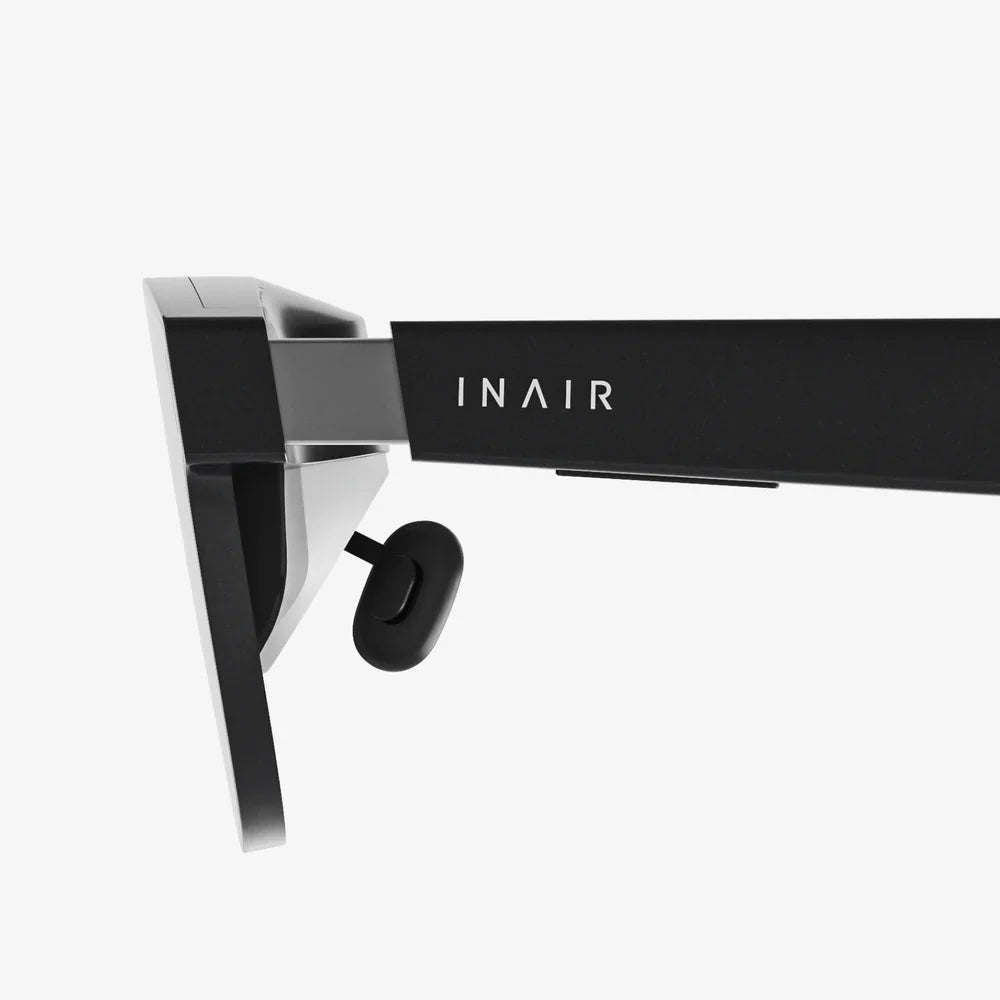
The current state of virtual reality, while impressive, is often compared to the early days of the mobile phone—bulky, expensive, and limited in application. Yet, just as the brick phone evolved into the indispensable smartphone, VR is on a similar, albeit accelerated, path of miniaturization, commoditization, and integration. Predictions for the next five years hinge on this evolution. We will witness the death of the tethered headset, replaced by sleek, self-contained devices with all-day battery life and processing power that rivals high-end computers. The form factor will shift towards something resembling stylish eyewear, making the technology less isolating and more socially acceptable.
This hardware revolution will be matched by a software explosion. The development ecosystem will mature, moving from bespoke, expensive projects to accessible creation tools that empower a new generation of artists, educators, and entrepreneurs to build virtual experiences. This democratization of creation is a key prediction: just as anyone can now build a website, soon, anyone will be able to construct a compelling virtual space.
The Sensory Leap: Beyond Sight and Sound
Today's VR primarily engages two senses: sight and hearing. The next wave of predictions focuses on engaging the rest. Haptic technology will evolve from simple vibrating controllers to full-body suits that simulate touch, pressure, and temperature. Imagine feeling the rough bark of a tree in a virtual forest, the recoil of a virtual tool, or the warmth of a virtual sun on your skin. This is not science fiction; prototypes exist and will become consumer-ready within the decade.
Olfactory and gustatory interfaces are further behind but are active areas of research. The prediction here is the emergence of devices that can generate a wide range of complex smells to enhance immersion, from the salty sea air of a virtual beach to the sterile scent of a virtual operating room. While taste remains the final frontier, early experiments with electrical stimulation of the tongue suggest that even this most elusive sense may one day be part of the virtual palette.
The Rise of the Metaverse and the Spatial Web
No discussion of virtual reality predictions is complete without addressing the metaverse. The term, often misunderstood, does not refer to a single platform but to a hypothesized iteration of the internet: a persistent, shared, 3D virtual space linked into a perceived virtual universe. The prediction is that VR will be the primary gateway to this new digital frontier.
This will give rise to the spatial web—an internet that understands and interacts with the physical world. Instead of browsing flat web pages on a screen, you will step into immersive, three-dimensional websites. Shopping will involve walking through a virtual store and examining 3D models of products. Social media will transform into shared virtual experiences where you can sit around a campfire with friends from across the globe, their avatars conveying real emotion through advanced facial and motion tracking.
Interoperability will be the key to this vision. The prediction is the development of open standards that allow digital assets—your avatar, your clothing, your virtual possessions—to travel seamlessly between different virtual worlds and experiences, creating a cohesive digital identity and economy.
Transforming Industry and the Future of Work
The impact of VR will extend far beyond entertainment. One of the most concrete predictions is the virtualization of the workplace. The concept of the office will be decoupled from a physical location. VR meetings will move beyond simple video calls in a virtual room to collaborative sessions where teams can interact with 3D data models, prototype designs, and architectural plans as if they were physical objects in front of them.
Fields like medicine, engineering, and education will be revolutionized. Surgeons will practice complex procedures on virtual anatomies that behave exactly like real tissue. Engineers will design and stress-test machinery in virtual environments long before a single piece of metal is cut. Classrooms will become portals to ancient Rome, the human bloodstream, or the surface of Mars, making experiential learning the norm rather than the exception. The prediction is that VR will become as essential a professional tool as the computer is today.
The Social and Psychological Implications
With such profound technological shifts come equally profound societal questions. Virtual reality predictions must account for the human element. On one hand, VR offers incredible potential for enhancing human connection, allowing people to share experiences and spaces regardless of physical disability, economic means, or geographic location. It could be a powerful tool for empathy, allowing users to literally see the world through another person's eyes.
On the other hand, it presents significant risks. The concept of virtual addiction is a serious prediction—a world so perfect and customizable that some may choose never to leave it, leading to social isolation and neglect of the physical world. The potential for hyper-realistic misinformation and propaganda is terrifying; if you can't believe your own eyes and ears, what can you believe?
Furthermore, the data collected in VR is exponentially more intimate than today's browsing history. It's not just what you click on; it's where you look, how long you look at it, your physiological responses, and the subtle nuances of your behavior in a simulated world. The prediction is that data privacy and security will become the paramount ethical challenge of the immersive age.
The Long-Term Horizon: The Ultimate Interface
Looking decades ahead, predictions venture into the realm of science fiction, though many respected technologists believe them to be inevitable. The ultimate goal is a direct neural interface—a seamless connection between the human brain and the virtual world. This would bypass the eyes and ears entirely, streaming high-fidelity sensory information directly into the cortex. This would represent the final step in immersion, a true reality where the virtual is indistinguishable from the real.
Such technology would have staggering implications. It could be the key to perfect memory recall, instantaneous learning, and truly telepathic communication. It also raises existential questions about the nature of reality and consciousness itself. While this may be 30 to 50 years away, the foundational research in brain-computer interfaces is happening now, making it a credible, if distant, prediction on the VR timeline.
The path from today's clunky headsets to a seamless neural lace is long and fraught with technical and ethical hurdles. But the direction of travel is clear: virtual reality is evolving from a niche gaming accessory into the next great computing platform, a mirror world layered over our own, and ultimately, perhaps, into a new stage of human experience. The predictions are bold, but the pace of innovation suggests they are not a matter of if, but when. The virtual frontier is open, and humanity is preparing to step through.
We stand at the precipice of a new dimension of human experience, where the only limit is the imagination. These virtual reality predictions paint a picture of a future filled with both breathtaking opportunity and profound responsibility—a world where we won't just use technology but will step inside it and, in doing so, redefine what it means to be human, to connect, and to explore. The headset is your passport; the future is waiting to be built.
Share:
How Good Is Virtual Reality: A Deep Dive into the Immersive Digital Frontier
What Can You Watch With Virtual Reality - The Ultimate Immersive Entertainment Guide