


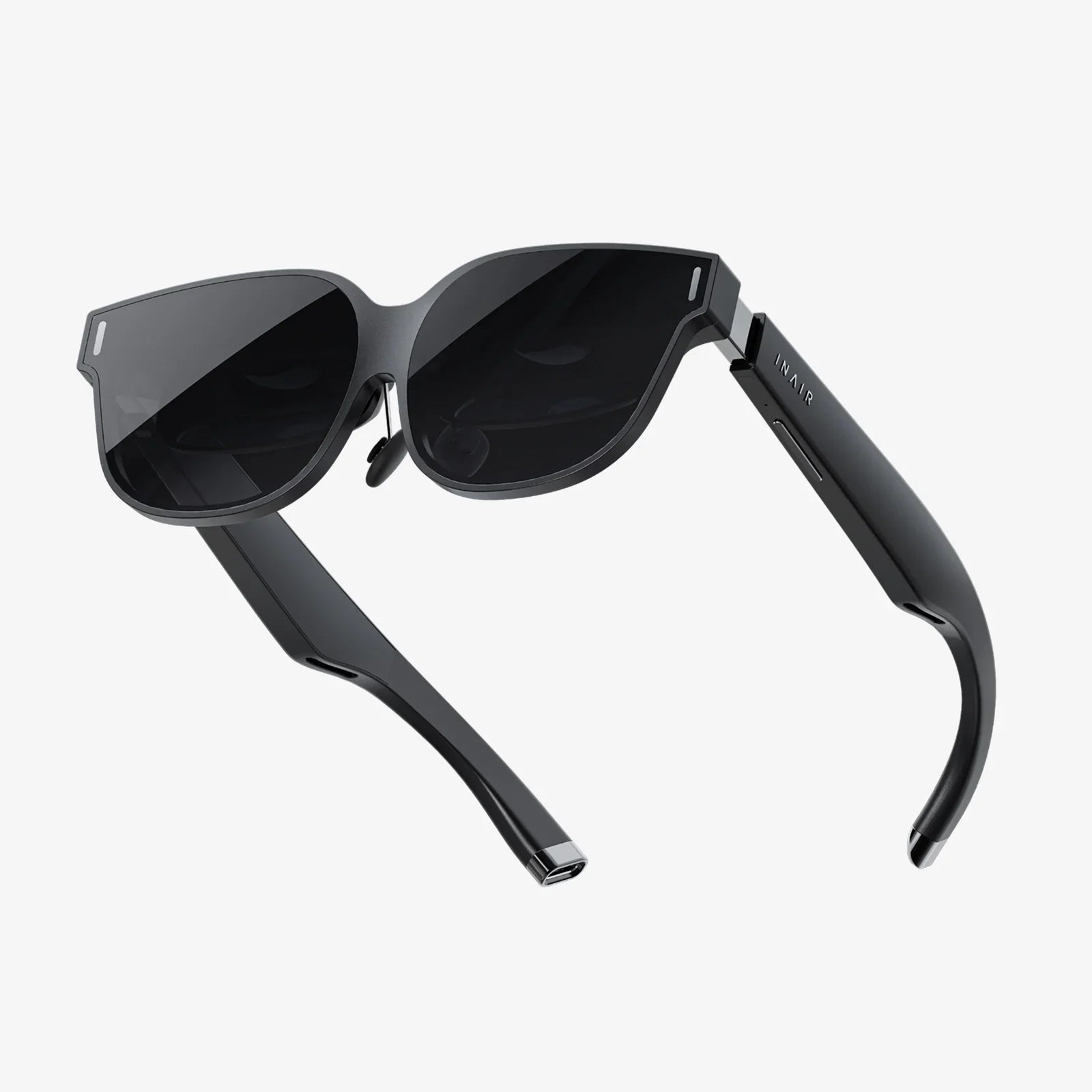
Imagine a world where the boundaries between the digital and the physical not only blur but merge, creating experiences limited only by the imagination. This is the promise held within the rapidly evolving realms of virtual and mixed reality. For the uninitiated, these terms might seem interchangeable, mere marketing jargon for putting on a headset. Yet, they represent fundamentally different philosophies of how we, as humans, will interact with and augment our reality. The choice between them is not merely about technical specs; it's a question of escapism versus augmentation, of total immersion versus contextual enhancement. Understanding the core divide between Virtual Reality (VR) and Mixed Reality (MR) is the first step in navigating the next great computing platform, a spectrum of experience that will redefine everything from how we work and learn to how we connect and play.
Defining the Realms: Core Principles and Technological Foundations
At its most fundamental level, the difference between VR and MR is a difference in intent. One seeks to replace your reality, while the other seeks to augment it.
The All-Encompassing World of Virtual Reality
Virtual Reality is the art and science of complete immersion. Its primary goal is to transport the user, both perceptually and psychologically, to a entirely computer-generated environment. A successful VR experience severs your connection to your physical surroundings, making you present in a digital world. This is achieved through a combination of key technologies. Headsets utilize stereoscopic displays, showing slightly different images to each eye to create a convincing sense of depth and three-dimensionality. Advanced head-tracking technology, often using a combination of gyroscopes, accelerometers, and external or internal cameras, monitors the user's head movements in real-time, adjusting the perspective within the virtual world accordingly. This creates the critical illusion that you are looking around a cohesive space. Furthermore, auditory immersion is provided through spatial3D audio, where sounds change based on your orientation and position within the virtual environment. For deeper immersion, haptic feedback controllers and even full-body suits allow users to 'feel' and interact with digital objects, completing the sensory deception.
The Blended Frontier of Mixed Reality
Mixed Reality, sometimes used as an umbrella term that includes Augmented Reality (AR), is more nuanced. Rather than replacing reality, MR aims to seamlessly blend digital content with the user's physical environment. The core differentiator of true MR is the concept of anchoring and interaction. Digital objects aren't just overlayed on your view; they are understood by the system to exist within your space. This requires a significantly more complex technological stack. MR headsets are equipped with outward-facing cameras, depth sensors, and LiDAR scanners that constantly map and understand the geometry of the room—the walls, floors, tables, and chairs. This environmental understanding allows a digital character to realistically hide behind your real sofa, or a virtual tennis ball to bounce off your actual wall. This is known as occlusion, where real objects can block digital ones, a key factor in selling the illusion. Interaction moves beyond controllers to include hand-tracking and gesture recognition, allowing users to manipulate holograms with their bare hands as if they were physical objects.
The Spectrum of Experience: From Augmentation to Immersion
It is most accurate to think of VR and MR as existing on a continuum, a spectrum famously illustrated as the Virtuality Continuum proposed by Paul Milgram and Fumio Kishino in 1994. On one far end lies the completely real environment, and on the other lies a completely virtual one. MR occupies the vast and exciting middle ground.
- The Real Environment: The physical world as we perceive it.
- Augmented Reality (AR): Digital overlays that supplement the real world but do not interact with it intelligently (e.g., a heads-up display in a car showing your speed, or a smartphone game placing a creature on your table).
- Augmented Virtuality: A primarily virtual world where elements of the real world are incorporated (e.g., seeing your real hands in a virtual game, or a live video feed of your desk integrated into a VR workspace).
- Virtual Reality (VR): A fully digital, immersive environment.
True Mixed Reality systems fluidly move across this spectrum, dynamically blending the real and the virtual based on the user's needs and the application's purpose.
Hardware and Accessibility: The Gateways to New Realities
The journey into these new worlds is governed by the hardware, which varies dramatically in capability, cost, and form factor.
VR systems have matured into two primary categories. Tethered VR headsets connect to a powerful external computer or game console, which handles the intense graphical processing required for high-fidelity, immersive worlds. This offers the highest-quality experience but sacrifices freedom of movement and requires a significant financial investment in both the headset and the computer. Standalone VR headsets have all the necessary computing power, sensors, and batteries built into the headset itself. They are无线, more affordable, and incredibly user-friendly, making VR accessible to a mass audience, albeit often at a slight reduction in graphical fidelity.
MR hardware is currently more specialized and resides largely in the professional and developer sphere. These headsets are essentially sophisticated standalone computers with a complex array of sensors for environmental mapping. They represent the cutting edge of consumer technology and carry a price tag to match. However, the line is blurring. Many modern VR headsets are now equipped with high-resolution passthrough cameras. This feature allows them to function as capable MR devices by displaying a live video feed of your surroundings, which can then be augmented with digital content. This technological convergence is making mixed experiences increasingly accessible.
Transforming Industries: Practical Applications Today
Beyond gaming and entertainment, both VR and MR are proving to be powerful tools with profound practical applications across numerous sectors.
Virtual Reality in Action
VR's strength lies in its ability to create controlled, repeatable, and safe simulated environments.
- Training and Simulation: Surgeons practice complex procedures on virtual patients, eliminating risk. Pilots train for emergency scenarios in perfect digital replicas of cockpits. Factory workers learn to operate dangerous machinery without the danger.
- Healthcare and Therapy: VR is used for exposure therapy, helping patients with phobias (like fear of heights or flying) confront their triggers in a safe setting. It's also used for pain distraction for burn victims during wound care and for motor rehabilitation following strokes.
- Design and Prototyping: Architects and engineers can walk clients through unbuilt buildings at a 1:1 scale. Automotive designers can review full-scale 3D models of new car designs, saving millions on physical prototypes.
Mixed Reality in the Wild
MR shines in scenarios where users need to maintain a connection to their physical environment while leveraging digital information.
- Remote Assistance and Collaboration: A field technician wearing an MR headset can receive live guidance from an expert thousands of miles away. The expert can see their view and draw arrows or holographic instructions directly into their field of vision, pointing to exact components that need repair.
- Advanced Design and Manufacturing: Engineers can examine a physical prototype of a jet engine while overlaying schematics, performance data, or instructions for assembly directly onto the machinery.
- Healthcare: Surgeons can have patient vitals, MRI scans, or critical guidance superimposed onto their visual field during an operation, without looking away from the patient.
The Human Factor: Social and Psychological Considerations
As these technologies become more pervasive, they bring a host of societal and psychological questions that we are only beginning to grapple with. VR, while offering incredible escapism, raises concerns about isolation, addiction, and the potential for a phenomenon known as "simulation sickness" or cybersickness, a type of motion sickness induced by a disconnect between visual motion cues and the body's vestibular sense. There are also profound questions about identity and behavior in a world with no physical consequences.
MR, by keeping users grounded in the real world, presents a different set of challenges. The constant overlay of digital information could lead to information overload and new forms of distraction, especially as this technology moves toward more socially acceptable glasses. The concept of attention theft becomes critical—who controls what is displayed in your field of view? Furthermore, the privacy implications are staggering. MR devices that constantly scan and map our homes, offices, and public spaces will generate unprecedented amounts of data about our lives, habits, and environments. Establishing robust ethical frameworks and data security standards is not a secondary concern; it is a prerequisite for widespread adoption.
Gazing into the Crystal Ball: The Convergent Future
The future of these technologies is not one of VR versus MR, but of convergence. The hardware will continue to evolve toward a single, sleek form factor—likely a pair of advanced glasses—that can effortlessly switch between full virtual immersion and context-aware mixed augmentation based on the task at hand. The key enabling technology for this future is the development of high-quality varifocal displays that can comfortably project light onto the retina while allowing the user to see the real world naturally.
This convergence will give rise to the spatial web or the metaverse—a persistent network of interconnected virtual spaces and digital overlays that exist in concert with our physical reality. In this future, your virtual workplace, your social hangout spaces, and informational overlays on your city streets will all be part of a continuous fabric of experience. The distinction between a meeting held in a fully virtual boardroom and one where 3D models are collaboratively reviewed on a real table will be a matter of user preference, not hardware limitation.
The ultimate winner in the dialogue between virtual and mixed reality will be human experience itself. We are moving toward a world where our computing interface is no longer a pane of glass we stare into, but the world we inhabit. It will be a world where we can learn by doing in impossible simulations, work with colleagues as if they were in the room from anywhere on Earth, and enhance our perception with a layer of contextual magic. The journey from the purely physical to the seamlessly blended has already begun, and its destination promises to be more extraordinary than any single reality we've ever known.
Share:
Virtual Reality Standards: The Invisible Framework Shaping Our Digital Future
Elementary and Virtual Reality: Revolutionizing the Modern Classroom Experience