


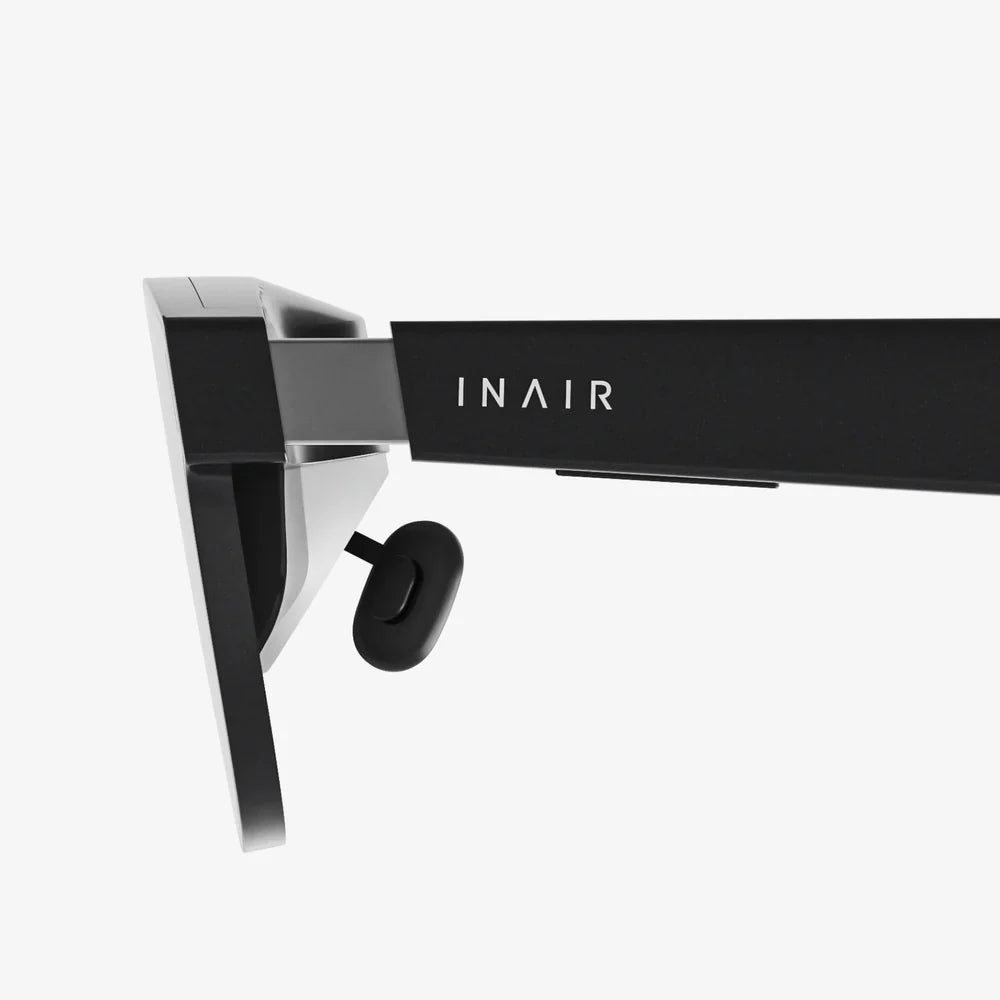
Imagine standing on the surface of Mars, the rust-colored dust crunching under your boots as you gaze at the pale, setting sun. Now, picture yourself shrinking down to the size of an atom, weaving through the intricate double-helix of a DNA strand. A moment later, you’re in a front-row seat at a legendary concert that happened decades ago, the energy of the crowd pulsing around you. This is not a dream, nor is it science fiction. This is the power of a modern VR experience, a technological leap that is fundamentally rewiring our perception of reality itself, offering a passport to any place, any time, and any state of being. It is the closest humanity has come to genuine magic, and its implications are only just beginning to unfold.
The Psychology of Presence: Why Your Brain Believes the Unbelievable
The true magic of a compelling VR experience lies not in the visual fidelity of the headset, but in a profound psychological phenomenon known as "presence." Presence is the elusive, holy grail of virtual reality—the undeniable, gut-level feeling of being there. It’s the moment your conscious mind surrenders to the illusion, and your lizard brain takes over, responding to digital stimuli as if they were physically real.
This sensation is achieved through a meticulous orchestration of sensory inputs designed to trick the brain’s ancient survival mechanisms. It starts with stereoscopic vision—a slightly different image presented to each eye—which creates the crucial depth perception that makes a world feel tangible. This is coupled with a wide field of view that dominates your vision, eliminating the distracting edges of a screen or the real world. When you turn your head, the world responds with imperceptible latency; any delay shatters the illusion immediately, often leading to discomfort. This precise head-tracking is the bedrock of spatial awareness in a VR experience.
But the illusion goes deeper. Advanced systems incorporate spatial audio, where sounds emanate from specific points in the 3D environment. A voice behind you actually sounds like it’s behind you, compelling you to turn and look. The final, and most powerful, layer is interactivity. When you reach out with a motion-tracked controller and your digital hand collides with a virtual object, providing haptic feedback—a subtle vibration or a precise force—the circle is complete. Your brain receives congruent feedback from your eyes, ears, and hands, and the illusion solidifies. You are no longer just observing a simulation; you are inhabiting it. This triggers genuine emotional and physiological responses: fear of heights on a virtual ledge, vertigo, surprise, and even empathy for digital characters.
More Than Games: The Expansive Universe of VR Applications
While immersive gaming is the most famous application, the value of a VR experience extends far beyond entertainment, revolutionizing fields from medicine to education to corporate collaboration.
Revolutionizing Education and Training
VR offers the ultimate learning tool: experiential education. Instead of reading about ancient Rome, history students can walk its bustling streets, hear the forums, and look up at the towering temples. Medical students can practice complex surgical procedures on virtual patients, making critical mistakes without consequences and honing their skills in a risk-free environment. This is invaluable for high-stakes professions. Pilots train in flight simulators, which are a form of VR, and now firefighters can navigate burning buildings, soldiers can learn battlefield medicine, and mechanics can disassemble complex engines—all within a perfectly replicated, safe, and repeatable VR experience.
Transforming Healthcare and Therapy
Therapeutic VR experiences are providing breakthroughs in mental and physical health. For patients undergoing painful procedures or enduring long hospital stays, VR serves as a powerful distraction therapy, transporting them to calming beaches or serene forests, which has been proven to reduce perceived pain and anxiety. Psychologists are using controlled VR environments to treat phobias—like fear of flying, heights, or public speaking—through gradual, safe exposure. For physical rehabilitation, VR turns repetitive exercises into engaging games, motivating stroke victims or those with physical injuries to complete their often tedious therapy regimens with dramatically improved outcomes.
Redefining Social Connection and Remote Work
The concept of the "metaverse" speaks to the potential of social VR experiences. Platforms now allow people to gather as lifelike avatars in virtual spaces for concerts, meetings, or simply to hang out. The sense of shared presence—making eye contact, using natural gestures—fosters a connection that flat video calls cannot replicate. For businesses, this means architects walking clients through unbuilt designs, global teams collaborating around a 3D model as if it were physically in the room, and new forms of remote work that feel less remote. A VR experience can collapse geography, creating a new paradigm for human interaction.
The Architect's Toolkit: Building Worlds from Scratch
Crafting a believable VR experience is a complex ballet of art and technology. Developers are not just creating a game; they are architects of reality, and every design choice either enhances or breaks the sense of presence.
The process begins with 3D modeling, building every asset, from a coffee cup to an entire cityscape. These models are then textured and lit with incredible care, as realistic lighting is paramount to selling the illusion. Physics engines are implemented to govern how objects interact—how they fall, collide, and break—ensuring the world behaves as users expect. The user interface (UI) presents a unique challenge; traditional menus and HUDs can shatter immersion. The most effective VR experiences diegetically integrate UI elements into the world itself—a holographic watch on your wrist, a virtual clipboard in your hand.
Beyond the technical, creators must master the art of VR storytelling. They use techniques like guiding—using light, sound, or environmental cues to direct a user’s attention—rather than forcing them down a path. They understand the importance of scale, making users feel empowered or humbled by their surroundings. They design comfortable movement systems to avoid the nausea associated with "vr legs," often offering teleportation or vignetting options for new users. Building a comfortable, compelling, and convincing world is the ultimate goal of any VR developer.
The Flip Side of the Coin: Ethical and Societal Considerations
With such transformative power comes significant responsibility. The very intensity that makes a VR experience so compelling also raises critical ethical questions that society must confront.
Privacy and Data Security: VR headsets are data collection powerhouses. They don’t just track what you look at; they track how you look at it—your gaze, your pupil dilation, your precise movements, your reactions. This biometric data is a treasure trove of information about your preferences, cognitive state, and even unconscious reactions. The question of who owns this data and how it can be used is paramount.
The Reality Gap: As experiences become more realistic, the potential for psychological manipulation grows. The "Proteus Effect" describes how embodying an avatar can change a user’s behavior and self-perception in the real world. This can be used for positive therapeutic change but could also be exploited for malicious influence. Furthermore, returning to the "real" world after an extended, perfect VR experience could lead to dissociation or a diminished appreciation for actual reality.
Access and Inequality: High-quality VR requires expensive hardware and a powerful computing setup, creating a significant barrier to entry. There is a real risk of a "digital divide," where transformative educational, professional, and social VR experiences are only available to an affluent few, exacerbating existing social and economic inequalities.
The Horizon Beckons: What the Future Holds for Virtual Reality
The current state of VR is impressive, but it is merely the foundation. The future promises experiences that are indistinguishable from physical reality. Several key technologies are poised to make this leap.
Next-generation headsets are moving towards varifocal displays, which simulate the way our eyes naturally focus on objects at different distances, eliminating eye strain and deepening the visual realism. Haptic technology is evolving from simple vibrations to full-body suits and gloves that can simulate touch, temperature, and even resistance, allowing you to feel the texture of a virtual wall or the weight of a digital object.
Perhaps the most significant frontier is the integration of brain-computer interfaces (BCIs). Early experiments show the potential to navigate virtual worlds through thought alone, or to experience simulated sensations directly through neural signals. This could ultimately lead to a VR experience that bypasses external hardware entirely, creating a direct pipeline from the digital world to the human brain.
We are marching towards a future where a VR experience will be a seamless extension of our daily lives—a tool for work, a window for socializing, a canvas for creation, and a gateway to adventures limited only by our imagination. The line between the virtual and the real will not be erased, but it will become beautifully, wonderfully blurred.
The journey into virtual reality is not about escaping our world, but about expanding it. It’s a tool for empathy, allowing us to walk in another’s shoes with unprecedented intimacy. It’s a machine for time travel, preserving cultures and moments for future generations. It’s a canvas for the human spirit, enabling new forms of art, storytelling, and connection. The headset is merely the key. The real destination is the limitless landscape of human experience, waiting just on the other side of the screen, inviting us all to step through and see what we become.
Share:
What Is The Meaning of Human Computer Interaction - The Bridge Between Man and Machine
What Do You See With VR Goggles? A Journey Into Digital Realities