


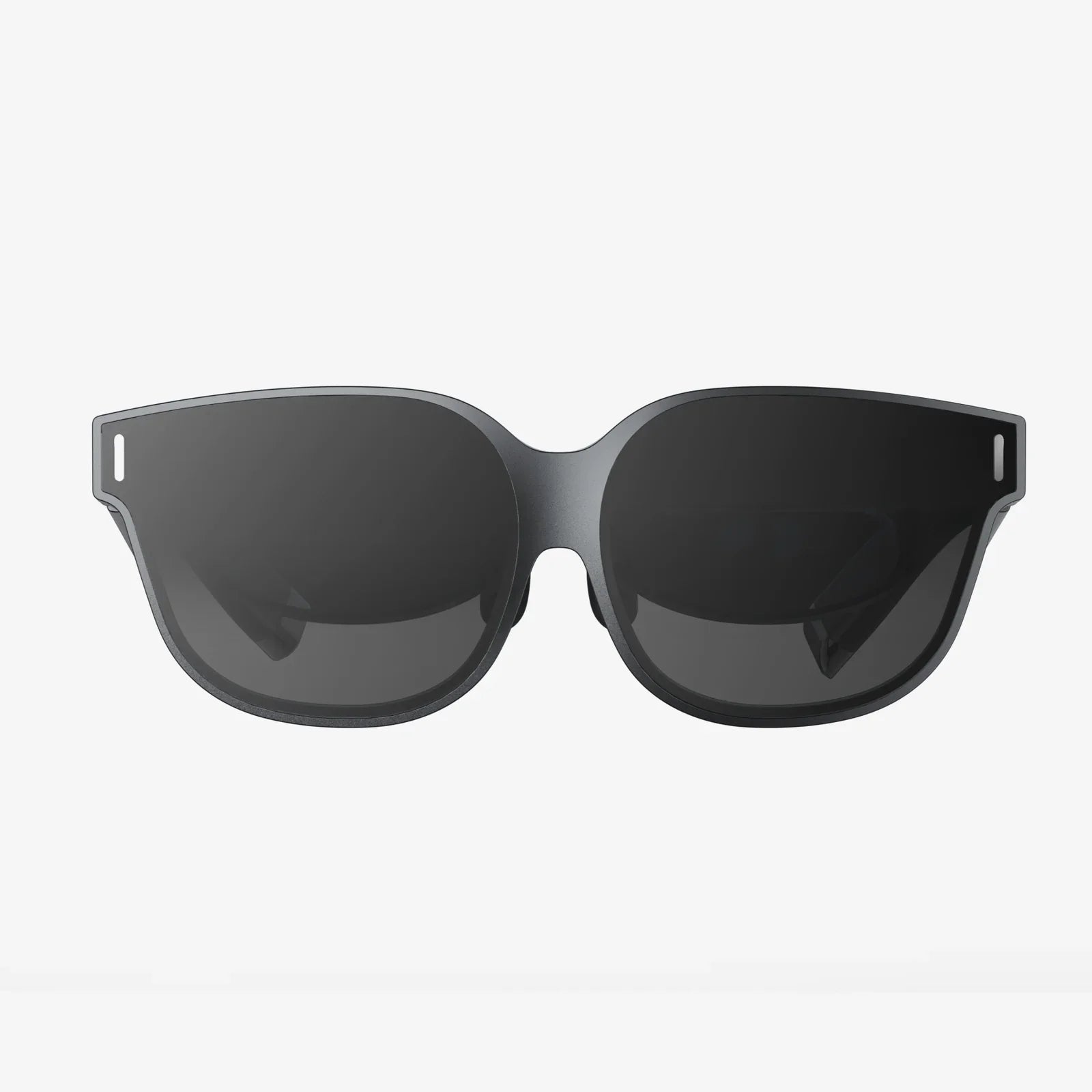
Imagine a classroom where the Great Pyramid of Giza rises from the floor, a biology student can walk through a beating human heart, and a history lesson transports you directly onto the streets of ancient Rome. This is no longer the stuff of science fiction; it is the rapidly evolving reality of education, powered by the transformative potential of a VR headset for learning. This technology is poised to fundamentally reshape how we acquire knowledge, moving from passive absorption to active, experiential discovery. The screen-based learning of the past is giving way to a world where students are no longer just observers but participants in their own educational journeys.
The Paradigm Shift: From Abstract to Experiential
For centuries, the primary modes of education have relied on abstraction. Textbooks describe phenomena, diagrams illustrate concepts, and lectures explain theories. While effective to a degree, these methods often create a cognitive gap between the information presented and its real-world application and understanding. A student can read about gravitational forces, but feeling the visceral pull of a virtual planet as they adjust its mass is an entirely different, more profound form of comprehension.
A VR headset for learning bridges this gap by leveraging the power of presence and immersion. Presence is the psychological state where a user’s subjective experience is generated by and filtered through technology, making them feel as if they are actually in the simulated environment. This is the magic ingredient. When a medical student dons a headset and is suddenly standing in a virtual operating theater, their brain reacts to the scenario with a level of focus and emotional engagement that a textbook image could never elicit. This shift from abstract to experiential learning leads to deeper cognitive processing, improved knowledge retention, and a more intuitive grasp of complex subjects.
Unlocking New Dimensions of Knowledge Across Disciplines
The applications for immersive learning are as vast as the curriculum itself, offering unique advantages for nearly every field of study.
STEM Education: A Laboratory Without Limits
In science, technology, engineering, and mathematics (STEM), VR demolishes physical and financial constraints. Chemistry students can experiment with volatile or expensive compounds without any risk or cost, combining elements to see reactions unfold in front of them. Physics students can manipulate the laws of gravity and momentum to understand their fundamental principles firsthand. Engineering and architecture students can walk through their 3D designs at a 1:1 scale, identifying potential flaws and experiencing spatial relationships long before a single physical resource is expended. This safe, repeatable, and infinitely scalable laboratory allows for trial and error, which is the cornerstone of scientific discovery.
Historical and Cultural Exploration: A True Time Machine
History and social studies are perhaps one of the most emotionally resonant applications. Rather than looking at a static map of the Roman Empire, students can don a headset and stand within the bustling Forum, hearing the sounds and seeing the scale of the architecture. They can witness pivotal moments, from Martin Luther King Jr.'s "I Have a Dream" speech to the landing on the moon, fostering a powerful empathetic connection to the past. Furthermore, VR offers unparalleled access to world heritage sites and museums. A class can take a guided tour of the Louvre, explore the depths of the Great Barrier Reef, or examine ancient Egyptian tombs in meticulous detail, all without leaving the classroom, democratizing access to cultural experiences that were once limited by geography and economics.
Medical and Vocational Training: Practicing Without Peril
In high-stakes fields like medicine, aviation, and emergency response, the margin for error is slim. VR provides an essential training ground for mastering skills without consequences. Aspiring surgeons can practice complex procedures on virtual patients, developing muscle memory and procedural confidence. Flight trainees can navigate countless emergency scenarios in a virtual cockpit. Firefighters can run through dangerous rescue operations in a perfectly replicated burning building. This type of training builds not just competence but also critical calm under pressure, ultimately saving lives.
Soft Skills and Empathy Development: Walking in Another's Shoes
Perhaps one of the most profound uses of a VR headset for learning is in the development of soft skills and empathy. Programs are being developed that allow users to experience the world from perspectives vastly different from their own. For example, a manager can experience a day in the life of a new or struggling employee to better understand their challenges. More powerfully, narratives that simulate the experiences of individuals with disabilities or those facing social prejudice can foster a level of understanding and compassion that lectures on diversity and inclusion cannot achieve. This embodied experiences can be a powerful tool for breaking down biases and building more cohesive communities.
The Pedagogical Power: Why Immersion Works
The efficacy of VR in education is not merely anecdotal; it is supported by growing bodies of research in neuroscience and pedagogy. The learning model best served by VR is constructivism, where learners actively construct their own understanding and knowledge of the world through experience and reflection.
VR supercharges this process through several key mechanisms:
- Enhanced Engagement: The immersive nature of VR eliminates outside distractions, commanding the user's full attention and creating a state of focused flow.
- Emotional Connection: Experiences that trigger emotional responses are more likely to be stored in long-term memory. The awe of standing next to a virtual dinosaur or the tension of a simulated medical emergency creates powerful memory anchors.
- Spatial Memory: Humans have evolved to learn and remember through spatial navigation. By placing information within a 3D world that a learner can navigate, VR taps into this primal and highly effective memory system.
- Active Learning: VR is inherently interactive. Learners must make decisions, manipulate objects, and solve problems, transforming them from passive recipients into active participants in the learning process.
Navigating the Challenges and Considerations
Despite its immense promise, the integration of VR into mainstream education is not without its hurdles. Thoughtful consideration must be given to several key areas to ensure its responsible and effective implementation.
Cost and Accessibility
The initial investment in hardware—headsets, capable computers or standalone units, and software licenses—can be significant for educational institutions. While prices are falling, achieving a 1:1 student-to-headset ratio remains a challenge for many schools. Strategies like shared stations, headset carts, and lab setups can help maximize resources. The industry is also moving towards more affordable standalone devices, which are lowering the barrier to entry.
Content Quality and Curriculum Integration
Not all VR experiences are created equal. The market contains a mix of shallow tech demos and deeply educational, curriculum-aligned applications. The key is for educators to critically evaluate content for its pedagogical value, accuracy, and ability to meet specific learning objectives. The most successful implementations will see VR not as a replacement for teachers, but as a powerful tool used by educators to enhance a thoughtfully designed lesson plan.
Health and Safety
Issues like cybersickness (a form of motion sickness), eye strain, and social isolation are valid concerns. Sessions must be appropriately timed, especially for younger users, and breaks should be mandated. Furthermore, creating shared virtual experiences where students can see and collaborate with each other's avatars is crucial to maintaining the social aspect of learning and preventing isolation.
Teacher Training and Support
For VR to be effective, teachers need robust professional development. They must feel comfortable not only operating the technology but also integrating it seamlessly into their pedagogy. Without proper training and technical support, even the best hardware risks gathering dust in a closet.
The Future Classroom: A Blended Immersive Reality
The future of education is not a world where students are permanently plugged into a virtual world. Instead, it will be a sophisticated blend of physical and digital, with VR acting as a specialized tool for specific, high-impact learning moments. We can anticipate several exciting developments on the horizon.
The rise of social VR platforms will enable truly collaborative learning, where students from across the globe can meet in a virtual space to solve problems together. Advancements in haptic technology—gloves and suits that provide tactile feedback—will add the sense of touch, making virtual dissections and engineering simulations even more realistic. Furthermore, as artificial intelligence integrates with VR, experiences will become adaptive, tailoring themselves in real-time to a student's understanding and pace, providing a truly personalized educational journey.
The ultimate goal is not to replace traditional methods but to expand the toolkit available to educators and learners. The VR headset for learning is the next logical step in a long history of educational technology, from the slate chalkboard to the personal computer. It offers a unique and powerful way to make the abstract tangible, the distant accessible, and the complex comprehensible. It turns learning into an adventure, and in doing so, has the potential to ignite a lifelong passion for discovery in a new generation of students. The door to the classroom of the future is now open, and it leads to anywhere and any-when you can imagine.
Share:
VR with iPhone 6s: The Complete Guide to a Surprisingly Capable Experience
VR Headset Discount: Your Ultimate Guide to Finding the Perfect Deal in the Virtual World