


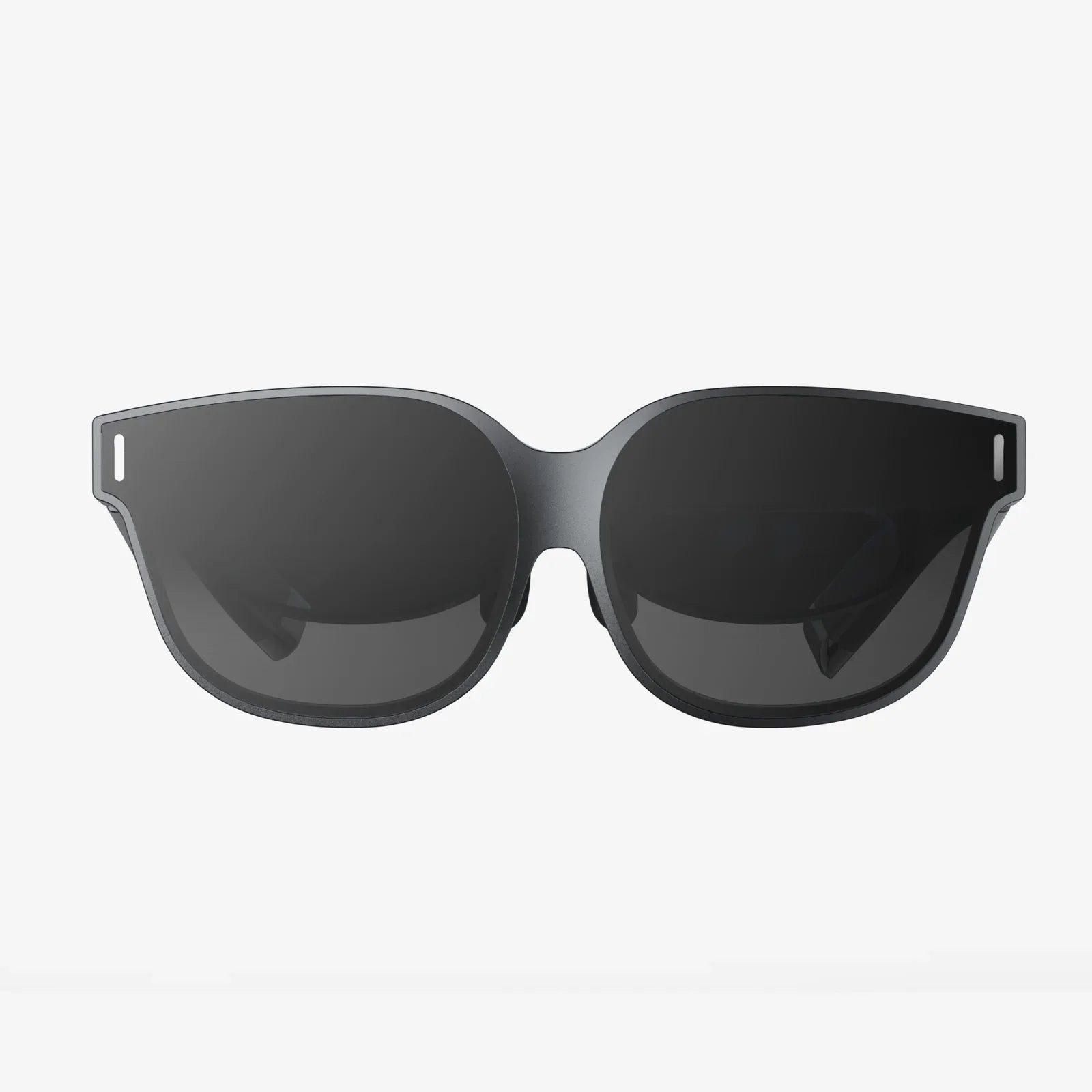
You strap on the headset, the world fades to black, and suddenly you’re there. You’re standing on the surface of Mars, looking out over a rust-colored canyon. You’re in the front row of a concert, feeling the thump of the bass in your chest. You’re facing down a dragon, its scales shimmering in the firelight. This is the magic of virtual reality—a seamless transportation to another world. But what if the view is blurry? What if the edges of the scene are distorted, or a persistent glare pulls you out of the moment? Suddenly, the spell is broken. The unsung hero, and often the critical bottleneck, between you and this perfect digital reality is a small, incredibly precise piece of polished glass or plastic: the VR headset lens. This is the gateway. This is the window. And understanding it is the key to unlocking the true potential of immersion.
The Gateway to Another World: Why Lenses Matter More Than You Think
When we think about VR hardware, our minds often jump to flashy specifications: resolution of the displays, the power of the processor, the fidelity of the tracking systems. While these are undoubtedly important, they are all ultimately funneled through a single, crucial component: the lenses. They are the final arbiters of your visual experience. A ultra-high-resolution display is rendered meaningless if the lenses in front of it smear, distort, or otherwise corrupt the image before it reaches your eyes. Their primary job is to take the light from the small screens positioned inches from your face and transform it into a comfortable, wide-field-of-view image that appears to be many feet away. They are the most intimate part of the hardware, literally the last thing the digital image passes through before becoming your reality.
The Optical Challenge: From Inches to Infinity
The core challenge that VR lenses must solve is a profound one. The physical displays inside a headset are typically only a few centimeters from your eyes. If you were to look at a screen that close without any optical intervention, your eyes would need to strain severely to focus (a state known as accommodation), and the image would occupy only a tiny fraction of your field of view. Lenses solve this by acting as a sophisticated optical relay.
They perform two critical functions:
- Refocusing: The lenses bend the light rays from the display to make them appear as if they are coming from a much farther distance, often tricking your eyes into a more relaxed, distant-focus state (typically around 2 meters or more). This is essential for visual comfort and reducing eye strain during extended sessions.
- Expanding the Field of View (FoV): By magnifying the image, the lenses allow the relatively small display to fill a much larger portion of your peripheral vision. A wider FoV is a cornerstone of immersion, making the virtual world feel expansive and continuous rather than like looking through a pair of binoculars.
A Tale of Two Lenses: Fresnel vs. Pancake
The history of consumer VR has largely been a story of two dominant lens architectures, each with its own set of trade-offs between performance, size, and cost.
Fresnel Lenses: The Workhorse of First-Gen VR
Inspired by lighthouse lenses designed in the 19th century by Augustin-Jean Fresnel, these lenses are characterized by their thin, lightweight design and concentric ridges or rings. The principle is simple: by carving out the bulk of the glass and leaving only the angled ridges that perform the light-bending, you achieve the same optical power (magnification and focus) as a much thicker, heavier, and expensive conventional lens.
Advantages:
- Thin and Lightweight: This was crucial for early headsets, making them wearable for more than a few minutes.
- Cost-Effective: Easier and cheaper to manufacture at scale than complex aspherical lenses.
- High Optical Power: Excellent at providing a wide field of view.
The Trade-Offs: Optical Artifacts
The Fresnel design is not without its significant drawbacks, which have been a major source of user complaint:
- God Rays: Perhaps the most infamous issue. The concentric rings can scatter light, especially in high-contrast scenes (white text on a black background). This creates a ghostly, smeared, "ray-like" artifact that seems to emanate from bright objects, breaking immersion.
- Ring Patterns: In certain lighting conditions, users can actually perceive the faint outline of the lens ridges themselves in their vision.
- Small "Sweet Spot": The area of perfect clarity in the center of the lens can be frustratingly small. Move your eyes without moving your head, and the image can quickly become blurry, forcing a lot of manual adjustment and re-seating of the headset.
Pancake Lenses: The Modern Compact Revolution
As the industry pushed for smaller, more portable headsets, a new design emerged: pancake lenses. These are a type of folded optics system that uses polarization and half-mirrors to "fold" the light path back and forth within a very thin assembly. The result is an incredibly slim profile—hence the name "pancake."
Advantages:
- Extremely Thin: This is their killer feature. They enable sleek, glasses-like form factors that were previously impossible.
- Sharper Image & Larger Sweet Spot: By often employing high-quality aspherical or complex hybrid designs, they can provide edge-to-edge clarity, drastically reducing the blurriness in the peripheral vision.
- Reduced God Rays: Without the ringed structure of Fresnel lenses, they virtually eliminate this particular artifact, offering much cleaner contrast.
The Trade-Offs: The Light Trade
This innovation comes with a critical compromise:
- Significant Light Loss: The process of folding the light through multiple polarized layers can result in a staggering amount of light loss—often up to 80% or more. This means displays must be significantly brighter to compensate, which can impact power consumption and generate more heat. It also means that for a given display, a headset with pancake lenses may not appear as vibrant or bright as one with Fresnel lenses.
- Increased Complexity and Cost: The precision required and the number of optical elements make pancake lenses more expensive to produce.
Beyond Blur: Understanding Key Lens Specifications
When evaluating a VR headset, several lens-related specs directly impact the quality of your experience.
- Field of View (FoV): Measured diagonally (and sometimes horizontally), this is how much of the virtual world you can see. A larger FoV is more immersive. Lenses are the primary determinant of FoV, constrained by their design and the size of the display.
- Eye Box: This is the three-dimensional space within which your eye can move and still see a clear, undistorted image. A large eye box is desirable as it means you have more freedom to look around with your eyes without the image degrading, and the headset is less sensitive to perfect positioning on your face.
- Pupil Swim: A distortion effect where the virtual world appears to warp and move slightly as you rotate your head or shift your gaze. It's caused by the lens not perfectly compensating for the way light enters the different parts of your pupil. Good lens design minimizes this.
- Chromatic Aberration: The lens failing to focus all colors of light to the same point, resulting in color fringing, especially on high-contrast edges. This is typically corrected computationally by pre-distorting the image before it's sent to the display.
The Human Factor: IPD, Prescription, and Comfort
The best lenses in the world are useless if they aren't aligned correctly with the user's eyes. This brings us to two crucial factors:
Interpupillary Distance (IPD): This is the distance between the centers of your pupils. It varies significantly from person to person. If the headset's lenses are not aligned with your IPD, the resulting image can cause eye strain, headaches, and a lack of depth perception (stereopsis).
- Fixed IPD: The lenses are set at a single, average distance. This works okay for some, but poorly for those with IPDs far from the average.
- Mechanical IPD Adjustment: A physical slider that moves the lenses and/or displays closer or farther apart. This allows for a precise, optical adjustment that maintains image quality.
- Software IPD Adjustment: The physical lens distance remains fixed, but the software shifts the rendered images on the display to roughly align with your eyes. This is better than fixed IPD but is not a perfect optical solution and can introduce some distortion.
Vision Correction: For the millions who wear glasses or contact lenses, VR presents a challenge. Smushing glasses into a headset is uncomfortable and can scratch both the headset lenses and the glasses themselves. Solutions include:
- Custom Prescription Lens Inserts: Third-party and first-party solutions that clip custom-ground lenses onto the headset's built-in lenses. This is the gold standard for comfort and visual clarity.
- Adjustable Diopter Dials: Some enterprise-focused headsets feature built-in dials that adjust the focus of the lens to match a user's prescription, eliminating the need for glasses or inserts.
The Cutting Edge: What's Next for VR Lens Technology?
The quest for the perfect lens—one that is small, light, clear, bright, and free of artifacts—is the holy grail of VR hardware. Several emerging technologies promise to get us closer.
- Metalenses: This is a revolutionary approach using nanostructures on a flat surface to bend light. Instead of relying on the curvature of glass, these meta-surfaces can control light with unprecedented precision. They promise incredibly thin, flat lenses that could eliminate virtually all common artifacts, though the technology is still in the R&D phase for consumer VR.
- Liquid Crystal Lenses: Lenses that can electronically change their focus, potentially solving the Vergence-Accommodation Conflict (VAC)—a key source of eye strain in VR where your eyes struggle to focus on virtual objects at different distances. This could lead to "varifocal" headsets where the focus shifts naturally with the object you're looking at.
- Aspherical and Hybrid Designs: We will see more complex, multi-element lens assemblies that combine the best attributes of different technologies. For example, hybrid Fresnel-aspherical designs can reduce rings while maintaining a wide FoV.
- Improved Coatings: Advanced anti-reflective (AR) and anti-fogging coatings will become standard, improving contrast, reducing glare, and enhancing comfort during active use.
Every time you step into a virtual world, you are placing your trust in a marvel of optical engineering. Those small circles of glass or plastic are the final, critical bridge between the raw data of ones and zeros and the breathtaking experience of being somewhere else. They are the difference between a technical demo and true presence. The relentless innovation in this space—from the bulky Fresnel workhorses of yesterday to the sleek pancake lenses of today and the meta-material miracles of tomorrow—is quietly driving the entire industry forward. The next time you marvel at a virtual sunset, take a moment to appreciate the perfect, invisible windows that made it all possible. The future of reality itself is being shaped, one precisely curved surface at a time.
Share:
VR Headset Price Range - A Comprehensive Guide to Navigating the Cost of Immersion
What Are AI Sunglasses: The Dawn of Wearable Intelligence and Augmented Reality