


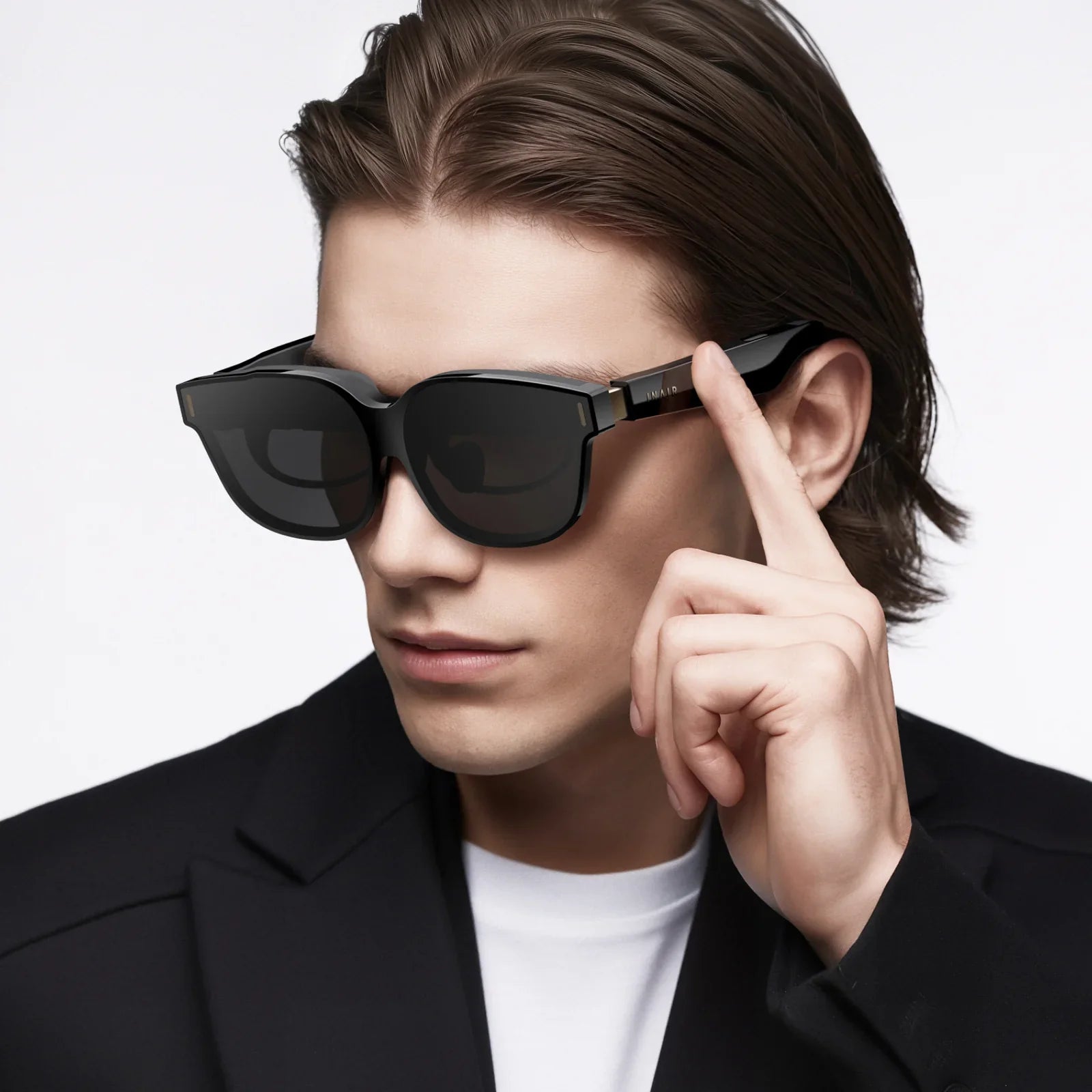
Imagine slipping on a headset and being instantly transported to a crystal-clear virtual world, a perfect digital landscape where every detail is sharp, immersive, and—most importantly—perfectly tuned to your unique eyesight. For millions, this has remained a frustrating dream, as the rigid lenses of traditional virtual reality have created a barrier to entry, excluding those with common vision impairments. But a technological revolution is quietly changing the game, promising to shatter these barriers and redefine comfort in the metaverse. The advent of the VR headset with adjustable focus is not just an incremental upgrade; it's a fundamental shift towards truly universal and personalized immersion.
The Unseen Barrier: Why Fixed Focus Fails So Many
To understand the monumental importance of adjustable focus, one must first grasp the critical limitation of conventional headsets. Standard devices use a pair of fixed-focus lenses. Their optical engineering is a marvel, creating a convincing stereoscopic 3D effect that places the virtual environment at a specific, fixed focal distance, typically around two meters. This design works acceptably for users with 20/20 vision, but it creates an immediate and often painful problem for anyone else.
Users who rely on prescription glasses or contact lenses to see the real world clearly are forced to accommodate this digital one. They are presented with three flawed options: struggle with the uncomfortable and often impossible task of wearing their glasses inside the headset, risking scratched lenses on both sides; invest in expensive, custom-made prescription lens inserts that permanently marry their device to their specific vision correction; or simply avoid VR altogether. This last option has been the unfortunate reality for a significant portion of the potential market, effectively locking them out of experiences in education, training, social connection, and entertainment.
Even for those with perfect vision, fixed focus presents a physiological challenge known as the Vergence-Accommodation Conflict (VAC). This is a fundamental mismatch between how our eyes and brain work together in the real world versus in a VR headset. In reality, when we look at a nearby object, our eyes converge (turn inward) and our lenses accommodate (change shape to focus). These two actions are perfectly linked. In a fixed-focus headset, your eyes may converge on a virtual object that appears inches from your face, but your lenses must still focus as if looking at an object two meters away. This sensory disconnect is a primary source of the eyestrain, headaches, and nausea that have plagued VR since its inception, preventing longer, more comfortable sessions.
How Adjustable Focus Technology Bridges the Gap
Adjustable focus technology, also known as varifocal or mechanized focus, directly attacks these core problems. Instead of a static lens, these advanced systems incorporate mechanisms that physically alter the distance between the display and the lenses or the shape of the lenses themselves in response to user input or eye-tracking data.
The most common implementation involves a motorized slider system. Using either a manual dial or a software-driven interface, the user can adjust the lens position, dynamically changing the focal plane. This simple mechanical action is transformative. It allows a user to dial in the perfect focus for their eyes, effectively building their prescription directly into the headset's optics without the need for any additional hardware. For the first time, a single headset can be instantly personalized to the visual acuity of anyone who puts it on, from a user with 20/20 vision to someone with significant near- or far-sightedness.
The Mechanics of Clarity: Diopter Dials and Motorized Sliders
The user experience of this adjustment varies by implementation. Some systems offer a simple physical diopter dial located on the underside or side of the headset. Turning this dial moves the lenses minutely, and the user adjusts it until the virtual text and imagery snap into perfect clarity. This is an intuitive and direct method, giving the user immediate tactile control over their visual experience.
More advanced systems integrate this functionality with sophisticated eye-tracking cameras. These systems can automatically measure the user's interpupillary distance (IPD) and even map their refractive errors. The software can then automatically configure the lens positions to provide the optimal starting point for visual comfort, which the user can then fine-tune. This marriage of hardware and software represents the pinnacle of user-friendly customization, removing all guesswork from the setup process.
Beyond Prescription: Mitigating the Vergence-Accommodation Conflict
While correcting for common vision impairments is a massive win, the potential benefits of adjustable focus extend even further into solving the deeply ingrained problem of VAC. Next-generation research prototypes, often dubbed "varifocal" systems, take adjustable focus to its logical conclusion. By using high-speed eye-tracking to know precisely where the user is looking in the 3D space, these systems can dynamically and automatically adjust the focal plane of the lenses to match the virtual distance of the object of interest.
If the user looks at a virtual menu floating close to their face, the lenses adjust to a near focal plane. When their gaze shifts to a mountain on the horizon, the lenses instantly shift to a far focal plane. This recreates the natural accommodation response of the human eye, effectively eliminating the Vergence-Accommodation Conflict. The result is a profound increase in visual comfort, a significant reduction in simulator sickness, and a dramatic enhancement in the perceived realism of the virtual world. Objects feel more solid and present because the eyes are focusing on them as they would a real object. While this fully dynamic varifocal technology is primarily in the R&D labs today, it represents the future that simpler manual adjustable focus systems are paving the way for.
A More Accessible and Social Virtual Future
The societal implications of widespread adoption of adjustable focus are profound. By eliminating the need for corrective eyewear inside the headset, this technology drastically lowers the financial and practical barrier to entry. Demo sessions in stores, offices, and classrooms become instantly more accessible. A single headset can be shared among a family, a group of friends, or a team of employees, with each person spending mere seconds to adjust the focus to their own eyes, rather than fumbling with inserts or struggling with blurry vision.
This fosters a more inclusive and spontaneous VR environment. It empowers older audiences, who are more likely to need vision correction, to engage with therapeutic and experiential applications without friction. In enterprise and training scenarios, it ensures that every employee, regardless of their prescription, can clearly see critical safety information or intricate procedural instructions, potentially reducing errors and improving outcomes.
The Road Ahead: From Manual Adjustment to Full Visual Fidelity
The journey of adjustable focus technology is just beginning. The current generation of manual diopter adjustment is a crucial and revolutionary first step, solving the immediate problem of prescription accessibility. The next leap will be the consumer-grade implementation of true varifocal systems, which will require immense computational power and incredibly precise, high-speed mechanical actuators to work flawlessly and without perceptible lag.
Beyond that, research continues into even more advanced solutions like liquid crystal lenses that can change focus without moving parts, and light field displays that can project all focal planes simultaneously, allowing the eye to focus naturally anywhere in the scene. These technologies promise a future where VR and AR visual comfort and realism rival that of the natural world. The adjustable focus headsets of today are the essential bridge to that future, proving the value of personalized optics and training a generation of users to expect and demand better visual ergonomics.
The true potential of virtual reality is not just in replic reality, but in surpassing its limitations. Yet, for years, a fundamental limitation of the hardware itself—its inability to see us as individuals—held it back. The integration of adjustable focus is a declaration that the era of one-size-fits-all immersion is over. It’s a commitment to comfort, clarity, and accessibility that finally aligns the technology with the diversity of human vision. This isn’t merely a new feature; it’s the key that unlocks the virtual world for everyone, ensuring that the next generation of immersive experiences won’t be seen through a blur, but in perfect, stunning, and personal clarity.
Share:
How Much Does a Normal VR Headset Cost: A 2024 Pricing Guide
How Much Does a Normal VR Headset Cost: A 2024 Pricing Guide