


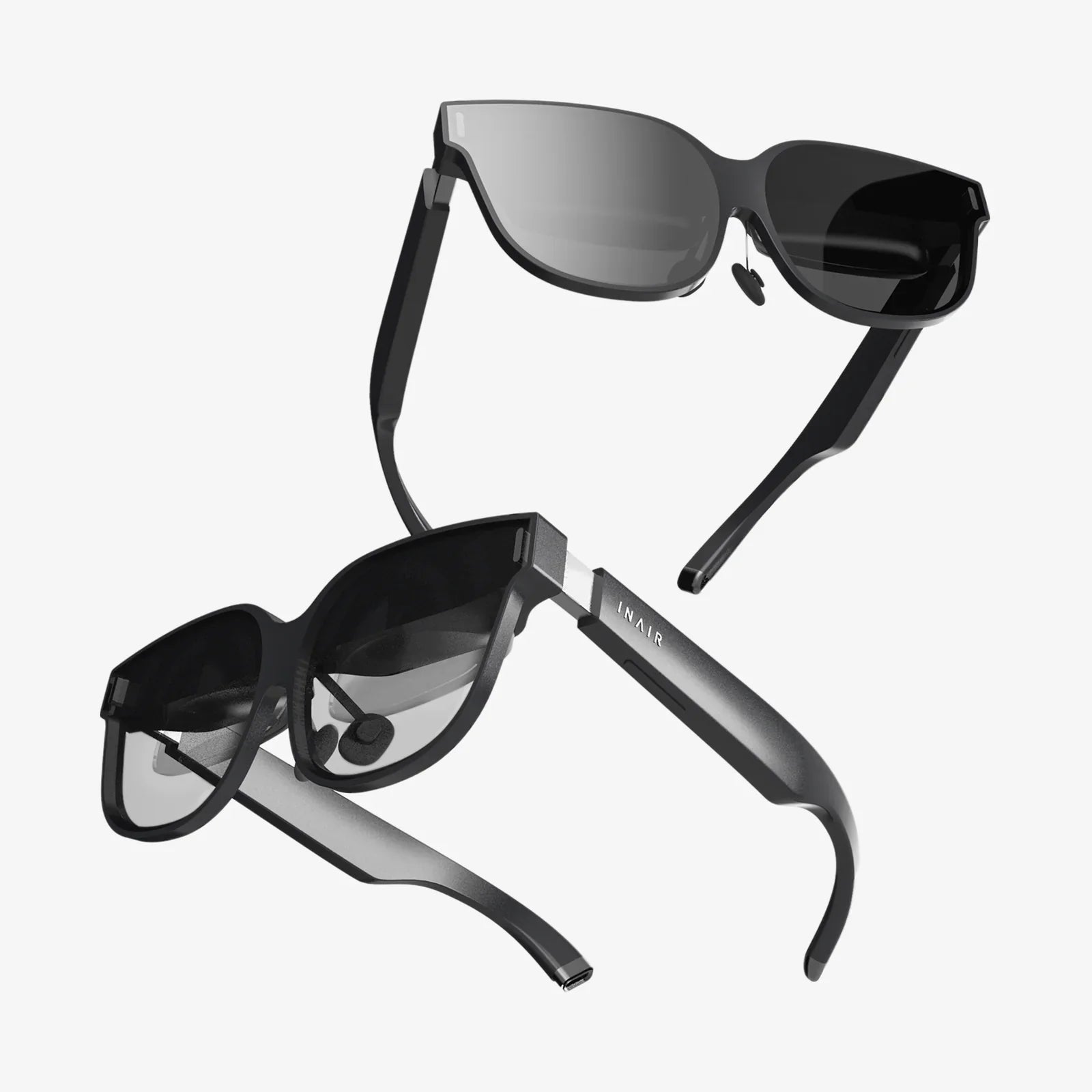
You’ve seen the headsets, you’ve heard the hype, and maybe you’ve even experienced a fleeting moment of digital wonder yourself. But have you ever stopped to ask, truly, what does VR mean? It’s a simple question with a profoundly complex answer, one that stretches far beyond gaming and goggles into the very future of human experience, connection, and understanding. This isn't just about technology; it's about a fundamental shift in how we interact with information, with each other, and with reality itself. Prepare to dive deep into the essence of virtual reality and discover why its meaning is still being written.
Deconstructing the Acronym: A Literal and Conceptual Foundation
At its most basic, VR means Virtual Reality. But to leave the definition at that would be a disservice to its depth. The term itself is a carefully chosen descriptor for an entire field of technological endeavor.
The word Virtual implies a near-reality, a state that is functionally or effectively true, even if not formally or physically so. In computing, a virtual machine is not a physical computer, but it behaves like one. Similarly, a virtual environment is not a physical place, but it can elicit the same perceptions and responses as one. It is a simulation, a convincing representation that exists in the realm of data and computation.
The word Reality is the anchor. It refers to the state of things as they actually exist, the sum of all that is real. In the context of VR, it is the target. The entire goal of the technology is to create a simulation that is so comprehensive, so immersive, and so convincing that the user's brain accepts it as a form of reality, even if only temporarily. It’s about crafting an experience that feels authentic and genuine within its own context.
Therefore, the phrase Virtual Reality means the creation of a simulated, interactive, and immersive environment that is designed to be perceived by the user as a non-digital reality. It is a gateway to a place that does not physically exist, yet feels real enough to walk through, touch, and believe in.
The Pillars of Presence: The Core Principles That Make VR Work
For an experience to truly mean something as Virtual Reality, it must achieve a state known as presence. Presence is the holy grail of VR—the undeniable, often euphoric feeling of "being there" in the virtual environment. This is not mere observation; it is transportation. Achieving presence relies on several interconnected technological and perceptual pillars.
1. Immersion: The Technical Trickery
Immersion is the objective measure of how effectively a VR system shuts out the physical world and replaces it with a digital one. It is achieved through a combination of hardware and software:
- Visual Fidelity: High-resolution displays with a wide field of view fill the user's peripheral vision, eliminating the "binoculars effect" and selling the illusion of a boundless world.
- Audio Engineering: Three-dimensional spatial audio is crucial. Hearing a sound that seems to come from directly behind you or above you is a powerful cue that reinforces the reality of the space.
- Tracking Precision: Low-latency, high-freedom tracking of the user's head and body movements is non-negotiable. When you turn your head, the virtual world must respond instantly and accurately. Any lag or jitter shatters the illusion immediately, causing disorientation or simulator sickness.
- Interaction: The ability to use your virtual hands to manipulate objects—to push, pull, throw, and grip—completes the feedback loop. Haptic feedback, from simple controller vibrations to more advanced force-feedback gloves, provides the tactile sensation that grounds you in the virtual space.
2. Interactivity: The Power of Agency
A static, 360-degree video is not true VR. It is a passive experience. What VR means is active participation. The virtual world must respond to the user's actions in a meaningful and consistent way. This is governed by the rules of its simulation—its physics, its logic, its cause and effect. If you press a virtual button, something must happen. If you pick up a virtual rock and throw it, it must follow a believable trajectory. This agency is what transforms a user from a spectator into an inhabitant.
3. Embodiment: The Virtual Self
A profound aspect of presence is embodiment—the sense of having a body within the virtual space. Seeing a pair of virtual hands that mirror your own movements, or a full avatar that represents you, powerfully reinforces the feeling that you are inside the world, not just looking at it. This virtual body becomes your agent, your means of existing and interacting within the simulation, and its design and responsiveness are critical to maintaining the illusion.
Beyond Entertainment: The Expansive Meaning of VR Across Industries
While consumer entertainment is the most visible application, the true meaning of VR is revealed in its transformative potential across nearly every professional field. Here, VR means safety, efficiency, and possibility.
VR Means Revolutionizing Education and Training
Imagine medical students practicing complex surgical procedures on virtual patients, making critical decisions without a single real-life risk. Aspiring mechanics can disassemble and reassemble the engine of a jet aircraft, with every part perfectly simulated, before ever touching a multi-million-dollar physical asset. History students can walk through ancient Rome, witnessing the construction of the Colosseum firsthand. VR means experiential learning, where the textbook becomes a world, and lessons are learned through doing rather than just reading.
VR Means Reinventing Design and Architecture
For architects and designers, VR means the end of the blueprint and the scale model. Clients and creators can now step inside a building before a single brick is laid. They can walk through hallways, assess sightlines, and experience the space at a 1:1 human scale, identifying potential design flaws and making emotional connections to the design that a 2D drawing could never facilitate. This is not just visualization; it is pre-construction, saving immense time and resources.
VR Means Advancing Healthcare and Therapy
Therapeutic applications of VR are among its most meaningful. It is being used to treat phobias through controlled, gradual exposure in a safe environment—a patient with a fear of heights can stand on a virtual ledge, and a therapist can control the scenario completely. It is used for physical rehabilitation, turning painful or repetitive exercises into engaging games. For patients dealing with chronic pain or the stress of hospitalization, VR can provide a calming escape to a peaceful beach or a serene forest, offering a powerful non-pharmacological tool for pain and anxiety management.
VR Means Connecting a Global Workforce
In the realm of remote work, VR means the potential to move beyond flat video calls into shared virtual workspaces. Colleagues from across the globe can meet as lifelike avatars around a virtual conference table, interact with 3D data models, and brainstorm on virtual whiteboards as if they were in the same room. This sense of shared presence can rebuild the spontaneous collaboration and social cohesion that is often lost in traditional remote work setups.
The Human and Philosophical Implications: A New Layer of Existence
As the technology matures, the question of what VR means becomes less about hardware and more about humanity. We are creating a new, persistent digital layer atop our physical reality, and this brings profound questions.
VR challenges our very definition of experience. Is a memory formed in a virtual world any less "real" than one formed in the physical world? The emotional impact—the fear from a virtual horror experience, the awe of standing on a virtual mountain peak, the connection felt with another person's avatar—is neurologically genuine. This blurs the line between what is physically real and what is virtually real, suggesting that reality may be more about conscious experience than about immutable physical matter.
It also raises questions about identity and connection. In a world where we can choose our appearance, our form, and even our physical laws, what does it mean to be "you"? Can deeper, more authentic connections be formed when we are freed from the biases and limitations of our physical bodies? Or does it risk further alienating us from the tangible world and the people in it? VR means we must grapple with these questions as we consciously design the future of human interaction.
The Future Meaning: From Virtual Reality to the Metaverse
The trajectory of VR points toward a future where it is not an isolated experience but a gateway—a fundamental interface for a broader digital existence often called the metaverse. In this context, VR means more than just a headset; it means a persistent, interconnected network of virtual spaces where people work, socialize, learn, and play.
This evolution will see VR technology become more seamless, with advancements in brain-computer interfaces, photorealistic graphics, and pervasive haptics. The goal is to reduce the friction between the user's intention and the virtual action until the technology itself fades into the background, leaving only the experience. In this future, VR won't be something you "use"; it will be a place you "go."
Imagine attending a live concert with friends from around the world, all of you feeling the same virtual crowd energy. Imagine exploring a digital twin of a city to plan its infrastructure, or visiting a historical event as it unfolds around you. This is the ultimate meaning VR is driving toward: not as a novelty, but as an integral platform for the next era of human civilization, adding a rich, experiential layer to our digital lives.
The meaning of VR is a story still unfolding, a technology whispering promises of worlds uncharted and connections unimagined. It’s the architect’s blueprint breathed into life, the surgeon’s first perfect incision, the student’s journey to the heart of a star. It’s the profound and unsettling question of where the digital self ends and the physical being begins. This isn't just about what you see through a lens; it's about the new realities we are building, together, and the incredible, terrifying, and beautiful possibilities that await on the other side of the headset. The door is open—what will you find when you step through?
Share:
Smart Devices Resolution: The Unseen Engine of Your Digital Life
Smart Devices How Affect People: The Unseen Revolution Reshaping Our Minds and Society