


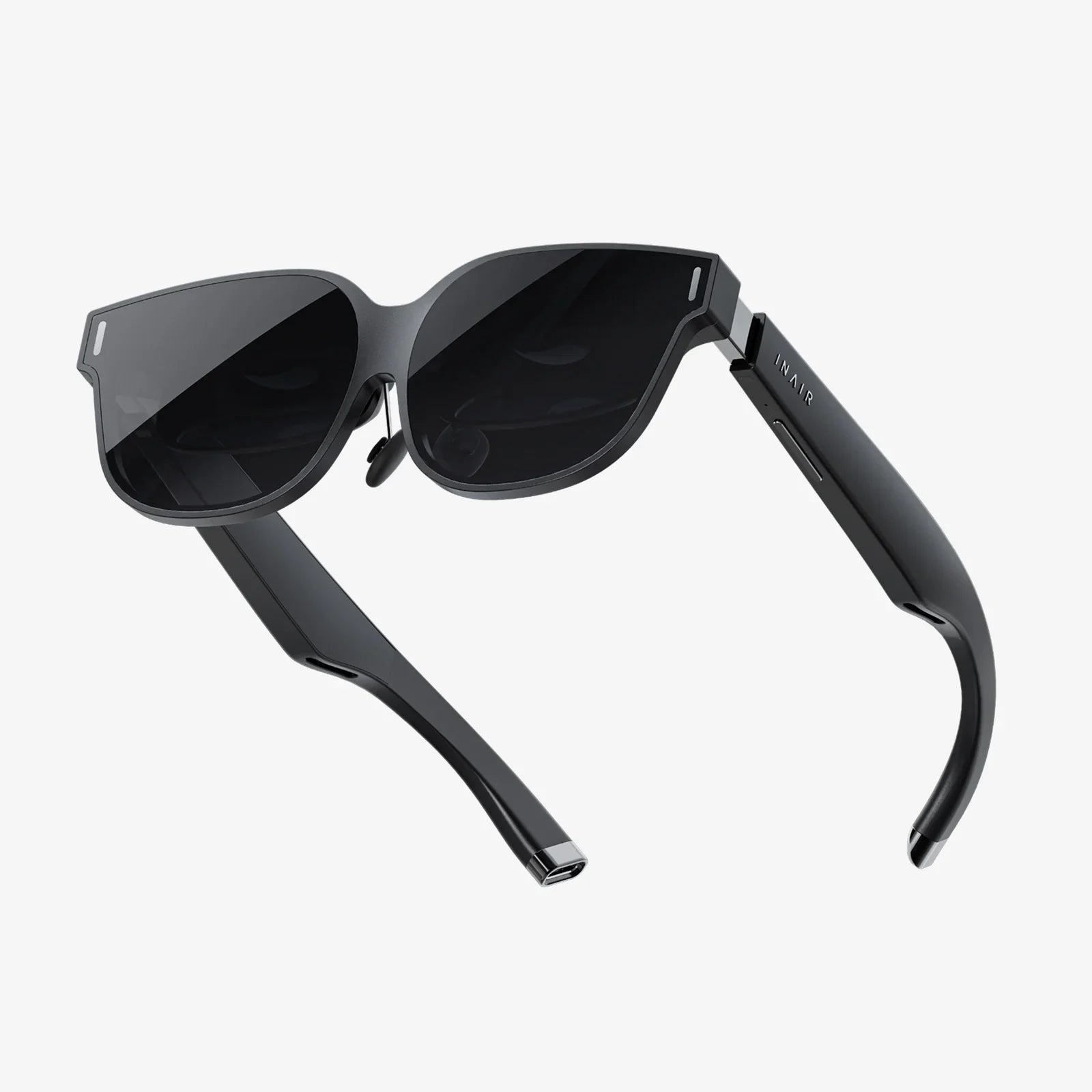
Imagine a world where information flows as freely as the air you breathe, where the boundary between the digital realm and physical reality dissolves into a seamless, intuitive experience. This is the promise of AI glasses, a technological leap that is quietly moving from the pages of science fiction into the palms of our hands and, more importantly, onto our faces. They represent not just a new gadget, but a fundamental shift in how we interact with technology, data, and each other. This comprehensive guide will pull back the curtain on this emerging technology, exploring its core functions, groundbreaking capabilities, and the profound implications it holds for our future.
The Core Concept: More Than Just Smart Glasses
At their most fundamental level, AI glasses are a wearable computer in the form of eyewear. But to dismiss them as merely smartphones for your face would be a significant underestimation. While early iterations of smart glasses focused on basic tasks like displaying notifications or recording video, the integration of sophisticated artificial intelligence is what truly defines this new category.
The magic lies in a combination of advanced hardware and powerful software. Typically, a pair of AI glasses is equipped with:
- Microphones: To capture voice commands and ambient sound.
- Speakers or Bone Conduction Transducers: To deliver audio privately to the user without obstructing their hearing.
- Cameras and Sensors: To see the world from the user's perspective, capturing images, depth, and motion.
- A Small Display: Often projected onto a lens (Augmented Reality) or presented as a small, discreet screen.
- A Processing Unit: Either onboard or connected to a companion device like a smartphone, which handles the complex AI computations.
It is the AI software—the neural networks and machine learning models—that breathes life into this hardware. This software enables the glasses to understand natural language, identify objects and people in real-time, translate text instantly, and generate contextual information, transforming raw data into actionable intelligence right before your eyes.
A Multitool for Your Senses: Key Capabilities and Functions
So, what do these devices actually do? The applications are vast and continually expanding, but they generally fall into several key functional categories.
1. Real-Time Information and Contextual Awareness
Imagine walking through a foreign city. You look at a restaurant, and instantly, reviews and its menu overlay your vision. You glance at a historical monument, and a summary of its significance appears. This is contextual awareness powered by AI. The glasses use their cameras and location data to understand what you are looking at and serve relevant information without you ever needing to search for it. This transforms every moment into a potential learning experience and empowers users with a superhuman level of situational awareness.
2. Seamless Translation and Communication
One of the most immediately impactful features is real-time translation. You can have a conversation with someone speaking a completely different language. As they speak, the AI transcribes and translates their words, displaying the subtitles in your field of view. Conversely, it can translate your spoken words for the other person. This also extends to text: look at a street sign, a menu, or a document in another language, and see it translated instantly. This function alone has the power to dismantle language barriers in business, travel, and human connection.
3. Advanced Photography and Videography
With cameras positioned at eye level, AI glasses offer a uniquely hands-free and immersive way to capture life's moments. The AI enhances this further through features like automatic framing, subject tracking, and intelligent editing. You can simply tell your glasses to take a photo or start recording a video, capturing your precise point of view without the intrusive barrier of a phone screen. This is invaluable for creators, journalists, and anyone who wants to document their experiences authentically.
4. Navigation and Spatial Awareness
Turn-by-turn navigation is elevated from a flat screen to the real world. Directional arrows and pathways can be superimposed onto the street in front of you, guiding you effortlessly to your destination. This is far more intuitive than constantly glancing down at a phone, especially when walking or cycling. Furthermore, for individuals who are blind or have low vision, AI glasses can act as a powerful assistive tool, audibly describing surroundings, identifying obstacles, and reading text aloud.
5. Productivity and Assistive Support
In professional settings, the potential is staggering. A technician can see a schematic overlaid on the machinery they are repairing. A surgeon can have vital patient statistics and imaging data visible during a procedure. A warehouse worker can see the most efficient picking route and item locations. The AI can also act as a personal assistant, summarizing meetings in real-time, managing your calendar, reading out important emails, and setting reminders—all accessible through simple voice commands without interrupting your workflow.
Beneath the Surface: The Technology That Makes It Work
The user experience is meant to be simple and magical, but it is enabled by a complex symphony of technologies. The core engine is a branch of AI called computer vision, which allows the glasses to interpret and understand visual data. This is combined with:
- Natural Language Processing (NLP): To understand and respond to voice commands conversationally.
- Machine Learning Models: Trained on massive datasets to accurately recognize millions of objects, scenes, and pieces of text.
- Augmented Reality (AR): The method of blending digital information with the user's environment in real-time.
- Edge Computing and Cloud AI: While some processing happens on the device (edge computing) for speed and privacy, more complex tasks are often offloaded to powerful cloud-based AI models, with the results streamed back to the glasses almost instantaneously.
The Inevitable Challenges: Privacy, Social Acceptance, and the Future
No transformative technology arrives without its set of challenges and ethical dilemmas. AI glasses, with their always-on cameras and microphones, sit at the epicenter of the privacy debate. The potential for surreptitious recording raises significant concerns about consent and surveillance. Manufacturers are addressing this with clear physical indicators like recording lights and designing systems that process data locally whenever possible. However, establishing strong social and legal norms around their use will be critical for widespread adoption.
Furthermore, the issue of social acceptance, often dubbed the "glasshole" problem, remains. Wearing technology that can record others can be perceived as antisocial or threatening. Overcoming this will require elegant, discreet design and a clear and transparent etiquette for use in public spaces.
Looking ahead, the future of AI glasses is one of miniaturization and integration. We can expect them to become as lightweight and socially acceptable as regular eyewear, with battery life lasting all day and displays becoming virtually indistinguishable from real life. They will evolve from being a separate device to a central hub in a larger ecosystem of Internet of Things (IoT) devices, controlling your smart home, your car, and your personal health data seamlessly.
The journey of AI glasses is just beginning. They are poised to redefine not only how we access information but how we perceive reality itself, offering a glimpse into a future where our digital and physical lives are no longer separate, but harmoniously intertwined.
The true power of AI glasses isn't in replacing your smartphone; it's in making you forget you ever needed one. They promise a world where you look up and engage with life, not down at a screen, all while having the sum of human knowledge and a powerful digital assistant effortlessly integrated into your perception. This isn't just a new product category—it's the next frontier of human-computer interaction, waiting to be explored one glance at a time.
Share:
Top AR VR Headsets 2025: The Ultimate Guide to Next-Gen Immersion
XR Glasses vs VR Headset: The Ultimate Showdown for Your Digital Future