


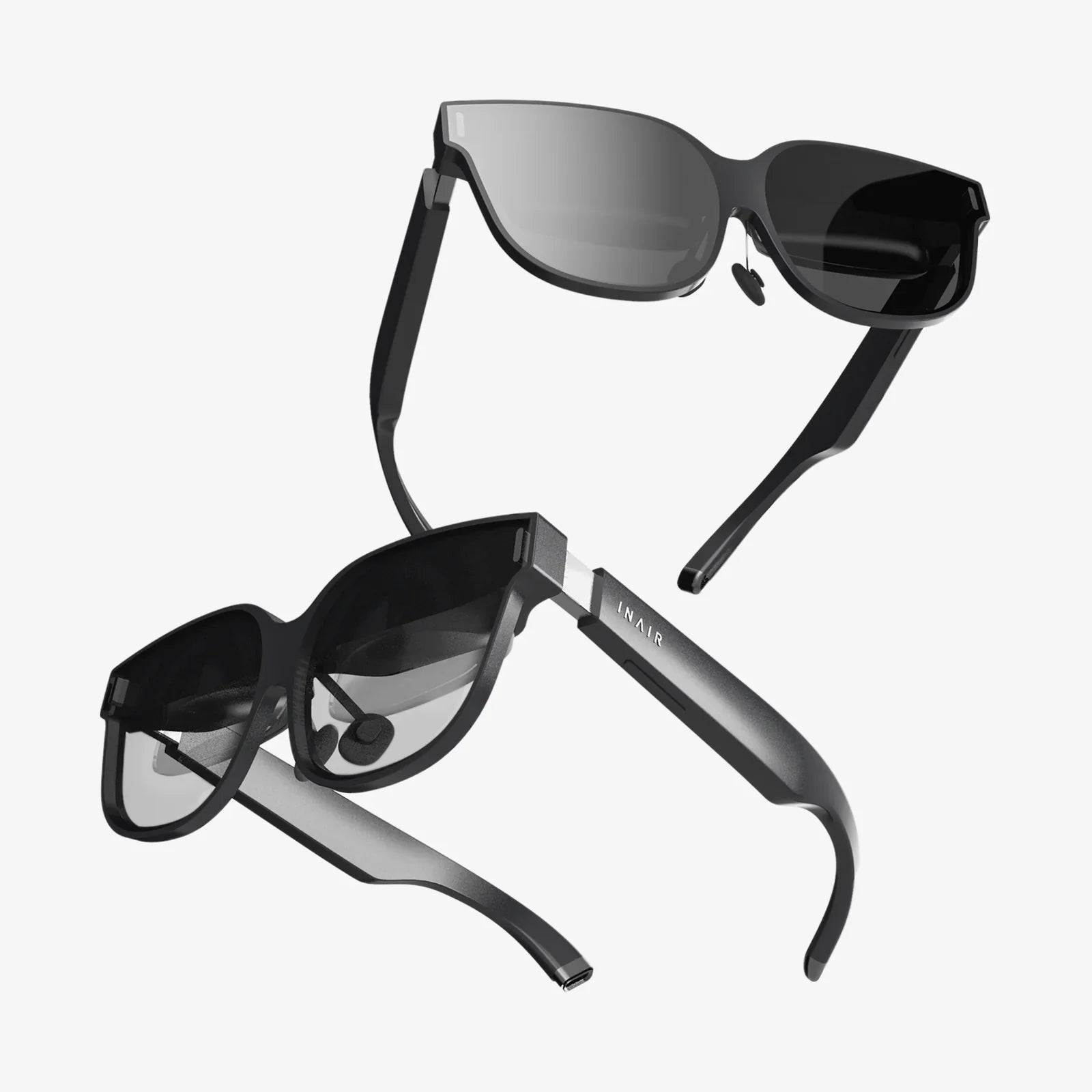
Imagine a world where information doesn't live on a screen in your pocket but is seamlessly woven into the fabric of your reality. Where language barriers dissolve before your eyes, where you never forget a name, and where the world around you becomes a dynamic, interactive canvas. This is not a distant science fiction fantasy; it is the emerging promise of artificial intelligence glasses, a device poised to redefine our relationship with technology and the world itself. The question on everyone's mind is simple yet profound: what do AI glasses actually do?
Beyond Novelties: The Core Functionality of AI Glasses
At their most fundamental level, AI glasses are a wearable computer for your face. They combine a sophisticated array of hardware—miniaturized cameras, microphones, speakers, sensors, and a transparent display—with powerful, cloud-connected artificial intelligence software. This synergy allows them to perceive the world you see, process that information in real-time, and present relevant data, insights, and digital objects directly into your field of vision. They are the physical embodiment of ambient computing, moving interactions away from a dedicated device and into your environment.
Real-Time Translation and Subtitling for the World
One of the most immediate and powerful applications is the breaking down of language barriers. Imagine walking through a foreign airport, and the signs, menus, and announcements automatically translate into your native language, overlaid right on top of the physical text. Or conversing with someone who speaks a different language, seeing their words translated as subtitles in real-time beneath their face, while your own words are translated for them through the glasses' speaker or a paired device. This isn't just about convenience; it's about fostering deeper human connection and understanding on a global scale, effectively making the entire world more accessible.
Enhanced Visual Assistance and Identification
AI glasses act as a superpower for your eyes, offering a layer of intelligent visual interpretation. For individuals with low vision, this technology can be life-changing. The glasses can identify and read aloud text from a book, a street sign, or a product label. They can describe scenes—"a brown dog is playing with a red ball in the park"—and even identify and announce the presence of people they recognize, helping to navigate social situations. For everyone else, this functionality extends to identifying plants, dog breeds, landmarks, and even providing detailed information about a painting in a museum or the specifications of a car you see on the street.
Augmented Navigation and Contextual Information
Forget looking down at your phone for turn-by-turn directions. AI glasses can project digital arrows and pathways onto the real world, guiding you to your destination while allowing you to keep your head up and stay aware of your surroundings. This augmented reality navigation can extend indoors, helping you find a specific product in a vast supermarket or the right gate in a complex conference center. Furthermore, they can provide a constant stream of contextual information. Look at a restaurant, and see its reviews and today's specials float beside it. Look at a historical building, and watch a timeline of its construction unfold next to it. The world becomes a hyperlinked, information-rich experience.
Hands-Free Productivity and Content Creation
In professional and personal settings, the ability to operate technology without using your hands is a significant advantage. AI glasses can record first-person perspective videos for training, tutorials, or simply capturing memories. They can transcribe meetings in real-time, display your notes or schematics while you work on a physical task, and allow you to control smart home devices with a voice command or a glance. For field technicians, surgeons, or engineers, this means access to crucial data and remote expert guidance without breaking focus or sterility.
The Engine Behind the Lenses: How AI Glasses Work
The magic of AI glasses is a complex dance of hardware and software. It begins with perception. Tiny, high-resolution cameras act as the device's eyes, continuously capturing the user's point of view. An array of microphones serves as its ears, picking up audio commands and ambient sounds. Inertial measurement units (IMUs), including accelerometers and gyroscopes, track head movement and orientation to understand where the user is looking.
This raw sensor data is then processed through several layers of artificial intelligence. On-device AI chips handle immediate, low-latency tasks like initial object detection and basic voice command processing. This is crucial for privacy and speed, ensuring that not every moment of your life is streamed to the cloud. For more complex tasks—like translating nuanced language, searching vast databases, or generating detailed descriptions—the data is securely encrypted and sent to powerful cloud-based AI models. These models, often leveraging large language models and complex computer vision algorithms, perform the heavy lifting and send the results back to the glasses in milliseconds.
Finally, the results are presented to the user. This is achieved through advanced display technology, typically either micro-LEDs projected onto waveguides within the lenses or using laser beam scanning to paint images directly onto the retina. The result is digital information that appears to float in the world at a comfortable distance, seamlessly integrated with reality. Bone conduction speakers or tiny directional speakers near the ears provide audio feedback without blocking environmental sounds, completing the immersive experience.
The Ripple Effect: Implications and Considerations
The widespread adoption of AI glasses will not be without its challenges and profound societal implications. The most pressing concern is, without a doubt, privacy. A device that is always-on and always-watching presents an unprecedented surveillance capability. The ethical collection, storage, and use of the vast amounts of visual and audio data these devices will capture must be addressed with robust, transparent policies and clear user controls. The concept of consent in public spaces will need to be redefined, as individuals may be recorded without their knowledge.
Furthermore, the constant overlay of digital information raises questions about attention and presence. Will we become more disconnected from the genuine, un-augmented experience of the world around us? Could information overload become a constant state? There is a risk of creating a new digital divide, not just in who can afford the technology, but in who can opt out of being constantly analyzed and identified by it.
On the positive side, the potential for enhanced accessibility is staggering. For the visually impaired, the hearing impaired, and those with cognitive conditions, AI glasses could serve as a powerful assistive technology, granting a level of independence and interaction with the world that was previously impossible. They could revolutionize fields like medicine, engineering, and education, providing experts with real-time data and remote collaboration tools that were once the stuff of dreams.
A Glimpse into the Future
The current generation of AI glasses is merely the beginning, a glimpse into a paradigm shift in human-computer interaction. As the technology matures, we can expect displays with wider fields of view and higher resolution, making digital objects indistinguishable from real ones. AI models will become faster, more efficient, and more intuitive, anticipating our needs before we even voice them. Battery technology will improve, allowing for all-day use, and the form factor will inevitably shrink towards the appearance of ordinary eyewear.
Future iterations may move beyond simple information display to full sensory augmentation, altering our perception of reality in more dramatic ways. They could highlight stress levels in people we talk to during a negotiation, visualize complex data sets in three dimensions for scientists, or allow us to rehearse a speech with a virtual audience. The line between the physical and digital worlds will become increasingly blurred, creating a new, hybrid reality for us to live, work, and play within.
The journey of AI glasses is just starting, and its destination is a world where technology doesn't demand our attention but enhances our perception. They promise to make us more knowledgeable, more connected, and more capable. The true answer to 'what do AI glasses do?' is that they have the potential to redefine human potential itself, offering a new lens—powered not just by glass, but by intelligence—through which to see and shape our world. The next time you put on a pair of glasses, you might not just be correcting your vision; you might be upgrading your reality.
Share:
Augmented Reality in Education: Transforming Classrooms from Passive to Participatory
Best XR Glasses: A Deep Dive into the Future of Immersive Technology