


You’ve seen the acronym HMD flash across tech blogs, whispered in gadget reviews, and splashed across conference banners. It’s a term that feels both familiar and elusive, a piece of jargon that the tech-savvy throw around with casual ease. But if you’ve ever paused and wondered, what does HMD stand for, really? you’re about to embark on a journey into one of the most pivotal technologies shaping our digital future. This isn't just about defining a term; it's about unlocking the gateway to new realities.
Decoding the Acronym: A Straightforward Answer
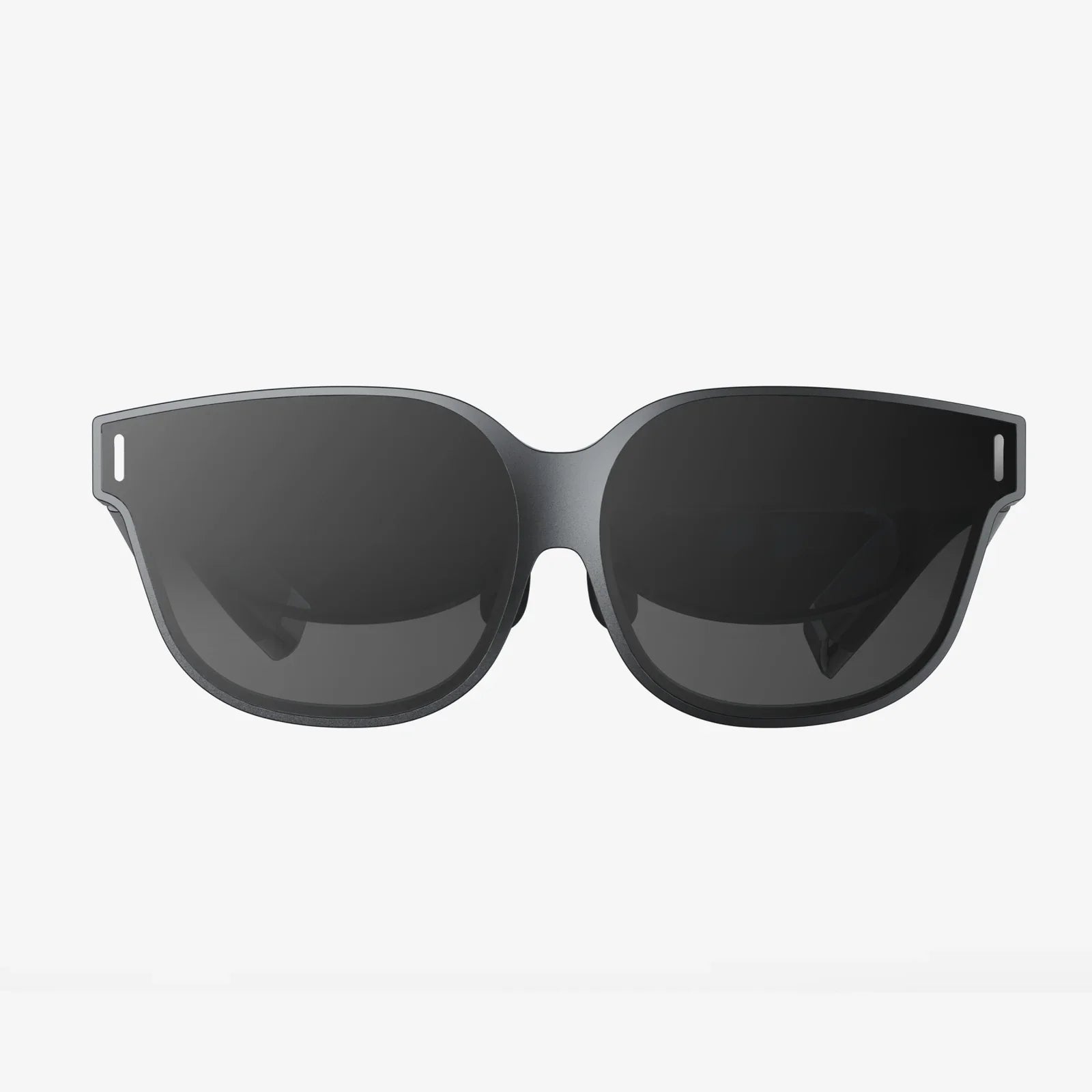
At its most fundamental level, HMD stands for Head-Mounted Display. This is the straightforward, technical definition. It describes any display device—a screen or set of screens—that is worn on the head or integrated into a helmet or a pair of glasses. The core function of an HMD is to place a visual interface directly in front of the user’s eyes, creating a personal, immersive viewing experience that is isolated from the external environment. Think of it as a cinema screen that moves with you, positioned mere inches from your retinas.
Beyond the Basics: The Anatomy of a Head-Mounted Display
Labeling an HMD as simply a "screen on your face" is a dramatic oversimplification. A modern HMD is a sophisticated symphony of components working in perfect harmony to create a believable and comfortable experience.
Core Components:
- Displays: These are the literal screens, one for each eye. They can be Liquid Crystal Displays (LCDs) or Organic Light-Emitting Diodes (OLEDs), prized for their deep blacks and high contrast ratios. Their resolution and refresh rate are paramount, directly impacting the clarity and smoothness of the virtual world, which is essential for preventing user discomfort.
- Lenses: Perhaps the most critical component, the lenses are placed between the user's eyes and the physical displays. Their job is to focus and reshape the light from the small, flat screens to fill the user’s entire field of view. They create the illusion that the images are coming from a distance, allowing the eye to focus comfortably rather than straining on a close-up screen. Different optical designs, like Fresnel lenses or the more advanced pancake lenses, are used to balance field of view, clarity, and the overall size and weight of the device.
-
Tracking Systems: For an HMD to be immersive, the virtual world must respond to your movements. This is achieved through a complex array of sensors:
- Inertial Measurement Units (IMUs): These include gyroscopes, accelerometers, and magnetometers that track the rotation and orientation of your head with extreme speed and precision.
- Outside-In Tracking: External sensors or cameras placed in the room track the position of the HMD itself, providing precise positional data.
- Inside-Out Tracking: Cameras mounted on the HMD itself look outward, scanning the real-world environment to track the device's position relative to the room. This is the modern standard for consumer devices, offering greater freedom of movement without external hardware.
- Audio: Spatial audio is a non-negotiable part of the immersion. Integrated headphones or speaker systems use advanced algorithms to simulate 3D sound, making a noise behind you actually sound like it's coming from behind. This auditory cue is as important as the visual one for selling the illusion.
- Compute Unit: The HMD itself may be a standalone device with its own onboard processor, memory, and battery (a standalone HMD), or it may act as a display for an external computer or gaming console (a tethered HMD), which handles the heavy lifting of rendering the complex graphics.
The Two Realms: VR HMD vs. AR HMD
The term HMD is a broad church, encompassing two distinct but related technological philosophies: Virtual Reality (VR) and Augmented Reality (AR). The type of experience is defined by the HMD's relationship with the real world.
Virtual Reality (VR) HMDs: The Total Escape
A VR headset is designed for full immersion. Its primary goal is to replace your reality entirely. These devices are typically fully opaque, blocking out all ambient light and visual cues from your physical surroundings. By completely encompassing your field of view with digital imagery and pairing it with spatial audio, a VR HMD transports you to a computer-generated world. Whether you're exploring a fantasy landscape, training on a virtual surgical table, or attending a concert with friends from across the globe, the physical world ceases to exist. The technology is a testament to the power of sensory substitution, convincing your brain that the only reality is the one being presented through the lenses.
Augmented Reality (AR) HMDs: The Digital Overlay
An AR headset, sometimes called a "see-through HMD," has a fundamentally different objective: to augment your reality. Instead of blocking the world, these devices allow you to see through them, either using camera feeds or transparent waveguides and semi-silvered mirrors. Digital information—text, graphics, 3D models—is then projected or superimposed onto this view of the real world. The classic example is the idea of having navigation arrows laid onto the road in front of you, a digital recipe floating next to your mixing bowl, or a mechanic seeing the internal components of a machine they are repairing. The HMD here acts as a contextual and interactive layer of intelligence on top of the user's natural environment.
A related term often used interchangeably with AR is Mixed Reality (MR). While AR can be a simple overlay (like a heads-up display in a car), MR implies a deeper level of interaction where digital objects can be occluded by real-world objects and understand the spatial geometry of the environment. The line between AR and MR is often blurred in modern HMDs.
A Brief History: From Sci-Fi to Your Living Room
The concept of the HMD is not a product of the 21st century. Its roots are deep, stretching back decades into the realms of military research, academia, and science fiction.
The first seeds were sown in the 1960s. Computer scientist Ivan Sutherland and his student Bob Sproull created "The Sword of Damocles," widely considered the first head-mounted display system. It was a terrifying and primitive device so heavy it had to be suspended from the ceiling. It could only display simple wireframe graphics, but it laid the foundational philosophy for all VR to come.
The 1980s and 1990s saw the concept enter the public consciousness, albeit clumsily. Jaron Lanier's company popularized the term "Virtual Reality" and developed the EyePhone HMD. The decade was filled with bulky, expensive, and low-fidelity attempts at consumer HMDs, often for arcade games. They were plagued by low resolution, laggy tracking (causing nausea), and a lack of compelling software. They were a fascinating glimpse of the future, but ultimately a commercial failure.
The modern renaissance began in the 2010s. The catalyst was the proliferation of smartphone technology. The mass production of high-resolution mobile displays, tiny precise IMUs, and powerful mobile processors suddenly provided all the core components for a capable HMD at a fraction of the previous cost. This led to innovations like using a smartphone itself as the display and brain of an HMD. This era culminated in the release of major consumer-grade VR HMDs, which finally offered the combination of high fidelity, accurate tracking, and accessible pricing needed to launch the category in earnest. The race was on.
More Than Games: The Expansive Applications of HMDs
While gaming and entertainment are the most visible and lucrative markets for HMDs, the technology's utility extends far beyond. The ability to simulate environments or overlay information has profound implications across countless industries.
- Enterprise & Training: This is one of the strongest use cases. Companies use VR HMDs to train employees in high-risk scenarios—firefighters, pilots, surgeons, and heavy machinery operators—without any real-world danger. They can practice procedures, walk through virtual prototypes of buildings or products, and conduct remote collaborative meetings as if they were in the same room. The cost savings and efficacy gains are enormous.
- Healthcare & Therapy: HMDs are revolutionizing patient care. They are used for exposure therapy to treat phobias and PTSD, allowing patients to confront triggers in a controlled, safe environment. They provide powerful distraction therapy for burn victims during painful wound care procedures. Medical students practice complex surgeries on virtual patients, and surgeons even use AR HMDs to view patient data, like MRI scans, superimposed on the patient during an operation.
- Design & Architecture: Architects and interior designers use VR HMDs to give clients immersive walkthroughs of unbuilt structures. They can experience the scale, lighting, and flow of a space long before the first brick is laid, enabling better design decisions and client approvals.
- Education: Imagine history students walking through ancient Rome, biology students exploring the human bloodstream, or astronomy students standing on the surface of Mars. HMDs offer unparalleled experiential learning, transforming abstract concepts into tangible experiences.
- Remote Work & Collaboration: The concept of the "metaverse" is largely built on HMDs. These devices enable a sense of "telepresence," where remote colleagues can meet in a shared virtual space, interacting with each other's avatars and digital whiteboards as if they were physically present, fostering a much deeper connection than a video call.
The Challenges and Considerations: The Road Ahead
Despite the incredible progress, the HMD industry still faces significant hurdles on its path to mass adoption.
- Comfort and Form Factor: Many devices are still too heavy, too hot, and too cumbersome for prolonged use. The quest for a pair of HMDs that are as comfortable and socially acceptable as a pair of sunglasses is the industry's holy grail. This requires breakthroughs in optics, battery technology, and materials science.
- Visual Fidelity: While resolution has improved dramatically, the visual experience is still not perfect. Issues like screen-door effect (seeing the gaps between pixels), limited field of view, and vergence-accommodation conflict (where your eyes struggle to focus on virtual objects at different depths) can break immersion and cause eye strain.
- User Interface & Input: How do you intuitively interact with a virtual world? Controllers are a good start, but the ideal is natural, gesture-based input using hand-tracking. This technology is advancing rapidly but is not yet flawless.
- Cost and Accessibility: High-end HMDs, especially those requiring a powerful computer, represent a significant financial investment. While standalone devices are more affordable, bringing the cost down further is key to reaching a global audience.
- Social and Ethical Questions: As with any transformative technology, HMDs raise important questions. How will prolonged immersion in virtual worlds affect our psychology and social skills? What are the privacy implications of AR HMDs that are constantly scanning and recording our environments? These are complex issues that society will need to grapple with.
The Future is on Your Head: What's Next for HMDs?
The evolution of the Head-Mounted Display is far from over. It is accelerating. We are moving towards devices that are lighter, smarter, and more integrated into our daily lives. Several key trends are emerging.
The next frontier is photorealistic avatars and eye-tracking. By accurately tracking your eyes and facial expressions, HMDs will be able to animate your digital avatar to reflect your real emotions, making virtual interactions startlingly genuine. This technology also enables foveated rendering, where the HMD renders only the area you are directly looking at in full detail, drastically reducing the processing power required.
We are also moving towards more contextually aware AR. Future AR HMDs will not just overlay information; they will understand what you are looking at and what you are trying to do, offering assistance before you even ask for it. They will act as a true augmented intelligence, seamlessly blending the digital and physical realms.
Ultimately, the goal is for the technology to fade away. The ideal HMD is one you forget you are wearing—an intuitive, always-on extension of your perception and cognition. It will become a standard computing platform, as ubiquitous as the smartphone is today, transforming how we work, learn, communicate, and experience reality itself.
So, the next time you see the term HMD, you'll see more than just an acronym. You'll see a portal. It represents the culmination of decades of innovation and the starting point for a future where the line between the digital and the physical is not just blurred, but beautifully and productively erased. The question is no longer just what HMD stands for, but what world it will help you stand in next.
Share:
Stuff for VR: The Ultimate Guide to Essential Gear and Immersive Accessories
VR Under $200: Your Ultimate Guide to Affordable Virtual Reality