


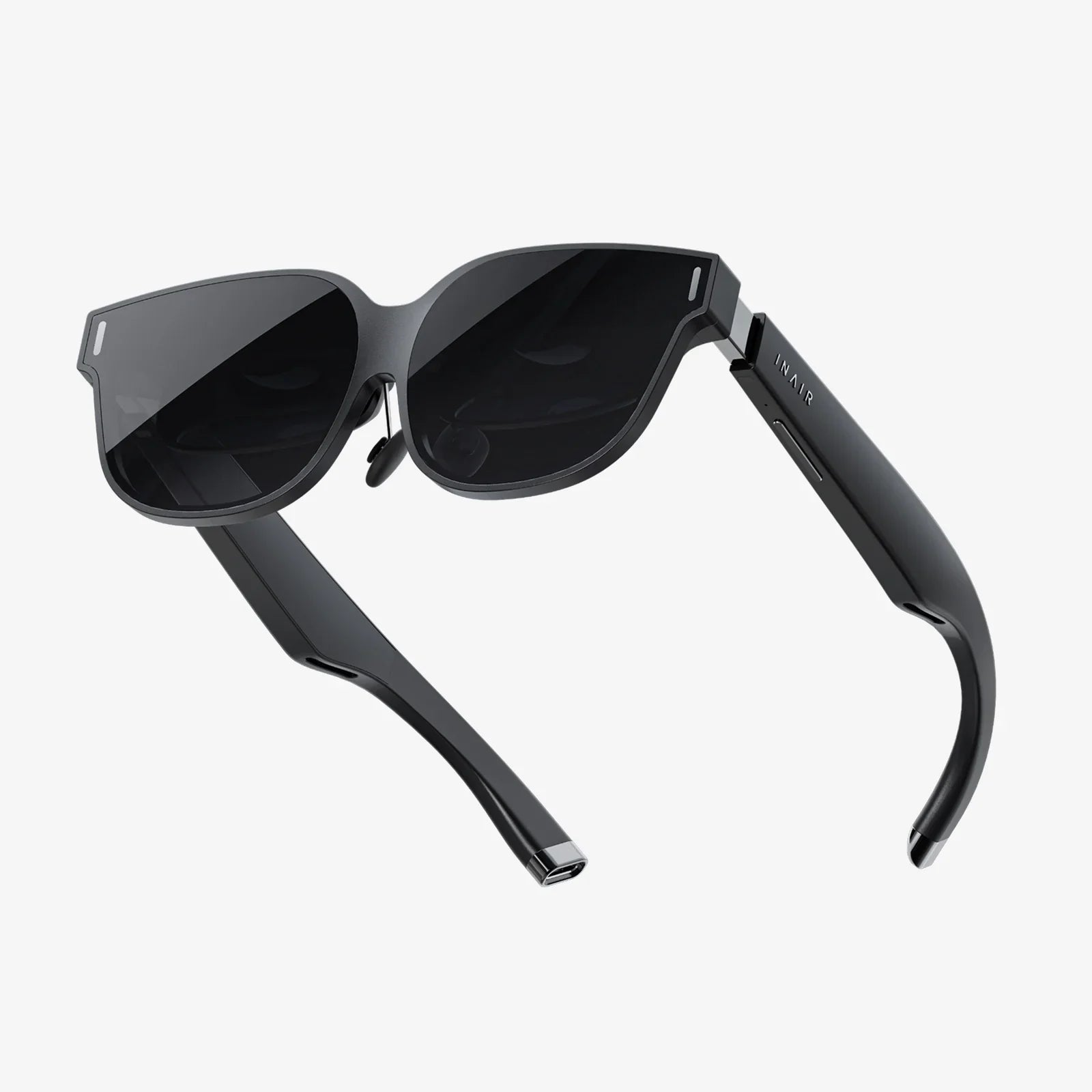
Imagine slipping on a headset and being instantly transported to another world—a world so convincing, so tactile, and so responsive that your brain accepts it as completely real. The digital breeze feels cool on your skin, the weight of a virtual object rests naturally in your palm, and your movements are translated with flawless, imperceptible latency. This is the ultimate promise of virtual reality, a promise that remains tantalizingly out of reach, held back not by a lack of imagination, but by a series of monumental engineering challenges that stand between today's compelling experiences and tomorrow's indistinguishable realities. The journey to this future is not one of incremental improvement, but a hard-fought battle against the fundamental limits of physics, computation, and human perception.
The Unresolved Quandary of Visual Fidelity and Realism
The human visual system is an incredibly sophisticated and demanding critic. For VR to achieve true photorealism, engineers must develop displays that far surpass the capabilities of any current consumer technology. The challenge is twofold: resolution and field of view. Current high-end headsets offer impressive clarity in a small central area, but the periphery often remains noticeably pixelated, a phenomenon known as the 'screen door effect'. To eliminate this, pixel densities must soar to beyond 60 pixels per degree (PPD), requiring resolutions in the range of 8K per eye or higher. However, cramming more pixels into a small display creates another problem: rendering them.
Driving these ultra-high-resolution panels at the requisite 90Hz or 120Hz refresh rates (necessary to avoid motion sickness and maintain immersion) generates a staggering data throughput, pushing the limits of current display interface standards. Furthermore, the field of view in most headsets is around 100 degrees, leaving users with a distinct tunnel-vision effect. Expanding this to a human-like 220 degrees without grotesquely increasing the size and weight of the headset is a formidable optical engineering puzzle, involving complex, multi-element lens systems and novel curved display technologies.
Conquering the Latency Dragon
Perhaps the most infamous enemy of VR comfort is latency—the delay between a user's movement and the corresponding update in the visual display. The human vestibular system is exquisitely sensitive to even the smallest discrepancies between physical movement and visual feedback; inconsistencies as low as 20 milliseconds can trigger debilitating simulator sickness in many users. The engineering challenge here is a system-wide problem, a relentless pursuit of optimization across the entire pipeline.
This includes the speed of positional tracking sensors (inside-out and outside-in), the computational time for the rendering engine to draw a new frame, the transmission time of that frame to the display, and the inherent response time of the display pixels themselves. Engineers are attacking this problem with a combination of advanced prediction algorithms that forecast head movement, foveated rendering (which leverages eye-tracking to render only the center of vision in high detail), and custom low-latency display panels. Taming the latency dragon is not about one breakthrough but about winning a thousand tiny battles across the hardware and software stack.
The Haptic Frontier: Engineering Touch and Feel
While sight and sound are well-trodden paths in VR, the sense of touch remains a largely unexplored frontier. True immersion is shattered the moment a user reaches out to touch a virtual stone wall and feels only empty air. Engineering convincing haptic feedback is a multi-disciplinary challenge involving materials science, mechanical engineering, and neuromorphic computing. Current consumer solutions, like simple rumble motors in controllers, are a crude approximation at best.
The next generation of haptics aims to replicate texture, pressure, temperature, and even the sensation of sharpness. This research is exploring technologies like ultrasonic arrays that create shapes and pressure fields in mid-air, actuated exoskeleton gloves that provide resistance to finger movement, and sophisticated thermal electric elements that can simulate warmth and cold. The ultimate goal is to develop wearable technology that is both powerful enough to generate convincing forces and subtle enough to be lightweight, unobtrusive, and energy-efficient. This requires innovations in micro-actuators, smart materials that change shape on demand, and low-power control systems.
Solving the Locomotion Paradox
How do you move through a vast virtual universe when your physical reality is confined to a small play area? This is the locomotion paradox, and it remains one of VR's most persistent and physically challenging problems. Teleportation, while effective against motion sickness, is immersion-breaking. Continuous artificial locomotion, where you use a thumbstick to move, often induces nausea in a significant portion of users—a deal-breaker for mass adoption.
Engineers are experimenting with radical hardware and software solutions to trick the brain into accepting virtual movement. Omnidirectional treadmills and robotic platforms allow users to walk or run in any direction while staying in place, but they are currently bulky, expensive, and mechanically complex machines. Other approaches involve clever use of redirected walking, where the virtual world is subtly manipulated to steer a user in physical circles within a limited space without them noticing. Solving this challenge requires a deep understanding of human biomechanics, vestibular physiology, and the development of entirely new categories of robotic and interactive hardware that can seamlessly blend real and virtual motion.
The Computational Burden and the Wireless Constraint
The graphical fidelity required for true immersion demands computational power that dwarfs today's best hardware. Rendering two high-resolution, high-frame-rate perspectives with complex lighting, physics, and interactions is a task that can bring even the most powerful computing systems to their knees. This creates a tension between performance and form factor. Do you tether the user to a monstrously powerful external computer, sacrificing freedom and accessibility? Or do you strive for a standalone, wireless headset, accepting a massive compromise in visual quality?
Cloud gaming and 5G/6G networks offer a potential future where heavy rendering is offloaded to remote servers, but this introduces its own engineering nightmare: maintaining ultra-low-latency, rock-solid wireless connectivity. A single dropped packet or a latency spike can instantly break presence and induce sickness. Engineers must develop incredibly efficient video compression codecs specifically designed for VR's split-frame rendering and create robust, high-bandwidth wireless protocols that can operate flawlessly in crowded signal environments. The path forward likely involves a hybrid approach, with on-device processing for critical low-latency tasks and cloud offloading for computationally intensive world-building.
Ergonomics and the Human Factor
All the technological wizardry is meaningless if the headset is too uncomfortable to wear for more than a few minutes. The engineering challenge of ergonomics is profound. A device must balance a multitude of conflicting requirements: it must be light enough to avoid neck strain, yet robust enough to house complex electronics and optics; it must be tight enough to prevent light leakage and maintain tracking accuracy, yet loose enough to be comfortable and accommodate a wide variety of head shapes and sizes; it must be sealed to contain heat-generating processors, yet ventilated enough to prevent lens fogging and user discomfort.
This requires intensive research in materials, such as advanced polymers and composites that are both strong and lightweight. It demands innovative industrial design for weight distribution, using counterweights and strategic component placement. It also involves the development of novel interface materials, like hygienic, moisture-wicking foam replacements that actively manage temperature and comfort. The goal is to make the hardware disappear on the user's head, a feat of human-centered engineering that is just as critical as any breakthrough in resolution or tracking.
The Invisible Architecture of Artificial Intelligence
Beyond the physical hardware, the next layer of immersion will be built on a foundation of sophisticated artificial intelligence. This presents a different kind of engineering challenge: creating software systems that can understand, predict, and interact in real-time. AI must power lifelike non-player characters (NPCs) that can converse and react with emotional intelligence, avoiding the uncanny valley. It must drive robust voice and gesture recognition, allowing for natural interaction without cumbersome controllers.
Furthermore, AI will be crucial for dynamic content generation, creating vast, ever-changing worlds that don't need to be painstakingly hand-crafted. This involves engineering neural networks that can generate coherent and compelling environments, objects, and stories on the fly, all while respecting the constraints of the hardware. The engineering challenge shifts from pure electrical and mechanical design to creating the low-latency, efficient inference engines that can run these complex AI models directly on the edge device or in seamless concert with the cloud.
Biometric Integration and Ethical Engineering
The final frontier of immersion may lie in closing the loop between the virtual world and the user's own body. Future headsets will likely incorporate a suite of biometric sensors—tracking pupil dilation, heart rate, galvanic skin response, and even brainwave patterns. This data could be used to adapt the experience in real-time, intensifying a horror game when it senses you're not scared enough or calming a meditation app when it detects stress.
However, this introduces the most critical engineering challenge of all: the ethical dimension. Engineering these systems requires building privacy and security into their very core from the ground up, a concept known as 'privacy by design'. How is this incredibly intimate biometric data stored, processed, and protected? Who has access to it? Engineers must work alongside ethicists and policymakers to create hardware and software architectures that are not only powerful and immersive but also secure, transparent, and respectful of user autonomy. This is perhaps the most complex challenge, as it moves beyond physics and into the realm of human values and trust.
The dream of a perfect virtual reality, one that engages all senses and feels utterly real, is not a single invention waiting to be discovered. It is a vast mosaic of interconnected engineering triumphs, each one a critical piece of the puzzle. From the quantum-level behavior of display pixels to the macro-level design of comfortable wearables, and from the lightning-fast calculations of a rendering engine to the thoughtful implementation of ethical AI, the path forward is one of collaboration and relentless innovation across every field of engineering. The companies and consortiums that tackle these challenges not as isolated problems but as a complex, interconnected system will be the ones who finally unlock the full, breathtaking potential of virtual reality and allow us to step through the looking glass for good.
Share:
Virtual Reality Definition in Simple Words: A Gateway to Digital Worlds
Haptic Devices Virtual Reality: The Unseen Force Shaping Our Digital Future