


Imagine a world where digital information doesn't just live on a screen but is seamlessly woven into the fabric of your everyday reality. A world where learning about history means watching a historical figure give a speech right on your street corner, where complex engine repairs are guided by floating arrows and diagrams overlaid on the machinery itself, and where your living room can transform into a fantastical game level or a virtual furniture showroom with a simple tap. This is not a distant sci-fi fantasy; it is the promise and power of Augmented Reality, an experience primarily unlocked through a feature now commonly found on billions of devices: AR Mode. This technology is rapidly moving from a novel gimmick to a transformative tool, and understanding what AR Mode is represents the first step into this new, enhanced layer of existence.
Beyond the Buzzword: Defining Augmented Reality
At its core, Augmented Reality (AR) is a technology that superimposes a computer-generated image, video, or 3D model onto a user's view of the real world. Unlike Virtual Reality (VR), which creates a completely immersive, digital environment that replaces the real world, AR enhances your real-world environment by adding digital elements to it. It's the difference between being transported to a completely digital concert (VR) and having a holographic band perform on your actual coffee table (AR). AR Mode, then, is the specific function or setting within a device's software or an application that activates this capability. It uses the device's camera, sensors, and processing power to perceive the environment and then correctly anchor and display the digital content within it.
The goal of AR is to create a cohesive experience where digital and physical objects coexist and interact in real-time. This creates a powerful and intuitive form of interaction, as it builds upon a reality we already understand, enriching it with contextually relevant information and experiences.
The Engine Behind the Magic: How AR Mode Works
The seemingly effortless magic of placing a digital dinosaur in your garden is powered by a sophisticated symphony of hardware and software working in perfect harmony. When you activate AR Mode, several key components spring into action:
1. Sensors and Cameras
This is the system's eyes. The primary camera captures the live video feed of your surroundings. However, modern AR relies on more than just a 2D image. It utilizes a suite of sensors, which may include:
- Depth-sensing cameras (Time-of-Flight sensors): These measure the distance to objects in the scene by calculating the time it takes for a laser or infrared light to bounce back, creating a detailed 3D map of the environment.
- LiDAR (Light Detection and Ranging): Similar to radar but using light, LiDAR scanners fire out millions of laser points to create a precise depth map of the surroundings, greatly improving the understanding of spatial geometry.
- Accelerometers and Gyroscopes: These track the device's movement, orientation, and rotation in space. This ensures that when you move your device, the digital object remains locked in its intended position and perspective, rather than sliding around unrealistically.
2. Processing and Computer Vision
This is the system's brain. The raw data from the sensors is fed into algorithms powered by computer vision. This is a field of artificial intelligence that enables computers to interpret and understand visual information from the world.
- Scene Recognition and Tracking: The software analyzes the camera feed to identify flat surfaces (like floors or tables), recognize distinct objects, or track specific images or markers. This process, often called simultaneous localization and mapping (SLAM), allows the device to understand its position relative to the environment and create anchor points for digital content.
- Occlusion: Advanced AR systems can perform occlusion, which is the ability for real-world objects to appear in front of digital ones. If you walk between your device and the digital dinosaur, you should see your body block the view of the dinosaur, making the illusion far more convincing.
3. Rendering and Display
This is the final act. Once the environment is understood and the digital object's position is calculated, the device's GPU renders the 3D model or effect. This is then composited—or layered—onto the live camera feed in real-time and displayed on your screen, creating the final, unified augmented experience.
A Spectrum of Augmentation: Different Types of AR
Not all AR experiences are created equal. The technology has evolved, leading to different methods of triggering and experiencing augmentation.
Marker-Based AR (Image Recognition)
This is one of the earliest and simplest forms of AR. It requires a specific visual object, known as a marker or target (like a QR code or a printed image), to activate the digital overlay. The device's camera recognizes this predefined pattern and uses it as an anchor point to display the digital content. It's highly reliable and precise but requires prior setup and the presence of the physical marker.
Markerless AR (Location-Based or Projection-Based)
This is the more common and advanced form of AR used in modern smartphones. It doesn't require a specific marker. Instead, it uses the device's sensors to understand the environment and place digital objects on surfaces like tables, floors, or walls. This includes:
- Surface Detection: Placing virtual furniture in your room or a game character on your driveway.
- Location-Based AR: Using GPS, compass, and accelerometer data to place information tied to a specific location. Think of an AR city guide that shows historical information when you point your phone at a landmark.
Superimposition-Based AR
This form replaces the original view of an object with an augmented view of that same object. It often involves object recognition, where the AR system identifies a specific object and then enhances or completely changes its appearance. A classic example is an AR manual that recognizes an engine part and then overlays step-by-step repair instructions directly onto it.
Projection-Based AR
This method projects artificial light onto physical surfaces, creating interactive displays. It can project a virtual keyboard onto a desk or turn any wall into a touchscreen. While often considered a separate category, it shares the core goal of augmenting the real world.
Transforming Industries: The Practical Applications of AR Mode
While social media filters and games brought AR into the mainstream, its utility extends far beyond entertainment. AR Mode is becoming a critical tool in numerous professional fields.
Retail and E-Commerce
The "try before you buy" dilemma of online shopping is being solved by AR. Applications now allow you to see how a new sofa would look in your living room, how a pair of glasses fits your face, or what a new shade of paint would do for your walls—all in real-time and at scale. This reduces purchase hesitation and product returns, revolutionizing the customer journey.
Education and Training
AR brings textbooks to life. Students can explore a human heart in 3D, watch historical events unfold on their desk, or interact with complex molecular structures. In corporate and industrial training, AR provides on-the-job guidance. Technicians can receive overlayed instructions while repairing equipment, and medical students can practice procedures on virtual patients superimposed onto mannequins, drastically reducing risk and cost.
Healthcare
Surgeons are using AR to overlay CT scans and MRI data onto a patient's body during procedures, providing an X-ray vision-like view that enhances precision. AR is also used for vein visualization, making it easier to find veins for injections, and for physical therapy, guiding patients through exercises with correct form.
Manufacturing and Maintenance
From design to assembly to maintenance, AR is streamlining industrial processes. Designers can visualize prototypes at full scale in a real-world context. Assembly line workers can see digital instructions overlaid on the components they are handling, reducing errors and training time. Field service technicians can access schematics and expert guidance hands-free, improving efficiency and safety.
Navigation
AR is set to change how we navigate. Instead of looking at a 2D map, AR navigation apps can overlay directional arrows, street names, and points of interest directly onto the live view of the street through your phone or, eventually, AR glasses. This creates a much more intuitive and context-rich guidance system.
The Future is Augmented: Where AR Mode is Headed
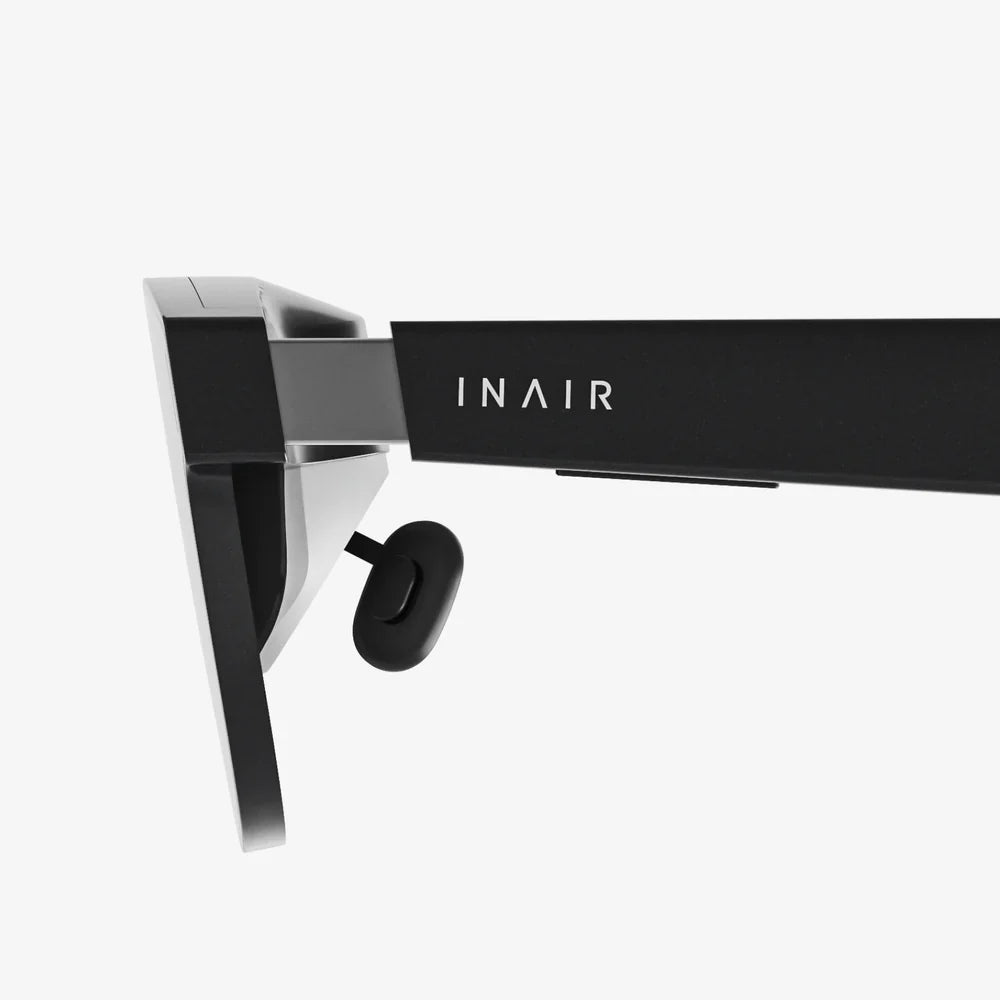
The current smartphone-based AR is just the beginning. The next major leap will be towards wearable AR, specifically smart glasses. Companies are racing to develop lightweight, stylish glasses that can project high-quality, persistent AR imagery directly onto the user's retina, freeing them from the need to hold up a phone. This shift towards always-available, contextual computing—often called the "Spatial Web" or "Web 3.0"—will further blur the line between the digital and physical worlds.
Advancements in AI and 5G connectivity will supercharge this evolution. AI will make object and scene recognition instantaneous and incredibly accurate, while 5G's high bandwidth and low latency will allow for complex rendering to be processed in the cloud and streamed seamlessly to devices, making them more powerful and efficient.
We are moving towards a future where AR interfaces become the primary way we interact with digital information. Checking the weather might involve glancing at a virtual forecast hovering by your window. Getting a notification could mean a subtle icon appearing in your periphery. The potential for reshaping communication, work, and social interaction is boundless.
You've already glimpsed its potential through playful filters and immersive games, but this is merely the tip of the iceberg. The true power of AR Mode lies in its ability to become an invisible layer of intelligence over our world, enhancing our abilities, streamlining our tasks, and unlocking new forms of creativity and connection. The device in your pocket is a key to this new reality—all you have to do is open your camera, tap that AR Mode button, and take your first step into a world where anything is possible.
Share:
Best AI Hardware: The Engines Powering the Intelligent Revolution
AI Translator Glasses: The Future of Communication is Here and It's Wearable