


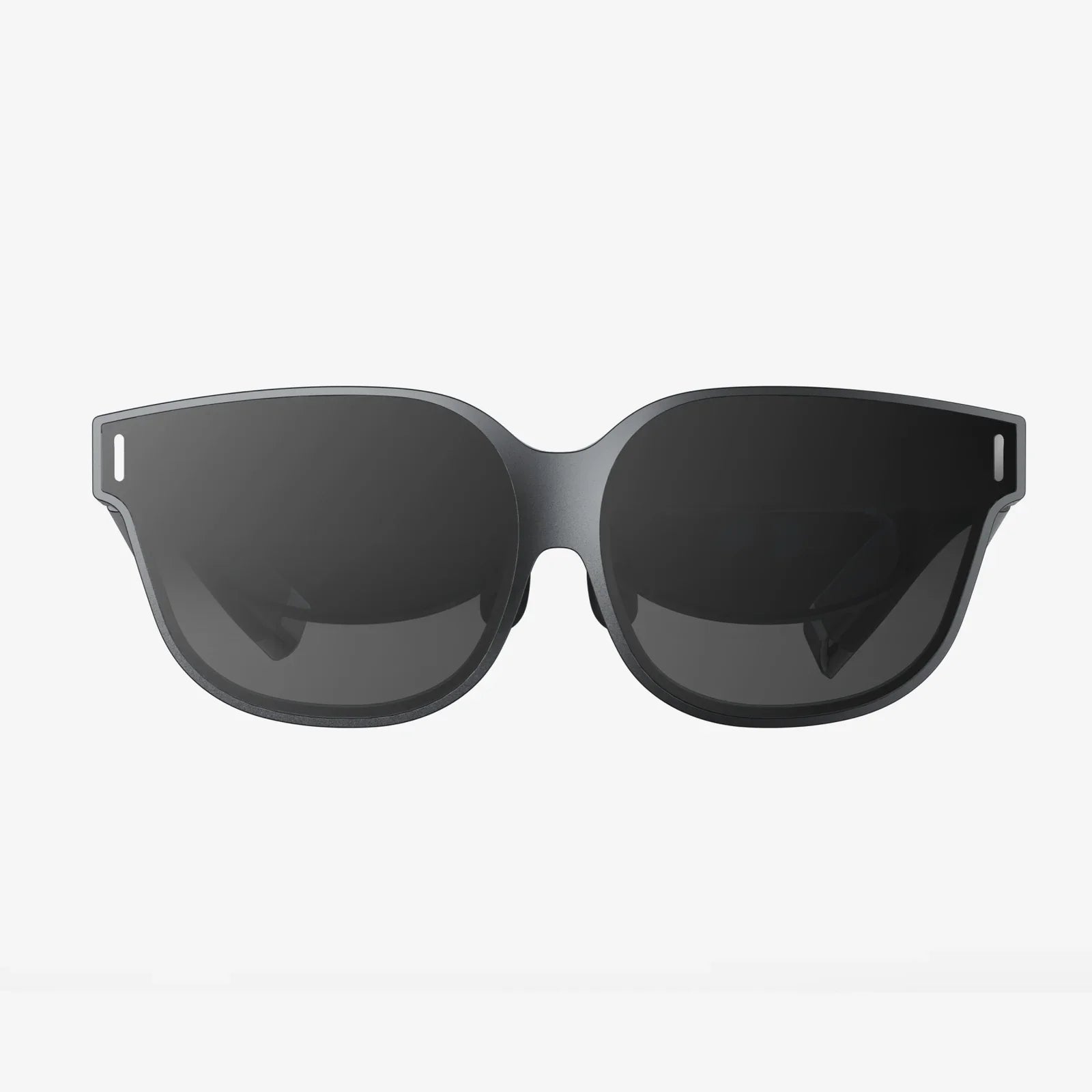
Imagine putting on a headset and instantly being transported. One moment you're in your living room, and the next, you're standing on the surface of Mars, watching two moons hang in a rusty sky. You're walking through the ancient Roman Forum, the marble columns towering around you, the sounds of a bustling marketplace filling your ears. You're inside the human body, navigating past pulsing red and white blood cells as if you're the star of a sci-fi movie. This isn't magic or a distant dream from a science fiction novel. This is the power and promise of Virtual Reality, and it's available right now. But what exactly is it? If you've ever been curious but found the technical jargon intimidating, you're in the right place. We're going to demystify this incredible technology in the simplest words possible.
The Simplest Explanation: A Convincing Dream
In the simplest words, virtual reality (VR) is a computer-generated simulation of a three-dimensional environment that you can interact with in a seemingly real way. Think of it as the ultimate illusion. It's a fully digital world that you can step inside, look around, and explore. The key to this illusion is something called immersion. A good VR experience is so convincing that your brain accepts it as real, making you forget about your actual physical surroundings and focus entirely on the digital world.
It’s like the difference between watching a documentary about swimming and actually jumping into the ocean. One gives you information; the other gives you an experience. VR aims for the experience. It doesn't just show you a new world; it makes you feel present within it.
The Magic Trick: How VR Tricks Your Brain
Creating this feeling of "being there" – known as presence – isn't simple magic. It's a carefully engineered trick that plays on your senses, primarily your vision and hearing.
1. Sight: The 3D View
Your two eyes are spaced apart, so each one sees a slightly different view of the world. Your brain combines these two images to create the perception of depth—the ability to tell how far away something is. A standard movie or TV screen shows the same image to both eyes. VR headsets have two small screens, one for each eye. Each screen shows a slightly different image, mimicking exactly how your eyes work in the real world. This stereoscopic vision is the foundation of the 3D effect in VR, making objects have volume and space have depth.
2. Movement: Tracking Your Every Move
If you turned your head in a VR world and the view didn't change instantly, the illusion would shatter immediately. You'd feel sick, and the experience would be ruined. This is where head tracking comes in. Sensors in the headset constantly monitor how you move your head—up, down, left, right, tilting, and even leaning. The computer then adjusts the images on the screens in real-time to match your perspective. This technology is so fast and precise that it feels perfectly natural, reinforcing the feeling that you are truly looking around a real space.
3. Sound: Hearing in 3D
Sound is just as important as sight for immersion. In the real world, you can tell if a sound is coming from behind you, above you, or to your left, based on tiny differences in when the sound reaches each ear and how it echoes around your outer ear. VR uses 3D spatial audio to replicate this. If a virtual bee is buzzing around your head in a VR experience, the sound will realistically move from one ear to the other as it circles you, making the digital world feel tangibly real.
4. Interaction: Your Virtual Hands
What good is being in a new world if you can't touch anything? This is where controllers come in. Most VR systems include handheld controllers that are also tracked by the system. These become your virtual hands. You can see digital representations of them in the VR world. You can push buttons, pick up objects, swing a sword, or paint a picture. More advanced systems can even track your individual fingers, allowing for gestures like pointing or giving a thumbs-up, making interactions feel incredibly natural.
Not All Virtual Worlds Are Created Equal: Types of VR
"Virtual Reality" is a broad term that covers several different levels of immersion and technology.
Fully-Immersive VR
This is what most people picture when they think of VR. It involves a powerful computer, a high-quality headset that completely covers your eyes, and motion-tracking controllers. This setup offers the highest level of immersion, making you feel truly transported to another place. It's used for high-end gaming, professional training simulations, and detailed architectural walkthroughs.
Standalone VR
These are all-in-one headsets that have the computer, screens, and sensors built directly into the device. There are no wires connecting to a separate PC. While they might be slightly less powerful than fully-immersive setups, their convenience, affordability, and lack of cables have made VR accessible to millions of new users. They offer a fantastic and deeply immersive experience.
Mobile VR (Smartphone VR)
This was an early, simpler form of VR. It involved slotting a smartphone into a holder (often made of cardboard or plastic) that you wore on your head like goggles. The phone's screen would display the VR world, and its sensors would handle the head tracking. While a great and cheap introduction to the concept, the experience was less immersive and interactive than the other types and has largely been phased out by standalone headsets.
Non-Immersive VR
This might sound like a contradiction, but it's actually the most common form of virtual environment. Have you ever played a computer game on a monitor where you control a character in a 3D world? That's a non-immersive virtual reality. You are interacting with a virtual world, but you are not immersed in it—you're still very much aware of your desk, your room, and your monitor. The line between a detailed video game and VR can be blurry, with the key difference being the level of immersion.
Beyond Games: Where VR Is Changing Our World
While gaming is a massive and exciting application, the uses for VR extend far beyond entertainment. Its core ability to simulate any environment safely and repeatedly makes it a powerful tool across many industries.
Education: The Ultimate Field Trip
Imagine history class where students can don headsets and explore ancient Egypt at the peak of its power. Biology students can take a journey through the bloodstream. Astronomy classes can witness the birth of a star. VR turns abstract concepts into unforgettable experiences, boosting engagement and retention. Medical students can practice complex surgical procedures on virtual patients countless times without any risk, gaining valuable muscle memory and confidence before ever touching a real person.
Healthcare: Healing and Therapy
Therapists are using VR to treat phobias and anxiety disorders. A patient with a fear of heights can gradually and safely experience being on a tall building from the security of their therapist's office. Patients recovering from strokes or injuries can use VR games for physical therapy, making repetitive exercises more engaging. VR is even used as a powerful distraction tool for patients suffering from severe burn pain during wound care.
Design and Architecture
Architects and designers no longer have to rely on blueprints and 3D models on a screen. They can build a virtual version of a building or product and step inside it before a single brick is laid or a part is manufactured. They can check for design flaws, experience the sightlines and flow of a space, and show clients exactly what the final result will feel like, not just what it will look like.
Social Connection: Meeting in Virtual Spaces
VR is evolving into a new platform for social interaction. Platforms exist where people can meet up as lifelike avatars. You can play games, watch movies, attend virtual concerts, or just hang out and chat with friends from across the globe. It creates a powerful sense of "shared presence," as if you are all in the same room together, making digital communication feel much more human and connected.
Remote Work and Training
Companies with employees and facilities spread across the world are using VR for meetings and training. Instead of a flat video call, team members can meet in a virtual boardroom. Factory workers can be trained on expensive, complex machinery in VR first, eliminating the risk of damage and the cost of taking equipment offline for training. This has become an invaluable tool for global collaboration.
The Human Side: The Challenges and The Future
Like any powerful technology, VR comes with its own set of challenges. Some people experience motion sickness if the virtual movement doesn't perfectly match their physical sensations—a disconnect often called "simulator sickness." There are also concerns about spending too much time in virtual worlds and how that might impact our real-world social relationships and physical activity. Furthermore, as these digital worlds become more realistic, questions about privacy, data security, and ethical behavior within them become increasingly important.
Looking ahead, the technology is only getting better. Headsets are becoming lighter, more comfortable, and with higher-resolution displays that eliminate the "screen door effect." Haptic feedback suits and gloves are being developed to let you feel virtual objects. The line between the virtual and the real will continue to blur, potentially leading to a future where VR is seamlessly integrated into our daily lives for work, play, and connection.
The door to countless new worlds is now open, waiting for you to take that first step. This beginner's guide has given you the key—a simple understanding of the magic behind the headset. The next move is yours. Whether you choose to explore the depths of the ocean, the far reaches of space, or simply a new way to connect with others, virtual reality is no longer a complex technical concept. It's an experience, an adventure, and a new lens through which to see the boundless potential of human imagination. Your journey into the digital universe is just beginning.
Share:
Virtual Reality Goggles: Peering Into the Future of Human Experience
Best Mobile Office: The Ultimate Guide to Unlocking Productivity Anywhere