


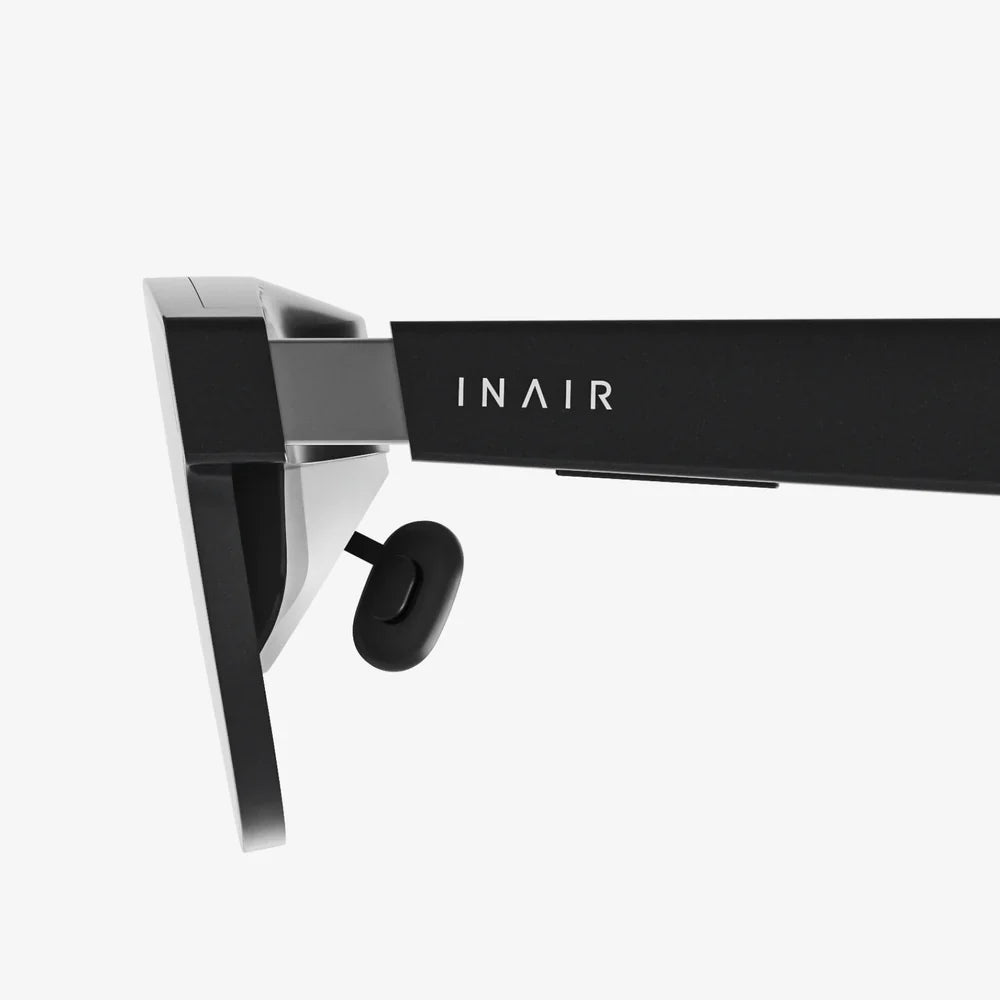
You've seen the futuristic concept videos and heard the promises of a world where digital information seamlessly blends with reality. Now, you're ready to step into that world and invest in your first pair of smart glasses. But with a rapidly growing market and a dizzying array of technical jargon, the question isn't just which model to choose, but what to look for in smart glasses specs to ensure your investment doesn't become a frustrating paperweight. The right specifications are the difference between a clumsy gadget and a transformative tool that enhances your daily life. This guide will demystify the key specifications, cutting through the marketing hype to give you the knowledge you need to find the perfect pair.
The Foundation: Display Technology and Visual Experience
This is arguably the most critical aspect of any smart glasses experience. How digital content is projected into your field of vision defines the entire product. There are several competing technologies, each with its own strengths and trade-offs.
Optical Waveguides and Micro-LED Projectors
Most high-end smart glasses utilize a combination of micro-LED projectors and optical waveguides. A tiny projector, often embedded in the arm of the glasses, beams light onto a transparent lens etched with microscopic patterns (the waveguide). This pattern guides the light directly into your eye, creating the illusion that the image is floating in space in front of you.
- Brightness (Nits): Measured in nits, brightness is non-negotiable for outdoor use. A dim display will be completely washed out in sunlight. Look for specifications indicating high nit levels (often 1000 nits or more) for clear visibility in all lighting conditions.
- Resolution and Field of View (FoV): These two specs are deeply intertwined. Resolution (e.g., 1920x1080) determines the sharpness of the image. Field of View, measured diagonally in degrees, determines how large the virtual screen appears in your vision. A larger FoV (e.g., 40-50 degrees) is more immersive but is technologically harder and more expensive to achieve. A small FoV can feel like looking through a tiny, postage-stamp-sized window.
- Color Depth and Contrast: A full RGB color spectrum is essential for a rich, vibrant display that doesn't feel like a monochrome relic from the past. High contrast ratio ensures text is crisp and legible against any background.
Other Display Types
Some older or more niche models might use different technologies like Liquid Crystal on Silicon (LCoS) or Digital Light Processing (DLP). While these can be effective, waveguide-based systems are generally considered the superior and more advanced method for consumer-grade smart glasses, offering better transparency and a more compact form factor.
The Brain: Processing Power and Connectivity
Smart glasses are, at their core, wearable computers. Their internal hardware dictates how smoothly they run, what apps they can support, and how they connect to your digital ecosystem.
System on a Chip (SoC)
The central processor is the engine of the device. While you won't see the same detailed CPU specs as for a smartphone, the presence of a capable, modern SoC is crucial. It handles everything from rendering graphics for the display to running AI algorithms for voice commands and translation. Look for mentions of a "custom" or "dedicated" processor; this often indicates a chip designed specifically for the unique thermal and power constraints of glasses, which is preferable to a repurposed mobile chip that may overheat or drain the battery quickly.
Memory (RAM) and Storage
RAM allows the glasses to multitask efficiently. More RAM means you can run multiple apps, switch between tasks, and have a generally smoother experience without lag. 4GB is a decent starting point for modern devices. Internal storage is needed for caching data, storing offline content like music or maps, and potentially installing apps. 32GB is a common baseline.
Connectivity Suite
Seamless connection to your other devices is paramount.
- Bluetooth: Essential for pairing with your smartphone for calls, audio, and using your phone's data connection. Bluetooth 5.0 or higher is ideal for better range and lower power consumption.
- Wi-Fi: Allows the glasses to connect directly to the internet for faster downloads, updates, and streaming, independent of your phone. Dual-band Wi-Fi (2.4GHz and 5GHz) support is a plus.
- GPS: Built-in GPS enables accurate location tracking for navigation and fitness apps without relying on your phone's GPS, saving your phone's battery.
Powering Your Day: Battery Life and Management
There is no faster way to break immersion than a "low battery" warning. Battery technology is one of the biggest challenges for wearable makers.
- Battery Capacity: Often listed in milliamp-hours (mAh), this indicates the total energy stored. However, this number is less useful on its own. Pay far more attention to the manufacturer's stated battery life.
- Estimated Battery Life: This is the key metric. It should be broken down by usage (e.g., "up to 4 hours of video playback," "up to 6 hours of typical use," "up to 48 hours in standby"). Be skeptical of "all-day" claims unless they are clearly defined. Consider your typical usage—will you be using them for two-hour bursts or a full eight-hour workday?
- Charging Solutions: How do you recharge? A proprietary magnetic charging cable is common. Look for fast-charging capabilities (e.g., "60% charge in 30 minutes") which can be a lifesaver. Some designs incorporate the battery into the arms, while others use an external battery "pod" that clips to your clothing or goes in a pocket, allowing for hot-swapping or a longer total runtime.
Hearing the Future: Audio Performance
Many smart glasses forgo traditional headphones in favor of more open audio solutions that allow you to hear your surroundings—a critical feature for safety and awareness.
Bone Conduction and Open-Ear Speakers
Most glasses use tiny speakers built into the arms that beam sound directly into your ear canal. The quality of these speakers varies wildly.
- Clarity and Bass: Good speakers should provide clear, intelligible audio for calls and podcasts. Bass response is naturally limited by the form factor, but some models manage it better than others.
- Audio Leakage: A major consideration. Poorly designed speakers will broadcast your audio to everyone around you in quiet environments like an office or library. Look for models that promote "directed" or "personal" sound to minimize this.
- Microphone Array: For voice commands and calls, clear audio input is vital. Multiple microphones use beamforming technology to isolate your voice and filter out background noise, wind, and chatter, ensuring you are heard clearly on the other end of a call.
The Human Interface: Sensors and Input Methods
How do you interact with a screen that's floating in front of your face? This is a unique challenge that manufacturers solve in different ways.
Sensor Suite
A robust array of sensors enables context-aware computing.
- Accelerometer & Gyroscope: Track your head movements for interactive games or for stabilizing UI elements in your view.
- Ambient Light Sensor: Automatically adjusts display brightness to suit your environment, saving battery and improving readability.
- Camera: If present, the camera's megapixel count is less important than its utility for tasks like photography, video recording, scanning QR codes, or enabling AR experiences that recognize the world around you. Privacy controls for the camera are an absolute must.
Control Schemes
You'll primarily interact with your glasses through:
- Voice Assistant: The most natural hands-free method. The quality of the built-in voice AI and its responsiveness is crucial.
- Touchpad: A small, discreet touch-sensitive surface on the temple allows for swipes and taps to control volume, skip tracks, or dismiss notifications.
- Button: A simple physical button for power and basic controls is often included as a reliable backup.
Form Meets Function: Design, Fit, and Prescription Compatibility
Specs are useless if you don't want to wear the glasses. The design must be comfortable, durable, and socially acceptable.
- Weight: Perhaps the single most important comfort factor. Heavy glasses cause fatigue and pressure points. Aim for models under 50 grams for all-day comfort.
- Build Quality and Materials: Are the frames made from flexible, durable materials like TR-90 nylon or titanium? Are the hinges robust?
- Interchangeable Lenses: Can you swap out the standard lenses for prescription lenses, sunglasses, or blue-light-filtering lenses? This is a critical feature for those who need vision correction. Partnering with a major optical lens provider is a strong positive sign.
- IP Rating: An Ingress Protection rating (e.g., IP54) tells you if the glasses are protected against dust and sweat. This is essential for use during exercise or in light rain.
The Intangible Ecosystem: Software and Privacy
The hardware is only half the story. The software and services are what bring the device to life.
- Operating System and App Ecosystem: Is it a closed system that only works with proprietary apps, or is there a developer SDK that promises a future with third-party apps? A healthy app ecosystem dramatically increases the long-term value of your glasses.
- Update Policy: Does the manufacturer have a track record of providing regular software updates that add new features and, crucially, security patches?
- Data and Privacy: Smart glasses with cameras and microphones are privacy-sensitive devices. Scrutinize the company's privacy policy. How is your data collected? Where is it processed (on the device is best)? How is it stored? Can you disable the cameras and mics with a physical switch? Your right to privacy is a non-negotiable specification.
Armed with this knowledge, you are no longer at the mercy of flashy marketing campaigns. You can look at a spec sheet and understand the real-world implications of a processor choice, a FoV measurement, or a battery life claim. You can prioritize the features that matter most for your life, whether it's all-day comfort for productivity, immersive media consumption, or seamless connectivity on the go. The perfect pair of smart glasses isn't the one with the highest numbers across the board; it's the one whose specifications align perfectly with the future you want to see.
Share:
Latest Holographic Display Technology 2025: A New Era of Visual Interaction
Can You Watch Movies on VR Goggles? The Ultimate Immersive Cinema Experience