


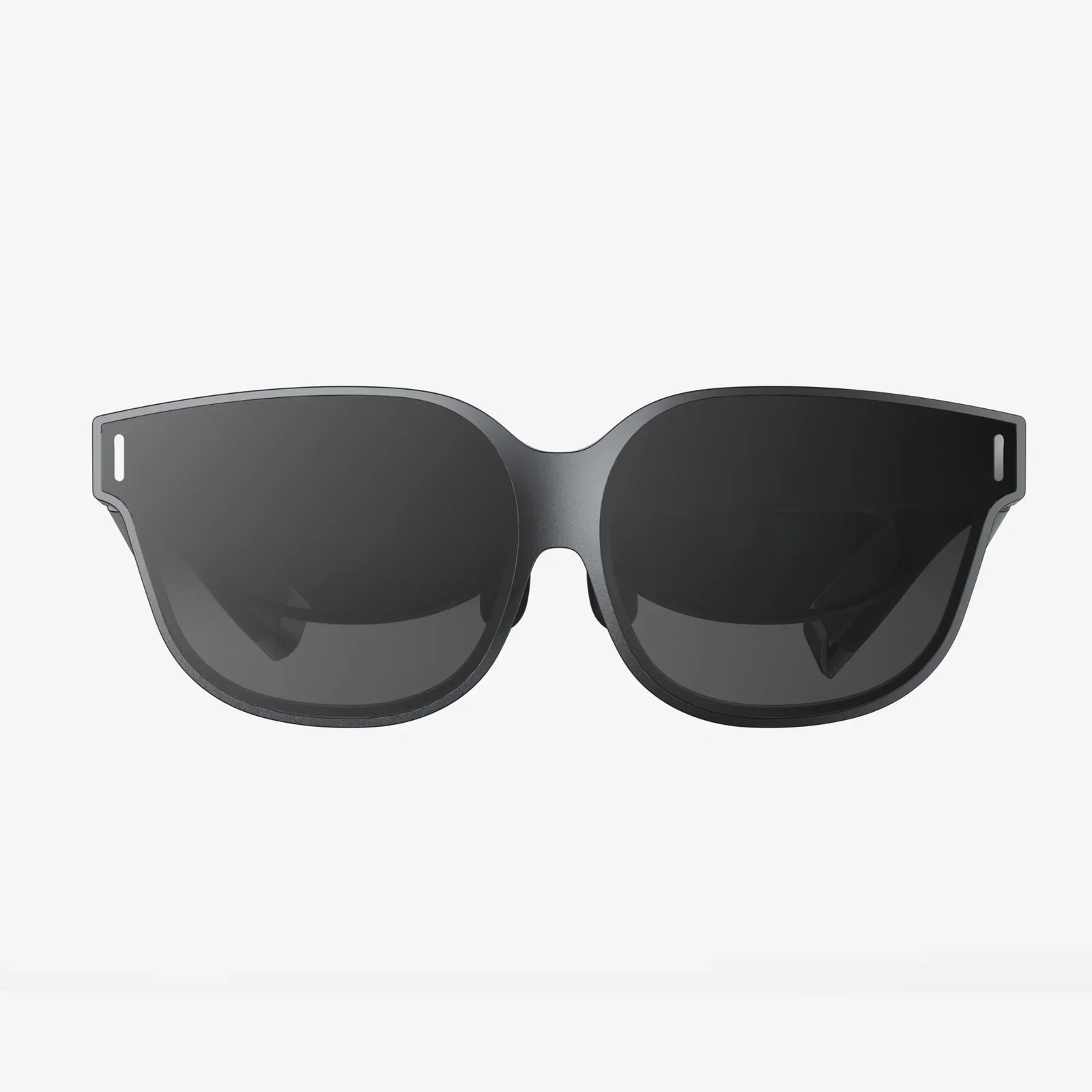
Imagine a world where the most advanced piece of technology you carried wasn't in your pocket, but seamlessly integrated into your clothing, your jewelry, or even strapped to your wrist. The history of wearable tech isn't a story that started with the microchip; it's a saga of human innovation that spans millennia, beginning with ingenious inventions that solved fundamental problems of time, navigation, and calculation. The answer to 'what was the first?' might surprise you, revealing a deep-seated and ancient desire to augment our human capabilities with portable, personal technology.
The Pocket Watch: A Revolution on a Chain
While portable sundials and hourglasses existed, the first true mechanical wearable technology emerged in 16th-century Europe. The pivotal invention was the mainspring, which allowed for the miniaturization of clock mechanisms. The problem? These early portable timepieces were still too heavy and bulky for pockets, which were not yet a common feature in clothing.
The solution was to wear them. The very first portable clocks, originating in German cities like Nuremberg, were often worn as pendants on chains around the neck. These devices, later dubbed "Nuremberg Eggs," were spherical, brass-cased, and typically about three to four inches in diameter. They were ostentatious, expensive, and notoriously inaccurate, losing several hours each day. However, they represented a monumental leap: for the first time, an individual could personally possess and access the time, a privilege previously reserved for public clock towers or large, stationary home clocks. They were the exclusive domain of the ultra-wealthy, less practical tools and more statements of immense status and technological affluence.
From Neck to Pocket: The Evolution of a Wearable
The 17th century saw two key developments that solidified the pocket watch's place as the first mainstream wearable tech. First, advancements in mechanics, particularly the introduction of the balance spring, drastically improved accuracy, transforming the watch from a novelty into a genuinely useful instrument. Second, changes in men's fashion introduced the waistcoat, complete with pockets. This allowed the device to shift from the neck to a more secure and discreet location, the pocket, giving the "pocket watch" its name.
Despite this move to the pocket, its fundamental nature as a wearable technology did not change. It was a device:
- Carried on the person: It was designed for portability and personal use.
- Provided continuous access to data: The time was available at a glance, a form of real-time information.
- Augmented human capability: It allowed for unprecedented personal scheduling, navigation (by coordinating with celestial observation), and professional precision.
- Reflected personal style: Watch cases were elaborately decorated, made from precious metals, and served as jewelry.
For over 300 years, the pocket watch was the pinnacle of personal technology. It was essential for the rise of railroad networks, military coordination, and the precise scheduling demanded by the Industrial Revolution. It set the foundational template for all wearables to follow: a device that serves a functional purpose while also being an intimate part of our personal identity and fashion.
Ancient Precursors: The Seeds of an Idea
If we broaden our definition of "technology" beyond the mechanical and into the realm of the ingenious, we can find even earlier examples of wearable devices designed to interface with and interpret the world.
The Ring Dial (c. 1500s and earlier)
Long before the mainspring, people needed portable timekeeping. One elegant solution was the ring dial, or astronomical ring. This was a beautifully crafted bronze ring, worn on the thumb or finger, that functioned as a portable sundial. The user would align a small hole in the ring with the sun, and a scale inscribed on the band would indicate the time. It was a sophisticated, analog wearable computer that required user input (alignment) to generate an output (the time). It was a wearable tool for telling time, making it a clear, albeit non-mechanical, precursor.
The Abacus Ring (c. 17th Century China)
During the Qing Dynasty, scholars and merchants used a remarkable device: a tiny, functional abacus built into a finger ring. The beads, often made of ivory or polished wood, were small enough to be manipulated with a stylus or a fingernail. This device fits a modern definition of wearable technology perfectly: it was a miniature, portable computer worn on the body (the finger) that aided in calculation, augmenting the wearer's cognitive capabilities for trade and accounting. It represents one of the earliest examples of a wearable computing device designed for mathematical data processing.
The Wristwatch: A Practical Response to Modernity
The next great evolutionary leap came from the battlefield. In the late 19th century, military officers, particularly artillerymen, realized that fumbling for a pocket watch in the heat of combat was impractical and dangerous. They began strapping small pocket watches to their wrists with leather straps, creating a "wristlet." This allowed them to synchronize maneuvers and time bombardinations while keeping their hands free.
The breakthrough into mainstream culture is often attributed to aviators and the First World War. Pilots needed to tell time instantly without removing their hands from the controls. Watchmakers responded by creating the first purpose-built wristwatches, with larger numerals, luminous paint, and protective grills over the face. The efficiency was undeniable. After the war, demobilized soldiers returned home with their wristwatches, normalizing the concept for men. The pocket watch, once the pinnacle of wearable tech, was rapidly relegated to a formal accessory, replaced by the far more practical and accessible wristwatch. This shift cemented the wrist as the primary location for wearable technology for the next century.
The Transition to Digital: The Calculator Watch
The quartz revolution of the 1970s made watches cheaper and more accurate, but it was the integration of the microprocessor that truly began the modern era. In 1975, the first calculator watch was launched. It was a sensation. For the first time, a wearable device on the wrist could do more than tell time; it could perform complex calculations, store limited data, and even act as a miniature video game. It was a direct, tangible fusion of timekeeping and computing, a primitive digital assistant strapped to the wrist. It captured the public's imagination and planted the seed for the idea that our watches could be multi-functional computers.
The Dawn of the Modern Smart Wearable
The final pieces of the puzzle fell into place in the late 20th and early 21st centuries. The miniaturization of sensors, the development of low-power Bluetooth technology, and the ubiquity of the smartphone created the perfect ecosystem for the modern smart wearable.
The first devices to emerge were focused on specialized data tracking. Heart rate monitors for athletes, pioneered in the 1980s, provided real-time physiological feedback. Pedometers evolved from simple mechanical clickers into digital devices that could track steps and estimate calorie burn. These were the direct ancestors of today's fitness trackers, devices dedicated to collecting and interpreting health and activity data.
The true catalyst for the current market was the development of the modern smartwatch and fitness tracker in the 2010s. These devices combined all the threads of history: the timekeeping of the pocket watch, the wrist-based convenience of the military watch, the computing power of the calculator watch, and the specialized data tracking of the heart rate monitor. They became holistic hubs for notification management, health monitoring, communication, and even contactless payment, fulfilling a vision of wearable technology that began not with a circuit board, but with a spring.
Defining the "First": A Matter of Perspective
So, what was the first wearable technology? The answer depends entirely on how strictly we define our terms.
- The First Mechanical Wearable: The 16th-century pendant watch (Nuremberg Egg).
- The First Mainstream Wearable Tech: The 17th-century pocket watch.
- The First Wearable Computer: The 17th-century Chinese abacus ring.
- The First Worn Digital Computer: The 1970s calculator watch.
- The First Modern Smartwear: The early digital fitness trackers and heart rate monitors of the 1980s-2000s.
This lineage shows that the drive to create wearable technology is not a modern obsession but a constant throughout human history. Each iteration was born from a desire to solve a problem: knowing the time, calculating a sum, winning a battle, or improving one's health. The technology available at the time dictated the form, but the intent has remained remarkably consistent.
From the brass Nuremberg Eggs dangling from the necks of Renaissance aristocrats to the sleek sensors monitoring our heart rates today, the journey of wearable technology is a powerful testament to a timeless human impulse. We have always sought to enhance our experience, to weave tools into the very fabric of our daily lives, and to carry a little bit of the future with us wherever we go. The next time you glance at your wrist for a notification, remember you are participating in a tradition centuries in the making, one that started with a simple question: what if I could carry that with me?
Share:
First AR: The Invisible Revolution Reshaping Our Reality
Digital Product Growth: The Definitive Framework for Sustainable Success