


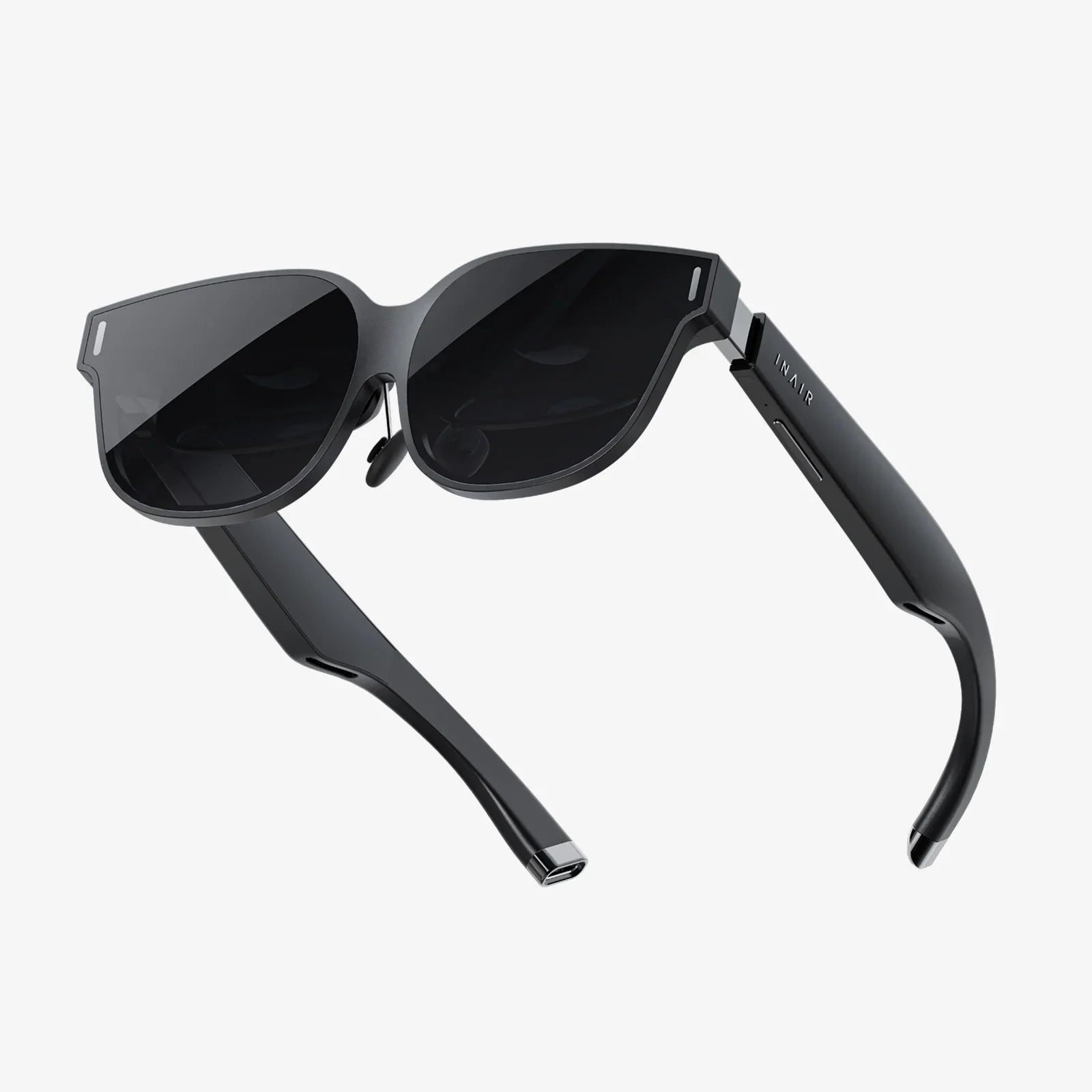
You strap on a sleek, modern headset, and your living room dissolves into an alien landscape or a deep-sea exploration. It feels like magic, a technology born from the 21st century. But what if we told you the spark that ignited this revolution was struck over half a century ago, in a world of clunky analog computers and magnetic tape? The true origin story of virtual reality is a fascinating tale of artistic prophecy, military research, and a brilliant scientist whose groundbreaking invention was so far ahead of its time that the world simply wasn't ready for it. The journey to answer the question, "when was the first VR headset made," is a trip through a history far more surprising and profound than most realize.
The Conceptual Forerunners: Art Before Technology
Long before the hardware existed to create a true virtual experience, the concept was already taking shape in the human imagination. The seeds of VR were first planted not in engineering labs, but in the world of art and speculative fiction. In the 1930s, a young science fiction writer named Stanley G. Weinbaum published a short story, "Pygmalion's Spectacles," which described a pair of goggles that could transport the wearer into a fictional world, engaging all their senses with holographic recordings and fictional characters who could interact with them. This was a stunningly prescient vision, a perfect conceptual blueprint for what would much later become virtual reality.
This artistic prophecy continued through the 1950s with another pivotal figure: Morton Heilig. A cinematographer by trade, Heilig was a visionary who believed cinema should be an experience that engulfed the audience entirely. In 1962, he built a mechanical arcade cabinet called the Sensorama, which was less a headset and more an immersive booth. It featured a stereoscopic 3D display, oscillating fans, aroma emitters, and a vibrating chair, all designed to simulate a motorcycle ride through Brooklyn. While not a head-mounted display in the modern sense, the Sensorama is a crucial evolutionary step. It was the first device to seriously propose and prototype multi-sensory immersion, establishing the core philosophy of VR: tricking the human senses into believing a digital reality is genuine.
The Perfect Storm: The Crucible of 1960s Innovation
To understand how the first true VR headset could be created in the 1960s, one must appreciate the technological and cultural context of the era. This was the decade of the space race, the Apollo program, and a massive surge in government funding for advanced research in computing, aviation, and human factors engineering. Institutions like MIT, the University of Utah, and NASA were hotbeds of innovation, pushing the boundaries of what was possible with computers, which were rapidly evolving from room-sized number-crunchers to machines capable of more graphical and interactive tasks.
Two key technologies were reaching a critical point of maturity. First, computer graphics were advancing beyond simple lines and vectors. Ivan Sutherland, a computer scientist, had already created Sketchpad in 1963, a revolutionary program that is considered the grandfather of computer-aided design (CAD) and graphical user interfaces (GUI). It proved that humans could interact with visual information on a screen in an intuitive way. Second, research into head-mounted displays was already underway, primarily for military applications. The US Air Force was experimenting with heads-up displays (HUDs) in fighter jet helmets, and other projects explored using head tracking to allow radar operators to control systems by moving their heads.
These parallel tracks—artistic vision, advanced computer graphics, and head-mounted display research—were on a collision course. All that was needed was a singular genius to connect the dots and build something the world had never seen before.
The Father of VR and His Landmark Invention
That genius was Ivan Sutherland. Fresh from his success with Sketchpad and now a professor at Harvard, Sutherland was pondering the ultimate display. In a famous 1965 essay, he outlined a concept for a window into a virtual world, a display that would make "a computer-controlled virtual world look real, sound real, feel real, and respond realistically to the viewer's actions." This was the mandate. And by 1968, working with his student Bob Sproull, he turned this concept into a tangible, working reality.
So, when was the first VR headset made? The definitive answer is 1968. The device was officially called "The Sword of Damocles," a name derived from its intimidating appearance. It was a head-mounted display so heavy and cumbersome that it had to be suspended from a mechanical arm bolted to the ceiling. The user would sit in a chair, and the apparatus would be lowered onto their head. It was the antithesis of today's sleek, wireless designs, but its internal workings were nothing short of revolutionary.
How The Sword of Damocles Worked
The system was a marvel of engineering for its time. It did not use LCD or OLED screens; those technologies were decades away. Instead, it employed miniature cathode-ray tubes (CRTs), one for each eye, to display the graphics. The key innovation was in how it generated the imagery. It used a combination of hardware and software to create simple wireframe graphics—floating 3D shapes like cubes and lines—that would update in perspective in real-time based on the user's head movements.
This was the world's first functional head-tracking system. Ultrasonic transmitters and receivers on the headset and the ceiling worked together to calculate the position and orientation of the user's head. This data was fed to a computer, which would then redraw the wireframe graphics from the new perspective. This created the fundamental illusion of VR: that the virtual world was a fixed place that you could look around by moving your head. The world it displayed was rudimentary—a simple wireframe cube floating in a featureless void—but the principle was proven. It was the first time a human could be visually immersed in a computer-generated world that responded to them.
Why It Took Decades for VR to Truly Arrive
If the first true VR headset was built in 1968, why did it take until the 2010s for the technology to become a mainstream concept? The answer lies in the immense technological hurdles that Sutherland's invention highlighted. The Sword of Damocles was a proof-of-concept, a brilliant but impractical prototype. The computing power required to render even its simple wireframe world was enormous, requiring one of the most advanced computers available. To create a more convincing reality with solid surfaces, textures, and realistic lighting was simply beyond the capability of 1960s and 1970s computing hardware.
Furthermore, the hardware for the headset itself was limiting. The displays were low-resolution, the tracking was rudimentary, and the entire system was prohibitively expensive and complex. For decades, VR remained a niche field, advanced slowly by NASA, the military for flight simulators, and a handful of university researchers. The term "virtual reality" itself wasn't even coined until the late 1980s, by Jaron Lanier, whose company VPL Research developed the first commercial goggles and data gloves, albeit for a price tag far out of reach for consumers.
The 1990s saw a first wave of consumer VR hype, with companies attempting to bring headsets to the arcade and home console market. These systems failed spectacularly. They were plagued by the same core issues: they were too expensive, the graphics were primitive and laggy, and the hardware caused nausea and discomfort. The technology needed to mature—exponentially. It required the Moore's Law-driven evolution of processing power, the invention of high-resolution, low-latency smartphone displays, and advanced motion-tracking sensors—all of which finally converged in the early 2010s to make comfortable, compelling, and affordable VR a reality.
The Legacy of a 1968 Prototype
The line from the Sword of Damocles to a modern VR headset is direct and unbroken. Ivan Sutherland and Bob Sproull didn't just build a curious historical artifact; they established the entire foundational architecture for immersive computing. Every VR and AR system today, no matter how advanced, is built upon the core principles they demonstrated:
- Stereo Vision: Using a separate display for each eye to create depth perception.
- Head-Mounted Form Factor: Placing the displays directly in front of the user's eyes for immersion.
- Real-Time Head Tracking: Using sensors to track the user's head movements and updating the display accordingly to create a stable virtual world.
- Computer-Generated Worlds: Using a digital processor to generate the environment in real-time.
Sutherland's work proved that this was possible. Every engineer and designer who entered the field in the subsequent decades stood on the shoulders of this 1960s giant. His invention was the Big Bang, and the modern VR industry is the expanding universe that resulted from it.
So, the next time you fasten the strap of a modern headset and prepare to dive into another reality, take a brief moment to appreciate the journey. That sense of presence you're about to experience wasn't born in a Silicon Valley garage in the 2010s. Its origin is a story of 1930s science fiction, a 1950s immersive cinema booth, and, most importantly, a terrifying, ceiling-suspended contraption from 1968 that showed the world what was possible. The first virtual reality headset was a promise made over fifty years ago, and we are only now finally living in the future it foretold.
Share:
AR Headset News: The Next Digital Revolution Is Happening Before Your Eyes
TV Split Screen Glasses: The Ultimate Guide to Personal Viewing Revolution