


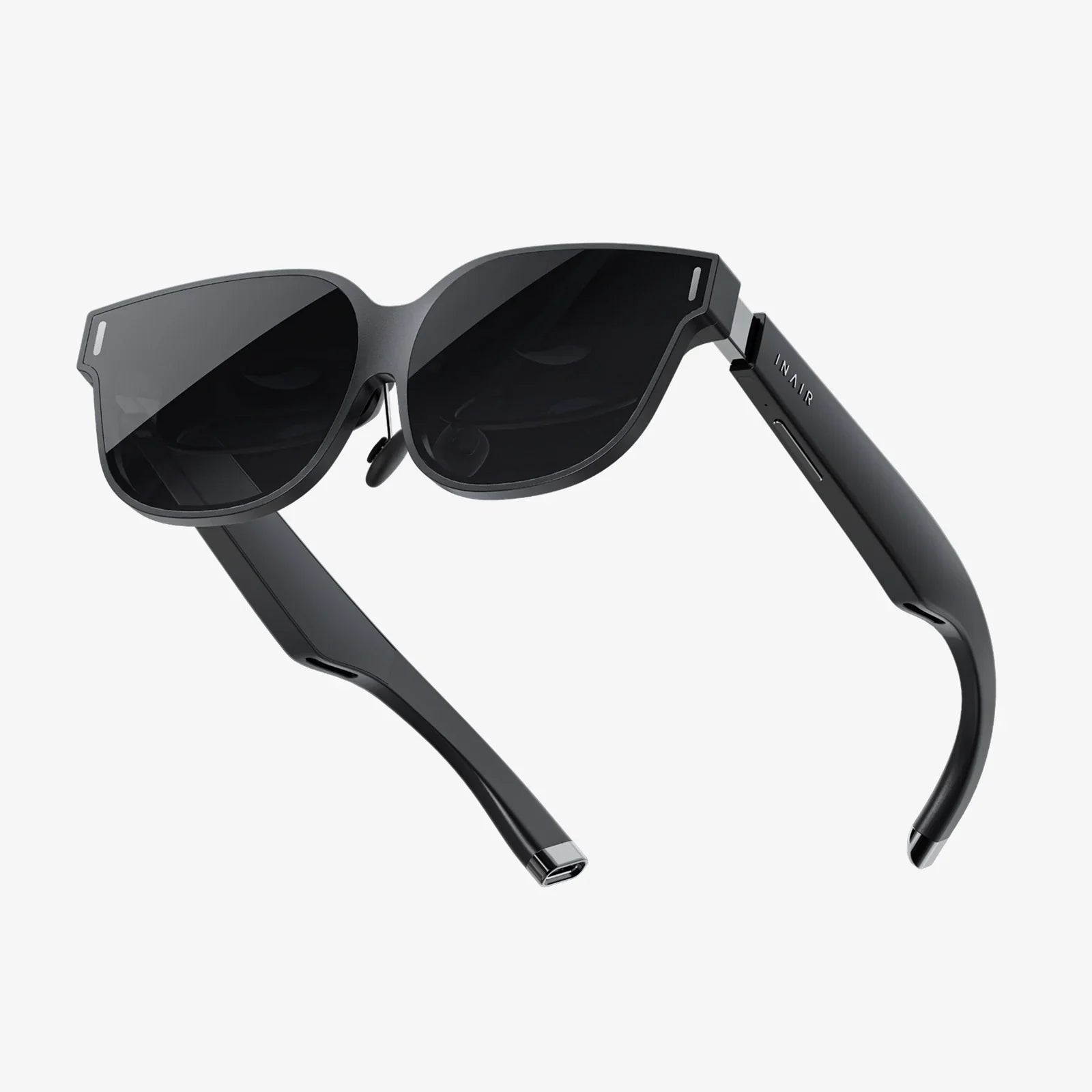
You've seen the future, and it's virtual. The promise of stepping into another world, whether to conquer alien planets, collaborate in digital boardrooms, or simply escape the confines of your living room, is more tangible and affordable than ever. But with a rapidly expanding landscape of hardware, a dizzying array of technical specifications, and a price range that stretches from impulse buy to significant investment, a single, daunting question emerges: which VR headset is best for me? This isn't about finding the one "best" headset for everyone; it's an intensely personal quest to find the perfect piece of technology that aligns with your life, your desires, and your wallet. This definitive guide is designed to be your trusted companion on that journey, cutting through the jargon and hype to provide the clarity you need to make an informed and confident decision. Let's dive in and find your virtual reality.
Deconstructing The Decision: It's More Than Just Specs
Before we compare pixels and processors, we must first establish the foundational questions that will frame your entire search. The raw power of a device is meaningless if it doesn't suit how you intend to use it.
Defining Your Primary Use Case: Play, Work, or Create?
The first and most critical step is to be brutally honest with yourself about what you will actually do in VR. Your primary use case is the North Star that will guide every other decision.
- The Gamer: Your primary goal is immersive entertainment. You crave high-octane action, intricate storytelling, and social experiences. Your priorities will be high refresh rates, low latency, precise controllers, and access to a rich and diverse game library.
- The Professional: You see VR as a tool for productivity. Your interests lie in virtual meetings, architectural visualization, data manipulation in 3D space, or specialized training simulations. Your needs lean towards high-resolution displays for reading text, comfortable ergonomics for long sessions, and business-grade software support.
- The Creator/Enthusiast: You are a tinkerer, developer, or artist. You want to experiment with the boundaries of the technology, develop applications, or create 3D art. Your requirements might include powerful processing, open development platforms, and advanced features like eye or face tracking.
- The Media Consumer: You want a personal cinema screen for movies, a front-row seat at live concerts, or a way to experience 360-degree videos. For you, display quality (especially contrast and color), comfort, and a simple user interface are paramount.
Establishing Your Reality: Tethered vs. Standalone vs. Mobile
This is perhaps the most significant technological divide in the VR market today, determining everything from performance to price to where you can use your headset.
- Standalone VR Headsets: These are all-in-one units with a processor, battery, and sensors built directly into the headset. They are the epitome of convenience—wireless, portable, and ready to use almost anywhere. The trade-off is that their computing power is self-contained, which generally limits them to less graphically intensive experiences compared to their tethered counterparts. They are ideal for newcomers, families, and anyone who values simplicity and freedom of movement.
- Tethered (PC/Console-Powered) VR Headsets: These headsets act as high-resolution displays and sensors but rely on an external computer or game console to do the heavy graphical lifting. This connection is typically via a cable. The result is access to the most visually stunning, complex, and immersive experiences available. The obvious downsides are the cost of the required powerful computer and the physical tether, which can limit movement and require cable management solutions. This is the domain of hardcore gamers and professionals who demand the highest fidelity.
- Smartphone-Based VR: This category has largely faded from the mainstream. It involved slotting a smartphone into a head-mounted holder. While incredibly affordable, the experience was severely limited by the phone's processing power, sensors, and lack of dedicated VR controllers. It served as an introductory gateway but is not a recommended path for a serious VR purchase today.
Confronting the Budget Question
Your financial investment goes beyond the sticker price of the headset itself. It's crucial to consider the Total Cost of Ownership.
- The Headset Itself: Prices can range from a few hundred to over a thousand currency units.
- The Required Hardware: For tethered headsets, do you already own a sufficiently powerful computer? If not, the cost of a new gaming PC must be factored into your budget, potentially doubling or tripling your total spend.
- Software and Games: Premium VR titles often carry a premium price tag, similar to traditional console games. Subscription services for fitness or social apps may also be a recurring cost.
- Accessories: These are often optional but highly recommended. This includes things like additional face interfaces for hygiene, prescription lens inserts if you wear glasses, upgraded head straps for comfort, external trackers for enhanced accuracy, and rechargeable batteries for controllers.
The Anatomy of a VR Headset: A Buyer's Glossary
To understand what you're buying, you need to speak the language. Here are the key specifications and what they truly mean for your experience.
Visual Fidelity: Seeing is Believing
- Resolution & PPD (Pixels Per Degree): Resolution (e.g., 1832x1920 per eye) is important, but PPD is a more accurate measure of clarity. It tells you how many pixels are packed into one degree of your field of view. A higher PPD means a sharper, more "real" image with less visible "screen door effect" (the fine mesh-like lines between pixels).
- Display Type: LCD vs. OLED: LCD panels are more common and offer high resolutions and sharp sub-pixel structures. Their weakness is typically in contrast ratio, meaning blacks can appear more like dark grays. OLED panels offer perfect blacks and incredibly vibrant colors, which are fantastic for space games and horror titles, but they can sometimes have a slightly lower effective resolution and may exhibit "mura" (a slight unevenness in the display). Newer technologies like Mini-LED and QLED are emerging to try and combine the best of both worlds.
- Refresh Rate (Hz): Measured in Hertz (Hz), this is how many times the image on the screen refreshes per second. A higher refresh rate (90Hz, 120Hz, and now even 144Hz+) leads to smoother motion, which is critical for fast-paced games as it reduces latency and the potential for motion sickness. For media consumption, 72-90Hz is often sufficient.
- Field of View (FoV): This is the extent of the observable world you can see at any given moment, measured diagonally in degrees. A wider FoV (110°+) is more immersive, making you feel like you're truly "inside" the world rather than looking through a pair of binoculars. Most consumer headsets range from 90-120 degrees.
- Lens Technology: Fresnel vs. Pancake: Traditional Fresnel lenses allow for a compact design but can introduce visual artifacts like "god rays" (glare around high-contrast objects). The newer Pancake lenses are a breakthrough, enabling much thinner and lighter headsets with a dramatically improved "sweet spot" (the area where the image is perfectly clear) and almost no god rays. This is a significant marker of a modern headset design.
Tracking and Control: How You Interact With The Virtual World
How the headset understands your movement is fundamental to the feeling of presence.
- Inside-Out Tracking: Cameras on the headset itself look outward to track the position of the controllers and map your physical room. This is the standard for modern standalone and PC-connected headsets. It requires no external hardware, is easy to set up, and is highly portable. Its limitations can include tracking loss if controllers are held directly out of the cameras' field of view (e.g., behind your back).
- Outside-In Tracking: External sensors or base stations are placed around your play area to precisely track the position of the headset and controllers. This method is renowned for its millimetre-accurate, rock-solid tracking, especially beneficial for competitive gaming and professional applications. The significant downside is the complex setup and lack of portability, as you cannot easily move the system to a new space.
- Controller Design: Controllers are your hands in VR. Ergonomic design, haptic feedback (subtle vibrations), and finger tracking (the ability to detect individual finger movements beyond just a trigger pull) all contribute to a more natural and immersive interaction. Some systems are moving towards hand-tracking, allowing you to use your bare hands without controllers for certain menus and experiences.
Comfort and Ergonomics: The Long-Haul Experience
A headset you can't wear for more than 30 minutes is a failed purchase, no matter how powerful it is.
- Weight Distribution: Lighter isn't always better; it's about how the weight is distributed. A well-designed strap that pulls the weight onto your forehead or the crown of your head is far more comfortable than a front-heavy device that presses against your cheeks.
- Head Strap Design: Basic elastic straps are common on entry-level devices but often lack support. Rigid, halo-style straps or elite straps with a rear counterweight are vastly superior for extended play sessions.
- Face Interface & IPD: The foam or silicone cushion that seals against your face is crucial. It should be soft, breathable, and easy to clean. Equally important is the Interpupillary Distance (IPD) adjustment—the ability to physically or digitally move the lenses to match the distance between your eyes. An incorrect IPD can lead to eye strain, headaches, and a blurry image.
Matching The Headset To The User: Practical Scenarios
Let's apply these principles to some common user profiles.
Scenario 1: The First-Time User & Family
Priority: Ease of use, affordability, a large and accessible content library, minimal setup.
Ideal Choice: A modern standalone headset. It offers a complete out-of-the-box experience with no extra hardware required. It's wireless, making it easy to share and demo to friends and family in different rooms. The content libraries for these platforms are curated and massive, filled with beginner-friendly experiences, social apps, and fitness games. This is the safest and most recommended entry point into VR.
Scenario 2: The PC Gaming Enthusiast
Priority: Top-tier visual fidelity, performance, access to the most demanding simulation and action games, precision.
Ideal Choice: A high-end tethered PC headset. This user likely already owns a powerful gaming rig and wants to leverage that investment for the absolute best VR experience money can buy. They will value high resolution, a wide field of view, high refresh rates, and the most accurate tracking available, even if it means dealing with a cable. For them, the cable is a worthy trade-off for unparalleled immersion.
Scenario 3: The Fitness Fanatic
Priority: Comfort during intense movement, hygiene, wireless operation, strong fitness app ecosystem.
Ideal Choice: A lightweight standalone headset is often the best fit. Wireless operation is non-negotiable for activities like boxing, dancing, or HIIT workouts. Comfort and secure fit are paramount to prevent the headset from bouncing around. The user should also prioritize purchasing additional sweat-resistant face interfaces for hygiene and easy swapping between users.
Scenario 4: The Remote Worker & Creator
Priority: High resolution for reading text, comfort for all-day wear, support for productivity software, pass-through camera quality.
Ideal Choice: This is a emerging category. The ideal device would be a high-resolution standalone headset with strong pass-through capabilities (allowing you to see your real-world keyboard and desk) and a robust ecosystem of business and creative software. Pancake lenses for clarity and a premium strap for comfort are essential features. The ability to also function as a portable monitor for a laptop is a huge plus.
Navigating the Ecosystem: The Intangibles That Matter
Beyond the hardware, the surrounding ecosystem can make or break your experience.
- Content Library: The best headset is useless without great software. Research the exclusive titles and key apps on each platform. Does one platform have the specific games or social experiences you crave?
- Social Features & Metasphere: If connecting with friends in VR is important, you'll want to ensure you're on a platform they use or one with a thriving, cross-platform community.
- Software Updates & Roadmap: Is the platform actively supported by its creator? Regular updates that add new features, improve performance, and enhance tracking can significantly extend the life and value of your headset.
- Privacy Policy: VR headsets contain a vast amount of personal data, including camera footage of your home. It is imperative to review the company's data policies to understand how your information is collected and used.
The Future-Proofing Paradox
Technology evolves at a breakneck pace. While it's wise to consider the longevity of a purchase, attempting to "future-proof" in VR is a fool's errand. The industry is moving too quickly. A headset bought today will likely be surpassed in 18-24 months. Instead, focus on buying the best tool for your current needs. Choose a platform with a strong track record of supporting its hardware with software updates, and then accept that this is a journey. Enjoy the experiences available to you now. The next incredible innovation is always on the horizon.
So, which VR headset is best for you? The answer now lies not in a singular product name, but in a clear understanding of your own priorities. It's the device that seamlessly integrates into your life, disappears on your head, and transports your mind to places limited only by imagination. You are no longer just a buyer; you are an explorer on the verge of a new reality. Your perfect portal awaits—go find it.
Share:
VR Headset That Does Not Need a Phone: The Ultimate Guide to Standalone Immersion
VR Devices for iPhone: Unlocking a Pocket-Sized Portal to Virtual Worlds