


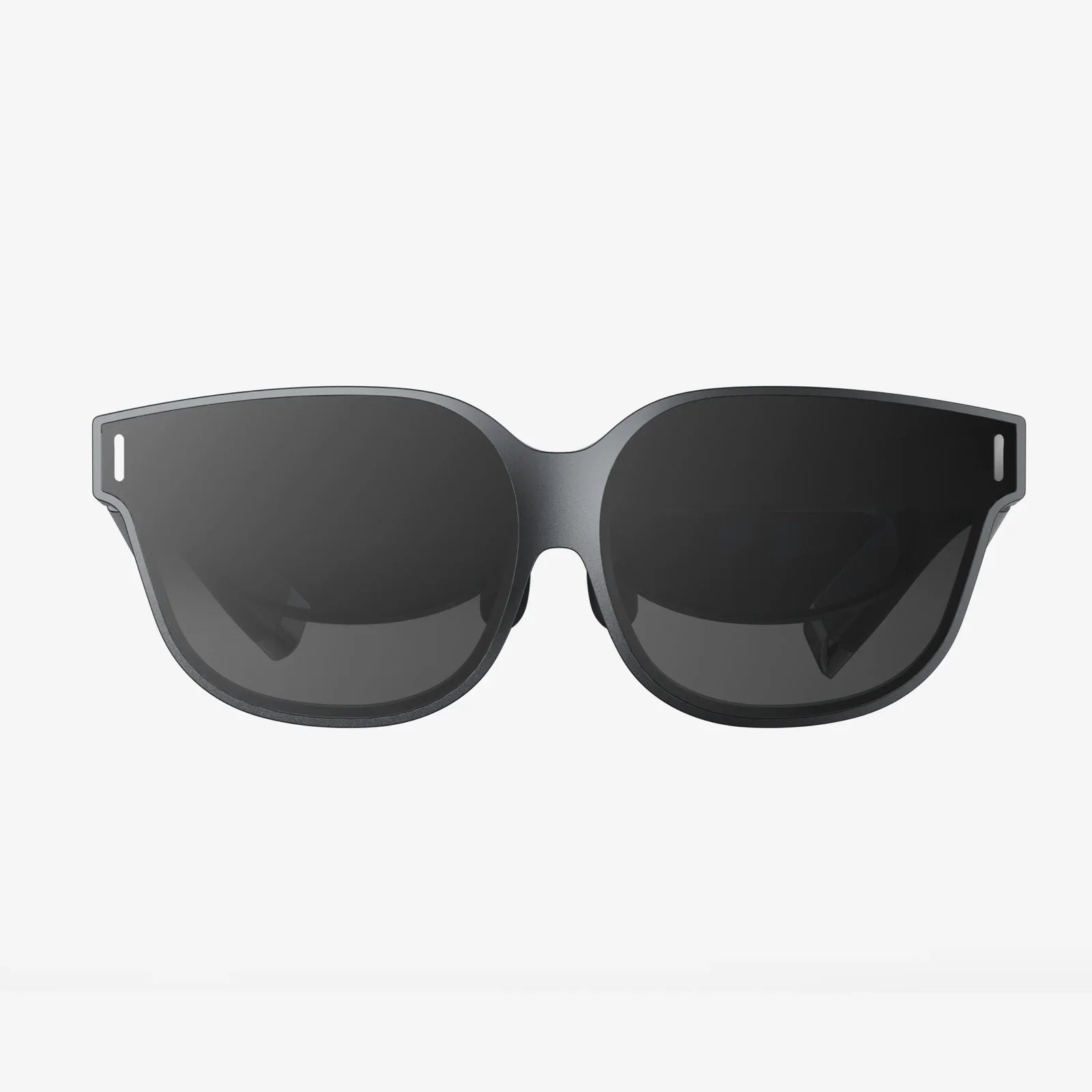
Imagine standing on the surface of Mars, feeling the crunch of red soil beneath your boots, gazing at the hazy, rust-colored horizon. Now, imagine performing a delicate surgical procedure for the first time, your hands steady as you make an incision, with zero risk to a living patient. Or, picture yourself sitting in a living room across the globe, sharing a conversation with a loved one as if they were physically in the chair next to you. This is not a distant science fiction fantasy; it is the emerging, tangible reality being built today through the power of virtual reality (VR). This technology, once confined to the realms of expensive prototypes and niche gaming, is rapidly evolving into one of the most significant technological advancements of our time, poised to revolutionize nearly every aspect of human existence.
The Empathy Machine: Fostering Deeper Human Connection
At its core, one of the most profound contributions of virtual reality is its unparalleled ability to generate empathy and foster human connection. Traditional media—text, photographs, and even video—are experienced from a distance. We observe stories as outsiders. VR, by contrast, is an experiential medium. It does not show you a scene; it places you within it. This phenomenon, known as presence, is the psychological state where the user's brain accepts the virtual environment as real.
This capability is being harnessed for powerful social good. Journalists and documentarians are using VR to transport viewers into the heart of humanitarian crises, refugee camps, and areas affected by climate change. Instead of reading a statistic about displaced populations, you can spend minutes in a virtual recreation of a refugee's shelter, hearing their story directly as if you are sitting with them. This first-person perspective can break down barriers of misunderstanding and apathy, creating a visceral, emotional understanding of global issues that abstract numbers simply cannot convey.
Furthermore, VR is redefining social interaction itself. Social VR platforms are creating persistent virtual spaces where people can meet, collaborate, play, and attend events. For individuals separated by vast distances, those with mobility issues, or those who feel isolated, these spaces offer a profound sense of togetherness. A handshake, a shared glance, or the simple act of building something together in a virtual space can replicate the nuanced cues of in-person interaction in a way that a video call never could. It is paving the way for a new form of digital society, one built on shared experiences rather than just shared information.
Revolutionizing Education and Training: Learning by Doing
The educational potential of virtual reality represents a paradigm shift from passive learning to active, immersive experiences. The age-old challenge of education has been engagement and knowledge retention. VR solves this by making learning an adventure. History students can walk through ancient Rome, witnessing the construction of the Colosseum. Biology students can journey through the human bloodstream, navigating around red and white blood cells. Astronomy classes can become interstellar voyages, with students maneuvering around the rings of Saturn.
This experiential learning dramatically improves retention and comprehension. The brain is far more likely to remember something it has seemingly lived through than something it has only read about. This applies equally to corporate and vocational training. Mechanics can practice complex repairs on detailed virtual models of engines. Electricians can learn to wire a complex circuit board without the risk of electrocution. Flight simulators have used this principle for decades, but VR makes this high-fidelity, risk-free training accessible for countless other professions.
The most critical application is in high-stakes fields like medicine and emergency response. Surgeons can rehearse intricate procedures countless times in a virtual operating room, using patient-specific anatomy generated from MRI or CT scans. This practice reduces errors and improves outcomes in the actual operating theater. Similarly, firefighters can train for dangerous scenarios like oil rig fires or building collapses in a completely safe environment, allowing them to build muscle memory and critical decision-making skills without ever facing real danger. This type of training was previously impossible, too costly, or too risky to conduct at scale.
Transforming Healthcare: Healing the Mind and Body
Beyond training, virtual reality is emerging as a powerful therapeutic tool for both physical and psychological treatment, offering new hope where traditional methods have fallen short.
In physical rehabilitation, VR turns repetitive and often painful exercises into engaging games. A patient recovering from a stroke might be tasked with virtually catching butterflies to improve range of motion, or navigating a kayak down a river to rebuild strength. This gamification increases patient motivation and adherence to therapy regimens, while precise motion tracking allows therapists to monitor progress with unprecedented data. The immersive nature of the experience can also act as a powerful distraction, helping patients manage pain and discomfort during their sessions.
For mental health, VR-based exposure therapy is revolutionizing the treatment of phobias, anxiety, and Post-Traumatic Stress Disorder (PTSD). Therapists can gradually and controllably expose patients to their triggers within a safe virtual space. A patient with a fear of flying can experience the sights and sounds of an airport, the boarding process, and eventually a simulated takeoff, all from the therapist's office. For veterans with PTSD, controlled virtual environments can help them process and manage traumatic memories. This controlled, repeatable, and safe method of exposure allows for a level of therapeutic precision that was previously unattainable.
Empowering Design and Innovation: Prototyping the Future
The world of architecture, engineering, and design has been utterly transformed by VR's capacity for visualization. Where artists and engineers once relied on blueprints, CAD models on 2D screens, and physical scale models, they can now step directly into their creations long before the first brick is laid or the first product is manufactured.
Architects and their clients can take virtual walkthroughs of unbuilt buildings, experiencing the scale of a atrium, the sightlines from a window, and the flow of space between rooms. This allows for design flaws to be identified and corrected in the planning stage, saving enormous amounts of time and money. Car designers can sit in the driver's seat of a virtual prototype, assessing the layout of the dashboard and the feel of the interior, making iterative changes in real-time. This accelerates the design process and leads to more human-centric, ergonomic, and successful final products.
This virtual prototyping extends to urban planning as well. City planners can simulate the impact of a new public transit system, a new park, or a new high-rise building on traffic patterns, sunlight, and pedestrian flow. They can experience the city from a citizen's perspective, leading to more intelligent, sustainable, and livable urban environments. VR is becoming an indispensable tool for building a better physical world, by first perfecting it in a virtual one.
Expanding Economic and Creative Frontiers
The rise of virtual reality is catalyzing the creation of entirely new economies and creative mediums. The concept of the metaverse—a collective virtual shared space—is driving innovation in digital assets, virtual real estate, and new forms of entertainment and work.
Artists are no longer confined to canvases or physical materials. They are using VR to create immersive, three-dimensional sculptures and paintings that exist in a digital space, which can be explored and experienced by anyone, anywhere. Musicians are performing live concerts in virtual venues to global audiences of millions, offering visual experiences that would be impossible in a physical arena. Filmmakers are crafting interactive, 360-degree narratives where the viewer chooses where to look, becoming an active participant in the story.
Economically, this creates new markets for virtual goods, services, and experiences. It enables remote work and collaboration on an unprecedented scale, with teams from across the world meeting in a virtual boardroom to interact with 3D data models as naturally as if they were in the same room. This has the potential to democratize opportunity, allowing talent from anywhere to contribute to global projects without the need for physical relocation. The virtual economy is not a replacement for the physical one, but a vast and expansive addition to it, full of potential for innovation, entrepreneurship, and new forms of artistic expression.
Confronting the Challenges and Looking Ahead
For all its promise, the path forward for virtual reality is not without significant challenges. Issues of accessibility and the digital divide remain paramount; high-quality VR requires relatively expensive hardware and robust internet connectivity, potentially excluding large portions of the global population. Ethical concerns regarding data privacy, psychological effects of prolonged immersion, and the potential for addiction must be carefully studied and addressed with thoughtful regulation and design principles. Furthermore, as with any powerful technology, there is potential for misuse in areas like misinformation, where hyper-realistic virtual experiences could be created to deceive.
These challenges, however, are not insurmountable. They are the growing pains of a technology that is fundamentally altering the human experience. The importance of VR lies in its core function: to transcend the limitations of physical reality. It allows us to practice, to learn, to heal, and to connect in ways that were previously the domain of imagination. It is a mirror we can hold up to our own world to understand it better, and a canvas upon which we can paint a better one.
The true significance of virtual reality is not that it offers an escape from our world, but that it provides us with a powerful new set of tools to improve it. From the surgeon's steady hand to the student's wonder-filled eyes, from the engineer's perfect prototype to the patient's reclaimed peace of mind, VR is already demonstrating its profound value. It is a bridge across distances, a window into other lives, and a rehearsal for a better future—and that is a reality too important for the world to ignore.
Share:
Virtual Reality and Immersive Environments: Redefining Human Experience in the Digital Age
Virtual Reality VR Development: Building Immersive Worlds from Concept to Experience