


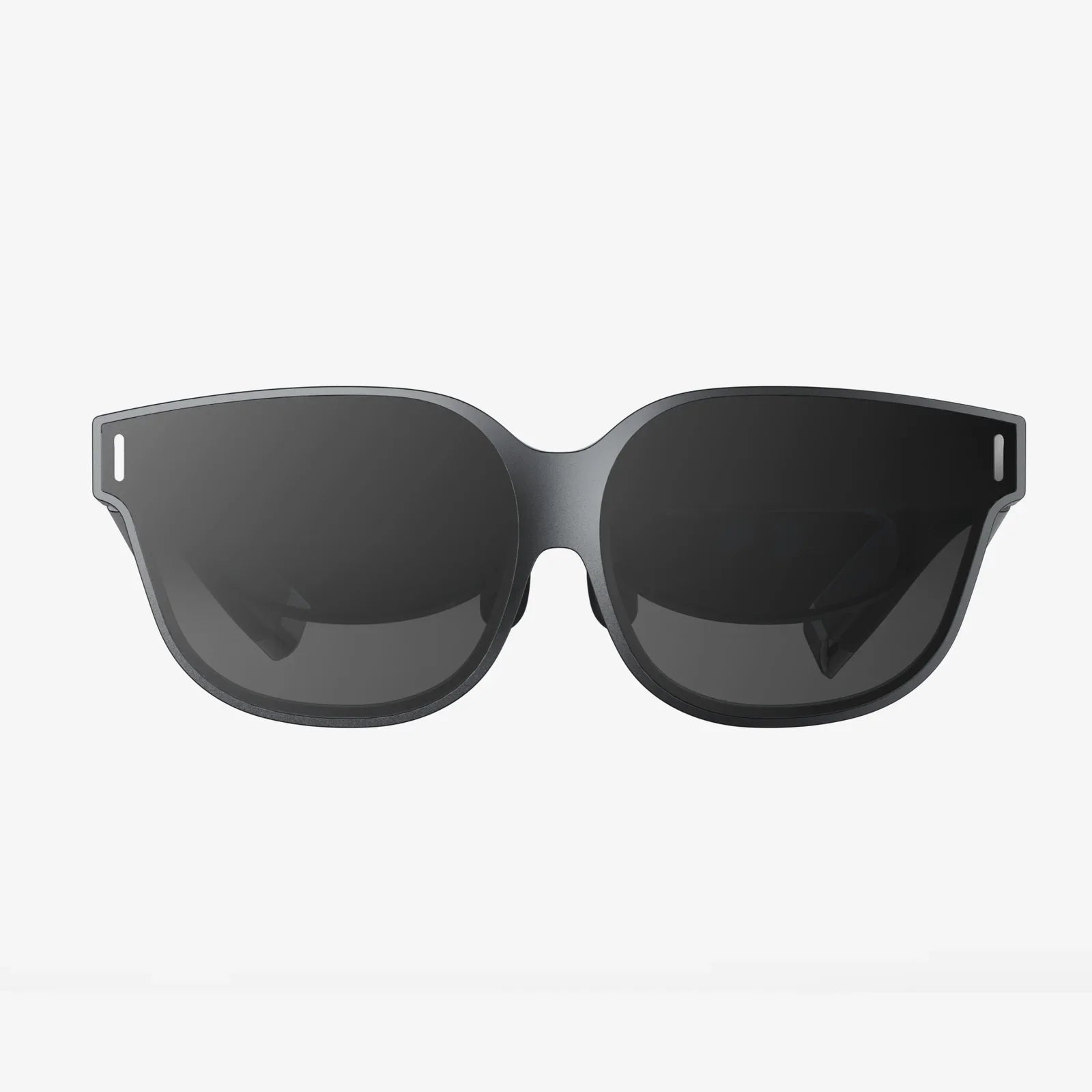
Consumer-grade AR is no longer just a flashy tech demo or a fleeting gaming trend; it is rapidly becoming the invisible layer that will sit on top of everything you see, buy, learn, and do. If you have ever tried a virtual try-on, used a filter on your camera, or followed on-screen directions that float over the real world, you have already stepped into this new reality. What feels like a playful extra today is quietly building the foundation for the next major shift in how people interact with technology and with each other.
To understand where this is heading, you need to look beyond isolated apps and think about consumer-grade AR as an ecosystem: hardware, software, networks, content, and human behavior all evolving together. The devices you carry, the stores you visit, the classrooms you learn in, and even the streets you walk down are slowly becoming AR-enabled environments. The question is not whether this will affect your life, but how prepared you are for the moment when augmented reality stops being optional and starts being expected.
What Consumer-Grade AR Actually Means
At its core, consumer-grade AR (augmented reality) is a set of technologies that overlay digital information onto the physical world in ways that ordinary people can access, afford, and understand. It is not a lab prototype or a specialized industrial tool; it is AR designed for everyday use by non-experts.
To qualify as consumer-grade, AR typically needs to meet several practical criteria:
- Accessible hardware: It runs on devices people already own or can reasonably afford, such as smartphones, tablets, or lightweight wearables.
- Simple interfaces: It uses intuitive gestures, voice, or touch, without requiring technical training.
- Reliable performance: It works well enough in typical environments like homes, streets, stores, and classrooms, not just controlled labs.
- Clear value: It solves real problems or provides meaningful entertainment, not just a one-time novelty.
Think of consumer-grade AR as the bridge between advanced computer vision research and your daily routine. It takes complex concepts like real-time 3D mapping, spatial understanding, and object recognition and wraps them in experiences that feel natural, useful, and sometimes surprisingly fun.
How Consumer-Grade AR Differs from VR and Industrial AR
Consumer-grade AR is often confused with other immersive technologies, especially virtual reality (VR) and industrial AR. The differences matter, because they shape the use cases, business models, and adoption patterns.
AR vs. VR
Virtual reality creates a fully digital environment that replaces your view of the real world. You put on a headset and are transported somewhere else, cut off from your surroundings. AR, by contrast, keeps you anchored in the physical world and adds digital elements on top.
- VR: Immersive, isolating, great for simulations and games, but less practical for multitasking or public spaces.
- Consumer-grade AR: Blended, contextual, and designed to be used while you move through real environments and interact with real people.
This distinction is crucial: consumer-grade AR aims to enhance your real life, not replace it. That makes it more compatible with everyday tasks like shopping, navigation, learning, and communication.
Consumer AR vs. Industrial AR
Industrial AR is often used in factories, warehouses, and field service operations, where specialized headsets guide workers through complex tasks. These solutions can be expensive, highly customized, and tightly integrated with enterprise systems.
Consumer-grade AR, on the other hand, focuses on mass-market scenarios:
- Helping shoppers visualize furniture in their homes.
- Letting students see interactive models in their textbooks.
- Enabling travelers to navigate unfamiliar cities with visual cues.
- Turning public spaces into interactive entertainment zones.
The technology base may be similar, but the design priorities differ. Consumer AR emphasizes ease of use, aesthetics, and emotional engagement, while industrial AR emphasizes precision, safety, and efficiency.
The Building Blocks of Consumer-Grade AR
To appreciate what consumer-grade AR can do, it helps to understand the core technologies that make it possible. These building blocks are rapidly improving, which is why AR experiences feel more stable and convincing each year.
Hardware: Devices That Bring AR to Life
Most consumer AR today runs on devices people already carry:
- Smartphones and tablets: The primary AR platforms for the mass market, equipped with cameras, accelerometers, gyroscopes, and increasingly advanced depth sensors.
- Wearables: Smart glasses, AR headsets, and even experimental contact lenses aim to provide hands-free, always-available augmentation.
- Connected accessories: AR-enabled toys, fitness equipment, and home devices that respond to AR apps and environments.
The march toward lighter, more comfortable, and more powerful AR-capable devices is relentless. As battery life improves and components shrink, AR will become less about holding up a phone and more about having a persistent digital layer that is always available when you need it.
Software: The AR Engines and Toolkits
Consumer-grade AR relies on sophisticated software running behind the scenes:
- AR frameworks: These provide core functions like motion tracking, plane detection, and light estimation, so developers can focus on content and interaction rather than low-level math.
- 3D engines: They render digital objects with realistic lighting, shadows, and physics, helping AR content feel like it belongs in the real scene.
- Cloud services: Remote servers store maps, models, and shared experiences, enabling multi-user AR and persistent digital layers tied to specific locations.
This software stack is increasingly accessible, allowing small teams and individual creators to build AR experiences that would have required large research labs a decade ago.
Computer Vision and Spatial Mapping
At the heart of AR is the ability to understand the physical environment in real time. Consumer-grade AR uses computer vision algorithms to:
- Track device movement and orientation.
- Identify surfaces like floors, walls, and tables.
- Recognize images, objects, or markers in the environment.
- Estimate depth and scale to place virtual objects correctly.
These capabilities allow a virtual chair to stay anchored to your living room floor as you walk around it, or a floating arrow to stay aligned with the street you are following. The more accurate and robust this mapping becomes, the more believable and useful consumer AR feels.
Interaction Models: How People Use AR
Consumer-grade AR succeeds or fails based on how natural it feels to use. Common interaction models include:
- Touch-based: Tapping, dragging, and pinching on a screen to place or manipulate AR objects.
- Gesture-based: Hand tracking or simple gestures recognized by cameras or sensors.
- Voice commands: Speaking to control AR interfaces when hands are busy or when touch is awkward.
- Gaze and head tracking: Using where you look or move your head as an input, especially in wearable AR.
The most successful consumer AR experiences minimize friction: they feel like an extension of how you already interact with the world, not like learning a new language.
Everyday Use Cases of Consumer-Grade AR
Consumer-grade AR is spreading across many aspects of daily life. Some of these applications are already familiar, while others are just starting to emerge.
Shopping and E-Commerce
Retail is one of the most visible frontiers for consumer AR. The ability to visualize products in context reduces uncertainty and boosts confidence.
- Virtual try-ons: Users can see how clothing, accessories, or cosmetics might look on their own bodies or faces using their device camera.
- Home visualization: Furniture, decor, and appliances can be placed virtually in a room to check size, style, and fit before buying.
- Interactive packaging: Scanning a product or its packaging can reveal instructions, recipes, or stories layered over the physical item.
- Store navigation: AR directions inside large stores can guide customers to specific aisles or products.
For consumers, these experiences reduce guesswork and returns. For retailers, they increase engagement and conversion, making AR a powerful tool rather than a gimmick.
Education and Learning
Consumer-grade AR is transforming learning by making abstract concepts tangible and interactive.
- Interactive textbooks: Printed pages can come to life with 3D models, animations, and quizzes when viewed through an AR app.
- Science and anatomy: Students can explore virtual organs, molecules, or astronomical systems in 3D, rotating and dissecting them in real time.
- Historical reconstructions: Visiting historical sites can be enriched with AR overlays that show how locations looked in the past.
- Language learning: AR labels and prompts in the real environment help learners associate words with objects and actions.
By merging physical and digital content, AR taps into multiple learning styles at once, making it easier to understand complex ideas and remember them longer.
Navigation and Travel
Navigation is a natural fit for AR because it is inherently spatial. Instead of reading a flat map and mentally translating directions, users can see guidance overlaid directly onto the world.
- AR walking directions: Arrows and markers appear on sidewalks and streets, showing exactly where to turn.
- Transit assistance: Visual cues can highlight the correct bus stop, train platform, or station exit.
- Tourist information: Landmarks can be labeled with history, opening hours, and visitor tips when viewed through a camera.
- Indoor wayfinding: Large venues like airports, malls, and stadiums can use AR to guide visitors through complex layouts.
As mapping and localization technologies improve, navigation-focused AR will feel less like an app and more like a natural extension of how people move through the world.
Entertainment, Gaming, and Social Experiences
Entertainment has been one of the earliest drivers of consumer AR adoption, and it continues to evolve rapidly.
- Location-based games: Titles that blend physical locations with digital characters and objectives encourage players to explore their neighborhoods.
- Social filters and effects: Camera-based effects that alter faces, backgrounds, or entire scenes have become a staple of social media.
- Interactive stories: AR narratives can unfold in the user’s environment, turning living rooms and parks into story stages.
- Live events: Concerts, sports, and festivals can include AR layers that provide stats, alternate views, or interactive elements.
These experiences are more than just distractions. They are training millions of people to see AR as a normal part of how they express themselves and connect with others.
Health, Fitness, and Wellbeing
Consumer-grade AR is also making its way into health and wellness.
- Guided workouts: Virtual trainers can appear in your living room, demonstrating exercises and correcting form using motion tracking.
- Posture and movement coaching: AR overlays can show ideal posture or movement paths for activities like yoga, rehabilitation, or sports.
- Mental wellness: Relaxation exercises, breathing guides, and calming environments can be integrated into physical spaces.
- Health education: Visualizing how lifestyle choices affect the body can make health information more impactful.
While healthcare-grade AR has strict regulatory requirements, consumer AR is already helping people build healthier habits and understand their bodies better.
Why Consumer-Grade AR Is Gaining Momentum Now
Consumer-grade AR has existed in some form for years, but several trends are pushing it toward mainstream adoption.
Hardware Maturity
Modern smartphones and tablets have powerful processors, high-resolution cameras, and improved sensors. This hardware can handle real-time AR without overheating or draining batteries too quickly, making extended AR sessions more feasible.
Network and Cloud Infrastructure
Faster mobile networks and more efficient cloud services allow AR apps to offload heavy processing and access shared maps and content. This enables multi-user experiences, persistent AR layers tied to specific places, and richer graphics without overwhelming local devices.
Developer Ecosystems and Tools
AR development tools have become more accessible and better documented. Independent developers, educators, marketers, and hobbyists can build AR content without needing to reinvent the underlying technology.
Changing User Expectations
People are increasingly comfortable with cameras, sensors, and digital overlays. Younger generations, in particular, see AR effects as a normal part of communication. As expectations evolve, services that lack AR features may begin to feel outdated or incomplete.
Challenges and Risks of Consumer-Grade AR
Despite its promise, consumer-grade AR faces serious challenges. Understanding these issues is essential for anyone building or adopting AR experiences.
Privacy and Surveillance Concerns
AR devices often rely on cameras and sensors that continuously observe the environment. This raises questions such as:
- What happens to the video and sensor data captured by AR apps?
- Can bystanders be recorded or analyzed without consent?
- How are location-based AR maps stored, shared, and secured?
Responsible AR design requires clear privacy policies, transparent data practices, and mechanisms to protect people who may not even realize they are part of an AR experience.
Security and Data Integrity
AR systems that overlay information onto the real world can be manipulated if not properly secured. Potential risks include:
- Fake AR directions that mislead users.
- Malicious overlays that hide hazards or misrepresent products.
- Unauthorized access to shared AR spaces or content.
As AR becomes more integrated into critical tasks, the cost of misinformation or tampering increases. Security must be treated as a core requirement, not an afterthought.
Digital Overload and Attention Fragmentation
AR adds another layer of information to an already noisy digital environment. Poorly designed AR can distract users, increase cognitive load, and contribute to stress or reduced situational awareness.
Designers need to balance augmentation with restraint, ensuring that AR enhances focus rather than undermining it. Subtle, context-aware overlays are often more effective than constant visual noise.
Accessibility and Inclusivity
Consumer-grade AR must work for people with diverse abilities, devices, and environments. Challenges include:
- Ensuring AR content is usable for people with visual, auditory, or motor impairments.
- Designing experiences that do not require expensive, cutting-edge hardware.
- Considering cultural differences and avoiding biased or exclusionary content.
Inclusive AR design is not just ethical; it expands the potential user base and improves overall usability.
Design Principles for Effective Consumer-Grade AR
Creating successful consumer AR experiences requires more than technical skill. It demands thoughtful design that respects human limits and real-world contexts.
Anchor AR in Real Problems
Start with a clear understanding of what users are trying to accomplish. AR should reduce friction, clarify information, or create experiences that are impossible without augmentation. If an AR feature does not make a task easier, faster, or more engaging, it is likely to be ignored.
Respect the Physical Environment
AR does not exist in a vacuum. It competes with real-world stimuli and must coexist with physical constraints.
- Avoid overlays that block important real-world cues, such as traffic or safety signage.
- Ensure that AR objects behave in predictable ways relative to surfaces, lighting, and movement.
- Consider how experiences play out in crowded, noisy, or low-light environments.
Keep Interactions Simple and Discoverable
Users should not need a manual to understand how to interact with AR content. Use familiar patterns:
- Tap to select, drag to move, pinch to scale.
- Clear visual cues for what can be interacted with.
- Onboarding moments that teach key gestures in context.
Every extra step or hidden gesture increases the risk that users will abandon the experience.
Design for Short and Long Sessions
Consumer AR use can range from quick glances to extended engagement. Design for both:
- Make core value accessible within seconds of launching the AR feature.
- Provide deeper layers of interaction for users who want to explore.
- Allow easy pausing and resuming without losing context.
This flexibility respects the fragmented nature of modern attention while still rewarding sustained engagement.
How Businesses Can Prepare for Consumer-Grade AR
Organizations that move early and thoughtfully into consumer-grade AR can create lasting advantages. Preparation does not require huge budgets; it requires clarity of purpose and experimentation.
Identify High-Impact Use Cases
Start by mapping where AR might add value in your customer journey or service experience:
- Can customers benefit from seeing your product in their environment?
- Are there complex instructions that could be simplified with visual guidance?
- Do physical locations you control lend themselves to AR-enhanced visits?
Focus on a small number of high-impact scenarios rather than scattering resources across many low-value experiments.
Invest in Content and 3D Assets
Consumer-grade AR is only as compelling as the content it delivers. Building a library of high-quality 3D models, animations, and contextual information is a long-term asset.
- Standardize how products or services are represented in 3D.
- Ensure assets are optimized for mobile performance.
- Plan for localization and cultural adaptation of AR content.
Over time, this content can be reused across multiple AR platforms and experiences.
Experiment, Measure, and Iterate
AR is still a developing medium. The most effective solutions are often discovered through experimentation.
- Launch small pilots with clear success metrics.
- Track engagement, completion rates, and user feedback.
- Refine or pivot based on real-world usage, not assumptions.
Organizations that treat AR as a living product rather than a one-time campaign are more likely to uncover sustainable value.
Collaborate Across Disciplines
Consumer-grade AR sits at the intersection of design, engineering, marketing, and operations. Successful projects often involve:
- Designers who understand spatial interaction and human factors.
- Developers skilled in AR frameworks and 3D engines.
- Content creators who can tell stories in mixed reality.
- Business stakeholders who connect AR features to strategic goals.
Breaking down silos is essential to building AR experiences that are technically solid, user-friendly, and commercially meaningful.
How Individuals Can Get Ready for an AR-Enhanced World
Consumer-grade AR will not just change how companies operate; it will change how individuals navigate daily life and careers. Preparing yourself is both practical and empowering.
Build AR Literacy
You do not need to become a developer to be AR-literate. Focus on:
- Understanding basic AR concepts like tracking, mapping, and overlays.
- Recognizing where AR is being used around you, even subtly.
- Learning to evaluate whether an AR feature is genuinely helpful or just flashy.
This literacy helps you make smarter choices about which tools to adopt and how to use them effectively.
Experiment with Everyday AR Apps
Try a variety of AR experiences in different domains:
- Shopping apps that let you visualize products at home.
- Educational AR that enhances books or courses.
- Navigation tools that overlay directions on your surroundings.
- Creative AR tools for art, design, or storytelling.
By exploring, you will quickly develop a sense of what works well and what feels forced, which is invaluable if you later help shape AR in your workplace or community.
Protect Your Privacy and Boundaries
As AR becomes more pervasive, setting personal boundaries is essential.
- Review app permissions, especially for camera, location, and microphone access.
- Be mindful of where you use AR that captures surroundings, particularly with other people present.
- Stay informed about how AR platforms handle your data and what controls you have.
Healthy skepticism and informed choices can help you enjoy AR without sacrificing control over your digital footprint.
Consider Career and Skill Opportunities
Consumer-grade AR is spawning new roles and reshaping existing ones. Skills that may gain value include:
- 3D modeling and animation.
- Experience design for spatial interfaces.
- AR-focused software development and prototyping.
- Storytelling that blends physical and digital elements.
Even if you do not work directly in AR, understanding its capabilities can set you apart in fields like marketing, education, retail, tourism, and healthcare.
The Future Trajectory of Consumer-Grade AR
Looking ahead, several trends are likely to define the next phase of consumer-grade AR.
From Handheld to Wearable
As AR-capable wearables mature, experiences will move from occasional, phone-based interactions to more continuous, glasses-based augmentation. This shift will:
- Reduce the friction of pulling out a device for every AR interaction.
- Enable hands-free workflows in both personal and professional contexts.
- Make AR feel less like a separate mode and more like a natural extension of perception.
However, it will also intensify debates about privacy, social norms, and appropriate use in public spaces.
Persistent, Shared AR Layers
AR content will increasingly be tied to specific places and shared across users. Imagine:
- Digital art that always appears on the same building when viewed through AR.
- Community notes and reviews anchored to storefronts.
- Shared games and experiences that unfold in neighborhoods over time.
This persistence will blur the line between the physical environment and a collective digital layer, turning cities and communities into evolving AR canvases.
Smarter, Context-Aware AR
Advances in artificial intelligence will make AR more context-aware and personalized. Systems will better understand:
- What you are looking at and what you are trying to do.
- Your preferences, habits, and accessibility needs.
- The social and environmental context you are in.
Done well, this will reduce clutter and surface only the most relevant information. Done poorly, it could feel intrusive or manipulative, highlighting the need for ethical guidelines and user control.
Greater Regulation and Standards
As consumer-grade AR becomes more influential, regulators and standards bodies are likely to step in. Areas of focus may include:
- Privacy protections for bystanders and users.
- Safety guidelines for AR use in public and high-risk environments.
- Interoperability standards for AR content and devices.
These frameworks will shape what is possible and acceptable, guiding how AR integrates into daily life at scale.
Why You Cannot Afford to Ignore Consumer-Grade AR
Consumer-grade AR is not a distant future or a niche hobby; it is already influencing how people discover products, learn new skills, navigate spaces, and socialize. Ignoring it means missing out on a powerful new interface layer that competitors, peers, and even your customers may already be exploring.
Whether you are an individual curious about the next wave of digital experiences or an organization deciding where to invest, the time to build AR awareness is now. Start small: experiment with a few well-chosen apps, imagine how AR could remove friction in your own routines, and pay attention to where your attention feels enhanced rather than drained. Those simple steps will put you ahead of the curve in a world where the line between physical and digital is becoming less visible every day.
As consumer-grade AR continues to mature, the most valuable opportunities will belong to those who understand both its power and its limits. The people and organizations that learn to layer meaningful, respectful, and context-aware information onto the real world will not just keep up with the future; they will help define it.
共有:
Spatial Mapping: Transforming Digital Experiences Through Intelligent 3D Understanding
Breakfast in Mountain Home AR: Hidden Gems, Local Flavor, and Scenic Starts