


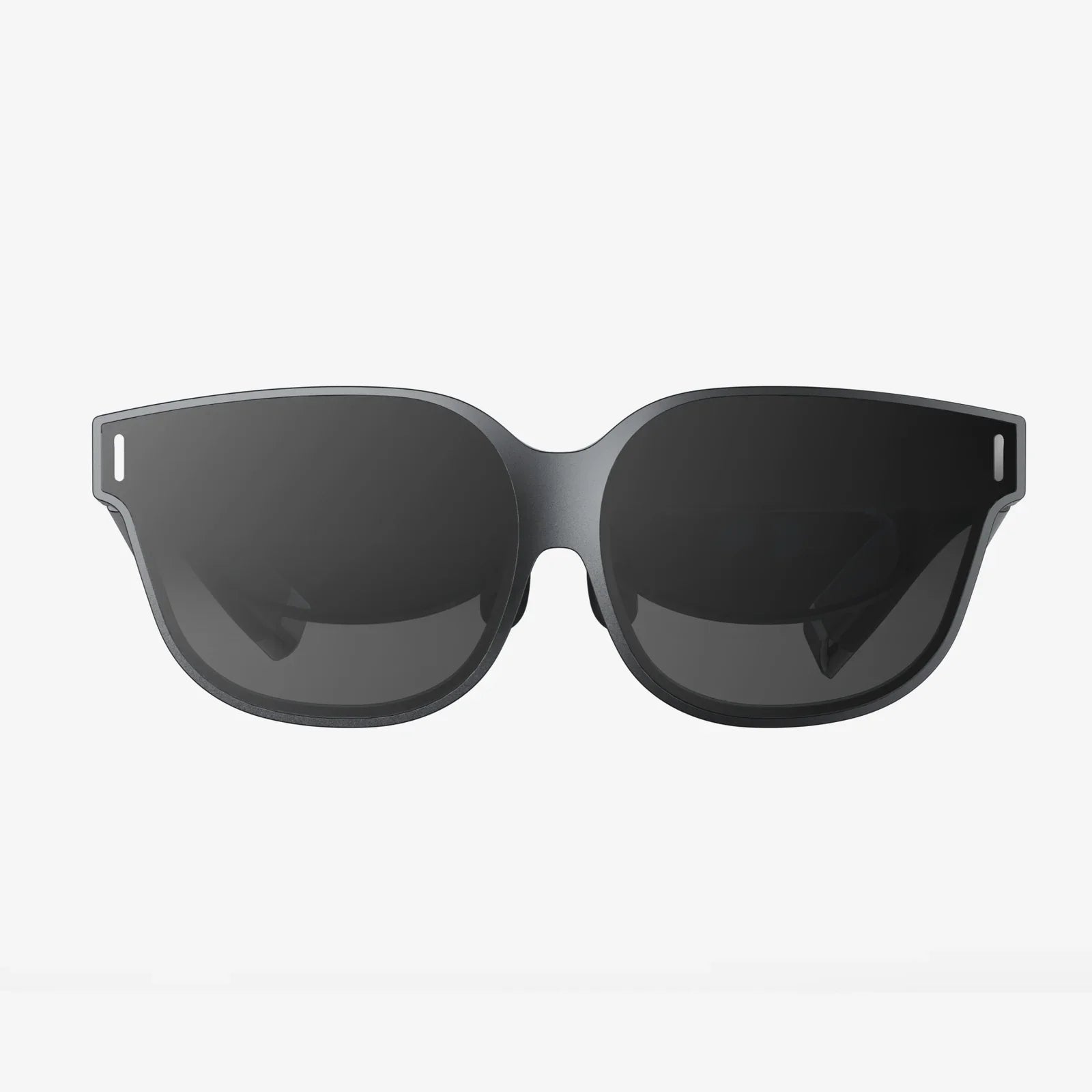
Imagine pointing a device at your room and instantly seeing every wall, table, and doorway turned into a living digital canvas that reacts to you in real time. That is the promise of spatial mapping, and it is moving from futuristic concept to everyday reality faster than most people realize. Whether you care about immersive gaming, precise indoor navigation, safer workplaces, or smarter cities, understanding spatial mapping today is like understanding the internet in the 1990s: it gives you a front-row seat to the next big shift.
What Is Spatial Mapping?
Spatial mapping is the process of digitally understanding and representing real-world physical spaces in three dimensions so that devices can interact intelligently with the environment. Instead of treating the world as a flat image, spatial mapping allows systems to recognize surfaces, volumes, distances, and boundaries. Walls, floors, ceilings, furniture, and even people become part of a dynamic 3D model that software can reason about.
At its core, spatial mapping turns the physical world into data that computers can process, update, and use for decision-making. It enables devices to answer questions such as:
- Where are the surfaces I can place virtual objects on?
- How far away is that obstacle?
- Can a person walk through this space without bumping into anything?
- How has this environment changed since the last time I scanned it?
This capability underpins many emerging technologies, including augmented reality, mixed reality, robotics, autonomous navigation, and advanced simulation systems.
Key Components of Spatial Mapping Systems
To understand how spatial mapping works in practice, it helps to break the process into several key components. Each component contributes a crucial piece to the overall capability of building and using a 3D representation of the environment.
Sensing the Environment
Spatial mapping begins with sensing. Devices use one or more types of sensors to capture information about the world:
- Depth sensors: These measure the distance from the device to objects in the environment. They can be based on structured light, time-of-flight, or stereo vision. Depth sensors provide a cloud of points that describe the shape of the surroundings.
- RGB cameras: Standard color cameras capture visual details such as textures, edges, and colors. When combined with depth data, they help create realistic textured 3D models.
- Inertial measurement units (IMUs): These include accelerometers and gyroscopes that track how a device moves and rotates. They are critical for understanding motion and stabilizing the spatial map over time.
- Environmental sensors: Additional sensors, such as proximity detectors, ambient light sensors, or ultrasonic sensors, can refine the understanding of the space.
Building a 3D Representation
Once raw sensor data is collected, it must be transformed into a coherent 3D representation. This step involves several techniques:
- Point cloud generation: Depth measurements are combined into a point cloud, where each point represents a location in space. Large point clouds can describe entire rooms, buildings, or outdoor areas.
- Mesh construction: Algorithms convert point clouds into 3D meshes made of interconnected triangles. Meshes are easier to use for physics, collision detection, and rendering.
- Surface classification: The system identifies planes and objects, such as floors, walls, tables, and ceilings. This classification allows applications to place content intelligently, for example, putting a virtual screen on a wall instead of in mid-air.
- Semantic labeling: More advanced systems assign meaning to parts of the environment, recognizing doors, windows, furniture, and other elements. This semantic understanding unlocks higher-level reasoning.
Localization and Tracking
Spatial mapping is not just about building a static model; it must also track the device within that model over time. This is where localization and tracking come in:
- Simultaneous localization and mapping (SLAM): SLAM algorithms build a map of the environment while simultaneously estimating the device’s position within that map. This allows a device to know where it is, even in spaces without GPS.
- Pose estimation: The system continuously estimates the position and orientation of the device in 3D space. Accurate pose estimation is essential for stable augmented reality overlays and reliable navigation.
- Loop closure: When the device revisits a previously mapped area, loop closure techniques help correct drift and align the new data with the existing map.
Real-Time Updating
Real-world environments are dynamic. People move, objects shift, and lighting changes. Effective spatial mapping systems must adapt in real time:
- Map updating: The system detects changes in the environment and updates the spatial map accordingly. For example, if a chair is moved, the map should reflect its new location.
- Occlusion handling: When something passes in front of a virtual object, the system must correctly hide or reveal content to match the physics of the real world.
- Temporal smoothing: Filters and prediction models ensure that the spatial map does not appear jittery or unstable as new data arrives.
How Spatial Mapping Powers Augmented and Mixed Reality
Augmented and mixed reality experiences depend heavily on spatial mapping. Without a reliable understanding of the environment, virtual content would float aimlessly, slide around, or clip through real objects. Spatial mapping solves this by anchoring digital content to the physical world.
Stable Anchoring of Virtual Objects
One of the most visible benefits of spatial mapping is the ability to pin virtual objects to real-world locations. For example:
- Placing a virtual desk organizer on an actual table and having it remain fixed as you walk around.
- Hanging a digital painting on a real wall that stays aligned even when you move to the other side of the room.
- Positioning a virtual character so it stands convincingly on your living room floor.
These experiences require accurate surface detection and continuous tracking. Spatial mapping provides both, enabling immersive and believable interactions.
Realistic Occlusion and Depth
Realism in augmented and mixed reality depends on correct depth relationships between real and virtual objects. Spatial mapping enables:
- Occlusion: Virtual objects can appear behind real objects, partially hidden from view. For instance, a virtual robot can walk behind your sofa and disappear from sight until it emerges on the other side.
- Depth-aware effects: Shadows, reflections, and lighting can be adjusted based on the geometry of the environment, making virtual objects appear more integrated into the scene.
- Collision detection: Virtual objects can bounce off real surfaces or stop when they hit a wall, reinforcing the illusion that they share the same space.
Natural Interaction with the Environment
When devices understand the shape and layout of a room, they can enable more natural interactions:
- Virtual buttons can be projected onto real surfaces and activated by touch-like gestures.
- Digital instructions can appear directly over the real machine or object they refer to.
- Interactive experiences can adapt to the size and shape of the room, scaling content accordingly.
This makes augmented and mixed reality feel less like a layer pasted on top of reality and more like a genuine extension of it.
Spatial Mapping in Gaming and Entertainment
Gaming and entertainment have been among the earliest and most visible beneficiaries of spatial mapping. By turning living rooms, offices, and public spaces into interactive arenas, spatial mapping reshapes how games are designed and experienced.
Transforming Physical Spaces into Playgrounds
With spatial mapping, any room can become a game level. The system scans the environment and uses the layout as part of the game design:
- Enemies can spawn behind actual furniture, encouraging players to move physically to gain line of sight.
- Virtual portals can appear on real walls, turning familiar spaces into gateways to other worlds.
- Obstacle courses can adapt to the size and complexity of the player’s environment.
Because the game understands the geometry of the room, it can ensure that interactive elements are placed in safe, reachable locations and that gameplay encourages movement without risking collisions with real objects.
Social and Shared Experiences
Spatial mapping also supports multi-user experiences by creating shared maps of a space. Multiple players can see the same virtual objects anchored to the same real locations. This enables:
- Collaborative puzzle-solving where players interact with the same digital mechanisms.
- Competitive games where players dodge or chase virtual characters that move through the real environment.
- Shared storytelling experiences where digital characters and effects are synchronized across devices.
By grounding these experiences in a common mapped space, spatial mapping reduces disorientation and enhances social presence.
Immersive Storytelling and Media
Beyond traditional games, spatial mapping supports new forms of storytelling and media consumption:
- Interactive narratives that unfold across different rooms in a house, with scenes triggered by location.
- Educational experiences where historical events are reconstructed in the user’s environment, scaled to match the available space.
- Art installations that respond to the architecture of a gallery or public space, adapting visuals and sound to the surroundings.
These experiences blur the line between physical and digital storytelling, making the environment itself part of the narrative.
Industrial and Enterprise Applications of Spatial Mapping
While entertainment often grabs the headlines, spatial mapping is quietly transforming industrial and enterprise workflows. By providing a detailed understanding of physical spaces, it improves safety, efficiency, and decision-making.
Maintenance, Repair, and Operations
Technicians working on complex machinery can benefit from spatially aware guidance:
- Step-by-step instructions can be overlaid directly onto the equipment, highlighting specific components and tools.
- Spatial mapping can detect whether a panel is open or closed, adjusting instructions accordingly.
- Technicians can record their work in context, creating a spatial log that can be reviewed later.
This reduces errors, shortens training times, and allows remote experts to assist by seeing the same spatial context as the on-site technician.
Manufacturing and Assembly
In manufacturing environments, spatial mapping supports:
- Assembly guidance: Workers can see virtual overlays showing where each part should be placed, reducing mistakes and rework.
- Layout planning: Facilities can be scanned and digitized, enabling virtual rearrangement of machines and workstations before any physical changes are made.
- Quality inspection: Spatially aligned digital templates can be used to compare the actual product to the desired geometry.
By connecting digital models with physical spaces, spatial mapping helps bridge the gap between design and execution.
Construction and Architecture
Construction and architecture rely heavily on accurate spatial information. Spatial mapping contributes by:
- Creating up-to-date 3D scans of construction sites to track progress and detect deviations from plans.
- Allowing architects and clients to walk through full-scale virtual designs overlaid on existing structures.
- Supporting clash detection, where potential conflicts between structural, mechanical, and electrical systems are identified in context.
These capabilities reduce costly surprises and improve communication among stakeholders.
Healthcare and Training with Spatial Mapping
Spatial mapping is also making significant inroads in healthcare and professional training, where precision and context are critical.
Medical Training and Simulation
Medical professionals can use spatially aware simulations to practice procedures in realistic environments:
- Operating rooms can be scanned and recreated digitally, allowing trainees to rehearse workflows in the exact layout they will encounter.
- Mixed reality systems can overlay anatomical models onto mannequins or volunteer subjects, aligning virtual organs with real bodies.
- Team-based simulations can coordinate multiple participants within a shared mapped space.
Because spatial mapping captures the real environment, trainees learn not just the procedure but also how to move, position equipment, and interact with colleagues in context.
Rehabilitation and Therapy
Rehabilitation programs can leverage spatial mapping to create adaptive exercises:
- Patients recovering from injuries can perform guided movements in their own homes, with virtual markers placed on real furniture to encourage specific motions.
- Therapists can monitor performance remotely, reviewing spatial data to assess range of motion and balance.
- Gamified tasks can motivate patients by turning exercises into interactive challenges grounded in their physical environment.
By tailoring experiences to the actual space available, spatial mapping makes remote and at-home therapy more practical and engaging.
Navigation, Robotics, and Smart Environments
Spatial mapping is essential for any system that needs to move intelligently through the physical world, from indoor navigation aids to autonomous robots and smart buildings.
Indoor Navigation and Wayfinding
Traditional GPS struggles indoors, but spatial mapping provides an alternative by building detailed maps of interiors:
- Users can receive turn-by-turn directions through complex buildings, with arrows and markers overlaid onto the real environment.
- Accessibility-focused navigation can highlight ramps, elevators, and obstacle-free paths.
- Emergency responders can use spatial maps to plan routes and locate key infrastructure within unfamiliar structures.
Because the system understands the geometry of corridors, staircases, and rooms, guidance can be more precise and context-aware than simple floor plans.
Robotics and Autonomous Systems
Robots and autonomous devices rely on spatial mapping to perceive and navigate their surroundings:
- Mobile robots use spatial maps to plan paths, avoid obstacles, and operate safely near humans.
- Drones can map indoor or outdoor spaces, creating 3D models for inspection or surveying tasks.
- Warehouse robots can adapt to changing layouts, updating their routes as shelves and pallets move.
Spatial mapping helps these systems move beyond rigid, pre-programmed environments and operate in more dynamic, unstructured spaces.
Smart Buildings and Cities
As buildings and cities become more connected, spatial mapping provides the foundation for context-aware services:
- Building management systems can use spatial models to optimize heating, cooling, and lighting based on occupancy and layout.
- Digital twins of buildings can combine spatial data with sensor readings to monitor performance and plan maintenance.
- Urban planners can analyze 3D models of city spaces to assess sightlines, pedestrian flows, and accessibility.
These applications rely on accurate, up-to-date spatial maps to make informed decisions that affect comfort, safety, and sustainability.
Technical Challenges in Spatial Mapping
Despite its promise, spatial mapping faces significant technical challenges that researchers and developers continue to tackle.
Accuracy and Drift
Maintaining accurate spatial maps over time is difficult. Small errors in sensor readings and pose estimation can accumulate, leading to drift. This can cause virtual objects to slowly misalign with real surfaces or maps of large areas to warp.
To mitigate this, systems use techniques such as:
- Combining multiple sensors to cross-check measurements.
- Using known reference points or markers to reset position estimates.
- Applying loop closure algorithms when revisiting previously scanned areas.
However, achieving high accuracy in all conditions remains an active area of research.
Dynamic Environments
Most spaces are not static. People move, objects are rearranged, and temporary structures appear and disappear. Spatial mapping systems must decide how to handle these changes:
- Short-term changes, such as a person walking through the scene, may be treated as noise.
- Longer-term changes, like furniture being moved, should update the map.
- Seasonal or lighting variations can affect visual features, complicating map matching.
Balancing stability with responsiveness is a complex challenge, especially in crowded or frequently changing environments.
Performance and Power Consumption
Spatial mapping requires continuous processing of sensor data, which can be computationally intensive. Devices must:
- Process depth and image data in real time.
- Run SLAM algorithms continuously to update position and maps.
- Render virtual content with minimal latency to avoid motion discomfort.
Achieving this while preserving battery life and maintaining comfortable device temperatures is a major engineering constraint, particularly for mobile and wearable hardware.
Scalability and Data Management
Large-scale spatial mapping, such as mapping entire buildings or cities, generates vast amounts of data. Managing this data involves:
- Compressing and streaming maps efficiently.
- Synchronizing updates from multiple devices and users.
- Segmenting maps into manageable regions while preserving continuity.
Scalable architectures are essential for multi-user, multi-location applications that rely on shared spatial understanding.
Ethical, Privacy, and Security Considerations
Spatial mapping does more than capture geometry; it often reveals how spaces are used, where people move, and what objects they own. This raises important ethical and privacy questions.
Capturing Sensitive Environments
When devices scan homes, offices, or public spaces, they may inadvertently capture sensitive information, such as:
- Layouts of private residences.
- Security features like cameras or safes.
- Personal belongings that reveal habits or preferences.
Responsible systems must minimize unnecessary data collection, offer clear user controls, and default to privacy-preserving behaviors whenever possible.
Data Ownership and Control
Spatial maps can be valuable assets. Questions arise around who owns this data and how it can be used:
- Do individuals own the maps of their homes created by their devices?
- Can organizations use spatial data from public areas for analytics without explicit consent?
- What rights do users have to delete or export their spatial data?
Clear policies and transparent practices are needed to ensure that spatial mapping benefits users without eroding their control over their environments.
Security Risks
If spatial maps fall into the wrong hands, they could be misused for surveillance or planning physical intrusions. To mitigate this risk, systems should:
- Encrypt spatial data both in transit and at rest.
- Limit the level of detail shared beyond the local device unless explicitly authorized.
- Implement robust authentication and access controls for shared maps.
Security must be treated as a core design requirement, not an afterthought.
The Future of Spatial Mapping
Spatial mapping is still evolving, and several trends suggest where it is heading next.
From Device-Centric to Environment-Centric Mapping
Today, spatial mapping is often tied to a specific device. In the future, environments themselves may become persistent digital entities:
- Rooms, buildings, and public spaces could maintain their own spatial maps, updated by many devices.
- Users entering a space could tap into its existing map, avoiding repeated scanning.
- Services could be bound to locations rather than devices, appearing whenever someone with compatible hardware enters the area.
This shift would make spatial mapping a shared infrastructure rather than a per-device feature.
Richer Semantic Understanding
Future systems will not just map geometry; they will understand meaning more deeply:
- Recognizing object categories and functions, such as identifying a chair versus a table.
- Understanding typical human behaviors in spaces, such as where people tend to stand in a kitchen.
- Adapting experiences based on context, such as switching to quiet notifications in a meeting room.
This semantic layer will enable more intelligent, context-aware applications that feel truly responsive to human needs.
Cross-Device and Cross-Platform Interoperability
As spatial mapping becomes more common, interoperability will matter more:
- Different devices should be able to share and interpret spatial maps consistently.
- Standards for map formats, coordinate systems, and semantics will reduce fragmentation.
- Applications will be able to run across multiple hardware platforms while relying on a common spatial understanding.
This will open the door to richer ecosystems where content and services are not locked to a single device type.
Everyday Use Cases for Ordinary Users
Over time, spatial mapping will fade into the background as a technology and simply become part of everyday tools:
- Home organization apps that suggest furniture arrangements based on room geometry.
- DIY guides that overlay instructions on walls and fixtures for repairs or installations.
- Personal fitness experiences that adapt workouts to the available space and obstacles.
What feels advanced today will eventually be as routine as using a map application on a phone.
Preparing for a Spatially Aware Future
Spatial mapping is quietly rewriting the rules for how digital systems understand and respond to the physical world. It is turning rooms into responsive interfaces, cities into living datasets, and everyday devices into context-aware companions. As this technology spreads, the spaces you live, work, and play in will increasingly be mirrored by detailed, intelligent digital counterparts.
For individuals, this means new kinds of experiences that feel less like looking at screens and more like stepping into living, responsive environments. For organizations, it opens opportunities to rethink workflows, training, design, and customer engagement by grounding digital tools in the reality of physical spaces. And for creators and developers, spatial mapping offers a new canvas where geometry, semantics, and human behavior intersect.
The next time you walk through a familiar room, imagine what it would mean for that space to be fully understood by your devices: every surface recognized, every path mapped, every change noticed. That is the world spatial mapping is building, and those who learn to design for it now will shape how the rest of us experience reality when digital and physical finally meet on equal terms.
共有:
Eyeglass Display Strategies That Transform Browsers Into Buyers
Consumer-Grade AR Is Quietly Reshaping Daily Life Faster Than You Think