


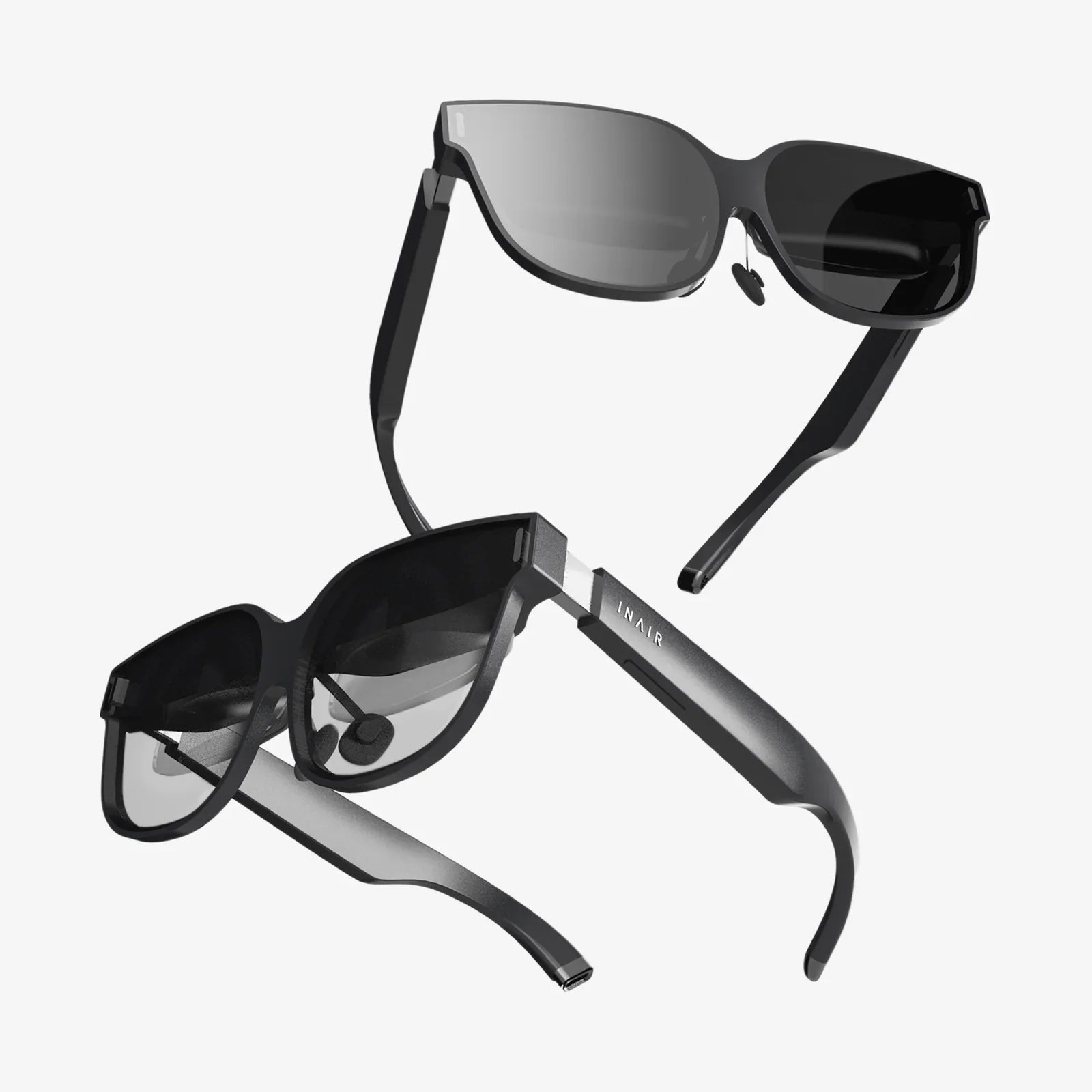
Reality glasses are no longer a sci-fi prop; they are quietly becoming the next big screen in our lives. From turning your living room into a cinema to overlaying step-by-step instructions on real machinery, these wearable devices promise to merge the digital and physical worlds in ways that a flat phone screen never could. If you have ever wondered what it would feel like to live inside your apps, reality glasses are the closest answer we have so far.
As investment and innovation accelerate, reality glasses are moving from experimental gadgets to tools with real-world value. Workers are using them to assemble complex equipment, students are dissecting virtual organisms in mid-air, and designers are walking through full-scale buildings that do not yet exist. Understanding how these glasses work, where they shine, and what pitfalls they carry is essential if you want to be ready for the next computing shift.
What Are Reality Glasses?
Reality glasses are wearable devices that project digital content into your field of view while you look at the real world. Instead of staring down at a phone, you see information, images, or 3D objects floating in front of you or anchored to real-world locations. They are worn like regular glasses or goggles and rely on a mix of sensors, displays, and software to align digital content with your surroundings.
Although the term is broad, reality glasses generally fall into three overlapping categories:
- Augmented reality (AR) glasses – Overlay digital elements onto the real world without blocking it. You can still see your environment, with extra layers of information such as navigation arrows, labels, or interactive objects.
- Mixed reality (MR) glasses – Go a step further by making digital objects appear anchored to the physical world. These objects can interact with real surfaces and respond to your movements, creating a sense that virtual elements truly inhabit your space.
- Virtual reality (VR) headsets – Fully immerse you in a digital environment, blocking out the real world entirely. While often bulkier than glasses, the line is blurring as devices get slimmer and start offering pass-through views of reality.
When people talk about reality glasses, they usually mean AR and MR devices that you can wear comfortably in daily life, not just for short gaming sessions. These are intended to become more like everyday eyewear than a special-purpose gadget.
How Reality Glasses Work: Core Technologies
Reality glasses rely on a sophisticated stack of hardware and software to create convincing digital overlays. Several key technologies make the magic possible:
Optics and Displays
The display system is at the heart of reality glasses. It must place digital imagery in front of your eyes without blocking your view of the real world (for AR and MR) or while fully enclosing you in a virtual space (for VR). Common approaches include:
- Waveguide optics that guide light from a small projector through a transparent lens, making digital content appear as if it is floating in front of you.
- Micro-OLED or micro-LED displays that offer high brightness and contrast in a tiny form factor, crucial for visibility outdoors and for crisp text.
- Lens-based projection where light is reflected off semi-transparent mirrors or combiner lenses to overlay images on your view of the real world.
These systems must balance brightness, clarity, field of view, and weight. Too dim and you cannot see the overlay outdoors; too heavy and you will not wear them for long.
Sensors and Environmental Awareness
To correctly place digital objects in your environment, reality glasses must constantly sense and understand the world around you. They typically include:
- Cameras to capture the environment, track surfaces, and sometimes provide a pass-through view of reality.
- Depth sensors or time-of-flight sensors to measure distances to objects and map the room in 3D.
- Inertial measurement units (IMUs) that track head movement using accelerometers and gyroscopes, enabling stable overlays even as you move.
- Eye-tracking sensors in more advanced devices, which detect where you are looking and allow for foveated rendering and gaze-based interaction.
All of this data feeds into algorithms that build a live 3D model of your surroundings, allowing digital objects to appear fixed to real surfaces and to respond when you walk around them.
Processing Power and Connectivity
Reality glasses are essentially small computers on your face. They need processors capable of handling graphics, sensor fusion, and spatial mapping in real time. Some models contain all the processing hardware inside the frames, while others offload heavy tasks to a phone, belt-worn compute unit, or remote cloud server.
Connectivity options such as Wi-Fi and cellular connections enable cloud-based rendering, multi-user shared experiences, and real-time collaboration across distances. As networks become faster and more reliable, the possibility of lightweight glasses with powerful cloud-based brains becomes more realistic.
Interaction Methods
Without a traditional keyboard or mouse, reality glasses rely on alternative ways for you to interact with digital content. Common methods include:
- Hand and gesture tracking – Cameras track your hands so you can pinch, grab, swipe, or tap virtual objects in mid-air.
- Voice commands – Microphones and speech recognition let you control apps, search, and dictate text using natural language.
- Eye tracking and gaze – Your gaze can be used to select items or focus on content, reducing the need for physical input.
- Companion devices – Some systems support small controllers, rings, or wristbands for more precise input.
These interaction models are still evolving, and how intuitive they feel will heavily influence how widely reality glasses are adopted.
Everyday Uses Of Reality Glasses
Reality glasses are often associated with gaming and futuristic demos, but their most transformative impact may come from ordinary, everyday uses.
Navigation And Wayfinding
Imagine walking through a complex city or a huge airport with arrows floating at your feet, guiding you turn by turn. Reality glasses can overlay navigation cues directly onto the world, reducing the need to look down at a phone. They can highlight building entrances, show you which train car has more room, or indicate which doorbell belongs to your delivery destination.
Productivity And Multitasking
Reality glasses can turn any space into a multi-monitor workstation. Instead of being limited to a laptop screen, you could pin virtual displays around your desk or living room: a browser window floating above your keyboard, a video call window to your left, a document to your right. Because these displays are virtual, you can adjust their size, position, and number without physical hardware.
For remote workers, reality glasses may help recreate the feeling of a shared office by placing virtual colleagues around a table or showing shared documents as large interactive boards.
Entertainment And Media
Entertainment is one of the most obvious early uses for reality glasses. Instead of a TV, you could watch a movie on a virtual screen as large as a wall, positioned wherever you want. Sports broadcasts might overlay live stats on players as they move, or show multiple camera angles around the field.
Interactive stories can become more immersive when characters appear in your room, and music experiences can transform your surroundings with visual effects that sync with the sound. Reality glasses also enable shared viewing, where multiple people in the same space see the same virtual screen.
Communication And Social Presence
Video calls may evolve from flat screens into spatial experiences. Instead of staring at a grid of faces, you might see life-sized avatars of your friends or colleagues seated around your real table. Spatial audio can make voices sound as if they come from each person’s position, increasing a sense of presence.
For casual social interaction, reality glasses could allow friends to leave virtual notes pinned to your room, share 3D objects, or play games that blend digital characters with your physical space.
Professional And Industrial Applications
While consumer uses are gaining attention, many of the most mature applications of reality glasses are in professional settings where they can deliver immediate value.
Field Service And Maintenance
Technicians repairing complex equipment can wear reality glasses that overlay step-by-step instructions directly onto the machinery. Instead of flipping through manuals, they see arrows pointing to the next screw to remove, or warnings about high-voltage components.
Remote experts can see what the technician sees through the glasses’ cameras and annotate the view in real time, drawing circles or arrows that appear over the equipment. This reduces travel costs and can speed up repairs, especially in remote locations.
Manufacturing And Assembly
In factories, reality glasses can guide workers through assembly tasks, highlight parts bins, and confirm that each step is completed correctly. Quality control inspectors can receive visual cues about areas to inspect, and real-time data about production can be displayed in their field of view without requiring them to leave the work area.
By reducing errors and training time, reality glasses can improve efficiency and consistency in manufacturing processes.
Architecture, Engineering, And Construction
Designers and engineers can use reality glasses to visualize 3D models at full scale in the real world. For example, an architect can stand on a construction site and see the planned structure overlaid on the empty space. This helps identify design issues early and communicate ideas to clients more clearly.
Construction teams can see where pipes, cables, or beams should go, reducing mistakes and rework. As-built conditions can be compared with digital plans in real time, improving coordination between different trades.
Healthcare And Surgery
In healthcare, reality glasses can provide surgeons with real-time information during procedures, such as patient vital signs, imaging overlays, or 3D models of anatomy aligned with the patient’s body. Medical students can practice procedures in mixed reality, learning from interactive simulations that respond to their actions.
Beyond the operating room, reality glasses can assist in rehabilitation by guiding patients through exercises and giving instant feedback on posture or movement.
Education, Training, And Skill Development
Reality glasses have the potential to reshape how people learn, making education more interactive and context-rich.
Immersive Classrooms
Students can explore historical events as if they were standing in the middle of them, or manipulate virtual molecules in 3D rather than looking at static diagrams. Complex concepts become more tangible when learners can walk around them, zoom in, or see them in action.
Language learners might practice conversations with virtual characters that respond naturally, while geography lessons could involve exploring virtual landscapes layered onto the classroom.
On-The-Job Training
Reality glasses enable just-in-time learning, where instructions appear exactly when and where they are needed. New employees can be guided through tasks with visual cues, reducing the need for constant supervision. Simulations of hazardous scenarios can be conducted safely, allowing workers to practice responses without real-world risk.
This approach can shorten training cycles and improve retention, because people learn by doing rather than only reading or watching.
Design, Creativity, And Collaboration
Reality glasses open new possibilities for creative professionals and teams who need to collaborate on visual ideas.
3D Design In Real Space
Instead of designing 3D objects on a flat screen, creators can sculpt, arrange, and modify models in the space around them. This allows for more intuitive understanding of scale, proportion, and ergonomics. Furniture designers can place virtual prototypes in real rooms; fashion designers can see garments on virtual mannequins at life size.
Remote Collaboration
Teams spread across different locations can meet in shared virtual spaces where they see the same 3D models and annotations. Reality glasses can display these shared elements in each person’s physical environment, making remote collaboration feel more like being in the same room.
Whiteboards, sticky notes, and diagrams become spatial objects that participants can manipulate, improving engagement and clarity during brainstorming sessions.
Challenges And Limitations Of Reality Glasses
Despite their promise, reality glasses face significant hurdles before they become as common as smartphones.
Comfort, Design, And Social Acceptance
For many people, wearing bulky headsets in public feels awkward. Devices must become lighter, more stylish, and more comfortable for all-day use. Battery life is also a constraint; powerful displays and processors consume energy quickly, forcing trade-offs between performance and endurance.
Social norms are another challenge. People may feel uneasy interacting with someone wearing opaque glasses or devices with visible cameras. Clear indicators of when cameras are active, along with thoughtful design, will be important for acceptance.
Privacy And Data Security
Reality glasses can collect an enormous amount of data: your location, surroundings, gestures, and even eye movements. This creates serious privacy concerns. For example, continuous environmental scanning could inadvertently capture sensitive information about bystanders or private spaces.
Responsible use requires robust data protection policies, transparent consent mechanisms, and options for local processing that minimize the need to send raw sensor data to remote servers. Regulations may evolve to address how and when reality glasses can be used in public or sensitive areas.
Health And Well-Being
Extended use of head-mounted displays can cause eye strain, fatigue, or motion discomfort in some users, especially if the visuals are not well calibrated. Designers must consider ergonomics, visual comfort, and the need for regular breaks.
There is also a broader concern about how blending digital and physical realities might affect attention, social interaction, and mental health. If notifications and virtual content are constantly in view, managing distraction becomes even more challenging than with phones.
Content And Standards
Reality glasses are only as useful as the experiences they offer. Creating high-quality, spatially aware content is more complex than building traditional apps. Developers must account for variable environments, lighting conditions, and user movement.
Interoperability is another issue. Without common standards, experiences built for one platform may not run on another, fragmenting the ecosystem and slowing adoption. Over time, shared formats and frameworks will likely emerge to ease development and ensure consistent experiences.
How Reality Glasses Could Change Daily Life
As reality glasses improve and become more affordable, they could alter many subtle aspects of daily living.
Replacing Or Complementing Smartphones
Reality glasses may not immediately replace smartphones, but they could gradually become the primary way people consume information on the go. Quick tasks like checking messages, getting directions, or glancing at the weather become more seamless when information appears in your field of view without reaching into your pocket.
Over time, as input methods and battery life improve, more complex tasks might migrate to glasses, with phones serving as background compute units or disappearing altogether.
Context-Aware Assistance
Because reality glasses know where you are and what you are looking at, they can offer context-sensitive help. Looking at a foreign sign could trigger instant translation overlaid on the text. Staring at a complex device might bring up instructions or warnings. Browsing a bookshelf could reveal reviews and summaries of each title as you glance at it.
This level of situational awareness can be powerful, but it also raises questions about how much assistance is helpful versus intrusive. Users will need fine-grained control over what information appears and when.
Blending Physical And Digital Identities
Reality glasses could blur the line between physical and digital identity. Name tags, professional roles, or shared interests might appear above people in certain contexts, such as conferences or networking events. While this can make introductions easier, it also creates potential for bias and privacy issues if personal data is overexposed.
Digital fashion may also emerge more strongly: people might wear simple physical clothing while projecting digital enhancements visible through reality glasses, turning style into a mix of physical and virtual expression.
What To Consider Before Using Reality Glasses
If you are thinking about adopting reality glasses as they become more available, there are several factors worth considering:
- Use cases – Identify what you actually want to do: productivity, entertainment, training, navigation, or creative work. This will influence the type of device and apps that matter most.
- Comfort and fit – Weight, balance, and adjustability are critical. A device that feels fine for five minutes may become uncomfortable after an hour.
- Display quality – Look for clarity, brightness, and field of view that suit your environment, especially if you plan to use the glasses outdoors or for reading text.
- Privacy controls – Check what data is collected, where it is stored, and how you can manage permissions. Pay attention to camera indicators and options for offline use.
- Battery life – Consider how long you need the device to last between charges and whether you can easily recharge during the day.
- Software ecosystem – The value of reality glasses depends heavily on the apps and content available. Make sure your key needs are supported.
The Road Ahead For Reality Glasses
Reality glasses are poised to become one of the most significant shifts in personal computing since the smartphone. They promise a world where information is no longer trapped behind screens but woven into the spaces where we live and work. That promise is powerful: more intuitive learning, more efficient work, richer entertainment, and new forms of creative expression.
The path to that future will not be simple. Designers and policymakers must navigate challenges around comfort, privacy, social norms, and health. Users will need to learn how to balance immersive digital experiences with the need to stay grounded in the physical world. Yet the direction of travel is clear: computing is moving closer to our senses, becoming more spatial, contextual, and integrated into everyday life.
If you are curious about where technology is heading, reality glasses are worth watching closely. They hint at a future where digital tools feel less like separate devices and more like an invisible layer of capability always within reach. The question is not only what these glasses will be able to do, but how we will choose to use them—and how they will reshape the way we see everything around us.
共有:
Reality Eyeglasses And The Future Of Immersive Vision
Visual Smart Device Trends Transforming Everyday Life and Work