


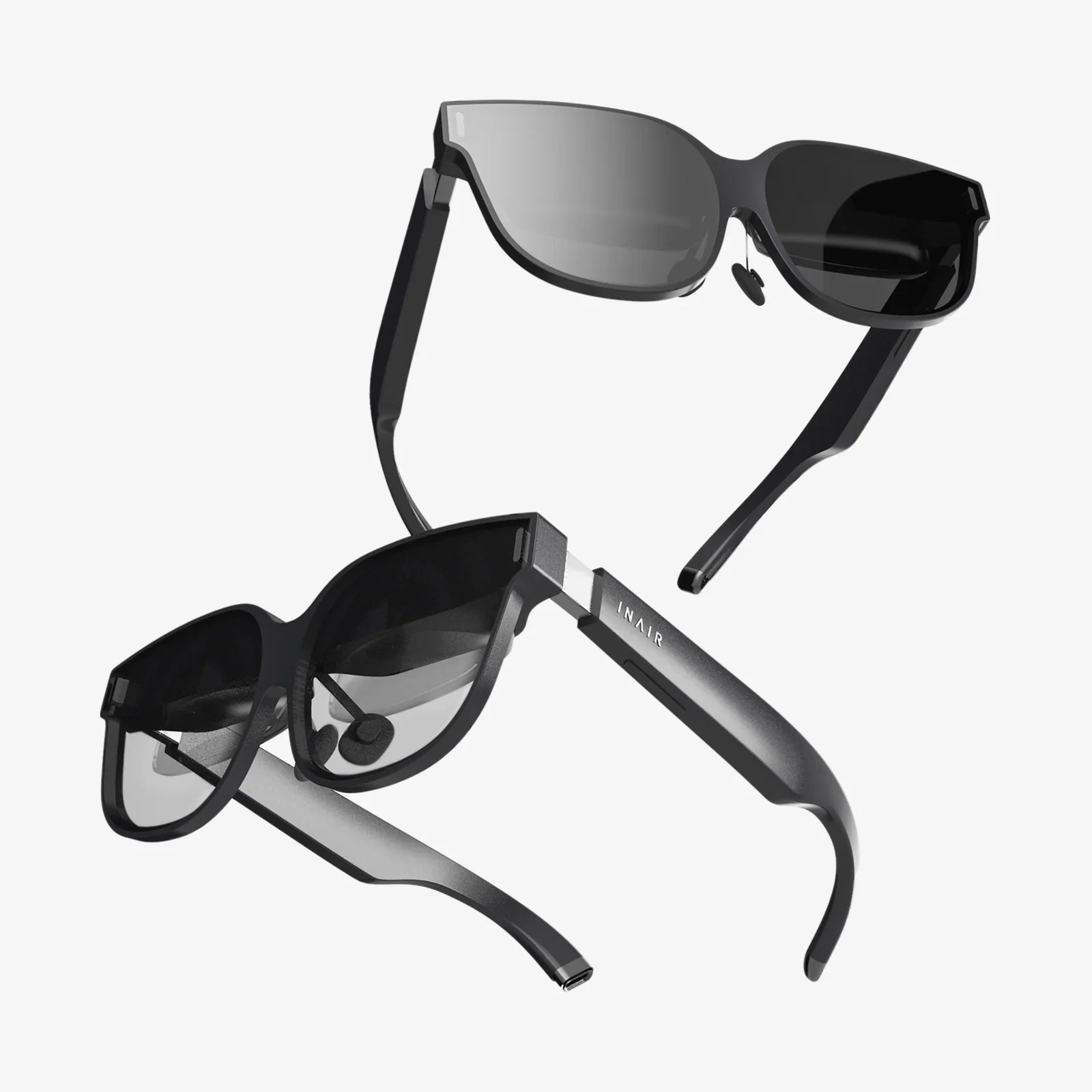
Wearable display glasses are quietly becoming the next big leap in personal technology, promising to turn every walk, commute, and workday into an immersive digital experience. Instead of staring down at phones or being tethered to bulky monitors, people are beginning to imagine a world where information simply appears in front of their eyes, layered seamlessly over reality. This shift is not just about cool gadgets; it is about redefining how we work, learn, socialize, and navigate the physical world.
As these devices move from experimental prototypes to consumer-ready products, the conversation is rapidly shifting from “Is this possible?” to “How will this change my life?” Understanding wearable display glasses now means gaining a glimpse into the future of computing, where screens become invisible, interfaces feel natural, and the boundary between digital and physical spaces grows thinner every year.
What Are Wearable Display Glasses?
Wearable display glasses are head-mounted devices that look similar to traditional eyewear but integrate miniature displays, sensors, and computing components to present digital content directly in the user’s field of view. They can overlay information onto the real world (augmented reality), fully immerse the user in a virtual environment, or mix both approaches depending on the design and use case.
Unlike handheld devices, wearable display glasses free up the user’s hands and maintain continuous alignment with their gaze. This creates a unique combination of mobility, awareness, and immersion. Instead of pulling a phone out of a pocket, users can receive navigation cues, messages, or contextual information at a glance, without breaking their focus or posture.
Key Technologies Inside Wearable Display Glasses
The magic of wearable display glasses comes from a complex blend of optical engineering, sensor fusion, and miniaturized computing. Several core technologies work together to create an experience that feels natural and usable.
Optical Systems and Display Engines
At the heart of wearable display glasses is the optical system that projects images into the user’s eyes. Common approaches include:
- Waveguide optics: Ultra-thin transparent layers that channel light from a tiny projector into the eye, allowing digital content to appear as if it floats in front of or within the real world.
- Micro-OLED or micro-LED displays: Very small, high-resolution displays that provide bright, sharp images in a compact form factor.
- Birdbath or reflective optics: Systems that use mirrors or lenses to reflect a display into the user’s field of view, often used in early or bulkier designs.
These optical engines must balance brightness, clarity, color accuracy, and field of view while remaining light enough to wear comfortably for extended periods. They also need to avoid eye strain by aligning properly with the user’s pupils and providing consistent focus.
Sensors and Environmental Awareness
To understand the world around the user and respond intelligently, wearable display glasses rely on a suite of sensors:
- Cameras: Capture the environment for augmented reality overlays, object recognition, and sometimes photography or video capture.
- Inertial measurement units (IMUs): Accelerometers, gyroscopes, and magnetometers track head movement and orientation in real time.
- Depth sensors: Help map the environment in three dimensions, enabling digital objects to appear anchored to real-world surfaces.
- Eye-tracking sensors: Monitor where the user is looking, enabling foveated rendering, more natural interaction, and adaptive interfaces.
By combining these inputs, the glasses can precisely align digital content with the physical world and ensure that graphics remain stable even as the user moves.
Processing, Connectivity, and Power
Wearable display glasses require enough computing power to handle graphics, sensor fusion, and connectivity without generating excessive heat or draining the battery too quickly. Designs typically include:
- Onboard processors: Custom chips optimized for low-power, high-efficiency computation, especially for graphics and AI tasks.
- Wireless connectivity: Wi-Fi and Bluetooth for linking to phones, computers, and cloud services, sometimes with optional cellular connectivity.
- Battery systems: Compact rechargeable batteries integrated into the frame or tethered to an external pack, balanced to provide useful runtime without excessive weight.
The challenge is to deliver a fluid, responsive experience while keeping the glasses light, cool, and comfortable. This has driven significant innovation in chip design, thermal management, and power optimization.
Types of Wearable Display Glasses
Not all wearable display glasses aim for the same experience. The category spans a spectrum from subtle heads-up displays to fully immersive mixed reality systems.
Heads-Up Display (HUD) Glasses
HUD-style glasses provide simple, glanceable information in a small portion of the user’s field of view. Typical use cases include:
- Navigation arrows and turn-by-turn directions.
- Notifications such as messages or calls.
- Basic fitness metrics like pace, distance, or heart rate.
These devices prioritize lightness, battery life, and discretion over complex 3D graphics. They are often the easiest to integrate into everyday life because they resemble regular eyewear and do not fully alter the user’s perception of reality.
Augmented Reality (AR) Glasses
AR glasses overlay digital content directly onto the real world, allowing users to see both simultaneously. They can place labels on objects, show virtual screens anchored to walls, or display 3D models on tables. Common applications include:
- Work instructions and guidance in industrial or technical environments.
- Educational overlays for museums, classrooms, or training simulations.
- Product visualization, interior design previews, and interactive advertising.
AR glasses require more advanced spatial mapping and graphics capabilities, as digital content must align precisely with real-world surfaces and respond to user movement.
Mixed Reality and Immersive Glasses
Mixed reality glasses blend AR with elements of virtual reality, allowing digital objects to interact with the physical world in sophisticated ways. For example, a virtual character might walk around a real room, hide behind furniture, and respond to the user’s voice and gestures. These devices often feature:
- Wide fields of view for more immersive scenes.
- Advanced hand-tracking and gesture recognition.
- High processing power for complex 3D experiences.
While typically bulkier than simple HUD glasses, mixed reality systems showcase the full potential of spatial computing and immersive interaction.
Everyday Uses of Wearable Display Glasses
The promise of wearable display glasses comes to life when we look at how they can enhance everyday activities. From work to entertainment to travel, the potential use cases are broad and steadily growing.
Productivity and Remote Work
For professionals, wearable display glasses can transform how information is displayed and manipulated:
- Virtual multi-monitor setups: Workers can create multiple floating screens around them without physical monitors, useful in small spaces or for on-the-go productivity.
- Hands-free reference materials: Technicians, engineers, or healthcare workers can view manuals, patient data, or schematics while keeping both hands free for tasks.
- Immersive remote collaboration: Remote colleagues can appear as life-sized avatars or video windows, with shared 3D models or documents visible to everyone.
These experiences can reduce reliance on physical hardware, support hybrid work environments, and make complex information easier to understand by placing it in context.
Entertainment, Gaming, and Media
Wearable display glasses are particularly compelling for entertainment:
- Personal cinema mode: Users can watch movies or shows on a virtual large screen that appears in front of them, whether they are on a plane, in bed, or sitting on a couch.
- AR-enhanced gaming: Games can bring digital characters and objects into the user’s living space, turning a living room into a battlefield, puzzle arena, or fantasy world.
- Interactive storytelling: Stories can unfold around the user, with characters appearing in the environment and scenes adapting to user choices.
By placing media directly in the field of view and integrating it with the physical world, wearable display glasses can make entertainment more immersive and personal than traditional screens.
Navigation and Travel
Travel and navigation become far more intuitive when directions appear in the real world rather than on a map:
- Turn-by-turn arrows overlaid on streets and sidewalks.
- Contextual information about landmarks, restaurants, and transit options.
- Real-time translation of signs or menus, displayed directly in the user’s view.
For tourists, this means exploring new cities without repeatedly checking a phone. For commuters, it can simplify multi-step journeys and reduce confusion in complex transit hubs.
Fitness, Sports, and Outdoor Activities
Wearable display glasses can deliver real-time performance data without breaking stride:
- Cyclists can see speed, distance, and navigation cues in their line of sight.
- Runners can track pace and heart rate while focusing on form and surroundings.
- Hikers can receive trail information, weather updates, and safety alerts.
By presenting data unobtrusively, these devices can enhance safety and performance while keeping users engaged with their environment instead of a handheld screen.
Education and Training
Education is one of the most promising areas for wearable display glasses:
- Interactive lessons: Students can see 3D models of molecules, historical artifacts, or planetary systems anchored in their classroom.
- Skill training: Trainees can receive step-by-step AR guidance while practicing procedures in fields such as medicine, aviation, or manufacturing.
- Remote instruction: Instructors can observe a learner’s environment through the glasses and provide real-time feedback and annotations.
This approach can make complex or abstract concepts more tangible and memorable by placing them directly into the learner’s surroundings.
Healthcare and Accessibility
In healthcare and accessibility, wearable display glasses can be transformative:
- Surgeons can view patient data, imaging, and guidance overlays without looking away from the operative field.
- Rehabilitation programs can use AR exercises tailored to a patient’s progress.
- People with certain visual impairments can use contrast enhancement, magnification, or text-to-speech overlays to better interpret their environment.
By integrating real-time data and contextual information, these devices can support both medical professionals and patients in more personalized and efficient ways.
Design Considerations: Comfort, Style, and Social Acceptance
For wearable display glasses to become truly mainstream, they must not only be powerful but also comfortable, stylish, and socially acceptable.
Weight, Fit, and Ergonomics
Wearing a device on the face for hours magnifies any discomfort. Designers must consider:
- Even weight distribution across the nose and ears.
- Adjustable nose pads and temple arms for different head shapes.
- Ventilation and heat management to prevent hotspots.
Lightweight materials, clever component placement, and modular designs that can adapt to prescription lenses all contribute to a more comfortable experience.
Aesthetics and Discretion
Many people are hesitant to wear devices that look obviously high-tech or intrusive. To overcome this, manufacturers focus on:
- Frames that resemble conventional eyewear.
- Subtle integration of cameras and sensors.
- Minimal external lighting that might draw attention.
The more wearable display glasses blend into everyday fashion, the easier it becomes for users to adopt them in social and professional settings without feeling self-conscious.
Interaction Methods and Usability
Control schemes must feel natural and intuitive. Common interaction methods include:
- Voice commands: Useful for hands-free control but may be awkward in public or noisy environments.
- Touch controls: Swipes and taps on the frame for quick actions.
- Gesture recognition: Hand or finger movements detected by cameras.
- Eye-tracking and gaze control: Selecting items by looking at them, combined with subtle gestures or voice.
Successful designs often combine several methods so users can choose what feels most comfortable in a given context.
Privacy, Security, and Ethical Concerns
The same features that make wearable display glasses powerful also raise important questions about privacy and ethics. Cameras, microphones, and sensors worn on the face can affect both the wearer and people nearby.
Recording and Bystander Privacy
When glasses can silently record video or audio, bystanders may feel uncomfortable or surveilled. Key issues include:
- Clear indicators when recording is active, such as visible lights or on-screen prompts.
- Policies and etiquette for using such devices in sensitive environments like schools, offices, or private spaces.
- Legal frameworks governing consent and data collection in public and private settings.
Social norms will need to evolve, and users will likely need to develop habits similar to how people learned to respect boundaries with cameras and smartphones.
Data Security and Personal Information
Wearable display glasses can collect detailed information about a user’s surroundings, behavior, and interactions. Protecting this data is crucial:
- Strong encryption for stored and transmitted data.
- Transparent privacy settings that allow users to control what is collected and shared.
- Local processing of sensitive information whenever possible to reduce reliance on cloud services.
As these devices integrate with productivity tools, health systems, and communication platforms, robust security practices become essential to maintain user trust.
Attention, Safety, and Cognitive Load
Constant access to information is powerful but can also be distracting. Designers must consider:
- Limiting notifications to reduce cognitive overload.
- Special modes for driving, cycling, or hazardous environments that restrict certain features.
- Interface designs that respect the user’s need for focus and downtime.
Striking the right balance between helpful information and distraction will determine whether wearable display glasses enhance or undermine attention and well-being.
Technical Challenges and Limitations
Despite rapid progress, wearable display glasses still face significant technical hurdles before they can fully replace or complement existing devices for everyone.
Field of View and Visual Quality
Many current designs offer a narrower field of view than natural human vision, making digital content appear like a floating window rather than a fully immersive overlay. Improving this without adding weight or reducing brightness remains a major engineering challenge.
Additionally, visual artifacts such as glare, color fringing, or limited contrast can affect the realism and comfort of the experience, especially in bright outdoor environments.
Battery Life and Heat
Continuous graphics processing, sensor operation, and wireless connectivity consume power quickly. Extending battery life without making the glasses heavy or hot requires:
- More efficient processors and display technologies.
- Adaptive power management that scales performance to the task.
- Potential use of external battery packs for demanding use cases.
Users will be more willing to rely on wearable display glasses daily when they can trust the device to last through typical work or leisure sessions without frequent charging.
Content Ecosystems and Standards
For wearable display glasses to be truly useful, they need rich ecosystems of applications, content, and services. Challenges include:
- Developing standardized tools and frameworks for AR and mixed reality content.
- Ensuring compatibility across devices, platforms, and operating systems.
- Encouraging developers to design experiences specifically tailored to spatial computing rather than simply porting flat-screen apps.
The value of the hardware will increasingly depend on the quality and variety of software available to users.
The Future of Wearable Display Glasses
Looking ahead, wearable display glasses are likely to evolve from niche devices into central components of everyday computing. Several trends will shape this trajectory.
Integration with Artificial Intelligence
As AI systems become more capable, wearable display glasses can act as a natural interface between the user and intelligent assistants:
- Real-time translation, summarization, and contextual information overlays.
- Personalized recommendations based on location, activity, and preferences.
- Proactive assistance, such as suggesting tasks, reminders, or relevant information at the right moment.
By combining spatial awareness with AI, these devices can deliver guidance and insights in a way that feels less like using a tool and more like collaborating with a digital companion.
Convergence with Other Wearables
Wearable display glasses will likely work in concert with other devices such as smartwatches, earbuds, and health trackers. This ecosystem approach can:
- Distribute computing and sensing tasks across multiple devices.
- Provide richer context about the user’s state, such as stress or fatigue.
- Enable more natural multimodal interactions combining voice, touch, and gaze.
Rather than replacing all other devices, wearable display glasses may become the visual centerpiece of a broader wearable network.
From Early Adopters to Everyday Users
Adoption will likely follow a familiar pattern: early enthusiasts and professionals, followed by targeted consumer niches, and eventually mainstream users as prices fall and designs improve. Key milestones on this path include:
- Compelling “must-have” applications that clearly justify wearing the device.
- Improved comfort and aesthetics that make all-day wear realistic.
- Clear social norms and etiquette for public use.
As these milestones are met, wearable display glasses could become as common as smartphones, fundamentally altering how people interact with digital information.
Practical Tips for Evaluating Wearable Display Glasses
For individuals or organizations considering wearable display glasses, careful evaluation can ensure that expectations align with current capabilities.
Clarify Primary Use Cases
Start by identifying the main scenarios where the glasses will be used:
- Are they for field work, office productivity, training, entertainment, or travel?
- Will they be used indoors, outdoors, or both?
- Are hands-free operation and safety-critical tasks involved?
Clear priorities help in choosing devices that emphasize the right balance of features such as brightness, field of view, ruggedness, or comfort.
Assess Comfort and Fit Over Time
A quick demo rarely reveals how wearable display glasses feel after hours of use. Whenever possible:
- Test the device for extended periods to evaluate pressure points and heat.
- Consider whether prescription lens support is needed.
- Check how stable the glasses feel during movement.
Comfort can be the deciding factor between a device that becomes part of daily life and one that ends up unused.
Evaluate Visual Quality and Interface Design
Visual clarity and interface usability are central to the experience:
- Check readability of text at different distances and lighting conditions.
- Observe how well digital objects remain anchored when you move your head.
- Explore the interface to see if navigation feels intuitive or confusing.
Even powerful hardware can feel frustrating if the interface is cluttered, inconsistent, or difficult to control.
Understand Privacy and Security Features
Before integrating wearable display glasses into work or personal routines, review how they handle data:
- What information is stored locally versus in the cloud?
- What controls are available for disabling cameras or microphones?
- How are software updates and security patches delivered?
Strong privacy and security practices are essential, especially in professional or sensitive environments.
Why Wearable Display Glasses Matter Now
Wearable display glasses are more than a futuristic curiosity; they represent a shift in how people will experience and control the digital world. As screens shrink, interfaces become spatial, and AI grows more capable, these glasses offer a way to bring information closer to human perception and behavior rather than forcing people to adapt to flat, rectangular displays.
Whether you imagine yourself watching a movie on a virtual theater screen during a long flight, following subtle arrows through a busy city without ever looking down, or collaborating with colleagues around a shared 3D model, wearable display glasses are poised to make such scenarios part of everyday life. Exploring their capabilities, limitations, and implications today means taking an active role in shaping how this emerging technology will fit into your work, your habits, and your sense of what it means to be connected in a world where the line between the physical and digital grows thinner with every passing year.
共有:
Project Looking Glass And The Quest To See Beyond Time
AR XR Guide: How Immersive Tech Is Quietly Rebuilding Our Reality