


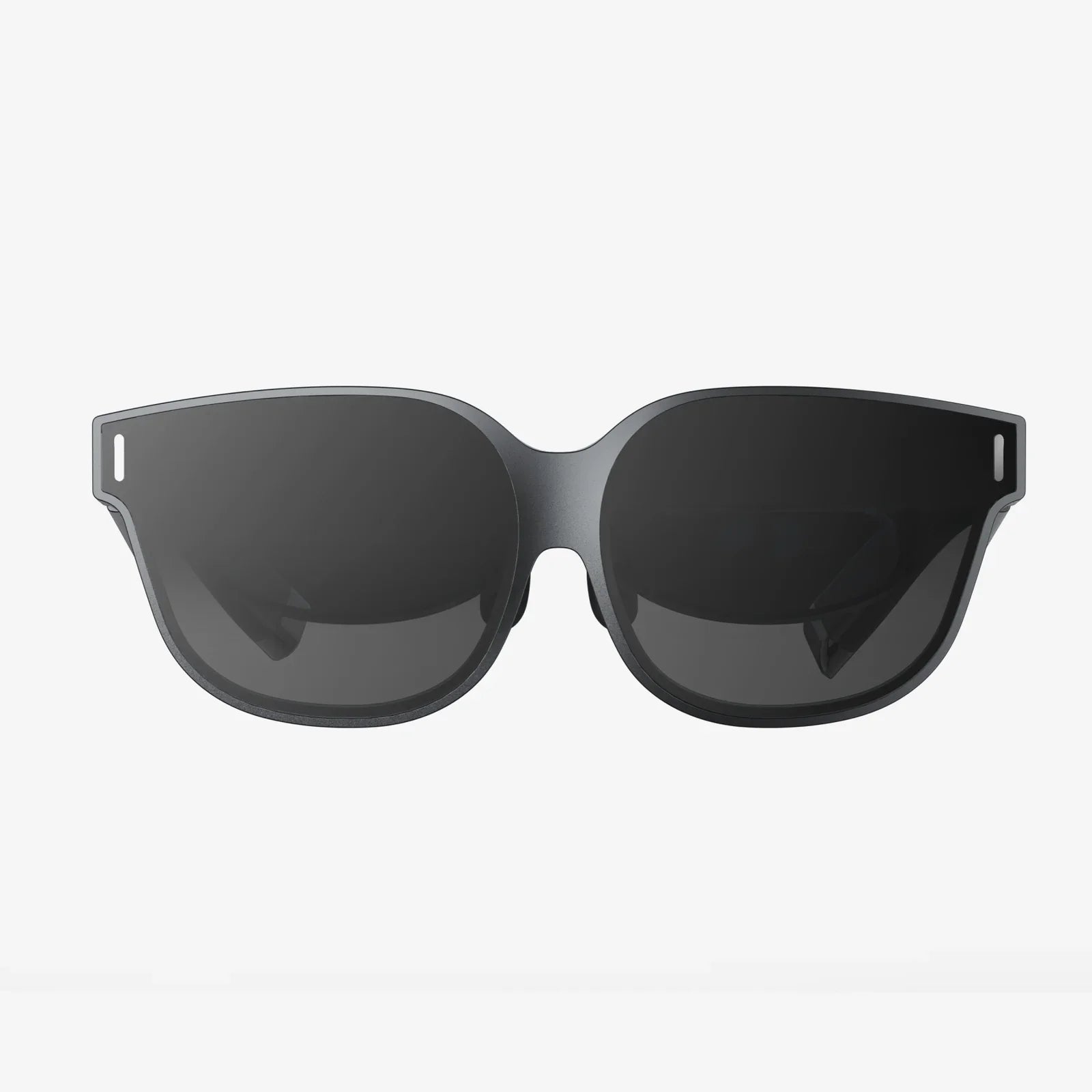
Imagine holding a screen so small it could rest on your fingertip, yet so powerful it can project a crystal-clear, cinematic universe directly before your eyes. This isn't science fiction; it's the reality forged by the incredible engineering behind the 1080p OLED microdisplay, a technological titan in a microscopic package that is silently reshaping the boundaries of human vision and interaction with the digital world.
The Architectural Marvel: Deconstructing the Microdisplay
To understand the significance of a 1080p OLED microdisplay, one must first appreciate the sheer scale of the engineering challenge it overcomes. A traditional 1080p display, measuring diagonally across many inches, packs in just over two million pixels (1920 x 1080). Now, compress that same number of pixels into an active area often smaller than a postage stamp, sometimes measuring less than an inch diagonally. The resulting pixel density is astronomical, creating an image so sharp that any notion of a "screen door effect"—where users can discern the gaps between pixels—is completely obliterated.
The magic lies in its two core components: the resolution and the underlying technology. The "1080p" designation is crucial. In the realm of near-eye applications like augmented reality (AR) and virtual reality (VR) headsets, resolution is paramount. Lower-resolution displays placed mere centimeters from the human retina appear pixelated and grainy, shattering immersion and causing eye strain. Full HD resolution at this proximity is a foundational benchmark for creating convincing, comfortable, and visually coherent digital overlays and virtual environments.
Why OLED? The Perfect Synergy of Light and Darkness
The choice of Organic Light-Emitting Diode (OLED) technology is not incidental; it is fundamentally synergistic with the demands of a microdisplay. Unlike Liquid Crystal Displays (LCDs) that require a separate backlight, each individual pixel in an OLED panel is a microscopic, self-emissive light source. This architecture confers several critical advantages that are magnified in a microdisplay format.
First is the pursuit of perfect black. When an OLED pixel is off, it emits no light whatsoever. This allows for an infinite contrast ratio, meaning the darkest parts of an image are truly, utterly black. This is not just an aesthetic improvement; it is critical for realism and depth perception in simulated environments. It also dramatically reduces the "ghosting" or "halo" effects that can plague other display types when portraying bright objects against dark backgrounds.
Second is response time. OLED pixels can switch on and off orders of magnitude faster than their LCD counterparts. This eliminates motion blur and smearing in fast-paced content, a vital feature for both high-speed simulation and maintaining visual fidelity during rapid head movements in VR.
Finally, OLED technology enables superior power efficiency. Since there is no need for a power-hungry backlight that illuminates the entire display regardless of the content, an OLED microdisplay only consumes significant energy for the pixels that are actively lit. For battery-powered wearable devices, this efficiency translates directly into longer operational times and less heat generation close to the user's face.
The Engine Room: How These Tiny Panels Are Born
Fabricating a 1080p OLED microdisplay is a feat of precision manufacturing, often involving silicon wafer technology borrowed from the semiconductor industry. The foundation is typically a complementary metal-oxide-semiconductor (CMOS) backplane. This isn't just a passive substrate; it's an active matrix of ultra-fine transistors, one for each of the two million-plus pixels, etched onto the silicon wafer. This CMOS layer provides the intelligence and speed required to control each pixel with pinpoint accuracy.
On top of this electronic foundation, the organic light-emitting materials are deposited through highly controlled processes like evaporation or inkjet printing in a vacuum chamber. These layers are astonishingly thin, often just a few hundred nanometers thick. They are then sealed with a protective thin-film encapsulation to shield the sensitive organic materials from degradation caused by oxygen and moisture. The entire structure is a masterpiece of miniaturization and integration, where electronics and photonics converge to create light itself.
A Universe of Applications: Beyond Science Fiction
The impact of 1080p OLED microdisplays extends far beyond consumer entertainment, seeding revolutions across multiple professional and scientific fields.
The New Reality: Augmented and Virtual Worlds
This is the most visible and transformative application. In AR smart glasses, a 1080p OLED microdisplay projects information—maps, messages, data—onto waveguides or other optical combiners that make it appear superimposed on the real world. The high resolution and perfect blacks are essential for rendering text and graphics that are legible and visually separate from the background environment, regardless of lighting conditions.
In VR headsets, these microdisplays are placed in front of each eye, creating an all-encompassing digital universe. The 1080p resolution per eye is a baseline for achieving presence—the convincing feeling of being "inside" the virtual world—without the distracting grid of pixels that plagued earlier devices. The fast response time ensures comfort during immersion, critical for widespread adoption.
Seeing the Unseeable: Medical and Scientific Imaging
In the medical field, 1080p OLED microdisplays are integral to next-generation surgical guidance systems. They are being integrated into surgical microscopes and head-mounted displays, allowing surgeons to view critical patient data like MRI overlays or vital signs directly within their field of view without looking away from the operating table. This enhances precision and reduces procedural time.
Furthermore, their use in electronic viewfinders (EVFs) for professional photography and videography has been a game-changer. Photographers can now preview their shot with an accuracy that truly represents the final image, thanks to the exceptional color gamut, contrast, and clarity offered by these panels.
Training and Simulation: Preparing for the Real Thing
From training pilots to educating mechanics, high-fidelity simulators rely on visually perfect experiences. 1080p OLED microdisplays are the core of compact, high-performance simulation headsets used for training in aviation, military operations, and heavy machinery operation. Their ability to render realistic scenes with deep contrast and vibrant color is essential for creating effective and believable training scenarios that translate seamlessly to real-world skills.
Challenges and The Road to 4K and Beyond
Despite their prowess, the development of these components is not without hurdles. Achieving even higher resolutions, such as 4K, on a micro-scale presents immense manufacturing challenges, pushing the limits of photolithography and material science. Power management remains a constant battle, as driving millions of pixels at high brightness demands innovative circuitry and energy-efficient pixel designs. Furthermore, ensuring longevity and preventing burn-in of the organic materials under intense use is a key focus of ongoing research and development.
The future, however, is radiant. We are rapidly advancing towards microdisplays with resolutions that will make 1080p seem like a stepping stone. The integration of new materials, such as quantum dots, promises even wider color gamuts and higher peak brightness levels. The ultimate goal is to create displays so dense and so perfect that the human eye cannot distinguish them from reality, effectively achieving visual verisimilitude and unlocking applications we have yet to imagine.
You may never hold one in your hand or even see one with your naked eye, but the 1080p OLED microdisplay is the unassuming hero poised to project the future directly onto your retina, blurring the line between the digital and the physical in ways that will redefine human experience itself.
Share:
Technology Trends of Intelligent Mobile Devices Shaping Our Digital Future
Technology Trends of Intelligent Mobile Devices Shaping Our Digital Future