


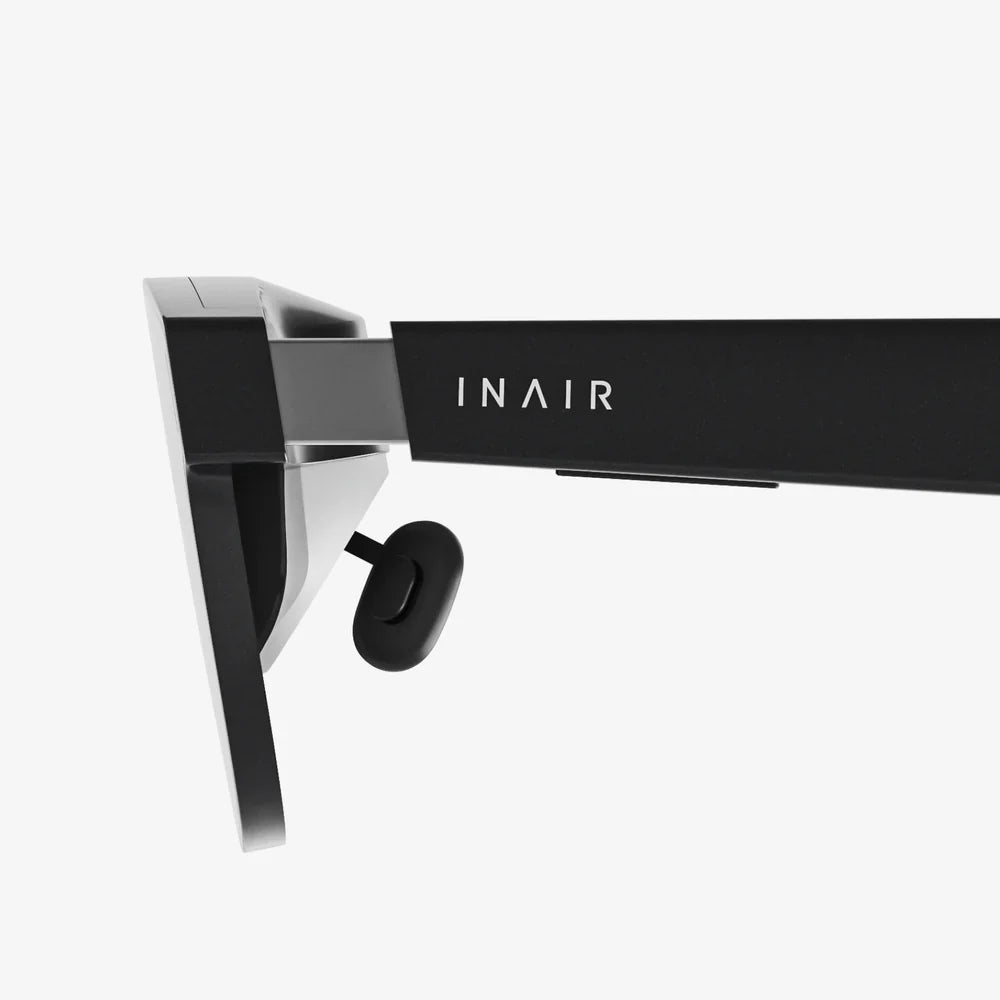
Imagine a world where your digital life isn't confined to a rectangle in your pocket or on your desk, but is seamlessly overlaid onto your physical reality with stunning, cinematic clarity. This is no longer the stuff of science fiction. The arrival of true high-definition, specifically 1080p resolution, in wearable displays is the pivotal breakthrough turning this vision into an accessible, everyday reality. This technological leap is poised to fundamentally alter how we work, play, learn, and connect, moving us beyond the screen and into an era of contextual, immersive computing.
The Resolution Revolution: Why 1080p is the Game Changer
For years, wearable displays, particularly those designed for augmented reality (AR) and virtual reality (VR) applications, were hampered by a fundamental limitation: visual fidelity. Early iterations often suffered from a phenomenon notoriously dubbed the "screen door effect," where users could perceive the fine lines between pixels, making the content look like it was viewed through a mesh door. This drastically broke immersion and made reading text or appreciating fine details a straining chore.
The move to 1080p resolution per eye marks a critical threshold in display technology. 1080p, or Full HD (1920 x 1080 pixels), has long been the benchmark for clear, sharp imagery on televisions and monitors. Translating this standard to a micro-display that sits mere centimeters from the human eye is a monumental engineering feat. The pixel density, measured in pixels per inch (PPI), achieved in these compact form factors is extraordinary, often far exceeding that of the most premium smartphones.
This density is the key to eliminating the screen door effect. When pixels are packed tightly enough, the human eye can no longer distinguish individual ones at a normal viewing distance, resulting in a smooth, continuous image. For wearable displays, this means digital text appears as crisp as printed ink, virtual interfaces look solid and real, and streamed video content feels like a private cinema experience. This level of clarity is not merely an incremental improvement; it is the difference between a distracting tech demo and a usable, practical tool for productivity and entertainment.
Beyond Entertainment: The Expansive Ecosystem of Applications
While immersive gaming and private movie theaters are the most headline-grabbing applications, the impact of high-definition wearable displays extends far deeper into professional and personal realms.
Redefining Remote Work and Collaboration
The modern professional landscape is increasingly remote and distributed. A 1080p wearable display acts as the ultimate portable office. Imagine attending a virtual meeting where life-sized holograms of colleagues sit around a virtual table with you, sharing crisp 3D models that you can walk around and inspect from every angle. For engineers and architects, complex CAD designs or architectural blueprints can be projected onto a physical workspace, allowing for precise overlays and measurements. Coders can have multiple large, virtual monitors floating in their field of view, enabling deep focus and immense productivity from anywhere in the world, untethered from a physical desk.
Transforming Education and Training
Learning becomes an experiential journey with this technology. Medical students can practice intricate surgical procedures on hyper-realistic virtual cadavers, seeing every muscle fiber and nerve ending in stunning detail. History lessons can transform into immersive time-travel experiences, walking through ancient Rome or witnessing historical events unfold. Field technicians can receive real-time, hands-free guidance with arrows and instructions overlaid directly onto the machinery they are repairing, reducing errors and improving safety.
Augmenting Daily Life and Accessibility
On a personal level, the applications are boundless. Navigation arrows can be painted onto the street in front of you, guiding you seamlessly through a new city. Real-time translation of street signs and menus can be displayed directly over the objects you are looking at, breaking down language barriers instantly. For individuals with visual impairments, these devices can magnify text, enhance contrast, and identify objects, granting a new level of independence. The high resolution ensures that all this contextual information is legible and seamlessly integrated, not a blurry, distracting overlay.
The Delicate Dance: Balancing Power, Performance, and Form Factor
Packing a 1080p display into a wearable form factor is only half the battle. The true challenge lies in the supporting architecture that makes it all work.
The Battery Conundrum
Driving two high-resolution displays, multiple sensors, and powerful processing units is an incredibly power-intensive task. Battery technology has not advanced at the same breakneck speed as display and processor tech. This creates a significant design constraint: achieving all-day battery life often requires a trade-off. Some designs opt for a larger, more powerful battery pack that can be housed in a separate unit, perhaps in a pocket, connected via a slim cable. Others prioritize a minimalist, lightweight design but accept shorter usage periods between charges. Innovations in low-power display technologies, like advanced OLED and MicroLED, alongside more efficient processors, are crucial to extending operational life without compromising on comfort.
The Processing Powerhouse
A pristine 1080p image is useless if the system cannot render complex environments smoothly. These wearables require immense processing power for tasks like spatial mapping, object recognition, and rendering high-fidelity graphics in real-time. This processing can be handled on-device by a dedicated chipset or offloaded to a companion device, such as a powerful smartphone or computer, via a high-speed wireless connection. The on-device approach offers greater freedom and lower latency, crucial for responsive AR experiences, but generates more heat and consumes more power. The offloading approach leverages existing hardware but can introduce latency and requires a strong, consistent connection.
Design and Social Acceptance
Perhaps the most significant hurdle is design. For this technology to become mainstream, it must transition from a bulky, geeky headset to a pair of glasses that someone would willingly wear in public. This involves a delicate balance of aesthetics, weight distribution, and comfort. The goal is social wearability—creating a device that feels natural and unobtrusive in social settings. This involves minimizing the "tech" appearance, ensuring the display is only active when the user wants it to be (a concept known as contextual awareness), and providing clear social signals to others when the device is in use.
A Glimpse into the Crystal Clear Future
The evolution of the 1080p wearable display is just the beginning. We are rapidly moving towards even higher resolutions like 4K and 8K, which will make virtual objects utterly indistinguishable from reality. Advancements in fields like photonics will lead to even thinner waveguides and lighter materials. The integration of more sophisticated AI will make these devices truly contextual, anticipating our needs and providing information before we even ask for it. We are moving towards a future of "ambient computing," where technology fades into the background of our lives, and the 1080p wearable display is the critical lens through which this new world will come into focus.
The door to a seamlessly blended reality is now open, and it’s in high definition. The barrier between what is digital and what is real is not just blurring; it’s being redesigned with pixel-perfect precision, offering a glimpse into a future where our most powerful tool is simply what we see.
Share:
AI-Powered Smart Glasses Manufacturer: Shaping the Next Era of Human-Computer Interaction
Smart Glasses Gesture Control: The Invisible Revolution in Human-Computer Interaction