


- by wangfred
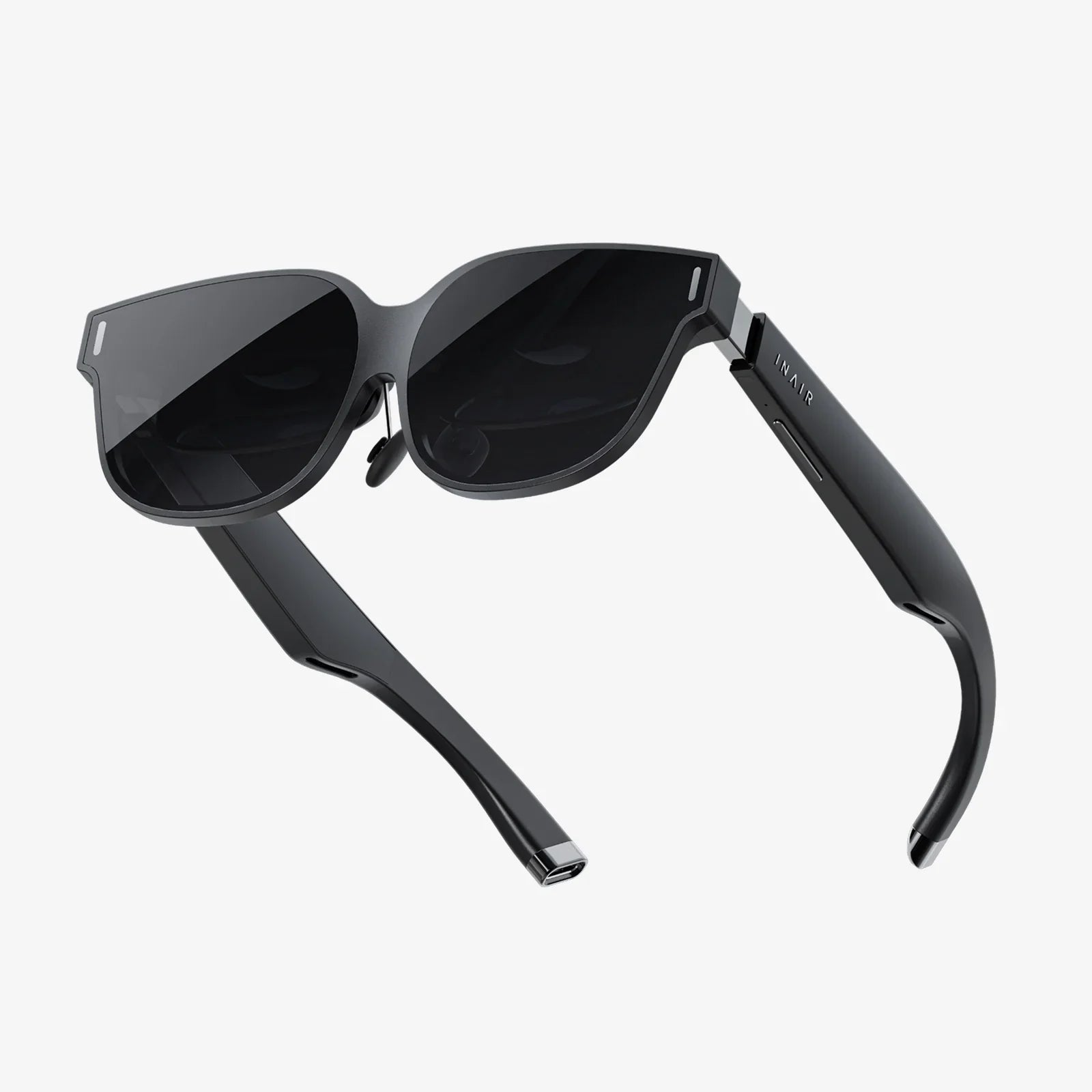
120Hz AR Glasses: The Unseen Revolution Reshaping Our Digital Future
- by wangfred
Imagine a digital layer so flawlessly interwoven with your reality that you can no longer discern where the physical world ends and the virtual one begins. This isn't a distant sci-fi fantasy; it's the imminent future being unlocked by a single, transformative technological leap hidden within the sleek frames of next-generation augmented reality glasses. The key that is quietly shattering the final barriers to true immersion isn't just about resolution or field of view—it’s about fluidity, and it’s measured in Hertz.
Before we delve into the profound implications of 120Hz, we must first speak its language. Refresh rate, measured in Hertz (Hz), is the number of times a display updates its image per second. For decades, the standard for most digital displays, from computer monitors to televisions, was 60Hz. This means the image you see is redrawn 60 times every second. To the human eye, this creates the illusion of motion.
However, the human visual system is extraordinarily perceptive. While 60Hz is sufficient for many applications, it represents a fundamental boundary. When digital objects are superimposed onto our high-motion, high-fidelity real world at 60Hz, subtle imperfections become glaringly obvious. The digital overlay can appear to stutter, lag, or smear, especially during quick head movements or when tracking fast-moving real-world objects. This disconnect creates a cognitive dissonance—your brain immediately recognizes the digital element as artificial, breaking the spell of immersion and, crucially, often leading to a phenomenon known as simulator sickness.
Doubling the refresh rate to 120Hz is not a linear improvement; it is a qualitative leap that crosses a critical perceptual threshold. At 120 frames per second, the motion of digital content achieves a level of smoothness that begins to mirror the continuous, unbroken flow of light we perceive in the natural world.
In essence, 120Hz technology works to make the AR interface itself disappear, allowing you to focus solely on the content and the experience.
Achieving a seamless 120Hz experience is not the task of a single component; it is a symphony of advanced hardware working in perfect harmony. The display panels themselves are marvels of micro-optics, capable of switching states at incredible speeds without sacrificing brightness or color accuracy. But they are just one instrument in the orchestra.
This high-speed visual performance is entirely dependent on a powerful system-on-a-chip (SoC) capable of rendering complex 3D graphics at a consistent 120 frames per second. This requires immense processing power and sophisticated algorithms for spatial mapping, object recognition, and depth sensing, all running concurrently and continuously. Furthermore, ultra-precise inertial measurement units (IMUs)—including gyroscopes and accelerometers—must sample head position and orientation thousands of times a second to feed data to the rendering engine. The interconnects between these components must be high-bandwidth, and the software stack must be ruthlessly optimized to prevent any single element from becoming a bottleneck. It is a holistic engineering challenge where every millisecond counts.
The impact of this fluidity extends far beyond gaming and entertainment, permeating and revolutionizing professional fields.
Architects and automotive designers can walk clients through life-size, photorealistic 3D models of their creations. At 120Hz, every detail is stable and solid. A designer can walk around a virtual car prototype, examining the flow of its curves and the play of light on its surfaces without any visual noise or instability破坏 the illusion. This allows for confident decision-making based on a flawless digital twin.
A specialist engineer thousands of miles away can see through a technician's glasses and annotate the real-world machinery in front of them with arrows, diagrams, and instructions. With a 120Hz refresh rate, these annotations stick perfectly to the components they reference, even as the technician moves their head quickly to look at different angles. This eliminates any miscommunication or ambiguity that lower performance could introduce, making remote guidance as effective as being there in person.
Surgeons can overlay critical patient data—such as MRI scans or vital signs—directly onto their field of view during procedures. The stability and low latency of a 120Hz display are non-negotiable here; a lagging or jittery image could have serious consequences. This technology allows for more precise, less invasive surgeries with all necessary information perfectly anchored in the surgeon's visual space.
Imagine walking through a new city with directional arrows and points of interest painted onto the streets themselves. With 120Hz, these navigational cues remain locked to the environment, providing an intuitive and effortless guide without the disorienting lag that would make it unusable while walking or driving.
The pursuit of higher refresh rates is, at its core, a pursuit of user comfort. Simulator sickness, a form of motion sickness, occurs when there is a conflict between what your eyes see and what your vestibular system (your inner ear balance mechanism) feels. Low refresh rates and high latency in AR are a primary cause of this conflict. Your eyes report a world that is stuttering and lagging behind your head movements, while your inner ear reports smooth and precise motion. This sensory mismatch can quickly lead to dizziness, nausea, and headaches, limiting the usable duration of AR experiences and excluding a significant portion of the population.
By delivering a visual experience that is temporally congruent with our vestibular expectations, 120Hz technology directly addresses this problem. It makes extended AR sessions not only possible but comfortable for a much wider audience, thereby removing one of the most significant adoption barriers the technology has faced.
The adoption of 120Hz represents a critical maturation point for augmented reality, establishing a new baseline for quality and comfort. But the march of progress does not stop here. The industry is already looking toward even higher refresh rates—144Hz, 240Hz, and beyond. These advancements will push the boundary of imperceptibility even further, potentially enabling experiences we can scarcely imagine today.
Furthermore, the true endgame may involve displays with variable refresh rates (VRR), similar to modern gaming monitors. This technology would allow the glasses to dynamically synchronize their refresh rate with the content's frame rate, ensuring perfect smoothness whether you're reading a static document (requiring minimal refresh) or engaged in a high-speed interactive simulation (demanding the full 120Hz). This would optimize both visual performance and power efficiency, a crucial consideration for all-day wearable devices.
We are also moving toward light-field displays and holographic technologies that will require immense data bandwidth and incredibly high refresh rates to accurately simulate the way light naturally behaves and interacts with our eyes. The infrastructure being built today for 120Hz is the necessary foundation for these next-generation visual paradigms.
The race for higher resolution in displays often grabs the headlines, but it is the silent, relentless pursuit of fluidity that is truly building the bridge between our world and the digital ones we wish to create. It is the difference between looking at a screen and living inside an interface. This invisible heartbeat of progress, ticking at 120 times per second, is the unsung hero making the dream of seamless augmented reality a tangible, comfortable, and breathtaking reality. The next time you witness a digital dragon soar seamlessly across a real sky or manipulate a holographic engine block with your bare hands, remember the incredible technology working behind the scenes to make it feel not just impressive, but real.
Share:
Affordable AR Smart Glasses: The Future of Computing is Now Within Reach
VR Under $100: The Ultimate Guide to Affordable Virtual Reality