


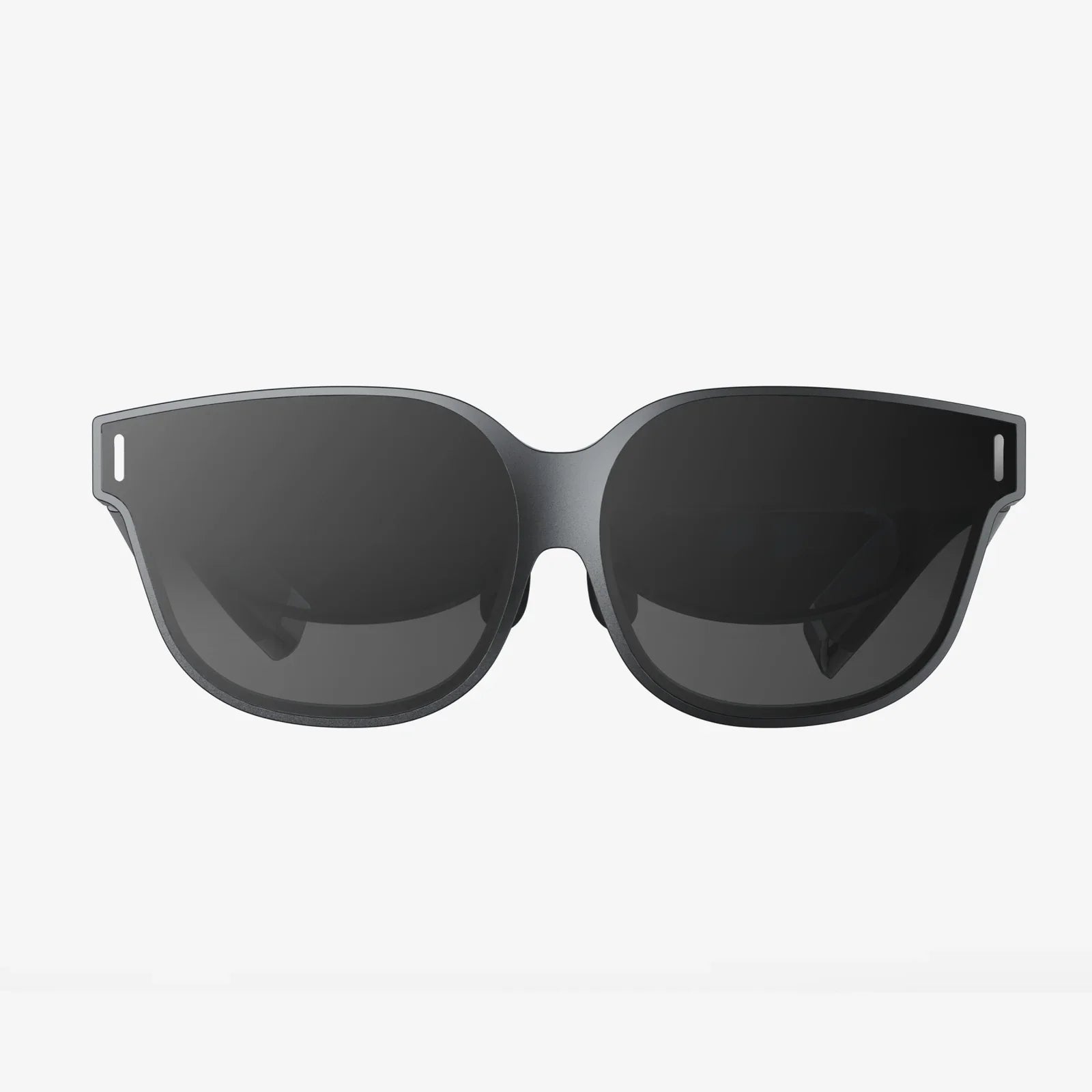
Imagine stepping into a virtual world so seamless, so fluid, and so incredibly real that the very notion of a screen strapped to your face evaporates into the experience itself. This isn't a distant dream of virtual reality's future; it's the palpable present, unlocked by a critical technological leap: the widespread adoption of the 120Hz refresh rate in VR headsets. For the uninitiated, this number might seem like just another spec sheet bullet point, a marketing term lost in a sea of resolutions and field-of-view figures. But for anyone who has felt the visceral difference, it represents the single most important upgrade in achieving true, comfortable, and breathtaking presence. The jump to 120Hz isn't an incremental improvement; it's a fundamental shift that redefines the boundaries of digital immersion, finally closing the gap between how we perceive reality and how we interact with virtual ones.
The Language of Smoothness: Understanding Refresh Rate and Its VR Imperative
Before we can appreciate the revolution of 120Hz, we must first understand the basic vocabulary of motion in digital displays. The refresh rate, measured in Hertz (Hz), signifies how many times per second a display updates with new image information. A standard 60Hz display refreshes 60 times each second. For decades, this was the benchmark for televisions, monitors, and early VR systems. It's serviceable, but in the demanding context of virtual reality, its flaws are magnified to an uncomfortable degree.
This is because VR operates under a unique set of constraints. Unlike looking at a static screen in the distance, a VR headset places displays mere centimeters from your eyes, and more importantly, it tracks your head movements in real-time. When you turn your head, the world inside the headset must respond instantaneously. Any lag, stutter, or blur between your physical movement and the visual feedback creates a dissonance that the human brain is exceptionally good at detecting. This dissonance is a primary culprit behind simulator sickness, a form of nausea and disorientation that has long plagued VR.
The problem with lower refresh rates like 60Hz is a phenomenon known as persistence. In simple terms, an image is drawn on the screen and remains there, persistent, until the next image replaces it. During rapid head movement (a phenomenon known as angular velocity), your eyes are tracking a smooth motion, but the persistent image on the screen becomes a smeared, blurry mess. Your brain receives conflicting signals: your inner ear says you're moving, but your eyes see a blur. This sensory conflict is a direct recipe for discomfort.
The 120Hz Solution: A Quantum Leap in Fluid Reality
Enter the 120Hz refresh rate. By doubling the update frequency from 60 to 120 times per second, the headset cuts the time each individual image is displayed in half. This dramatically reduces persistence. The images are on screen for a much shorter duration, resulting in significantly less blur during motion. The world inside the headet retains its clarity and sharpness even when you whip your head around to look behind you or quickly glance from side to side.
The benefits of this technological shift are profound and multi-faceted:
1. The Elimination of Simulator Sickness
For many users, this is the most critical benefit. The reduced latency and near-elimination of motion blur provided by a 120Hz display drastically lessen the sensory conflict that causes nausea. The virtual world's response to head movement feels instantaneous and natural. This isn't just a minor comfort improvement; it's a gateway that makes VR accessible and enjoyable for a much wider audience, including those who were previously unable to tolerate longer sessions. Developers can now design more dynamic and movement-intensive experiences without fear of making their entire user base ill.
2. The Unshakable Illusion of Presence
Presence is the holy grail of VR—the elusive moment where your conscious mind accepts the virtual world as real. It's a fragile state, easily broken by graphical glitches, latency, or blur. A 120Hz refresh rate is one of the most effective tools for building and maintaining this illusion. The world doesn't just look sharper; it feels more solid, more tangible, and more consistent. The subconscious cues that normally remind you that you're looking at a screen are vastly diminished. You're no longer an observer of a digital reality; you are an inhabitant within it.
3. Enhanced Realism and Visual Fidelity
While resolution dictates the sharpness of a static image, refresh rate governs the clarity of a moving image. A high-resolution display running at 60Hz will still look blurry in motion. A 120Hz display ensures that the incredible detail crafted by artists and developers is preserved during interaction. Whether it's the smooth trail of a lightsaber, the realistic flutter of a flag in the wind, or the seamless animation of a character, everything gains a new layer of polish and believability. It makes the virtual world feel alive and responsive in a way that lower refresh rates simply cannot match.
4. Improved Responsiveness and Competitive Edge
In social and competitive applications, every millisecond counts. The lower motion-to-photon latency (the delay between moving your head and seeing the screen update) inherent in a 120Hz pipeline provides a tangible advantage. In a fast-paced rhythm game, your actions feel more tightly connected to the visual cues. In a social space, the avatars of other users move with a lifelike smoothness that enhances communication and connection. In competitive esports titles, the improved clarity and responsiveness can be the difference between victory and defeat, allowing players to track fast-moving targets with unparalleled precision.
Behind the Scenes: The Hardware and Software Symphony
Achieving a stable 120Hz experience is not as simple as a display manufacturer just switching to a faster panel. It requires a harmonious and demanding orchestration of every component in the system.
The Graphics Processing Unit (GPU): This is the most obvious bottleneck. Rendering two high-resolution images (one for each eye) 120 times per second is an enormous computational task—effectively double the workload of a 60Hz target. It demands a powerful GPU capable of maintaining a rock-solid framerate. Dropping below the target refresh rate in VR is far more disruptive than on a flat screen, often causing stuttering and judder that immediately shatters immersion. Technologies like foveated rendering, which focuses full resolution only on where the user's eyes are looking, are becoming essential to sustainably power these high-refresh experiences.
The Display Panels: Naturally, the physical screens inside the headset must be capable of a 120Hz native refresh rate. These panels also need fast pixel response times (how quickly a pixel can change color) to avoid ghosting effects, ensuring that the rapid refresh cycles are actually clean and distinct.
The Tracking System: The external or internal sensors that track the headset's position and rotation must be incredibly high-speed and accurate. They need to sample your movements hundreds of times per second to provide the raw data that the system uses to render the correct viewpoint just in time for the next screen refresh.
Software and Optimization: Game and application engines must be meticulously optimized to handle the 120Hz pipeline. Developers have to make careful decisions about graphical complexity, shading techniques, and asset streaming to ensure consistent performance. The system software that manages the entire VR runtime must be finely tuned to minimize overhead and latency at every step, from tracking prediction to final frame presentation.
Beyond 120Hz: The Future of Perception
If 120Hz is so transformative, what comes next? Experimental systems are already pushing into territory beyond 120Hz, with some prototypes demonstrating 144Hz, 180Hz, and even higher. The pursuit is driven by the understanding that for VR to achieve true visual parity with reality, the refresh rate may need to be so high that motion blur becomes a non-issue entirely.
However, the law of diminishing returns applies. The perceptual difference between 90Hz and 120Hz is significant and immediately noticeable for most users. The jump from 120Hz to 144Hz, while measurable, is subtler. The future will likely involve a combination of even higher refresh rates paired with advanced neural rendering techniques, eye-tracking, and foveated rendering to make these extreme framerates computationally feasible for consumer hardware.
The goal is a future where the technology itself fades away, leaving only the experience. We are moving towards a reality where the frame rate, resolution, and field of view are so perfect that they are no longer talking points—they are simply a given, an invisible window into other worlds.
A New Standard for Virtual Existence
The adoption of 120Hz as a benchmark for high-end VR is more than a spec war; it's a maturation of the medium. It signifies a industry-wide commitment to prioritizing user comfort and qualitative experience over pure quantitative pixel counts. It acknowledges that how a world moves is just as important as how it looks when standing still.
For consumers, it means that VR is finally shedding its early-adopter growing pains and delivering on its long-promised potential. It means longer, more comfortable sessions, deeper immersion, and more compelling and realistic content. For developers, it provides a more robust and forgiving canvas upon which to paint their visions, free from the constant worry of inducing motion sickness.
This isn't just an upgrade you see; it's one you feel in your very being. The buttery-smooth motion, the rock-solid stability, the effortless comfort—once you've experienced a virtual world rendered at 120Hz, there's simply no going back. It redefines your expectations and forever changes your relationship with digital spaces, setting a new gold standard for what it means to truly be somewhere else.
Share:
Basic VR Headset: Your Uncomplicated Gateway to Virtual Worlds
Most Realistic VR Headset - The Unprecedented Quest for True Immersion