


Imagine a world where your morning commute is overlaid with navigational arrows painted onto the road, your coffee table becomes a collaborative workspace with colleagues from across the globe, and your history lesson transports you to stand in the Roman Forum at the height of the empire. This isn't a distant science fiction fantasy; it's the rapidly approaching reality of 2026, a year poised to be the definitive inflection point for Augmented and Virtual Reality. The foundational technologies are converging, the investments are monumental, and the societal readiness is reaching a tipping point. The line between our digital and physical lives is set to blur beyond recognition, and the implications are nothing short of revolutionary.
The Hardware Revolution: Invisible, Powerful, and Accessible
The single greatest barrier to mass adoption of AR and VR has been the hardware itself. Bulky headsets, limited field-of-view, short battery life, and a lack of compelling, comfortable form factors have kept these technologies in the domain of enthusiasts and enterprise. By 2026, this will be a relic of the past.
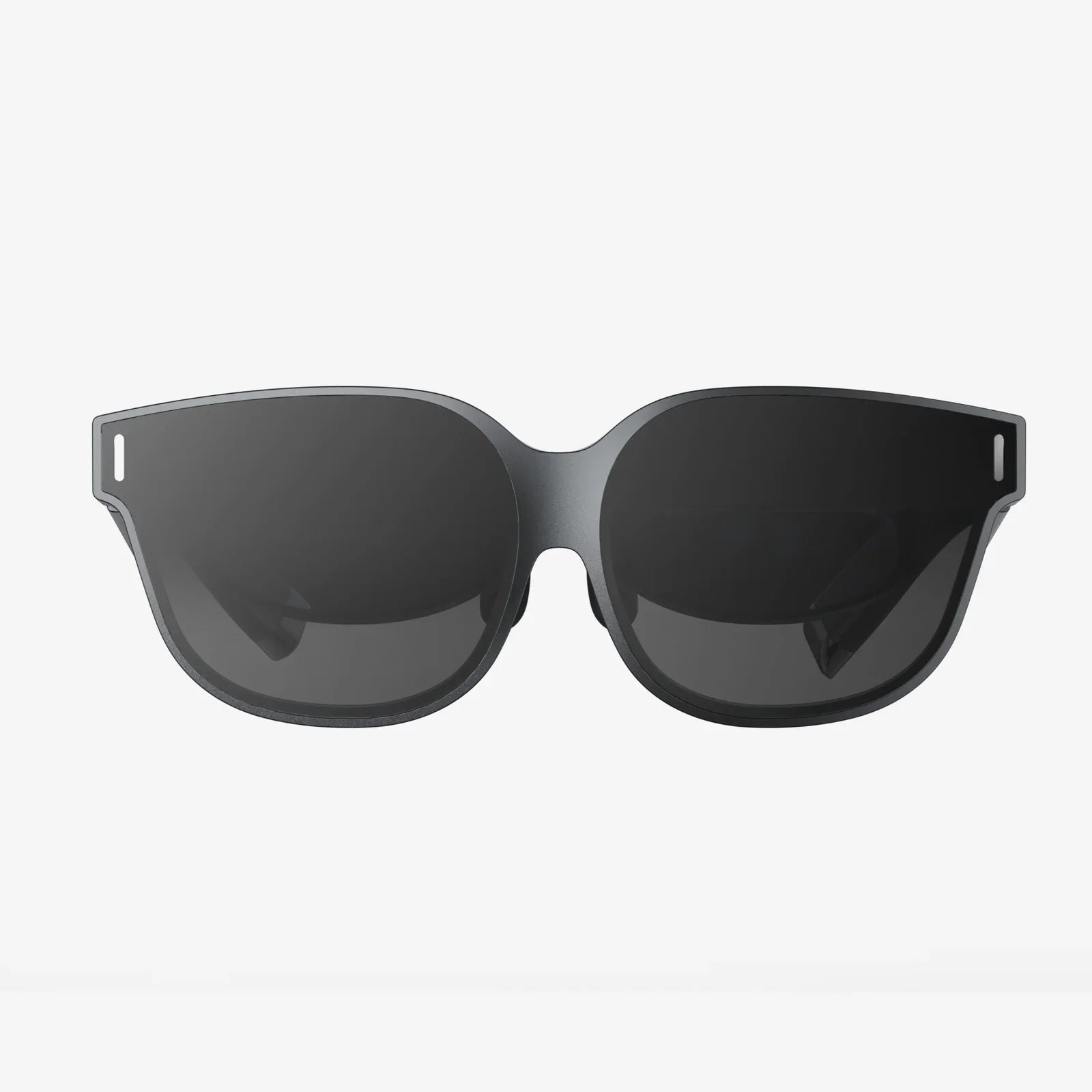
The race is on to create the definitive form factor. For AR, the goal is a pair of stylish glasses that are indistinguishable from regular eyewear. Advancements in micro-OLED displays, waveguide technology, and holographic optics will allow for bright, high-resolution digital overlays without the need for chunky components. These devices will be powered by a combination of on-device processing—leveraging chipsets designed specifically for the immense demands of spatial computing—and seamless, low-latency offloading to cloud compute resources. Battery technology will see significant improvements, moving from cumbersome external packs to sleek, integrated solutions that last a full day.
For VR, the focus is on achieving visual fidelity and comfort that allows for prolonged use. Headsets will become lighter, wireless by default, and will feature varifocal displays that mimic the natural focusing ability of the human eye, eliminating discomfort and eye strain. Haptic feedback will evolve from simple controller rumble to full-body suits and gloves that provide a genuine sense of touch, from the texture of a virtual stone wall to the impact of a digital basketball.
The AI Engine: The Invisible Brain Powering Immersion
Hardware is the body, but Artificial Intelligence is the brain that will make the 2026 AR/VR ecosystem truly intelligent and context-aware. AI will operate on multiple levels, functioning as the critical layer that understands and interprets the world around us.
Real-time scene understanding, powered by sophisticated computer vision models, will allow your AR glasses to not just see a table, but understand it's a table, identify objects on it, and know it can serve as a surface for digital content. Natural Language Processing (NLP) will enable truly conversational interfaces. You won't need to learn complex controller commands; you'll simply ask your AI assistant to "pull up the 3D model of the engine" or "translate this street sign in real-time."
Most importantly, AI will be predictive and proactive. By learning your habits, preferences, and schedule, it will surface the right information at the right time. Walking past a restaurant could trigger a subtle overlay of its health inspection rating and today's specials, all curated based on your dietary preferences. This shift from explicit command-based interaction to implicit, ambient intelligence will be what makes the technology feel like a natural extension of our own cognition rather than a separate device we must manage.
The Spatial Web: A New Layer of Reality
Today's internet is a network of pages we look at on screens. The Spatial Web, or WebXR, is the next evolution: a network of experiences and information anchored in the world around us. By 2026, early standards for this will be maturing, creating a shared, persistent digital layer over our physical environment.
This means digital content will have a permanent place in the real world. A piece of digital art purchased from a creator will hang on your wall, visible only through AR devices. A navigational signpost for a hiking trail will exist as a digital marker that never weathers or fades. Social interactions will leave digital traces; you could leave a holographic message for a friend at a specific location in a city for them to find later.
This requires a fundamental rethinking of how we create, share, and experience content. Universal standards for object persistence, user identity, and security will be paramount. The development of this ecosystem will be as significant as the creation of the World Wide Web, unlocking entirely new economies based on digital goods and experiences that are tied to physical locations.
Transforming the World of Work and Collaboration
The corporate world will be one of the earliest and most profound beneficiaries of this technological leap. The concept of the "office" will be completely decoupled from a physical location. Remote work will evolve into immersive work.
Instead of a flat video call on a monitor, teams will gather in photorealistic virtual meeting rooms or around a shared 3D holographic model of a new product design. Architects and engineers will walk clients through buildings that haven't been built yet, at a 1:1 scale. Medical professionals from different continents will collaborate in real-time around a holographic representation of a patient's scan, using virtual tools to plan a complex surgical procedure.
This will lead to a rise in the "virtual headquarters," persistent digital spaces that embody a company's culture and brand, accessible to every employee from anywhere. The gains in productivity, creativity, and global collaboration will be immense, finally delivering on the promise of technology to connect us in meaningful ways beyond simple video.
Redefining Education and Training
Education will shift from passive learning to active experience. Textbooks will become dynamic portals. A chapter on astronomy will allow students to stand on the surface of Mars, watching a dust storm approach. History lessons will become immersive time travel, letting students witness key events firsthand.
Vocational and skills training will be revolutionized. Trainee mechanics will learn to repair complex machinery with digital twins, making mistakes without costly consequences. Surgeons will practice rare procedures thousands of times in a risk-free simulation. Firefighters will train for dangerous scenarios in hyper-realistic virtual environments that mimic the stress and chaos of a real blaze. This experiential learning dramatically improves knowledge retention and skill acquisition, creating a more competent and prepared workforce.
The New Social Fabric and the Metaverse Matures
The much-hyped concept of the metaverse will begin to find its authentic form by 2026. It will not be a single, centralized virtual world, but a interconnected constellation of experiences—some social, some professional, some purely for entertainment—that users can fluidly move between.
Social interactions will be enriched by advanced avatars that feature realistic eye-tracking and facial expression tracking, conveying non-verbal cues that are lost in today's digital communication. Concerts, sporting events, and live theater will offer virtual attendance tickets, providing a front-row experience to anyone, anywhere in the world. The sense of "presence"—the feeling of actually being with another person in a shared space—will become the gold standard for digital connection, helping to combat the isolation and loneliness that can stem from current digital interactions.
Navigating the Inevitable Challenges
This future is not without its significant challenges and ethical dilemmas. The collection of real-time, continuous visual and audio data from our lives raises monumental privacy and security concerns. Who owns the data collected by your AR glasses? How do we prevent unauthorized surveillance?
The digital divide could evolve into a new "reality divide," where access to these powerful tools and experiences creates even greater socioeconomic inequality. There are also profound psychological questions about our relationship with reality. How will constant digital augmentation affect our memory, attention spans, and our appreciation for the un-augmented physical world? Establishing robust ethical frameworks, regulations, and digital literacy programs will be as important as the technological development itself to ensure this future is equitable and human-centric.
The year 2026 is not just another date on the calendar; it represents the culmination of decades of research, development, and dreaming. It's the point where the pieces of the puzzle—intelligent hardware, pervasive AI, a spatial internet, and compelling use cases—finally snap together. We are standing on the brink of a new era of human experience, one where our tools don't just provide information, but understand our context and enhance our perception of everything around us. The journey into this augmented age is beginning, and it promises to redefine the very fabric of our daily existence.
Share:
Smart Assistance Augmented Reality: The Invisible Revolution Reshaping Our Daily Lives
What Is An Augmented Reality Device - Bridging Our Digital And Physical Worlds