


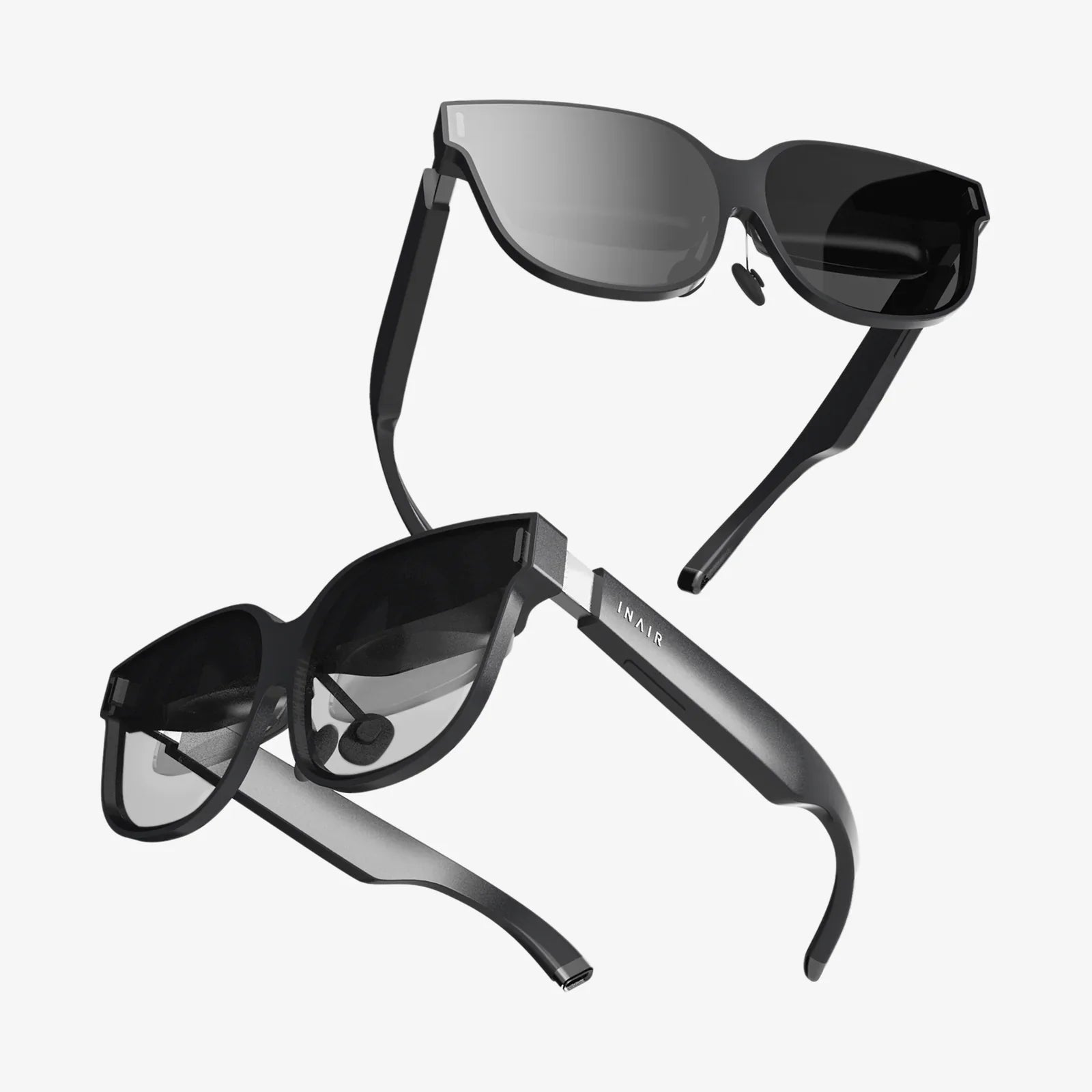
Imagine watching your favorite classic film, a cherished home movie, or a breathtaking nature documentary not as a flat image on a screen, but as a window into a living, breathing world. This is no longer the stuff of science fiction. The ability to transform two-dimensional video into rich, volumetric three-dimensional content is one of the most transformative and exciting advancements in modern visual technology, promising to redefine our relationship with recorded media and unlock vast new creative possibilities.
The Allure of the Third Dimension: A Brief History
The human fascination with depth perception is centuries old. Long before the digital age, inventors and artists sought ways to trick the eye into seeing a flat surface as a deep space. The stereoscope, popularized in the 19th century, used two slightly offset photographs to create a convincing illusion of depth for a single viewer. This principle of binocular disparity—presenting a unique image to each eye—remains the foundational concept behind all 3D imaging, including modern 2D-to-3D conversion. The golden age of 3D cinema in the 1950s and its various revivals have always faced a significant hurdle: the content had to be captured with specialized, often cumbersome, two-camera rigs. This made vast libraries of existing 2D film and video forever inaccessible to 3D enjoyment. The quest to break this limitation and liberate any 2D source for 3D viewing is what drives the development of conversion technologies.
Deconstructing Flatness: The Core Scientific Principles
At its heart, converting a 2D video to 3D is a complex process of intelligent inference and reconstruction. A single 2D frame is, by its nature, an incomplete data set; all depth information is lost during capture. The conversion process must therefore act as a digital detective, analyzing visual clues to rebuild that lost dimension. The primary cues that advanced algorithms look for include:
- Motion Parallax: Objects closer to the camera move faster across the frame than objects in the background. By tracking the movement of pixels over several frames, software can estimate their relative distance from the viewer.
- Occlusion and Disocclusion: As objects move, they reveal (disocclude) and hide (occlude) parts of the background. Analyzing these changing edges provides critical depth-ordering information.
- Perspective and Scale: The relative size of known objects (e.g., a person versus a car) and the convergence of parallel lines (like train tracks) give strong hints about spatial relationships within the scene.
- Shading and Lighting: The way light falls on an object, creating highlights and shadows, defines its shape and its position relative to the light source, offering another layer of depth data.
- Textural Gradients: The density of detail on a surface, like the pattern on a carpet, becomes finer and less distinct as it recedes into the distance.
Early conversion techniques were often manual and painstaking. Artists would rotoscope—manually outline—key objects frame-by-frame, assigning them a depth value to create a "depth map." This grayscale image, where brighter pixels represent closer objects and darker pixels represent distant ones, could then be used to offset the original image and generate the second-eye view needed for stereoscopic 3D. While effective, this process was prohibitively slow and expensive, limiting its use to major Hollywood blockbusters.
The AI Revolution: Machine Learning Takes the Helm
The advent of sophisticated artificial intelligence, particularly deep learning and convolutional neural networks (CNNs), has radically democratized and accelerated the conversion process. Instead of relying on human artists to define rules, AI models are trained on massive datasets containing millions of pairs of 2D images and their corresponding 3D depth maps. Through this training, the neural network learns to predict depth with astonishing accuracy. It learns the common visual patterns associated with depth: a human face has a nose that protrudes, eyes that are recessed; a tree trunk is closer than the forest behind it; a car has a complex, non-flat shape. This allows modern AI-powered software to analyze a 2D video sequence and automatically generate a highly precise, per-pixel depth map for every single frame in a fraction of the time it would take a human team.
The Conversion Pipeline: A Step-by-Step Breakdown
The modern automated conversion process is a multi-stage pipeline, each step refining the depth information further.
- Scene Analysis and Segmentation: The AI first analyzes the video to identify and separate different elements within the frame—people, vehicles, buildings, the sky, the foreground, and the background. This semantic understanding is crucial for applying consistent depth rules.
- Depth Map Generation: Using its trained model, the AI produces an initial depth map. This map is often refined over multiple frames to ensure temporal stability, preventing the depth from "flickering" or jittering from one frame to the next.
- Depth Refinement and Smoothing: Automated processes and sometimes light manual touch-ups are used to smooth out errors, clean up edges around finely detailed objects like hair or leaves, and ensure the depth transitions are natural and not jarring.
- Stereoscopic View Synthesis: This is the crucial final step. Using the original 2D image and its associated depth map, the software geometrically warps the image to create the perspective for the second eye. This is not simply shifting the image; it involves intelligent in-painting to fill in any gaps (occluded areas) that become visible from the new virtual camera angle.
- Post-Processing and Output: The two views (left-eye and right-eye) are packaged into a standard 3D format, such as side-by-side or top-and-bottom, ready for playback on a 3D display or VR headset.
Beyond Entertainment: Expansive and Impactful Applications
While bringing new dimension to classic films is a headline-grabbing application, the implications of 2D-to-3D conversion extend far beyond the cinema.
- Education and Cultural Preservation: Imagine history lessons where students can explore ancient ruins in 3D through archival footage, or biology classes where documentary footage of cellular processes gains tangible depth. Museums can convert 2D historical films into immersive experiences, making history more visceral and engaging.
- Medical Imaging: While medical scans like MRI and CT are inherently 3D data sets, the technique of converting 2D ultrasound imagery into more comprehensible 3D models shares a common technological DNA, aiding in diagnosis and surgical planning.
- Architecture and Real Estate: Existing video tours of properties can be converted, allowing potential buyers to get a much better sense of space and layout without needing a specialized 3D camera during filming.
- Home Videos and Personal Media: This is perhaps the most personal application. Families can transform precious memories—a child's first steps, a wedding, a holiday gathering—into vivid 3D experiences, preserving them with a new level of realism and emotional impact for future generations.
Navigating the Challenges and Ethical Considerations
The technology is powerful, but not without its challenges and points of debate. A poorly executed conversion can result in a "cardboard cutout" effect, where objects appear as flat planes slid to different depths rather than having volume. Visual artifacts, eyestrain, and headaches can occur if depth cues are inconsistent or too extreme. Furthermore, the technology raises ethical questions, particularly around content manipulation. As it becomes easier to create convincing 3D scenes from 2D sources, the potential for creating deepfakes or misleading volumetric propaganda increases. There is also an artistic debate: does converting a film that was meticulously composed and lit for a 2D canvas violate the original director's intent? These are questions that the industry and society will grapple with as the technology becomes more pervasive.
The Future is Deep: Next-Generation Immersive Experiences
The evolution of 2D-to-3D conversion is rapidly converging with other fields like virtual reality (VR) and augmented reality (AR). The next step is not just creating a stereo pair for a screen, but generating full six-degrees-of-freedom (6DoF) volumetric video from 2D sources. This would allow a user wearing a VR headset to actually move their head and look around objects within a converted scene, an experience that feels truly holographic. This requires inferring a complete 3D model of the scene, a monumental task that is now being tackled by cutting-edge AI research. As computational power grows and algorithms become more sophisticated, the line between captured reality and digitally inferred reality will continue to blur, opening up uncharted territories for storytelling, communication, and how we experience our past and present.
The magic of converting a flat memory or a classic scene into a world you feel you could step into is no longer a parlor trick but a sophisticated technological reality. From revolutionizing film archives to adding profound new depth to educational and personal content, this technology is poised to reshape our visual landscape, offering a thrilling glimpse into a future where every screen can become a window to another dimension.
Share:
Virtual Realities LLC Is Pioneering the Next Frontier of Human Experience and Connection
AI Glasses with Camera with Different Lenses: The Future on Your Face