


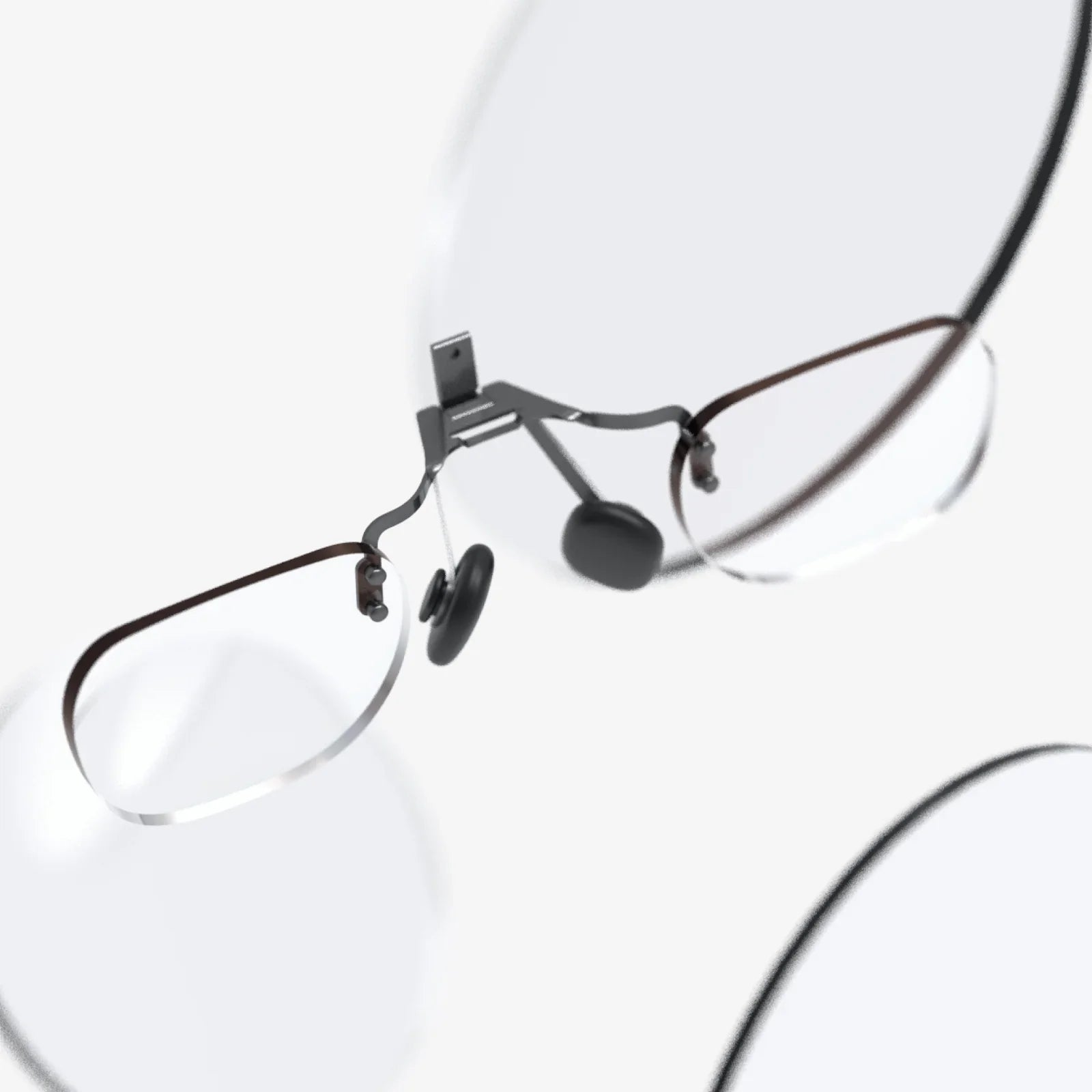
Imagine slipping on a headset and having the real world vanish, not just visually, but physically, replaced by a digital realm so crisp, so responsive, so utterly convincing that your brain struggles to accept it's not real. This isn't the promise of a distant future; it's the staggering reality delivered by a new class of hardware: the 3500 dollar VR headset. This isn't a toy for the casual gamer; it's a precision instrument, a portal to new realities, and a statement about where immersive technology is headed. The price tag is a headline in itself, but the story it tells—of unparalleled resolution, cutting-edge optics, and professional-grade performance—is what truly captivates and demands a closer look.
Deconstructing the Price Tag: Where Does the Investment Go?
To the uninitiated, a cost of $3500 for a virtual reality headset might seem exorbitant, a luxury reserved for the wealthy elite. However, this perspective shifts dramatically when one understands the confluence of bleeding-edge technologies packed into a single, wearable form factor. This is not an incremental upgrade; it's a generational leap.
The most significant portion of the investment is immediately visible to the user: the display system. We are far beyond the days of visible screen-door effects and blurry text. A headset in this echelon typically features dual micro-OLED displays, each boasting resolutions that push or exceed 4K per eye. The result is a pixel density so high that individual pixels become indistinguishable to the human eye, creating a visual fidelity that is breathtakingly real. This is complemented by a wide color gamut, exceptional contrast ratios with perfect blacks (thanks to the OLED technology), and high-fidelity HDR, allowing for a dynamic range that mirrors the real world, from the deepest shadows to the brightest highlights.
Furthermore, this visual splendor is channeled through a revolutionary optical stack. Pancake lenses have replaced the older Fresnel lenses, allowing for a much slimmer and lighter headset design while drastically reducing god rays and glare. These advanced optics also provide a massive "sweet spot"—the area where the image is perfectly in focus—making the headset more comfortable to use for extended periods and reducing the need for constant adjustment.
Beyond Sight: The Full-Body Immersion Experience
A pristine visual experience is only one pillar of true immersion. A $3500 VR headset builds upon this foundation with a suite of technologies designed to engage your other senses and erase the remaining barriers to presence.
Inside-Out Tracking and High-Fidelity Controllers
Gone are the external base stations cluttering a room. Professional-grade headsets utilize sophisticated inside-out tracking, employing a array of high-resolution cameras and sensors mounted on the device itself. These cameras map the physical environment in real-time with stunning accuracy, allowing for seamless movement and interaction within the virtual space. The accompanying controllers are marvels of engineering in their own right, featuring precise haptic feedback that can simulate the subtle texture of a stone, the recoil of a tool, or the gentle brush of a leaf. They often include individual finger tracking, enabling natural and expressive hand gestures that translate directly into the digital world.
Eye and Face Tracking: The Window to the Soul
This is where the technology truly diverges from consumer-grade offerings. Integrated eye-tracking is a cornerstone feature. Cameras inside the headset meticulously track the pupil's position and movement. This serves two critical functions:
- Foveated Rendering: This is a revolutionary rendering technique that uses eye-tracking data to dramatically reduce the computational power required. The system renders the area where the user is directly looking in full, ultra-high resolution, while intelligently reducing the detail in the peripheral vision. Since the human eye cannot perceive detail in the periphery anyway, this process is imperceptible to the user but can slash GPU workload by over 50%, making these high-resolution displays feasible even with today's hardware.
- Social Presence: In collaborative and social VR applications, eye-tracking, combined with internal sensors that track facial expressions and lip movement, allows a user's digital avatar to mirror their real-world expressions with uncanny accuracy. An avatar can convey a subtle smirk, a look of concentration, or a frown of disappointment, adding a layer of non-verbal communication that is vital for genuine human interaction.
Advanced Audio and Comfort
Immersion is broken as easily by poor audio as by poor visuals. These systems include integrated, high-fidelity spatial audio solutions. Unlike standard stereo sound, spatial audio mimics how sound waves interact with the human head and ears, allowing users to pinpoint the location and distance of a sound with remarkable accuracy. Comfort for multi-hour professional use is also paramount. The materials are premium—lightweight alloys, breathable fabrics, and perfectly counter-balanced straps—to distribute weight evenly and eliminate pressure points.
The Professional Arena: Who Truly Needs This Power?
The question is not "Who would buy this?" but rather "What value does this create?" For the professional market, a $3500 headset is not an expense; it's a strategic investment with a clear return.
- Architects and Engineers: They step inside their 1:1 scale CAD models before a single foundation is poured. They can walk through a building, inspecting sightlines, evaluating structural designs, and making crucial changes in the design phase, saving millions in potential construction errors.
- Medical Professionals: Surgeons practice complex procedures on detailed anatomical models, medical students learn anatomy by "dissecting" a virtual cadaver, and therapists use controlled virtual environments to treat phobias and PTSD.
- Product Designers and Manufacturers: From designing a new car's interior to prototyping a new consumer product, designers can hold, examine, and "use" a virtual prototype, iterating designs faster and cheaper than ever before.
- Enterprise Training: Companies create hyper-realistic simulations for training employees in high-risk fields—from emergency response and aviation to complex machinery operation—all in a safe, controlled, and repeatable environment.
- Research and Data Visualization: Scientists can step inside complex molecular structures, astrophysicists can navigate galactic data sets, and economists can visualize market trends in three-dimensional space, uncovering patterns invisible on a flat screen.
For these users, the cost of the headset is negligible compared to the time saved, the errors caught, the training efficacy gained, and the innovations unlocked.
The Ripple Effect: Pushing the Entire Industry Forward
The development and release of a $3500 VR headset have profound implications for the entire VR ecosystem, even for those who will never own one. This technology acts as a vanguard, testing and proving concepts that will eventually trickle down to mainstream devices.
Pancake lenses, eye-tracking for foveated rendering, and high-resolution micro-OLED displays are all technologies being pioneered and refined in these high-end devices. As manufacturing processes improve and economies of scale take effect, these features will become standard in future consumer headsets. The software ecosystem also benefits immensely. Developers are now empowered to create experiences with unprecedented visual and interactive complexity, knowing there is hardware capable of delivering it. This pushes the creative boundaries of the medium, fostering new genres of applications, games, and social platforms that will eventually be accessible to all.
The Future is Clear, and It's Expensive (For Now)
The arrival of the $3500 VR headset marks a critical bifurcation in the market. It is no longer a one-size-fits-all industry. There is a clear path now: accessible, fun, consumer-focused VR for the masses, and ultra-high-fidelity, professional-grade "simulation-grade" hardware for enterprise, research, and dedicated enthusiasts. This segmentation is a sign of a maturing market, not a failing one. It acknowledges that the potential of VR extends far beyond entertainment, into the very core of how we work, learn, and design our world.
While the price point ensures it remains a niche product today, its very existence is a beacon, illuminating the breathtaking potential of immersive computing. It sets a new benchmark for what is possible, challenging the entire industry to aim higher. The incredible technology it showcases is not just for the select few; it is a preview of the immersive future we are all steadily moving towards.
So, the next time you hear about a VR headset costing several thousand dollars, look past the sticker shock. You're not just seeing a price; you're witnessing a profound leap in technology, a tool that is already reshaping industries and redefining reality itself. This is more than just premium hardware; it's the undeniable proof that the line between our physical and digital lives is not just blurring—it's being systematically, and spectacularly, erased.
Share:
Most High Tech VR Headset: Pushing the Boundaries of Immersive Reality
Most High Tech VR Headset: Pushing the Boundaries of Immersive Reality