


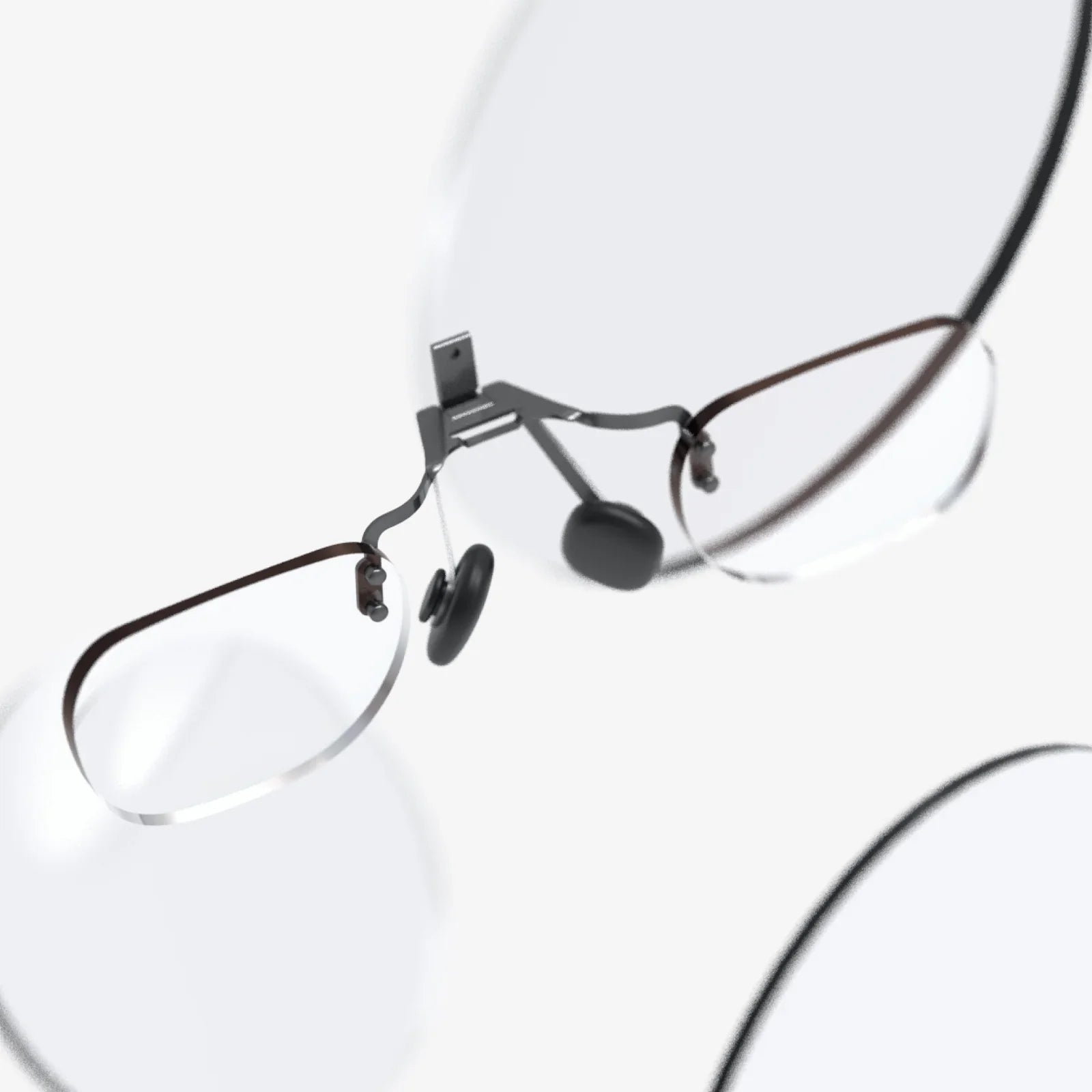
Imagine slipping on a headset and instantly being transported to a digital realm so crisp, so real, that the very line between the physical and virtual worlds doesn't just blur—it vanishes. This is the promise, the siren's call, of the latest generation of high-fidelity virtual reality. But that promise comes with a staggering, and for many, a jaw-dropping price: three thousand five hundred dollars. It’s a figure that immediately sparks a visceral reaction. Is this audacious pricing a brazen cash grab aimed at the wealthy elite, or is it a necessary, albeit painful, stepping stone toward a truly revolutionary technological future? The answer, much like the experience these devices aim to provide, is deeply immersive and complex.
Deconstructing the Cost: Where Does $3500 Actually Go?
To understand the price, one must look beyond the simple plastic and glass shell. A device at this level is less a consumer gadget and more a precision instrument, and every component is pushed to its absolute limit, representing the bleeding edge of what is currently possible.
The Display Revolution: Beyond Resolution
The heart of any VR headset is its display, and this is where a significant portion of the investment goes. We are far beyond the days of simple HD screens. A $3500 headset likely features dual micro-OLED or advanced mini-LED displays, each offering a resolution that meets or exceeds 4K per eye. This results in a pixel-per-degree density so high that the dreaded "screen door effect"—where users can see the gaps between pixels—is completely eradicated. The image isn't just sharp; it's pristine. Furthermore, these displays boast exceptional color gamut, high dynamic range (HDR) for stunning contrast between brilliant brights and deep blacks, and a refresh rate that can push well beyond 120Hz. This combination is computationally intensive and extraordinarily expensive to manufacture at such small sizes and with such low persistence to eliminate motion blur.
Optical Fidelity: Pancake Lenses and Eye-Tracking
A high-resolution display is useless if the optics in front of it distort, smear, or chromatic-aberrate the image. Premium headsets have abandoned older Fresnel lenses for state-of-the pancake lenses. This design uses a series of complex curved lenses that fold the light path, allowing for a dramatically slimmer and lighter headset form factor. The optical clarity across the entire field of view is superior, with drastically reduced god rays and glare. Even more critically, these headsets integrate sophisticated eye-tracking technology. This isn't a gimmick; it's a fundamental shift in how the device operates. By knowing precisely where your eyes are looking, the headset can employ foveated rendering. This technique renders the area of the screen you are directly looking at in full, ultra-high detail, while intelligently reducing the rendering load on your peripheral vision—where your eyes cannot perceive the detail anyway. This massively reduces the computational power required from the connected computer, making breathtaking visuals achievable without needing a supercomputer. The eye-tracking hardware itself, requiring high-speed, high-accuracy infrared sensors, adds a substantial cost.
Inside-Out Tracking and Mixed Reality
Gone are the external base stations that needed to be mounted around your room. Premium headsets now use advanced inside-out tracking. This involves multiple high-resolution, wide-field-of-view cameras mounted on the headset itself. These cameras continuously map your physical environment in real-time, tracking the headset's and controllers' positions with millimetric accuracy. This same sensor array powers high-fidelity mixed reality (MR). By seamlessly blending the real world with digital objects, MR requires an incredibly detailed and constantly updating understanding of your room's geometry, lighting, and surfaces. The processing power and sophisticated algorithms needed to accomplish this instantly and without lag represent a monumental engineering feat that is reflected in the price.
Build Quality and Materials
This is not a device built to a mass-market budget. The materials shift from lightweight plastics to magnesium alloys, carbon fiber composites, and high-quality glass. The head strap is no longer a simple elastic band but a rigid, counter-balanced halo design with integrated audio and sophisticated, comfortable padding made from memory foam and premium fabrics. Every component, from the lenses to the headstrap mechanism, is engineered for durability, comfort during extended professional use, and a sense of quality that justifies its position as a professional tool.
The Target Audience: Who Actually Buys a $3500 VR Headset?
This is perhaps the most critical point of confusion. The mainstream consumer is not the target for this product. Framing it as such leads to misunderstanding its purpose. This headset is not for playing casual games. It is a professional instrument, a capital investment for businesses and developers.
- Enterprise and Industrial Design: Automotive companies like Ford and BMW use VR to design and prototype new vehicles long before a physical model is built. Architects and construction firms walk clients through full-scale, photorealistic models of buildings, allowing for design changes before a single foundation is poured. The cost of a single design flaw caught in VR, versus after construction has begun, saves millions, making the headset's cost negligible.
- Medical and Surgical Training: Surgeons practice complex procedures on detailed virtual anatomies, reducing risk to patients. Medical students can explore the human body in ways textbooks could never offer. The value in improved outcomes and accelerated training is immense.
- Research and Development: From NASA simulating space missions to pharmaceutical companies visualizing complex molecules, the ability to interact with data in 3D space is a powerful research tool.
- High-End Content Creation: Film studios and VFX houses are using VR for virtual scouting and pre-visualization, allowing directors to "stand" inside a CGI set and plan shots. This saves enormous amounts of time and money on physical travel and set construction.
For these users, the $3500 price tag is not an extravagant expense but a reasonable cost of entry for a tool that increases efficiency, reduces errors, and unlocks new creative and analytical possibilities. The ROI is clear and calculable.
The Ripple Effect: How High-End Tech Trickles Down
The existence of a $3500 headset is not an anomaly; it is a consistent pattern in technology adoption. The first cellular phones, flat-screen televisions, and high-resolution monitors all started with astronomical price points that were only accessible to professionals and the wealthy. Through economies of scale, manufacturing refinements, and technological evolution, the features that defined those premium products eventually became standard in mass-market devices. The micro-OLED displays, pancake lenses, and inside-out tracking systems being perfected in today's premium headsets are the foundational technologies for tomorrow's consumer devices. The high-end market essentially funds the R&D that eventually benefits everyone. By pushing the boundaries of what's possible, these expensive headsset create a new ceiling, pulling the entire industry upward and setting a new benchmark for what "high-end" VR can be, which in turn redefines the "mid-range" and "entry-level" segments.
The Philosophical Divide: Tool vs. Toy
The $3500 price point forces a reevaluation of what virtual reality is and who it is for. It creates a clear philosophical split in the market. On one side, VR as a consumer entertainment toy: accessible, fun, and focused on gaming and social experiences. This market is driven by affordability and a large library of engaging content. On the other side, VR as a professional productivity tool: powerful, precise, and focused on solving complex problems and creating value. This market is driven by capability, fidelity, and reliability, with cost being a secondary concern to performance. The emergence of the ultra-premium headset doesn't kill the consumer market; it simply carves out a new, parallel professional track. Both can coexist and even symbiotically support each other, with professional adoption funding technological advances that benefit consumers, and a healthy consumer market creating a larger ecosystem of developers and users.
Is It Worth It? A Question of Context
The value proposition is entirely contextual. For a hardcore enthusiast with disposable income, the pursuit of the absolute best visual experience might justify the cost, much like a high-end gaming monitor or a premium sound system. However, for the vast majority of people, the answer is a resounding no. The law of diminishing returns is strongly at play. A headset costing one-fifth of the price can still deliver a fantastic, compelling, and truly immersive experience that is 80-90% as good for gaming and social interaction. The leap to that final 10-20% of fidelity and performance is where the cost skyrockets. Therefore, for most, the premium is difficult to justify for entertainment alone. The true worth is unlocked in a professional context where that final percentage of performance translates into tangible business value, precision, and capability.
So, the next time you see a headline boasting about a three-thousand-five-hundred-dollar virtual reality headset, don't dismiss it as a folly for the rich. See it for what it truly is: a glimpse into the future. This is the R&D lab, the design studio, the surgical theater, and the engineering marvel of tomorrow, available today for those who need it most. The breathtaking technology inside isn't just for the select few; it's the prototype for the immersive experiences we will all eventually enjoy, as the relentless march of progress turns today's astronomical premium into tomorrow's affordable standard.
Share:
PC VR Headset Specs: The Ultimate Guide to Understanding What Really Matters
PC VR Headset Specs: The Ultimate Guide to Understanding What Really Matters