


Imagine standing on the surface of Mars, the rust-colored dust swirling at your feet, or sitting front row at a concert thousands of miles away, feeling the thump of the bass in your chest. This is no longer the stuff of science fiction. It’s the palpable, breathtaking reality offered by 360 3D VR video, a technological symphony that is fundamentally altering our relationship with content, storytelling, and perception itself. This isn't just watching; it's being there.
The Architectural Blueprint: How 360 3D VR Video is Created
At its core, a 360 3D VR video is a complete spherical recording of a real-world environment or a computer-generated one, enhanced with stereoscopic depth to mimic human binocular vision. The creation process is a complex dance of hardware and software, far removed from traditional filmmaking.
The journey begins with capture. Specialized rigs house multiple high-resolution cameras, strategically positioned to cover every angle of a sphere. These cameras shoot simultaneously, capturing overlapping fields of view. The magic, and the significant challenge, lies in the next step: stitching. Powerful software algorithms analyze all these individual feeds, identifying common points and seamlessly weaving them together into a single, cohesive spherical video. Any miscalibration results in visual artifacts—ghostly seams or misaligned geometries that can shatter the illusion of immersion.
But a 360 video alone, while impressive, is still a flat panorama. The third dimension—stereoscopy—is what injects life and tangible depth. This is achieved by capturing two distinct spherical images, one for each eye, simulating the slight difference in perspective that our brains use to perceive depth in the real world. When viewed through a headset, each eye sees a slightly different image, and the brain synthesizes them into a single, voluminous, and convincing 3D environment. Objects have weight, space has scale, and the viewer feels truly present within the scene.
Beyond the Hype: The Tangible Impact Across Industries
The applications of this technology extend far beyond viral marketing clips and novelty experiences. It is becoming a powerful tool with profound practical implications across diverse sectors.
Revolutionizing Education and Training
Textbooks and diagrams are static. A 360 3D VR video is dynamic and experiential. Medical students can now "stand" in an operating theater and observe a complex surgical procedure from the surgeon’s perspective, watching the intricate dance of hands and instruments in true-to-life depth. History classes can transport students to ancient Rome, not just to see it, but to walk its streets and look up at the towering arches of the Colosseum. This experiential learning fosters deeper understanding and retention of complex subjects. For high-risk fields, from aviation to firefighting, VR provides a safe, controlled environment to practice emergency procedures and hone skills without any real-world consequences.
Transforming Real Estate and Architecture
The days of grainy, wide-angle photos are numbered. Potential homebuyers across the globe can now take a full, self-guided tour of a property at any time. They can sense the flow of the rooms, the scale of the kitchen, and the view from the balcony with a fidelity that static images could never provide. Architects and developers use 360 3D walkthroughs of unbuilt properties to showcase designs to clients, allowing them to experience the space, assess sightlines, and make informed decisions before a single brick is laid. This saves immense time, resources, and prevents costly post-construction changes.
Redefining Entertainment and Storytelling
The film industry is on the cusp of a paradigm shift. Traditional cinema has a fixed frame—a window into a story dictated by a director. 360 3D VR narrative is an immersive sphere where the viewer is inside the story. The director becomes a guide, using audio cues, lighting, and character movement to direct attention, but the audience possesses agency. They choose where to look. This creates a deeply personal and active viewing experience. Live events, from sports games to music festivals, are also being transformed. With a VR headset, a fan can have a courtside seat at the NBA finals or feel like they are on stage with their favorite band, experiences previously limited by geography and exorbitant cost.
Enhancing Remote Collaboration and Tourism
In a world increasingly comfortable with remote work, 360 3D VR offers a glimpse into the future of collaboration. Instead of a grid of faces on a screen, teams could meet in a virtual boardroom or on a digital model of a project site, interacting with 3D data and each other’s avatars with a sense of shared presence. For the travel industry, it’s the ultimate "try before you buy." Potential tourists can take preview trips to destinations, exploring hotel rooms, hiking trails, and museum exhibits, helping them make more informed travel decisions and sparking wanderlust in a powerful new way.
The Challenges on the Path to Perfection
Despite its incredible potential, the medium is not without significant hurdles that developers and creators are racing to overcome.
The most notorious is motion sickness (VR sickness). This occurs when there is a disconnect between what the eyes see (movement through a virtual space) and what the vestibular system in the inner ear feels (the body being stationary). Latency—the delay between a user’s head movement and the screen updating—is a primary culprit. Pushing for ever-higher frame rates and lower latency is critical for widespread comfort.
Hardware requirements remain a barrier. To stream or run high-fidelity 360 3D VR content smoothly requires substantial processing power, often necessitating a powerful computer or a high-end standalone headset. The cost of professional-grade capture rigs, while decreasing, is still significant for many creators.
There’s also the bandwidth bottleneck. A high-resolution 360 3D video file is exponentially larger than a standard HD video. Streaming such content demands robust and fast internet connections, which are not yet universally available. Finally, the question of storytelling language remains open. How does a director tell a compelling story when the audience might be looking the wrong way? New cinematic techniques are being pioneered to solve this puzzle.
The Future is Spherical: What Lies Ahead
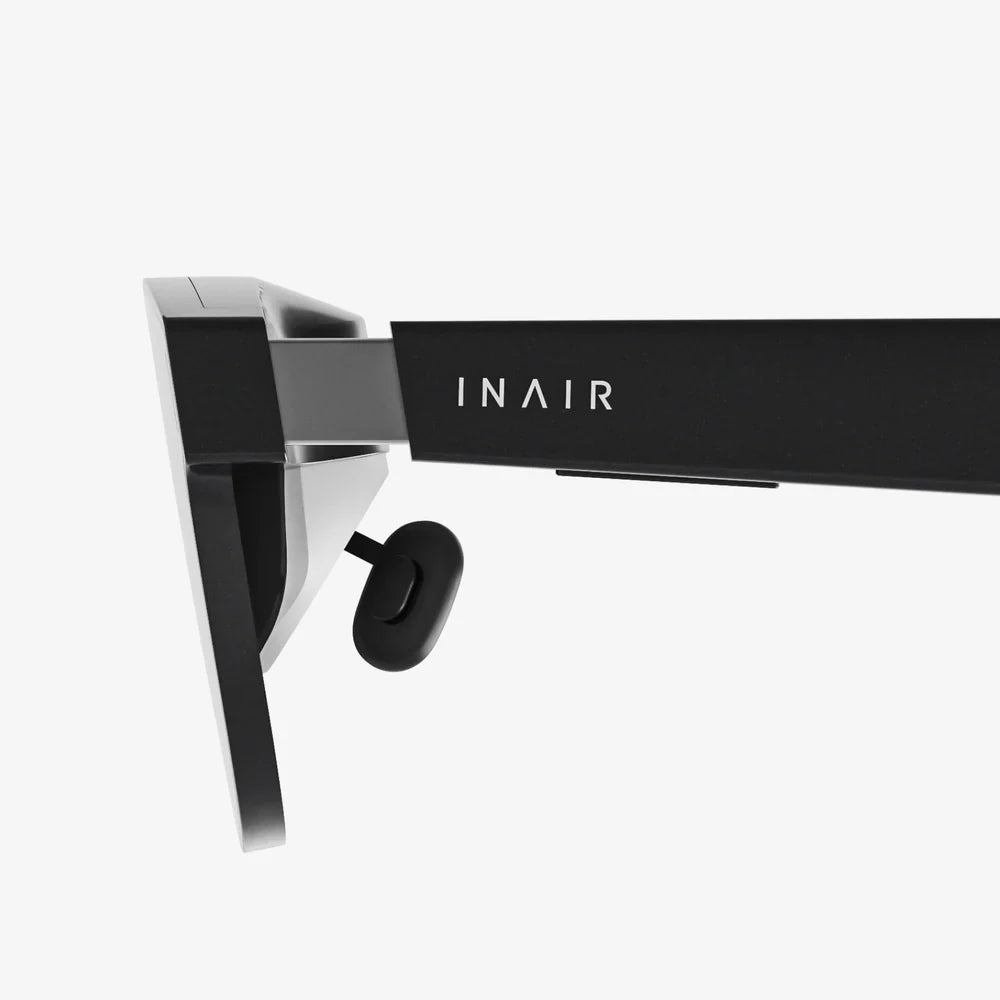
The evolution of 360 3D VR video is inextricably linked to advancements in several key technologies. The rollout of 5G and eventually 6G networks promises the high-speed, low-latency connectivity needed to stream crystal-clear immersive experiences wirelessly to anyone, anywhere. Standalone headsets are becoming more powerful, lighter, and more affordable, moving toward a form factor resembling everyday eyewear.
We are also moving toward more interactive experiences. The future is not just passive viewing but active participation. This is known as volumetric video, where not just the environment is captured in 3D, but people are too, allowing users to walk around a recorded person as if they were a hologram in the room with them. The integration of haptic feedback—gloves or suits that simulate touch—will add another critical layer to the sensory experience, allowing you to feel the virtual world.
Perhaps the most profound horizon is the convergence of VR with Augmented Reality (AR). This混合现实 (MR) would allow digital objects from a 360 3D VR experience to be anchored convincingly in our physical living rooms, blurring the lines between the digital and the real until they become indistinguishable.
The screen is dissolving, and in its place, an entire universe is waiting to be explored. 360 3D VR video is more than a new format; it's a portal to impossible places, a bridge across vast distances, and a tool for building empathy by allowing us to see the world through another's eyes. The question is no longer if this technology will become mainstream, but how quickly we are ready to step through and embrace the infinite possibilities of a world without edges.
Share:
AR Glasses for Professionals: The Next Frontier in Enterprise Productivity and Immersive Collaboration
High-End AR Glasses The Future of Reality is Transparent and Wearable