


Imagine pointing your device at the world around you and watching it transform, not with special effects reserved for blockbuster movies, but with interactive, intelligent digital layers that enhance your understanding, your creativity, and your play. This is no longer a futuristic fantasy; it’s the powerful reality delivered by the modern 3D augmented reality app, a technological marvel that is fundamentally reshaping our interaction with both the digital and physical realms. The ability to seamlessly blend computer-generated perceptual information with our real-world environment represents one of the most significant shifts in human-computer interaction, and it’s happening right in the palm of your hand.
The Core Technology: How a 3D Augmented Reality App Works
At its heart, a 3D augmented reality app is a sophisticated piece of software that performs a technological magic trick. It must understand the world it's looking at and then convincingly place 3D content within it. This process relies on a fusion of hardware and software working in perfect harmony.
Computer Vision: The App's Eyes and Brain
The foundation of any robust AR experience is computer vision. Using the device's camera, the app continuously analyzes the video feed. Advanced algorithms perform key tasks:
- Feature Point Detection: The app identifies unique points, textures, and patterns in the physical environment, such as the corner of a table or a distinct pattern on a floor.
- Simultaneous Localization and Mapping (SLAM): This is the true powerhouse. SLAM technology allows the app to simultaneously map an unknown environment (creating a point cloud of the space) and localize itself within that map in real-time. This creates a digital understanding of the physical world's geometry, which is essential for placing and anchoring 3D objects.
- Plane Detection: The app identifies horizontal surfaces (like floors and tables) and vertical surfaces (like walls), providing a "stage" upon which digital content can be placed.
- Light Estimation: The app analyzes the ambient light in the room, allowing it to adjust the lighting and shadows of the virtual object to match its surroundings, drastically increasing the realism of the blend.
Tracking and Anchoring: Keeping the Illusion Alive
For the illusion to be believable, the digital object must stay precisely where it’s put, even as the user moves their device. This is achieved through precise tracking, which uses the device's inertial measurement unit (IMU)—including the gyroscope and accelerometer—in combination with visual data from the camera to track the device's position and orientation in six degrees of freedom (6DoF): X, Y, Z coordinates and pitch, roll, and yaw rotation.
Rendering: Bringing 3D Content to Life
Once the environment is understood and the device is tracked, the app must render high-fidelity 3D models and animations. This involves powerful graphics processing to create realistic textures, lighting, and shadows that interact correctly with the real world. The result is a cohesive scene where a digital dinosaur can walk across your living room carpet, casting a shadow under your coffee table.
Beyond the Gimmick: Transformative Applications
While viral filters and games brought AR into the public consciousness, the true power of a 3D augmented reality app lies in its practical, transformative applications across countless industries.
Revolutionizing Retail and E-Commerce
The "try before you buy" paradigm has been completely upended. Shoppers can now use a 3D augmented reality app to see how a new sofa would look in their actual living room, checking for size, color, and style fit against their existing decor. They can virtually try on watches, glasses, or makeup, or even see how a new paint color would look on their walls. This drastically reduces purchase uncertainty and product return rates, while providing an engaging and confident shopping experience from home.
Empowering Industry and Manufacturing
In industrial settings, these apps are moving beyond novelty to become essential tools. Technicians can use AR to overlay complex repair instructions and animated guides directly onto the machinery they are fixing, highlighting specific components with digital arrows and annotations. Architects and construction workers can walk through a full-scale 3D model of a building on the empty construction site, identifying potential design clashes before a single brick is laid. This "see-what-you-mean" capability enhances precision, improves safety, and saves immense amounts of time and capital.
Transforming Education and Training
Learning becomes an immersive, interactive adventure. Instead of reading about the human heart, medical students can explore a beating 3D hologram from every angle, peeling back layers to see the interplay of muscles, valves, and arteries. History students can walk around a digitally reconstructed ancient ruin right in their classroom. This move from abstract 2D diagrams to tangible 3D models deepens understanding and retention, making complex subjects accessible and captivating.
Enhancing Navigation and Wayfinding
Forget trying to orient a tiny blue dot on a abstract map. The next generation of navigation uses AR to overlay giant, floating directional arrows onto the real-world view from your camera, showing you exactly which street to turn down. Indoors, this technology can guide you through a vast airport to your gate or help you find a specific product in a large supermarket aisle, transforming how we navigate complex spaces.
The User Experience: Design Principles for Immersion
Creating an effective 3D augmented reality app is as much an art as it is a science. The user interface (UI) and user experience (UX) must be meticulously designed to feel intuitive and magical, not clunky and disruptive.
Intuitive Interaction Models
How does a user interact with a object that isn't really there? Designers have developed elegant solutions:
- Direct Manipulation: Using touch gestures on the screen to rotate, scale, and move the 3D object as if it were under a piece of glass.
- Gesture Control: Using the front-facing camera to recognize hand gestures for more natural, if less precise, interaction.
- Voice Commands: Allowing users to manipulate the scene or summon information through simple spoken instructions.
The goal is always to minimize cognitive load. The best interfaces are those that feel invisible, letting the user focus on the content, not the controls.
Prioritizing Performance and Comfort
A laggy or jittery AR experience breaks immersion instantly and can even cause motion sickness. Developers must optimize 3D models and rendering pipelines to maintain a high, stable frame rate. Furthermore, designers must be mindful of "designer neck," avoiding the placement of key interactive elements too high or low in the field of view, which forces uncomfortable physical postures during prolonged use.
Challenges and The Path Forward
Despite the rapid progress, the development of truly pervasive 3D augmented reality apps faces several significant hurdles.
Hardware Limitations and Accessibility
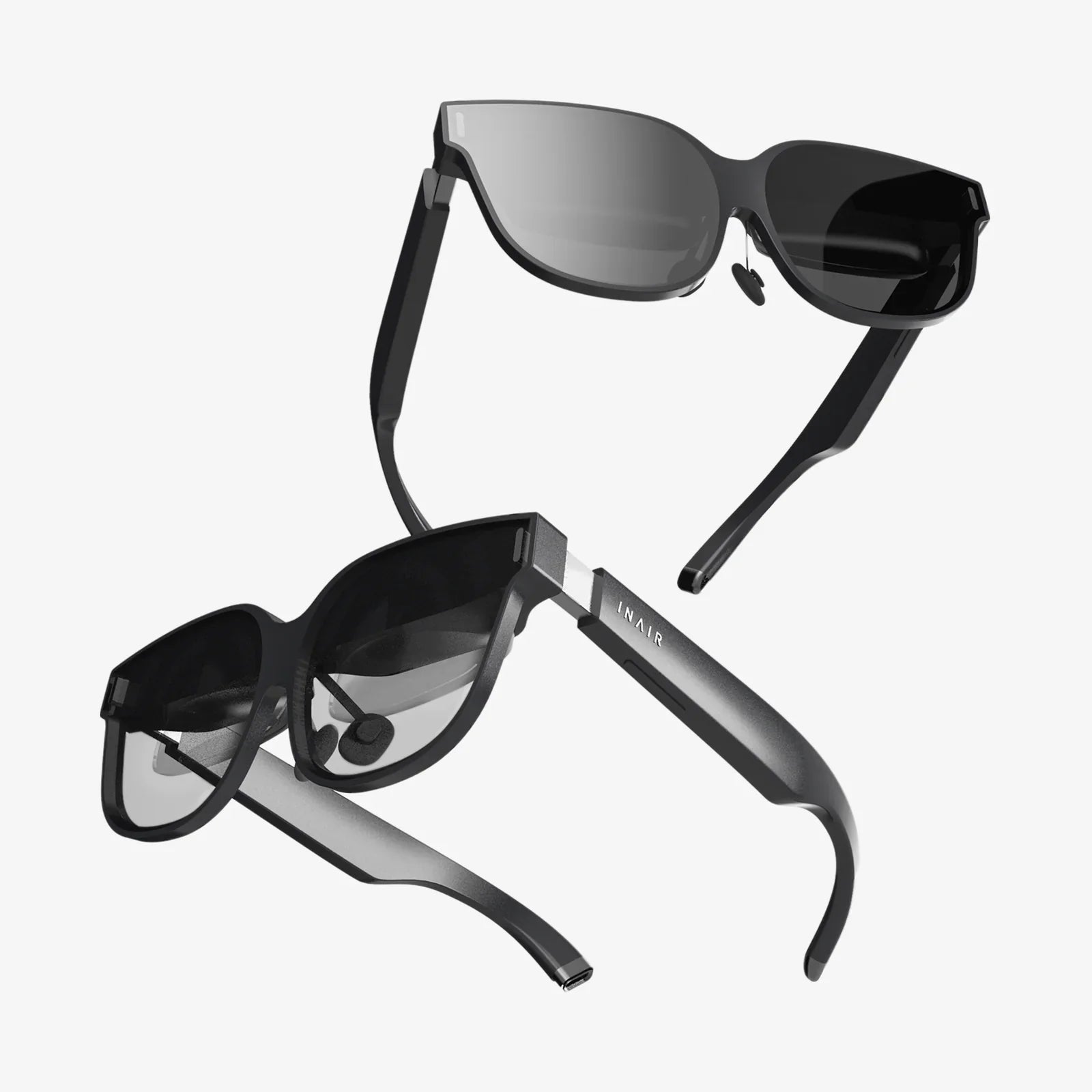
While smartphone-based AR is powerful, it has inherent limitations. Holding a phone up for long periods is awkward, and the field of view is confined to the small screen. Dedicated AR glasses promise a truly hands-free, immersive experience but have struggled with achieving a consumer-friendly blend of style, battery life, computational power, and affordability. The ultimate goal remains a pair of lightweight, all-day glasses that can seamlessly overlay digital information onto the world without isolating the user.
The Need for a Robust AR Cloud
For AR to become a shared, persistent layer on reality, we need what is often called the "AR Cloud"—a digital twin of the real world that can be accessed and annotated by everyone. This would allow one user to leave a virtual note for a friend on a specific street corner, or for digital artwork to be permanently affixed to a physical museum wall, visible to all who look through an app. Creating this scalable, precise, and universally accessible spatial map is one of the biggest challenges in the field.
Privacy and Ethical Considerations
An app that continuously scans and maps your environment raises profound privacy questions. Who owns the spatial data collected? How is it stored and used? The potential for persistent surveillance and unwanted advertising in physical spaces is a real concern that developers and regulators must address with clear ethical guidelines and transparent data policies to build and maintain public trust.
The journey of the 3D augmented reality app is just beginning. We are moving from isolated, app-specific experiences toward a future where AR is a continuous, contextual layer integrated into our daily lives—an invisible interface that provides information, connection, and utility exactly when and where we need it. The boundary between the atoms of our world and the bits of our digital existence is dissolving, and these apps are the catalysts. The next time you look around your room, just imagine what could be there, waiting for you to discover it.
Share:
Smart Sunglasses for Menwearables: The Ultimate Fusion of Fashion and Function
Generative AI Glasses: The Invisible Revolution Reshaping Reality