


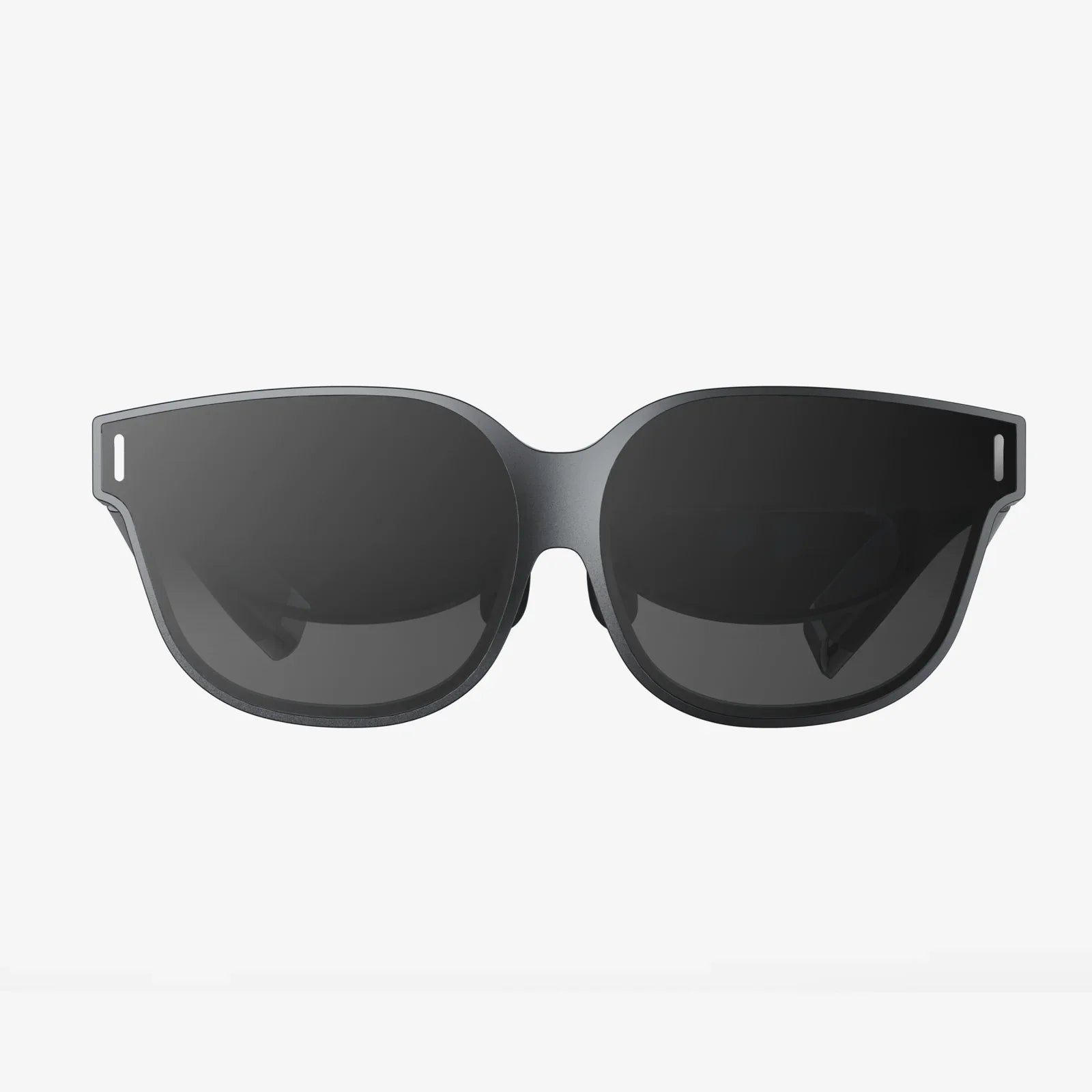
Imagine a world where the line between your thoughts and the digital realm dissolves, where information doesn't live on a screen in your pocket but is seamlessly painted onto the canvas of reality itself. This is the breathtaking promise of generative AI glasses, a technology not of incremental improvement, but of fundamental redefinition. We are standing on the precipice of a shift from looking at a device to looking through a intelligent portal to an augmented existence. This isn't just about getting notifications in your field of view; it's about empowering human cognition and perception in ways previously confined to science fiction.
Beyond Augmented Reality: The Paradigm Shift
The concept of augmented reality (AR) has been with us for years, often demonstrated through clunky headsets or smartphone apps that overlay simple digital graphics onto a live camera feed. Generative AI glasses represent a quantum leap beyond this. Traditional AR provides a static layer of pre-programmed data. Generative AI, however, is dynamic, creative, and contextual. It doesn't just display information; it interprets, creates, and interacts in real-time.
The core differentiator lies in the fusion of three critical technologies:
- Advanced Sensor Arrays: These glasses are equipped with high-resolution cameras, depth sensors, LiDAR, microphones, and inertial measurement units (IMUs). They continuously capture a rich data stream of the user's environment—what they see, hear, and their physical position within a space.
- Powerful On-Device Processing: To handle the immense computational load with minimal latency, these devices leverage specialized chips designed for machine learning tasks. This allows for real-time analysis without constant, privacy-compromising data transmission to the cloud.
- Sophisticated Generative AI Models: This is the brain. Multimodal AI models can process the visual, auditory, and contextual data from the sensors. They understand the scene, identify objects and people, interpret spoken and unspoken intent, and generate appropriate, context-aware responses.
This combination transforms the glasses from a display terminal into an intelligent companion that perceives the world alongside you and enhances your interaction with it.
Redefining Communication: The End of Language Barriers
One of the most immediate and profound applications will be in human communication. Imagine traveling anywhere in the world and engaging in fluent, natural conversation with anyone you meet.
- Real-Time Subtitles for Life: As a person speaks, their words are instantly transcribed and translated into your native language, appearing as subtitles seamlessly integrated into your visual field, seemingly floating near the speaker. The AI can even preserve the speaker's original tone and cadence in the translated text.
- Bidirectional Conversational Flow: You speak in your language, and the glasses speak for you in theirs. Advanced speech synthesis will generate a voice that not only speaks the translated words but can also mimic your emotional inflection, making conversations feel surprisingly personal and authentic.
- Beyond Verbal Communication: This could extend to reading historical placards in a museum, instantly translating restaurant menus, or understanding complex technical manuals in a foreign language, all by simply looking at the text.
This technology promises to dismantle one of humanity's oldest and most persistent obstacles, fostering deeper cultural exchange and global collaboration.
The Ultimate Contextual Assistant: Information When and Where You Need It
Generative AI glasses will become the ultimate contextual computing device, delivering information not based on what you search for, but based on what you are looking at and what you are doing.
- Visual Search and Identification: Look at a complex flower in a garden, and its name and species materialize beside it. Glance at the night sky, and constellations are outlined and labeled. Look at a landmark, and a brief history pops up. The entire world becomes hyperlinked.
- Procedural Guidance: Whether you're repairing a complex engine, learning a new recipe, or assembling furniture, the glasses can overlay numbered instructions, arrows, and annotations directly onto the physical components you're working with, guiding your hands step-by-step.
- Personalized Memory Augmentation: How many times have you forgotten a name at a crucial moment? The glasses, with appropriate permissions and privacy safeguards, could discreetly display the name and key details of a colleague approaching you at a conference, pulled from your past interactions and calendar.
This shifts our relationship with knowledge from one of recall and search to one of effortless discovery and guidance.
Unleashing Creativity and Altering Perception
The "generative" aspect of these glasses unlocks a fascinating creative dimension. They won't just show you the world as it is; they will allow you to see it as it could be.
- Real-World Content Creation: A graphic designer could sketch rough ideas in the air with their fingers, with the AI refining them into polished vector graphics floating in space. An interior designer could look at a empty room and visualize different furniture arrangements, color schemes, and lighting conditions in real-time.
- Artistic Filters for Reality: Want to see the world rendered in the style of Van Gogh? Or as a cyberpunk metropolis? The AI could apply these complex stylistic filters to your entire field of view, transforming your daily commute into an immersive art experience.
- Enhanced Sensory Perception: By tapping into data networks, the glasses could visualize otherwise invisible information. They could show the strength of Wi-Fi signals as shimmering fields of color, display real-time air quality data, or even overlay architectural blueprints and utility lines onto a building's facade for engineers.
This turns every user into a potential artist and designer, with the physical world as their mutable medium.
The Inevitable Ethical and Societal Earthquake
Such a powerful technology does not arrive without significant challenges. The societal, ethical, and privacy implications are staggering and must be addressed proactively.
- The Privacy Paradox: Glasses with always-on cameras and microphones represent the ultimate surveillance tool. The potential for abuse, both by individuals and institutions, is enormous. Robust, legislated rules around data collection, storage, and usage are non-negotiable. Features like clear physical indicators when recording is active and strict geofencing (e.g., disabling recording in changing rooms or private homes) will be essential.
- The Authenticity Crisis: If everyone can alter their perceived reality with a thought, how do we establish a shared, objective truth? The potential for deepfakes to move from the screen into the real world in real-time is a terrifying prospect for misinformation.
- The Digital Divide 2.0: This technology could create a new class of augmented individuals with significant cognitive and informational advantages over those who cannot afford or choose not to use it, leading to new forms of inequality.
- Social Etiquette and Attention: How do we interact with someone who is partially immersed in a digital overlay? Will constant access to information degrade our innate curiosity and ability to be present in the moment?
Navigating these challenges will require a collaborative effort from technologists, ethicists, policymakers, and society as a whole.
The Road Ahead: From Prototype to Ubiquity
The path to mainstream adoption is fraught with technical hurdles. Battery technology must evolve to power such computationally intensive devices all day. The form factor must become indistinguishable from fashionable eyewear—lightweight, comfortable, and socially acceptable. The user interface needs to move beyond voice commands and touchpads to more intuitive methods like subtle gesture control or even neural interfaces.
Furthermore, a new ecosystem of applications and experiences must be built from the ground up for this new platform. Developers will need to learn to design for spatial computing and context-aware generation, a paradigm vastly different from designing for a rectangular screen.
Despite these hurdles, the momentum is undeniable. The convergence of AI, sensor miniaturization, and display technology is making this inevitable. The first iterations may be focused on enterprise and niche professional use cases, but the trajectory points toward a future where generative AI glasses are as commonplace as wireless earbuds are today.
The true magic of generative AI glasses lies not in the technology itself, but in its potential to fade into the background. The ultimate success of this revolution will be measured by its invisibility—by how effortlessly it amplifies our human capabilities without intruding upon our humanity. We are not just building a new gadget; we are coding the very lens through which we will future generations will experience, understand, and shape their world. The question is no longer if this future will arrive, but how wisely we will choose to build it.
Share:
3D Augmented Reality App: The Ultimate Guide to Transforming Your Reality
Best AI Glasses for Work: The Ultimate Guide to Augmented Productivity