


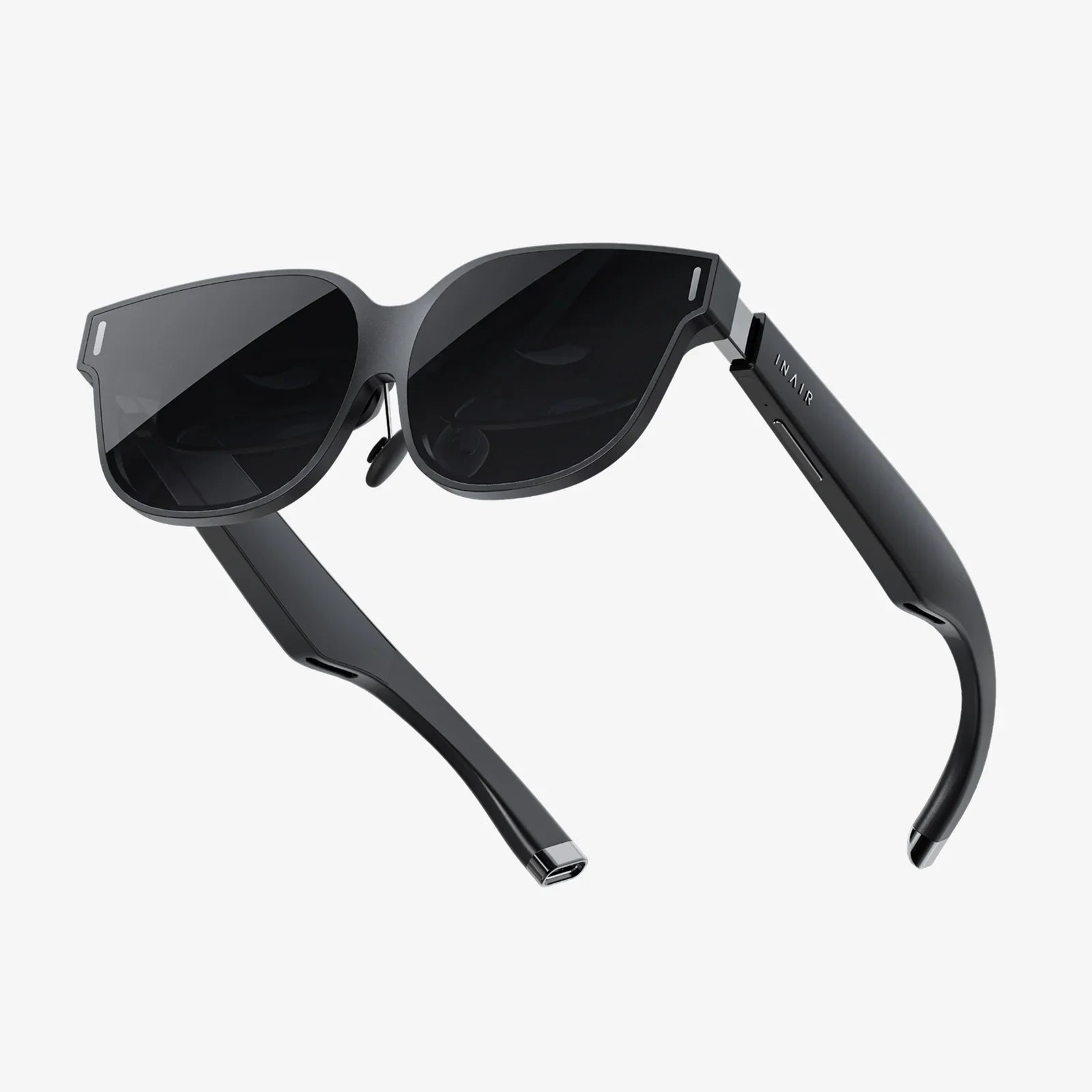
Imagine the thrill of a dinosaur's foot shaking the ground beneath you, the dizzying depth of a spaceship battle, or the intricate details of an animated world popping out from the screen, all from the comfort of your living room. This is the promise of 3D projection, a cinematic experience that transcends traditional viewing. But the true gateway to this immersive dimension isn't just the projector itself; it's the often-overlooked yet critically important accessory: the 3D glasses for your projector screen. Without the right pair, the magic remains locked away, a blurry promise on a flat surface. This guide will demystify the technology, break down the options, and equip you with the knowledge to unlock the full, breathtaking potential of your 3D-ready projector.
The Magic Behind the Lenses: How 3D Glasses Create Depth
To understand which glasses you need, it's essential to grasp the basic principle of stereoscopy—the technology that creates the illusion of depth. Human vision is binocular; each eye sees a slightly different image because they are spaced apart. Our brain then merg these two images into one, interpreting the differences as depth and dimension. 3D technology mimics this process. The projector rapidly displays two slightly offset images on the screen: one intended for the left eye and one for the right.
The sole purpose of 3D glasses is to ensure each eye sees only the image meant for it. By filtering the light, the glasses separate the two overlapping images, allowing your brain to perform its natural magic and reconstruct a single, coherent 3D picture. The method of filtering and separation is where the different technologies come into play, each with its own advantages and drawbacks.
A Spectrum of Technology: Passive vs. Active 3D Glasses
The world of 3D glasses is primarily divided into two camps: passive and active. Your projector's specifications will dictate which type you require, as they are not cross-compatible.
Passive 3D Glasses (Polarized)
Often associated with modern movie theaters, passive 3D technology relies on polarized light. The projector, sometimes with the help of a specialized silver screen that preserves polarization, displays the left-eye and right-eye images using light waves that are polarized at different angles—typically circular polarization, either clockwise or counter-clockwise.
The lenses in passive 3D glasses are filters that each only allow light polarized in one specific direction to pass through. The left lens blocks the right-eye image and vice versa. Because the technology is built into the lenses, which require no power, passive glasses are typically:
- Lightweight and Comfortable: They resemble standard tinted sunglasses, making them easy to wear for extended periods, even over prescription eyewear.
- Inexpensive: They are very cheap to manufacture and replace, allowing you to easily stock up for a large movie night with friends and family.
- No Batteries Required: There are no electronics to charge or fail.
The primary trade-off is resolution. Since the full HD image is split between both eyes (a technique called frame packing), each eye effectively receives a 1080i or 540p image, which can result in a slight decrease in perceived sharpness compared to active systems, though this is often negligible on very large projector screens.
Active 3D Glasses (Active Shutter)
Active shutter technology is a more complex and electronically driven system. In this setup, the projector displays the left-eye and right-eye images in rapid alternation, flashing them onto the screen at a very high speed (often 120Hz or 144Hz per eye).
The glasses themselves are sophisticated electronic devices. They contain a liquid crystal shutter in each lens, an infrared (IR) or radio frequency (RF) receiver, and a battery. The glasses sync wirelessly with the projector. When the projector shows the left-eye image, it sends a signal that instructs the glasses to darken the right lens and clear the left lens. Milliseconds later, when the right-eye image is projected, the shutters flip—the left lens darkens and the right lens clears. This happens so quickly that your brain perceives a continuous, flicker-free 3D image.
The advantages of active shutter systems include:
- Full HD 3D: Each eye sees the full 1080p resolution image sequentially, resulting in the highest possible image clarity and depth detail.
- Superior Compatibility: They are the dominant standard for home theater projectors, ensuring wide support from manufacturers.
The downsides are:
- Cost and Weight: The glasses are significantly more expensive, heavier, and bulkier due to their built-in electronics and batteries.
- Battery Dependency: They require regular charging via USB. A dead battery means no 3D.
- Potential for Flicker: Some sensitive viewers may perceive a slight flicker, especially in bright scenes, though modern models have largely mitigated this issue.
- IR Limitations: Models that use an IR emitter for sync require a clear line of sight between the emitter (usually placed near the screen) and the glasses. RF models offer more freedom of movement.
DLP Link: The Emitter-Free Active Alternative
A popular sub-category of active shutter technology is DLP Link. Developed for projectors using DLP chips, this clever system eliminates the need for a separate external IR emitter. Instead, the synchronization signal is embedded directly into the light pulses of the projected image itself, creating a invisible flash that the glasses detect.
The benefits are obvious: no extra piece of equipment to set up and no line-of-sight issues from an emitter. However, initial synchronization can sometimes be slightly trickier, and you must ensure your active glasses are specifically certified as "DLP Link" compatible to work with this technology.
Choosing the Right Glasses for Your Projector and Screen
Selecting the correct 3D glasses is not a matter of preference but of compatibility. Your first and most crucial step is to consult your projector's manual. It will explicitly state the 3D format it supports (e.g., "Active Shutter," "DLP Link," "Bluetooth 3D," "Polarized").
- If you have an active shutter projector, you must buy active glasses of the correct type (e.g., standard IR/RF or DLP Link).
- If you have a passive 3D projector, you must buy the correctly polarized passive glasses (usually circular polarized).
Mixing brands within the same technology (e.g., using one brand's DLP Link glasses with another brand's DLP Link projector) can often work, but it is not guaranteed. Sticking with the manufacturer's recommended or certified models is always the safest bet for flawless performance.
Beyond Technology: Factors Influencing Your 3D Experience
The glasses are just one part of the equation. The overall quality of your 3D immersion depends on a symphony of components.
- The Projector's Brightness: 3D glasses significantly dim the image reaching your eyes. A projector with high lumens output (1,500+ ANSI lumens for 3D in a dark room) is essential to combat this and produce a bright, vibrant picture.
- The Screen: A high-gain screen can help reflect more light back to the viewer, brightening the 3D image. For passive polarized systems, a specialized silver screen is often necessary to maintain the polarization of the light.
- Ambient Light: 3D viewing is best done in a completely light-controlled, dark room. Ambient light washes out the image and diminishes the 3D effect.
- Content Quality: A well-mastered 3D Blu-ray will provide a far superior experience to a compressed streaming signal or an poorly converted "post-production 3D" movie.
Comfort and Care: Living with Your 3D Glasses
If you opt for active shutter glasses, consider their ergonomics. Look for models with adjustable nose pads and temple arms to ensure a secure and comfortable fit. If you wear prescription glasses, seek out models designed to fit over them comfortably or consider clip-on solutions. For passive glasses, since they are so inexpensive, having a dozen pairs on hand for guests is a simple way to be ready for any impromptu 3D event.
Maintenance is straightforward. Always use the provided microfiber cloth and lens cleaner solution designed for coated optics. Avoid using household glass cleaners, as they can damage the specialized filters on the lenses.
The evolution of 3D glasses for projector screens has been remarkable, transforming from cumbersome novelties into sophisticated portals for entertainment. Whether you prioritize the effortless, crowd-friendly nature of passive systems or the breathtaking, full-resolution clarity of active shutter technology, the right pair will seamlessly disappear, leaving only the awe-inspiring depth and wonder of a world projected far beyond the confines of the screen. Your home theater is not just a display; it's a window, and these glasses are the key to opening it wide, inviting you to step through and become part of the story.
Share:
What Are the Best Smart Sunglasses? A Deep Dive into High-Tech Eyewear
Polarized Smart Sunglasses for Men: The Ultimate Fusion of Style and Technology