


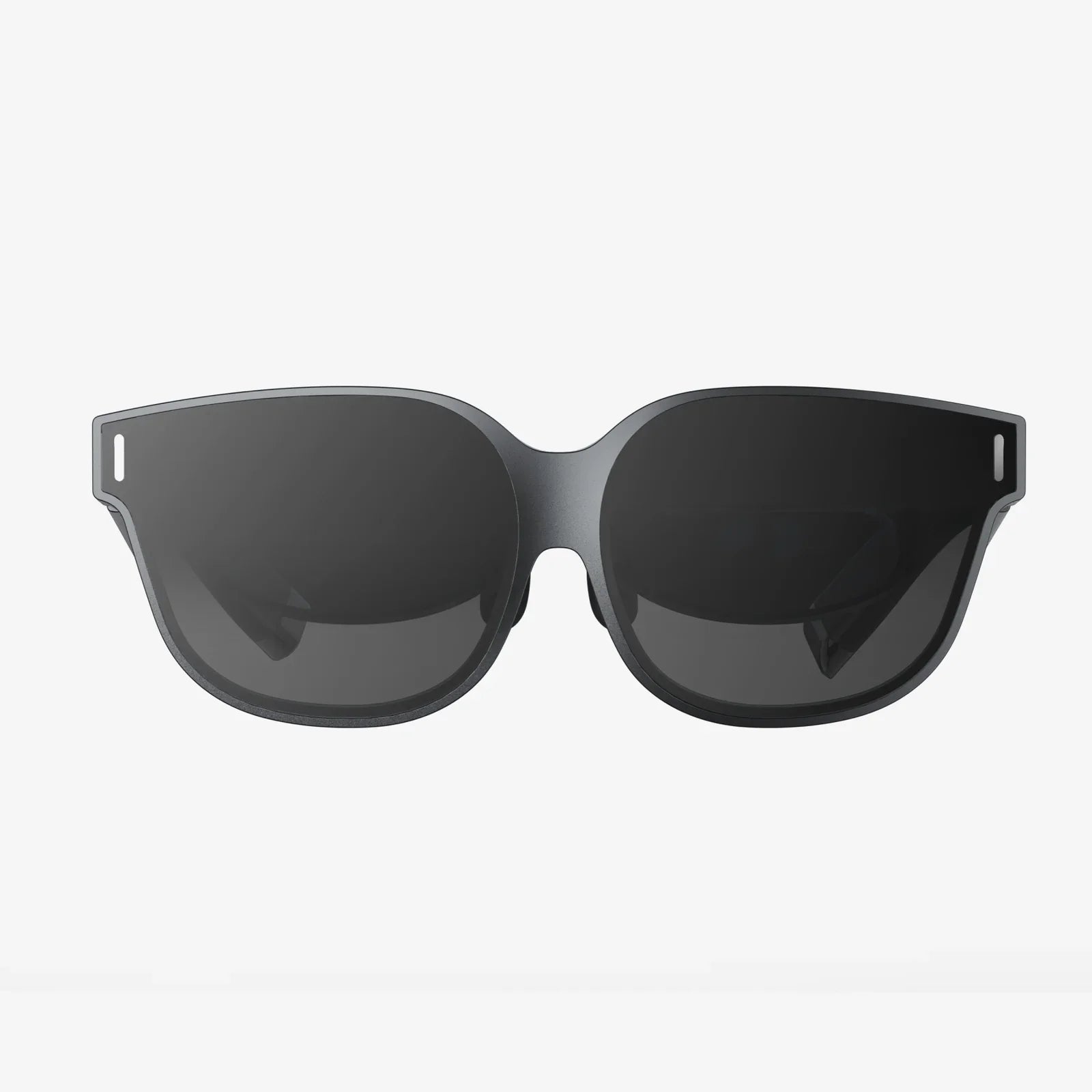
Imagine slipping on a sleek visor and instantly being transported to a concert front-row center, a surgical training room, or the surface of Mars—this is the breathtaking promise of the 3D head mounted display, a device poised to redefine our perception of reality itself.
The Architecture of Immersion: How It Works
At its core, a 3D head mounted display is a complex feat of optical engineering and computational power designed to trick the human brain into perceiving depth and scale in a digital world. Unlike a traditional flat screen, these devices create a stereoscopic 3D experience by presenting slightly different images to each eye. This binocular disparity is the primary cue our visual cortex uses to interpret depth in the real world, and by replicating it with precision, the headset generates a convincing illusion of a three-dimensional space all around the user.
The journey of light begins with two micro-displays, often high-resolution LCD or OLED panels, each dedicated to one eye. These displays generate the initial image. This light then passes through a series of sophisticated optics—lenses that focus, reshape, and magnify the virtual imagery, placing it at a comfortable focal distance to prevent eye strain. Advanced models incorporate varifocal or light field technology to dynamically adjust the focal plane, matching where the user is looking to create a more natural and comfortable experience that accommodates our eyes' need to refocus on near and far objects.
This visual symphony is conducted by powerful onboard processors and sensors. Inside-out or outside-in tracking systems, employing a combination of cameras, gyroscopes, accelerometers, and magnetometers, constantly monitor the user's head position and orientation in real-time. This data is processed at lightning speed to adjust the visuals accordingly, ensuring that the virtual world remains stable and responsive to every turn, nod, and step. This low-latency tracking is absolutely critical; any perceptible delay between physical movement and visual feedback can break immersion and induce discomfort, a phenomenon known as simulator sickness.
Beyond Gaming: A Spectrum of Applications
While popular culture often inextricably links these devices with immersive gaming, their potential extends far beyond entertainment, revolutionizing fields from medicine to manufacturing.
Revolutionizing Healthcare and Medicine
In the medical realm, 3D head mounted displays are becoming indispensable tools. Surgeons can overlay critical patient data, such as MRI or CT scans, directly onto their field of view during procedures, effectively granting them X-ray vision. This augmented reality guidance can improve accuracy and reduce operative time. Furthermore, these devices enable unprecedented remote collaboration, allowing a specialist across the globe to see what a local surgeon sees and provide real-time guidance. They are also revolutionizing medical training, letting students practice complex procedures on virtual patients in a risk-free, highly realistic environment.
Transforming Enterprise and Industrial Design
The industrial sector is leveraging this technology for design, training, and maintenance. Architects and engineers can walk clients through full-scale 3D models of unbuilt structures, making spatial decisions long before ground is broken. On the factory floor, assembly line workers can receive digital instructions overlaid directly on the machinery they are assembling, reducing errors and speeding up complex processes. Technicians performing repairs can access schematics and receive remote expert assistance hands-free, dramatically improving efficiency and safety.
Redefining Education and Remote Collaboration
Education stands to be profoundly transformed. Instead of reading about ancient Rome, history students can take a virtual walk through a meticulously reconstructed Forum. Biology students can dissect a virtual frog or explore the human bloodstream from within. This experiential learning creates powerful, lasting memories. In the corporate world, remote collaboration is elevated from flat video calls to shared virtual workspaces where participants, represented by avatars, can interact with 3D models, data visualizations, and each other as if they were in the same room, collapsing geographical barriers and fostering a new level of teamwork.
The Human Factor: Challenges and Considerations
Despite the exciting potential, the path to widespread adoption of 3D head mounted displays is paved with significant technical and human-centric challenges that developers must overcome.
A primary hurdle is user comfort. Many existing devices are still too bulky, heavy, and tethered to external computing units, limiting mobility and session length. The industry is racing towards miniaturization, wireless operation, and all-day battery life. Furthermore, the visual experience itself can cause issues. Vergence-Accommodation Conflict (VAC) occurs when our eyes converge (cross) to focus on a near virtual object but must maintain focus at the fixed distance of the display screen. This sensory mismatch is a major contributor to eye strain and headaches, pushing research into more advanced optical solutions.
Beyond the physical, there are profound psychological and social questions. Prolonged immersion in hyper-stimulating virtual environments could impact our perception of the real world, potentially leading to a form of technological dissociation. The concept of presence—the genuine feeling of "being there"—is powerful, and its long-term effects are not yet fully understood. Socially, as these devices become more advanced and potentially always-on, they risk further eroding face-to-face interaction and creating new digital divides between those who have access to these realities and those who do not.
Gazing into the Crystal Ball: The Future of Seeing
The future of 3D head mounted displays is moving towards greater invisibility and deeper integration with our senses and nervous systems. Current research is focused on developing technologies like retinal projection, which beams images directly onto the retina, potentially allowing for incredibly small and lightweight form factors. The ultimate goal is a pair of glasses that are indistinguishable from everyday eyewear yet capable of seamlessly blending the digital and physical worlds.
We are also moving towards more intuitive interfaces. The next generation of devices will likely move beyond handheld controllers, relying instead on advanced eye-tracking, facial expression recognition, and neural input—reading faint electrical signals from the brain to interpret user intention. This would allow for control through thought alone, creating a truly seamless and immersive interaction paradigm. Furthermore, the integration of artificial intelligence will be key, with AI agents acting as guides, collaborators, and creators within these virtual spaces, dynamically generating content and assisting users in real-time.
The Ethical Landscape of a Blended Reality
As this technology evolves from a novelty to a potential platform for much of human experience, it brings a host of ethical dilemmas that society must confront. The data collected by these devices is unprecedented—not just what we look at, but how we look at it, for how long, and even how our pupils dilate in response. This "attention data" is incredibly valuable and raises immense privacy concerns. Who owns this data? How is it used? The potential for sophisticated advertising and behavioral manipulation is staggering.
There is also the risk of reality fragmentation. If everyone can customize their perception of the world, will we lose a shared sense of objective reality? Could these technologies be used to create powerful echo chambers or even for propaganda, making manipulated experiences indistinguishable from real ones? Establishing digital rights, ensuring equitable access, and developing a robust ethical framework for the development and deployment of augmented and virtual realities is perhaps the most critical challenge of all, one that requires collaboration between technologists, philosophers, policymakers, and the public.
The 3D head mounted display is far more than a piece of hardware; it is a portal, a canvas, and a mirror reflecting both our highest technological ambitions and our deepest questions about experience, connection, and what it means to be human in an increasingly digital age. The virtual frontier is open, and its ultimate shape will be defined by the choices we make today.
From revolutionizing how we work and learn to challenging the very fabric of human interaction, the journey into these synthesized worlds is just beginning—and the next time you adjust a visor, you might just be stepping into a new chapter of human experience.
Share:
Informal Virtual Meetings: The Secret Weapon for Modern Team Connection and Productivity
Share AR Augmented Reality: The Next Frontier in Social Connection and Digital Experience