


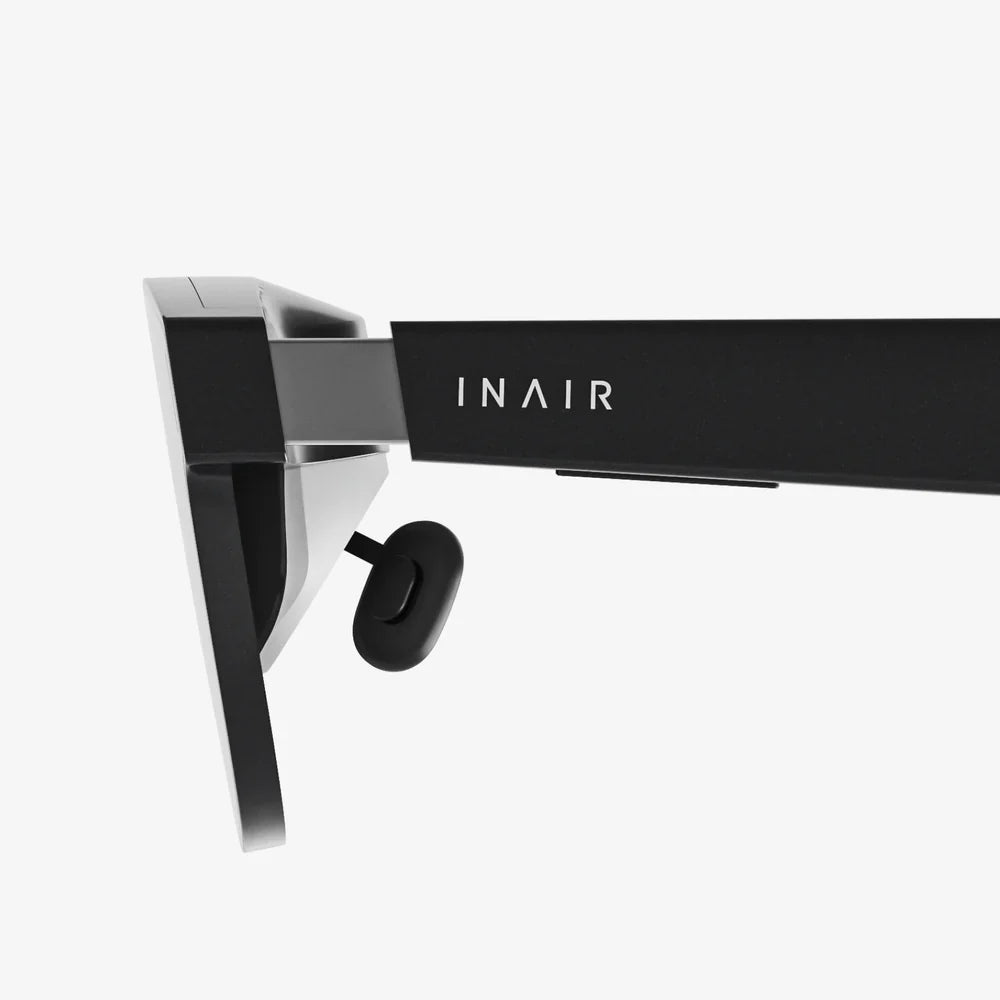
Imagine standing on the edge of a volcanic crater, feeling the heat radiate against your skin as you peer into the molten depths below. Now, picture yourself front row at a concert, with the lead singer striding towards you, their voice resonating in your very core. This isn't a dream or a scene from a science fiction film; this is the palpable, heart-pounding reality offered by 3D headset videos, a technology that is fundamentally rewiring our relationship with digital content and unlocking experiences once confined to the imagination.
The Technology Behind the Illusion: More Than Just Lenses and Screens
At its core, the magic of 3D headset videos is a sophisticated illusion, a carefully orchestrated trick played on our senses to create a profound feeling of presence. This illusion is built upon several key technological pillars working in concert.
Stereoscopy: The Foundation of Depth
Human vision is binocular. Our two eyes, positioned slightly apart, each see a slightly different two-dimensional image. Our brain then seamlessly merges these two images into a single, coherent picture with depth and dimension. 3D headset videos replicate this process by presenting a unique image to each eye. This is achieved either through two discrete displays, one for each eye, or a single high-resolution display split between the two lenses. This stereoscopic effect is the fundamental building block that creates the perception of a three-dimensional world.
Head Tracking: Anchoring You in the Virtual Space
Stereoscopy alone creates a 3D picture, but it doesn't create an immersive world. That critical role falls to head tracking. Modern headsets are equipped with a suite of sensors—gyroscopes, accelerometers, and magnetometers—that precisely monitor the orientation and movement of your head in real-time. As you turn your head to the left, the view within the video shifts accordingly. Look up, and you see the virtual sky; look down, and you see the virtual ground. This sub-millimeter precision tracking is what sells the illusion that you are not just watching a scene, but are physically present within it. It allows for six degrees of freedom (6DoF), meaning you can not only rotate your head but also lean side-to-side or move slightly forward and backward, with the virtual environment responding in kind.
Field of View and Resolution: Expanding the Window to Another World
For immersion to be complete, the virtual world must fill your vision. The field of view (FOV) is the extent of the observable environment seen at any given moment. A wider FOV, typically over 90 degrees, reduces the sensation of looking through a tunnel or a pair of binoculars, making the experience feel more natural. Paired with FOV is resolution. Early headsets suffered from a "screen-door effect," where users could see the faint lines between pixels, breaking immersion. Advances in display technology have led to high-resolution, high-pixel-density screens that render crisp, clear, and believable visuals, making digital objects appear solid and real.
Spatial Audio: The Sound of Reality
Vision is only half the experience. True immersion is achieved when sound behaves as it does in the real world. Spatial, or 3D, audio is a transformative technology that makes sounds appear to originate from specific points in three-dimensional space. If a helicopter flies overhead in a 3D video, spatial audio ensures the sound of its rotors moves convincingly from front to back and above you, corresponding perfectly with the visual. This auditory cue is incredibly powerful in convincing your brain of the reality of the situation, completing the sensory package of immersion.
A Universe of Applications: Beyond Gaming and Entertainment
While gaming and cinematic experiences are the most prominent applications, the potential of 3D headset videos stretches far beyond mere entertainment, revolutionizing fields from education to enterprise.
Education and Training: Learning by Doing, Virtually
Imagine medical students performing delicate virtual dissections or practicing complex surgical procedures without risk to a patient. Trainee mechanics can disassemble and reassemble intricate engine models from the inside out. History classes can take field trips to ancient Rome, walking through the Forum as it stood millennia ago. 3D headset videos enable experiential learning, where users don't just read about a subject—they interact with it. This "learning by doing" approach dramatically improves knowledge retention and skill acquisition.
Virtual Tourism and Real Estate: The World at Your Fingertips
For those with physical or financial limitations, 3D headset videos offer the next best thing to being there. Museums are creating immersive tours of their exhibits, allowing anyone, anywhere, to stroll through their halls. Travel agencies and tourism boards offer breathtaking previews of destinations, from snorkeling in the Great Barrier Reef to hiking Machu Picchu. In real estate, potential buyers can take fully immersive, self-guided tours of properties across the globe, getting a true sense of the space and layout without ever leaving their homes.
Therapeutic and Wellness Uses: Healing Through Immersion
The therapeutic potential of this technology is immense. It is already being used successfully for exposure therapy, helping patients with phobias—such as fear of heights, flying, or public speaking—confront their fears in a safe, controlled, and gradual manner. For patients suffering from chronic pain or undergoing stressful medical procedures, calming and distracting 3D environments (e.g., a peaceful forest or a serene beach) can significantly reduce perceived pain and anxiety. It also shows promise in rehabilitation, making physical therapy exercises more engaging through gamification.
Remote Collaboration and Design: The Future of Work
The concept of the "metaverse" for work is becoming a reality. Architects and engineers can collaborate within 3D models of their designs, examining structures at a human scale. Remote teams can meet in a shared virtual boardroom, interacting with 3D data visualizations as if they were physical objects in the room. This spatial collaboration can bridge geographical gaps and foster a level of interaction that flat screens and video calls simply cannot match.
Creating Your Own Immersive Worlds: A Creator's Guide
The barrier to creating 3D headset videos is lower than ever, opening the field to indie creators, artists, and businesses of all sizes. The process involves capture, stitching, and publishing.
Capture: The Art of Recording Reality in 360 Degrees
Creating live-action 3D video requires specialized camera rigs. These systems typically use two or more lenses, mimicking the placement of human eyes, to capture a stereoscopic pair of 360-degree videos simultaneously. The quality of the cameras, the precision of their alignment (which is crucial for comfortable viewing), and the number of lenses all impact the final fidelity and immersion of the experience. Lighting and sound recording on set are equally critical, as flaws are magnified in an immersive environment.
Stitching and Post-Production: Weaving the Seams of Reality
Once captured, the footage from all the individual camera lenses must be seamlessly combined into a single, spherical video. This complex computational process is known as stitching. Specialized software aligns the overlapping fields of view from each lens and blends them together, erasing the seams and the camera rig itself from the final video. This stitched sphere is then mapped onto a format that video players and headsets can understand. Color grading, spatial audio design, and adding interactive elements are all part of the post-production workflow.
Computer-Generated Imagery (CGI): Building Worlds from Scratch
Not all 3D headset content is captured from the real world. A vast amount is created entirely within computers using 3D animation and game engine technology. This approach offers limitless creative freedom, allowing for the creation of fantastical environments, characters, and effects that would be impossible to film. Tools like real-time rendering engines have been pivotal, allowing creators to build and experience their virtual worlds in real-time as they create them, vastly accelerating the development process.
Publishing and Distribution: Delivering the Experience
Due to their spherical nature and high resolution, 3D headset video files are incredibly large. Efficient compression and streaming technologies are essential for distribution. Major video platforms now support 360-degree and 3D video uploads, handling the complex task of delivering the correct part of the spherical video to the headset based on the user's head orientation. Dedicated apps and platforms also exist that are specifically designed to curate and deliver high-quality immersive experiences.
Navigating the Challenges and Looking Ahead
Despite rapid advancement, the medium still faces hurdles. Motion sickness, or simulator sickness, affects a portion of users, often caused by latency (a delay between head movement and the visual update) or a mismatch between visual motion and physical stillness. The industry is combating this with higher refresh rates, lower latency displays, and smarter software. Content accessibility and discovery also remain challenges, as traditional 2D interfaces are not ideal for browsing a 3D medium.
The future, however, is dazzlingly bright. We are moving towards photorealistic visuals powered by ever-increasing display resolutions and foveated rendering—a technique that tracks your eye movement and renders only the spot you are directly looking at in full detail, saving vast amounts of processing power. Haptic feedback suits and gloves are in development to let you feel the virtual world, adding the sense of touch to the audiovisual experience. The convergence of 3D headset videos with augmented reality will eventually allow us to blend digital creations seamlessly into our physical surroundings. We are not just watching stories anymore; we are stepping into them, and this is merely the first page of a very long and incredible chapter. The line between the digital and the physical is not just blurring—it's dissolving, offering a glimpse into a future where our reality is anything but limited.
Share:
Interactive Smart Board with Projector: The Ultimate Guide to Modern Collaboration
360 Degree 3D Video The Ultimate Immersive Experience Unveiled