


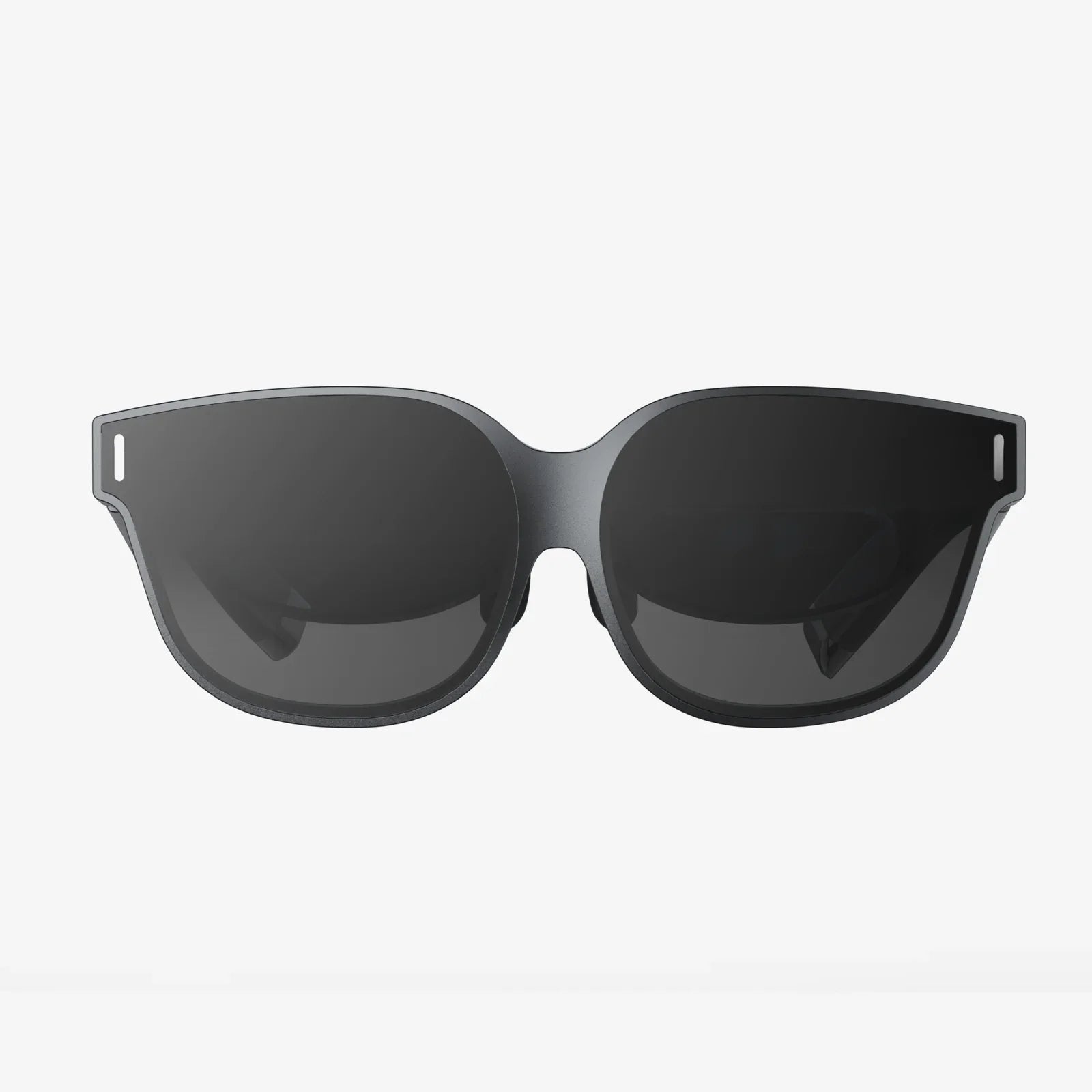
- by wangfred
3D Hologram Pictures: The Future of Visual Media is Here
- by wangfred
Imagine a world where your most cherished memories don't just sit flat behind glass on a wall, but float in the air before you, alive with depth and movement. A world where a doctor can walk around a beating heart, a designer can tweak a virtual engine block with their hands, and a teacher can bring a historical artifact into the classroom without a museum case. This is no longer the realm of science fiction. This is the world being unlocked by the rapid advancement of 3D hologram pictures, a technology that is poised to revolutionize how we see, interact with, and understand visual information.
At its core, a hologram is a photograph of light. Unlike a traditional photograph, which captures a two-dimensional representation of the light intensity and color reflected from a subject, a hologram records the light field itself. This means it captures both the intensity and the phase of light waves, the unique way light waves interact and interfere with each other to create the perception of depth.
The fundamental process for creating a traditional hologram, known as an optical hologram, involves a precise dance of lasers. A laser beam is split into two paths: the object beam and the reference beam. The object beam is directed onto the subject, and the light scatters from it. This scattered light, now carrying the unique information about the subject's shape and surface, then travels onto a special photographic plate or film. Simultaneously, the reference beam is directed onto the same plate without touching the subject. When these two beams meet on the plate, they create a complex pattern of interference—a microscopic landscape of light and dark lines that is the hologram itself. When this recorded pattern is later illuminated by a light source similar to the original reference beam, it diffracts the light to reconstruct the original light field, making the three-dimensional image appear.
While the above method produces stunningly realistic holograms, it requires immense stability (a single vibration can ruin the shot), expensive equipment, and real physical objects to photograph. The digital revolution has dramatically expanded the possibilities. Digital holography involves using a digital camera sensor to capture the interference pattern instead of photographic film. This digital capture allows for the holographic data to be processed, transmitted, and displayed electronically.
This shift is monumental. It means 3D hologram pictures can now be generated entirely by computers using sophisticated algorithms, without ever needing a physical object. This is known as Computer-Generated Holography (CGH). Artists and engineers can create 3D models in standard software, and CGH algorithms calculate the exact interference pattern that would be created if that virtual object were real. This pattern can then be sent to a holographic display device to be rendered into light.
Creating the data for a hologram is one thing; displaying it for the human eye to see is another significant challenge. Several technologies have emerged to make this possible, each with its own advantages.
The potential of this technology stretches far beyond entertainment, seeping into the very fabric of industry, science, and daily life.
In medical imaging, 3D hologram pictures are a game-changer. Surgeons can now examine detailed, interactive holograms of a patient's anatomy derived from CT or MRI scans. They can zoom, rotate, and virtually dissect a holographic model of a tumor or a complex bone structure before making a single incision, allowing for unprecedented surgical planning and precision. Medical students can study anatomy from every possible angle on a true 3D model, enhancing their understanding far beyond what textbooks or 2D screens can offer.
From automotive to aerospace, engineers are using holographic visualization to prototype and design complex machinery. A team can gather around a full-scale holographic model of an engine, discussing components and identifying potential design flaws in a collaborative, intuitive way that a computer-aided design (CAD) model on a monitor could never facilitate. This accelerates development cycles and reduces the cost of physical prototyping.
Artists are embracing holography as a new medium, creating works that play with light, space, and perception. Museums are deploying the technology to create immersive exhibits, allowing visitors to interact with fragile artifacts or extinct species in their full three-dimensional glory. Imagine seeing a holographic dinosaur roam a hall or being able to hold and examine a historically significant pottery shard that, in reality, is locked away in a vault thousands of miles away.
The concept of a "holographic call" is inching toward reality. Early systems already allow for people to be captured in one location and displayed as volumetric, life-like holograms in another, creating a powerful sense of presence that video conferencing lacks. This could transform remote work, education, and personal connections, making geographical distance virtually meaningless.
Despite the exciting progress, significant hurdles remain before 3D hologram pictures become as ubiquitous as the smartphone.
The primary challenge is data. A true hologram contains an astronomical amount of information—orders of magnitude more than a 4K video stream. Capturing, processing, transmitting, and displaying this data requires immense computational power and bandwidth that is currently prohibitive for consumer applications.
Secondly, display technology needs to become cheaper, brighter, and larger. Creating high-resolution, full-color, large-scale holograms that are viewable in normal lighting conditions is an enormous engineering feat that is still under active development.
Finally, there is the challenge of content creation. The tools for creating and editing holographic content need to become more accessible and user-friendly, moving from specialized labs into the hands of creators and consumers.
The trajectory is clear. As compute power continues to grow exponentially (following Moore's Law and beyond) and display technologies mature, these barriers will inevitably fall. We are moving towards a future where screens may become obsolete, replaced by light field projections that fill our living rooms and workspaces. The line between the digital and the physical will blur into what is often termed the "phygital" world.
Interfaces will become spatial and gestural, controlled not by a mouse and keyboard, but by our hands and eyes. Archival and documentation will shift from 2D photos to 3D light fields, preserving moments with a fidelity that makes you feel like you are truly there again. The way we learn, heal, design, and connect is on the cusp of a dimensional shift. The flat screen has dominated our visual experience for over a century, but its days as the pinnacle of visual media are numbered. A deeper, richer, and more immersive way of seeing is rising to take its place, and it’s going to change everything.
We stand at the threshold of a new visual era, one where the images we create will not just be looked at, but will be experienced, interacted with, and lived within. The promise of a photograph that holds not just a moment, but a piece of the world itself, is finally within our grasp, waiting to be opened.