


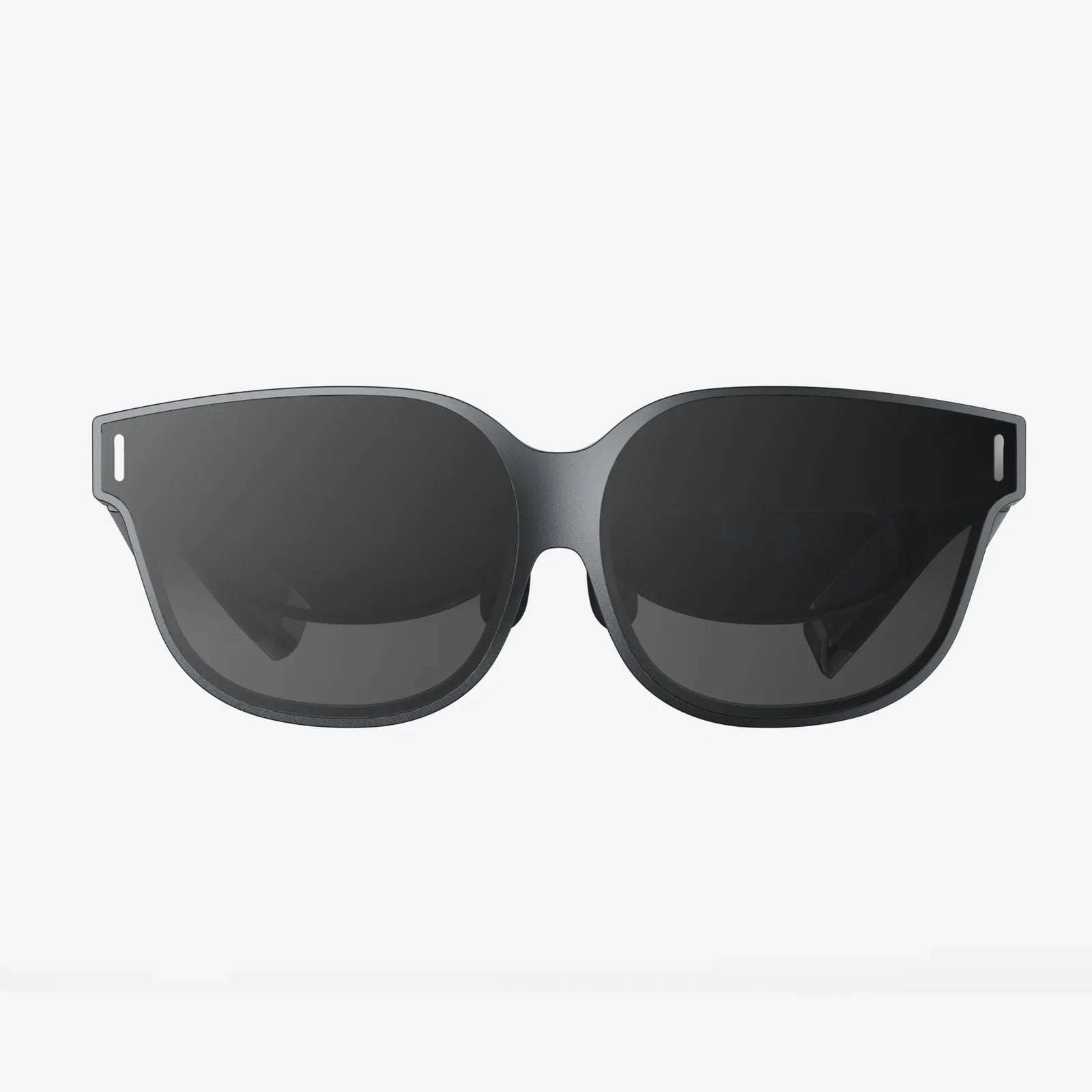
Imagine a world where your morning commute is overlaid with floating directional arrows, where your colleague from another continent appears life-sized in your living room for a coffee chat, and where the instruction manual for your new gadget is projected directly onto the device itself. This is not a distant science fiction fantasy; it is the imminent future being unlocked by the rapid development of 3D holographic glasses. This technology promises to be the most profound interface shift since the advent of the smartphone, fundamentally altering how we perceive and interact with information, each other, and the very fabric of our environment.
The Science of Sight: From Pixels to Photons
To appreciate the marvel of 3D holographic glasses, one must first understand the limitations of current display technologies. Traditional screens, whether on a television or a virtual reality headset, are essentially flat, two-dimensional arrays of pixels. They project light from a fixed surface into our eyes, creating an illusion of depth that the brain must interpret. Holography, in its purest form, is fundamentally different. It is a technique that records and reconstructs the light field of an object, capturing not just its color and intensity but also the phase of the light waves. This allows for the creation of a true three-dimensional image that possesses parallax and depth cues identical to a real object, meaning you can move around it and your perspective changes accordingly.
Modern 3D holographic glasses are sophisticated systems that miniaturize this complex physics. They typically incorporate several cutting-edge technologies working in concert:
- Waveguide Optics: Thin, transparent glass or plastic plates that use internal reflection to "pipe" light from micro-projectors at the temples into the user's eyes without obstructing their natural view of the real world.
- Spatial Light Modulators (SLMs): These are the core engines, often based on liquid crystal or micro-electromechanical systems (MEMS), that manipulate the phase and amplitude of incoming light to construct the complex wavefronts necessary for a holographic image.
- Advanced Eye-Tracking: High-speed, low-latency sensors continuously monitor the precise position and focal depth of the user's pupils. This is critical for ensuring the hologram remains stable and correctly positioned in 3D space as the user moves their head.
- Powerful Onboard Processing: Generating photorealistic holograms in real-time requires immense computational power, often leveraging specialized chips designed for parallel processing to handle the complex algorithms for light field rendering and sensor fusion.
The ultimate goal is to achieve what is known in the industry as "vergence-accommodation conflict" elimination. In current 3D displays, your eyes might converge (cross) on a virtual object that appears close, but the focal distance (accommodation) remains fixed on the screen, causing eye strain. True holographic displays solve this by allowing your eyes to naturally focus on the apparent depth of the hologram itself.
A World Remastered: Transformative Applications
The potential applications for this technology extend far beyond novelty or entertainment, poised to revolutionize nearly every professional and personal domain.
Revolutionizing Medicine and Surgery
In the medical field, 3D holographic glasses could become an indispensable tool. Surgeons could don a sterile pair and have a patient's MRI or CT scan data projected as a detailed, interactive hologram directly over the surgical site, acting as an X-ray vision guide. Medical students could dissect and study anatomical holograms from every angle, gaining an intuitive understanding of the human body that textbooks cannot provide. Telemedicine would be elevated to a new level, with a specialist able to appear in the operating room or clinic to guide a procedure, pointing to specific areas in the holographic overlay.
Reimagining Engineering and Design
For architects and engineers, the design process will be transformed. Instead of viewing blueprints on a screen or physical scale models, teams could walk through a full-scale, photorealistic holographic rendering of a building before a single brick is laid. They could manipulate mechanical assemblies with their hands, pulling apart a holographic engine to examine individual components. This facilitates a deeper understanding of spatial relationships and ergonomics, catching design flaws early and saving immense costs in prototyping and construction.
The Future of Work and Collaboration
The concept of the "metaverse" or virtual office will find its most natural expression through holographic glasses. Remote collaboration will feel truly present. Colleagues from around the globe will be able to meet around a virtual table, sharing and interacting with 3D models, data visualizations, and documents as if they were physical objects in the room. This presence and shared context is impossible to achieve with today's video conferencing grids, promising to bridge the gap created by physical distance and create more cohesive global teams.
Everyday Life and Consumer Applications
On a consumer level, the implications are staggering. Navigation will become intuitive, with giant floating arrows guiding you through city streets. Language barriers could crumble as real-time translation is overlaid onto signs and even the speech bubbles of people you are conversing with. Shopping for furniture could involve placing true-to-size holograms of sofas and tables in your actual living room to see how they fit. Gaming will escape the screen, transforming your entire environment into an interactive playground where digital characters and objects coexist with your physical reality.
The Human Factor: Challenges and Societal Implications
Despite the exciting potential, the path to widespread adoption of 3D holographic glasses is fraught with significant technical, social, and ethical challenges.
Technical Hurdles
The primary obstacles remain technical. Achieving high-resolution, full-color, wide-field-of-view holography in a form factor that is lightweight, comfortable, and socially acceptable to wear for extended periods is immensely difficult. Battery life is another critical constraint, as the computational and optical demands are enormous. Furthermore, creating a seamless and convincing blend of digital and real-world content requires a level of environmental understanding and tracking that pushes the limits of current sensor technology.
The Privacy Paradox
The societal implications are perhaps even more profound. The always-on, augmented nature of these devices raises monumental privacy concerns. If your glasses can recognize faces, objects, and locations, they become a constant recording and data-gathering device. Who has access to this data? How is it stored and used? The potential for pervasive advertising, where every surface in your vision can be tagged with a personalized commercial, could lead to an overwhelming and dystopian experience. Establishing clear digital ethics and robust regulatory frameworks will be paramount to prevent misuse and protect individual autonomy.
Redefining Human Connection and Reality
There is also a philosophical question: how will this constant mediation of our reality affect human cognition, attention, and our connection to the un-augmented world? Will we become overwhelmed by digital clutter, suffering from a new form of information overload? Could it erode our ability to be present in the moment or appreciate the subtle beauty of the natural world? The technology holds the power to both connect us more deeply and isolate us within personalized digital bubbles. Navigating this will require conscious design choices that prioritize human well-being over endless engagement and data extraction.
The journey towards perfect, ubiquitous 3D holographic glasses is a marathon, not a sprint. It will involve incremental advancements in optics, materials science, and computing power. Early iterations may be bulky, expensive, and limited in capability, appealing primarily to enterprise and professional users. But as the technology matures and refines, it will inevitably trickle down to consumers, becoming as commonplace as mobile phones are today. The companies and innovators that succeed will be those that solve not just the engineering puzzles but also the human ones, designing experiences that feel intuitive, empowering, and, above all, truly useful. They must build a platform that enhances our reality without eclipsing it, that amplifies our human capabilities without compromising our humanity. The glasses themselves are merely the lens; the future they reveal is ours to shape.
We stand on the precipice of a new sensory dimension, ready to trade our two-dimensional screens for a universe of information and experience painted directly onto the canvas of our world. The age of staring at reality is ending; the era of interacting with it, in its fullest, most augmented glory, is about to begin.
Share:
AR Lens Services Are Revolutionizing How We See and Interact With the World
Best AR Headsets for Remote Collaboration 2025: The Ultimate Guide to the Future of Work