


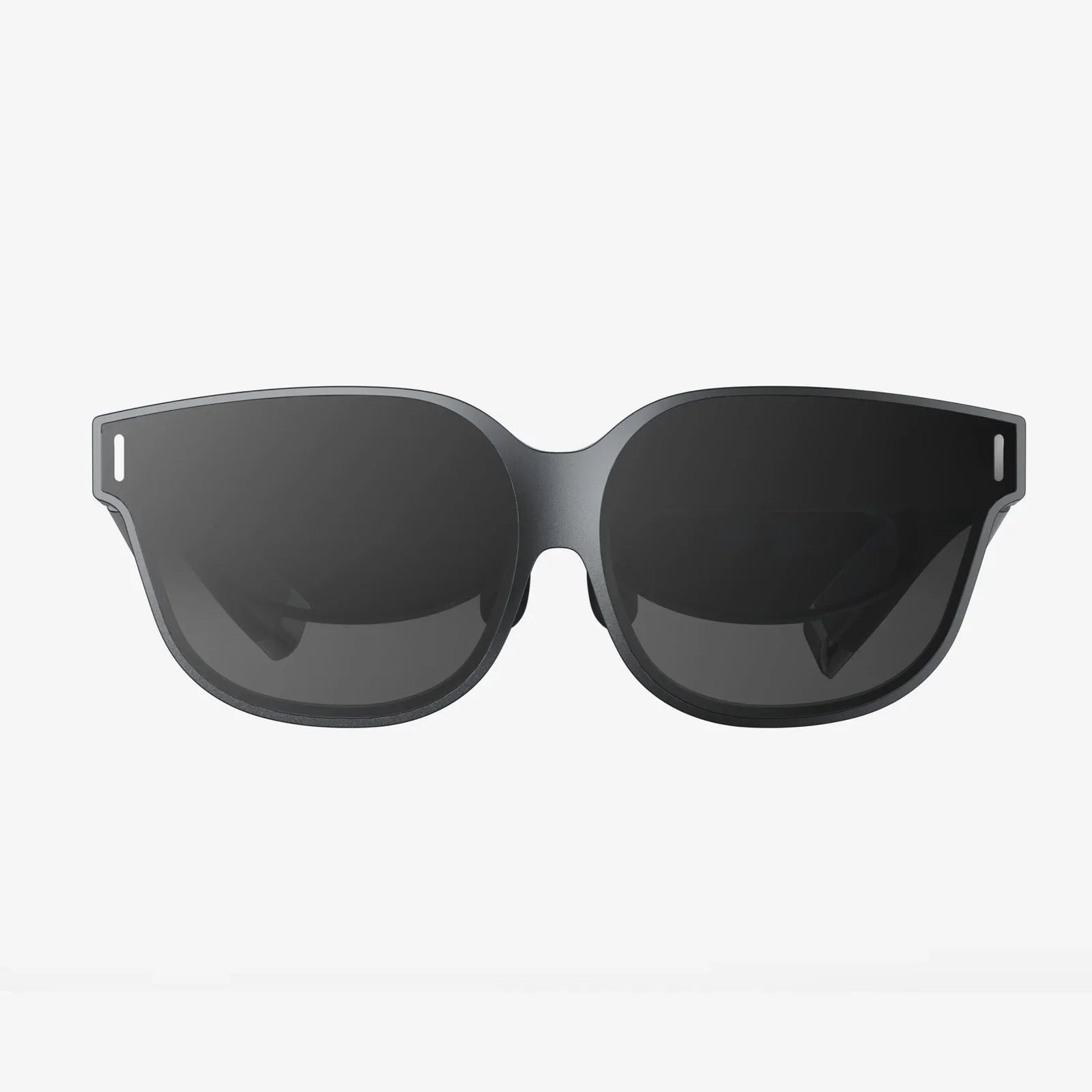
Imagine a world where your computer screen is no longer a flat, two-dimensional pane of glass but a vibrant, three-dimensional portal that blends the digital and physical realms into one seamless experience. This is not a scene from a science fiction film; it is the imminent future promised by the development of 3D holographic monitor technology. This groundbreaking innovation is set to shatter the confines of traditional displays, offering a glimpse into a future where data, entertainment, and communication leap out into our personal space, creating interactions that are as intuitive as they are awe-inspiring. The journey from the first flickering cathode-ray tube to the sleek OLED panels of today has been remarkable, but the next leap is perhaps the most profound yet, fundamentally altering our relationship with the digital world.
The Science Behind the Spectacle: From Pixels to Volumetric Voxels
To understand the magic of a holographic monitor, one must first move beyond the concept of the pixel. Traditional displays are built upon a grid of pixels, the smallest addressable elements that combine to form a 2D image. Holography, however, deals with the recording and reconstruction of light fields. Instead of simply emitting colored light, a holographic display must replicate the way light waves scatter and interfere with each other when they bounce off a real, three-dimensional object.
The core technology enabling modern 3D holographic monitors often revolves around a concept known as volumetric display or computer-generated holography (CGH). Unlike stereoscopic 3D used in cinemas, which requires special glasses to trick each eye into seeing a slightly different image, true holography is autostereoscopic—it creates the perception of depth without the need for any headwear. This is achieved by precisely controlling the phase and amplitude of light waves using advanced spatial light modulators (SLMs). These SLMs, often based on liquid crystal or micro-electromechanical systems (MEMS), act like dynamic diffraction gratings, bending light to construct a complex 3D light field that appears to occupy real space in front of the viewer.
Another approach involves rapidly projecting 2D "slices" of an image onto a spinning or oscillating surface, such as a parabolic mirror or a high-speed rotor, effectively scanning a volume of space to create a persistent 3D image that can be viewed from multiple angles. The computational power required for these systems is staggering. Generating the complex wavefront patterns for a single, high-resolution holographic frame demands processing capabilities far beyond today's top-tier graphics cards, making real-time rendering one of the most significant hurdles in the field.
A World Transformed: Applications Across Industries
The potential applications for this technology extend far beyond a novel way to watch movies. The ability to visualize and manipulate complex 3D data in mid-air will revolutionize numerous professional fields.
Medicine and Healthcare
In surgical planning, a surgeon could examine a patient's organ—a heart, a brain, a tumor—as a full-color, interactive hologram, rotating it, peeling back layers, and even simulating procedures before making a single incision. Medical students could move beyond cadavers and screens to study detailed anatomical models, walking around a holographic human body to understand the intricate relationships between muscles, nerves, and organs. This tactile, spatial understanding could dramatically improve learning outcomes and surgical precision.
Engineering and Design
Product designers and architects will no longer be confined to computer-aided design (CAD) software on a monitor. They could collaborate around a life-sized holographic prototype of a new engine block, a building's structural framework, or a new consumer product. They could reach in, virtually disassemble components, check for tolerances, and assess the ergonomics in a way that feels natural and intuitive, drastically reducing design iteration times and prototyping costs.
Scientific Research and Data Visualization
Complex scientific data, from the swirling patterns of a hurricane in a climate model to the intricate folding of a protein molecule, often loses its meaning when flattened onto a screen. A holographic monitor would allow researchers to step inside their data, to observe interactions and patterns from every angle, fostering new insights and discoveries. Molecular biologists could dock drugs into protein receptors by hand, and astrophysicists could watch the collision of galaxies unfold on their desk.
Communication and Collaboration
Video conferencing could evolve into holographic conferencing. Instead of seeing colleagues on a grid of screens, their life-like 3D avatars or even real-time reconstructed holograms could appear in the room, making remote collaboration feel as natural as a face-to-face meeting. The subtle nuances of body language and spatial presence would be preserved, bridging the gap between remote teams in a profoundly new way.
The Roadblocks on the Path to Mainstream Adoption
Despite the breathtaking potential, the path to a consumer-grade 3D holographic monitor on every desk is fraught with formidable challenges. The first is resolution and field of view. Current prototypes often suffer from a limited "viewing zone"—the sweet spot where the hologram appears correctly. Moving your head just a few inches can cause the image to break down or disappear entirely. Achieving a wide field of view with high resolution requires an exponential increase in computational complexity and display density.
The second major hurdle is computational demand. As mentioned, calculating the interference patterns for a dynamic hologram is a herculean task. It requires entirely new algorithms and specialized processing hardware. While advancements in AI and machine learning are being leveraged to accelerate these computations, real-time, photorealistic holography remains a goal for the future.
Finally, there is the question of content creation. Our entire digital ecosystem is built around 2D imagery. A new pipeline for creating, distributing, and rendering native 3D holographic content would need to be established. While 3D models from existing industries could be adapted, truly leveraging the medium will require artists and developers to think and create in entirely new dimensions.
The Future is Volumetric: What to Expect in the Coming Decade
The development of 3D holographic monitors will not be a single, explosive event but a gradual evolution. We are likely to see incremental steps: monitors that offer limited 3D effects for specialized professional use first, perhaps with a narrower field of view or requiring some head-tracking technology to optimize the image. The gaming and entertainment industry will be a powerful driver, pushing for higher refresh rates and more immersive experiences.
Over time, as computational power increases and algorithms become more efficient, we will see these limitations fall away. Displays will offer wider angles, higher resolutions, and full color. They will move from specialized labs and corporate boardrooms into creative studios, university classrooms, and eventually, our living rooms. The convergence of this technology with advancements in augmented reality (AR) will be particularly powerful, creating hybrid environments where digital holograms are seamlessly anchored to and interact with our physical surroundings.
The ultimate goal is a display that is indistinguishable from reality—a perfect recreation of light that can produce any object, any scene, and any person with utter realism. While that future may still be decades away, the first steps we are taking today are laying the foundation for a visual computing revolution that will make our current screens look as primitive as the stone tablet.
We stand on the precipice of a new era of visual computing, where the boundary between what is real and what is rendered will become increasingly blurred. The 3D holographic monitor is not merely an upgrade to a existing device; it is the key to unlocking a new dimension of human-computer interaction, promising to transform how we work, learn, heal, and connect with one another. The screen that contains our digital world is about to break open, and the future will literally spill out into our hands.
Share:
Best Headphones for Glasses Users: A Complete Guide to Uncompromised Comfort
AR Products: The Invisible Revolution Reshaping Our World