


Imagine a world where digital creations burst forth from their screens, occupying the same physical space as you, shimmering with light and depth so real you feel you could reach out and touch them. This is no longer the realm of science fiction; it is the burgeoning reality being crafted by the rapid advancement of 3D image hologram technology. This revolutionary field is not just an incremental upgrade to our displays; it is a fundamental shift in how we perceive and interact with digital information, promising to dissolve the barrier between the virtual and the real.
The Science of Capturing Light: From Photography to Holography
To truly appreciate the marvel of a hologram, one must first understand how it differs from a traditional photograph. A standard photograph is a two-dimensional recording of the intensity of light waves reflected from an object. It captures a flat perspective, a single point of view, forever frozen without depth.
Holography, derived from the Greek words holos (whole) and graphe (writing), is the science of recording the whole light field. It captures not just the intensity, but also the phase of the light waves. The phase information is what encodes the depth and parallax—the way objects appear to shift relative to each other when you move your head. This is achieved through the physics of interference.
The process begins with a coherent light source, typically a laser. This laser beam is split into two separate paths:
- The Object Beam: This beam is directed onto the physical object being recorded. The light scatters off the object.
- The Reference Beam: This beam is directed onto the recording medium (e.g., a photosensitive film or a digital sensor) without touching the object.
At the recording medium, the scattered light from the object beam and the pure, unchanged reference beam meet. Because laser light is coherent, their waves intersect and create a complex, microscopic pattern of interference—a series of bright and dark fringes. This pattern, which looks like a meaningless swirl of lines to the naked eye, is the hologram. It is essentially a frozen version of the light field that once existed around the object.
To view the hologram, the reference beam is shone back onto this recorded interference pattern. The pattern acts like a diffraction grating, bending the light to reconstruct the exact wavefront of light that originally came from the object. Your eyes, intercepting this reconstructed wavefront, perceive a perfect, three-dimensional image with all the original depth, parallax, and perspective cues.
A Spectrum of Illusion: Types of Holographic Displays
The term "hologram" is often used as a catch-all for various 3D display technologies, but true holography, as described above, is distinct. The modern landscape includes several key technologies that create hologram-like effects.
True Holographic Displays
These are the systems that genuinely reconstruct light fields using interference principles. They often require sophisticated lasers and can produce stunningly realistic images but have historically been limited in size, color fidelity, and update speed. Recent research is overcoming these hurdles, making true dynamic holography more viable.
Volumetric Displays
These displays create imagery by illuminating points in a true 3D volume of space. Imagine a rapidly spinning LED panel or a screen that uses lasers to excite particles in a glass tank to emit light. The result is a 3D image that can be viewed from all sides without any special glasses. However, the image is often translucent and may lack the sharp realism of a true hologram.
Pepper's Ghost and Reflection-Based Techniques
One of the oldest and most clever illusions, popularized in theater and famously used for "holographic" performances by departed musicians. It uses a piece of transparent glass or plastic, positioned at a 45-degree angle between the viewer and a dark room. A bright, two-dimensional video screen is placed out of view, either above or below. The glass reflects the bright image, making it appear as a ghostly, semi-transparent figure hovering in space. While not a true hologram, it is a highly effective and accessible illusion for large-scale stagecraft.
Augmented Reality (AR) and Head-Up Displays (HUDs)
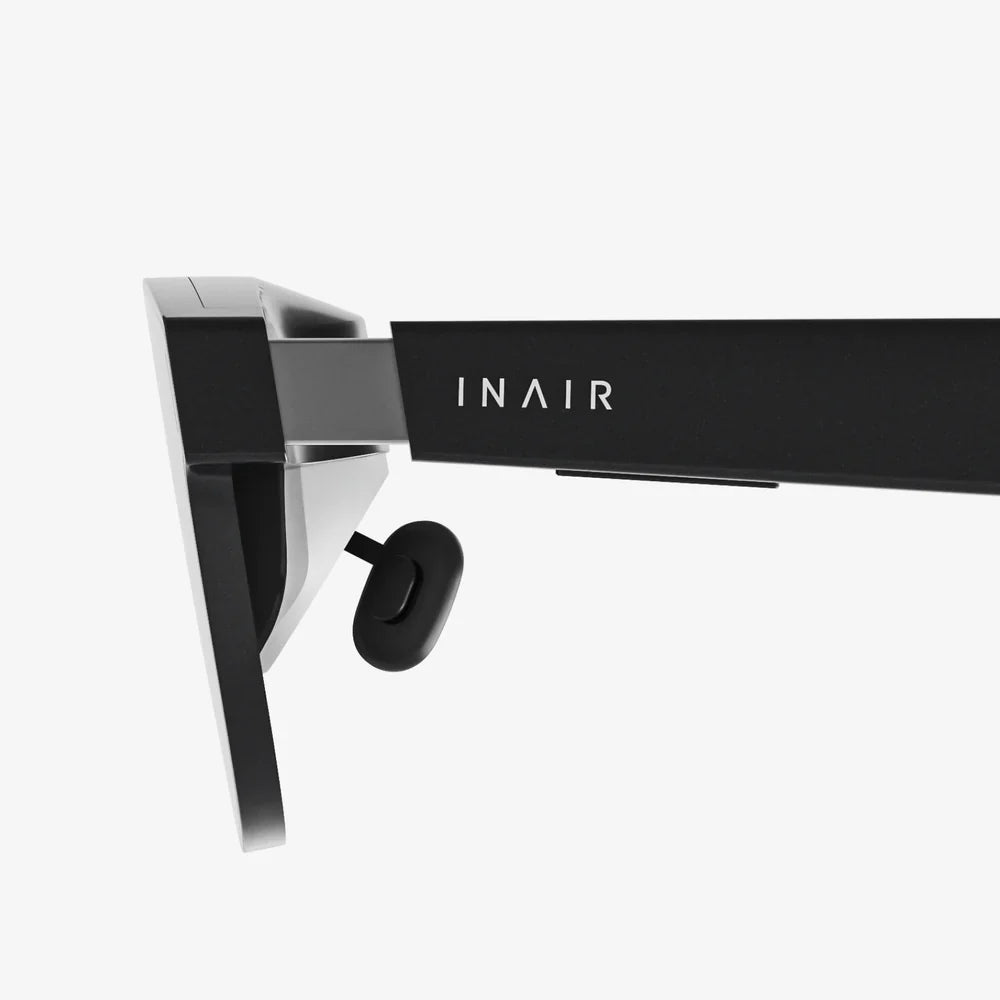
Modern AR smart glasses and car windshields with HUDs often use waveguide technology. A miniature projector sends an image into a transparent lens or piece of glass that contains nanostructures. These structures bounce the light along the waveguide until it is finally directed into the user's eye, overlaying digital information onto their view of the real world. This creates a compelling, integrated 3D experience that feels holographic.
Beyond Novelty: The Transformative Applications
The potential of 3D image hologram technology extends far beyond dazzling entertainment. It is poised to become a critical tool across numerous sectors, enhancing how we work, learn, and heal.
Revolutionizing Medicine and Healthcare
In the medical field, the ability to visualize complex structures in three dimensions is invaluable. Holographic technology is creating profound changes:
- Surgical Planning and Guidance: Surgeons can now examine a patient's anatomy—derived from CT or MRI scans—as a full-color, interactive hologram floating above the operating table. They can rotate, zoom, and virtually dissect this model to plan a complex procedure. During surgery, this hologram can be registered with the patient's body, acting as an X-ray vision guide to locate tumors, blood vessels, or fractures with unprecedented precision.
- Medical Education: Students can move beyond textbooks and 2D screens to study anatomy with life-sized, detailed holograms of the human body. They can walk around a beating heart, peel back layers of muscle, or explore the intricacies of the nervous system in a deeply immersive and intuitive way, dramatically improving comprehension and retention.
- Telemedicine: A specialist located across the globe could be "projected" into a remote clinic as a hologram, able to consult with local doctors and patients in a more present and engaging way than a flat video call allows.
Redefining Design and Engineering
From architects to automotive designers, professionals are using holograms to interact with their creations before they are physically built.
- Prototyping: Design teams can gather around a holographic model of a new product—be it a smartphone, a jet engine, or a piece of furniture. They can inspect it from every angle, test virtual assemblies, and make changes in real-time, saving millions of dollars and months of development time that would have been spent building physical prototypes.
- Architecture and Construction: An architect can place a holographic model of a new building directly onto the physical construction site. Clients and engineers can walk through a life-sized model of a room before a single wall is erected, allowing for design validation and changes at an early stage.
Creating Immersive Experiences and Communication
The way we tell stories, market products, and connect with each other is being transformed.
- Live Events and Performances: As mentioned, holographic technology has already brought iconic performers back to the stage. It also allows for live performers to be beamed to different venues simultaneously, or for spectacular virtual creatures and effects to share the stage with human actors.
- Retail and Marketing: Imagine viewing a life-sized hologram of a new car in a showroom, able to change its color and open its doors with a gesture. Or using an AR app on your phone to see how a new sofa would look in your living room, perfectly scaled and placed. Holograms create "wow" factor and drive engagement.
- Collaboration: The concept of the "holoportation"—beaming a person's 3D likeness into a meeting room in real-time—is actively being developed. This would make remote collaboration feel as natural as sitting across the table from someone, with full body language and spatial presence.
Navigating the Challenges on the Horizon
Despite the incredible progress, the path to perfect, ubiquitous holography is not without its obstacles. Significant technical and societal challenges remain.
The primary technical hurdle is computational power. Calculating the precise interference patterns for a dynamic, high-resolution, full-color hologram requires an astronomical number of calculations per second. While advances in GPUs and specialized holographic processing units (HPUs) are helping, it remains a barrier to real-time, complex imagery.
Similarly, developing affordable and scalable display mediums is crucial. Many of the most impressive demonstrations rely on expensive, custom-built hardware. Creating consumer-grade devices that can generate bright, wide-viewing-angle, large-scale holograms at a reasonable cost is the holy grail for the industry.
Beyond the technical, there are important ethical and societal considerations. The power to create photorealistic, dynamic 3D images of anything—including people—raises serious questions about authenticity and misinformation. The potential for deepfakes is frightening enough with 2D video; holographic deepfakes could be exponentially more convincing and damaging. Establishing standards for verification and digital provenance will be critical. Furthermore, as our physical and digital realities merge, issues of privacy, advertising overload, and even new forms of addiction will need to be addressed.
The Future is Light: What Comes Next?
The trajectory of 3D image hologram technology points toward a future where it is seamlessly integrated into our daily lives. We are moving toward contact lenses that can overlay holographic information directly onto our retinas, toward walls in our homes that can transform into windows to any virtual world, and toward communication systems that make geographical distance meaningless.
Research is pushing the boundaries into areas like haptic feedback, using focused ultrasound waves to create the sensation of touch in mid-air, allowing you to truly "feel" a hologram. The development of artificial intelligence is also key, as AI algorithms are being used to generate holograms instantly from standard 2D images, bypassing the need for complex laser recording setups.
This technology will cease to be a separate entity and will instead become the primary interface between humanity and the vast digital universe we are creating. It won't be about looking at a screen; it will be about existing within the information.
The shimmering, ethereal dance of light that constitutes a 3D image hologram is more than a technical marvel; it is a glimpse into a new paradigm of human experience. It challenges our very definitions of reality and presence, offering a bridge between the tangible world we inhabit and the infinite possibilities of the digital realm. As this technology continues to evolve and escape the confines of labs and high-budget stage shows, it promises to touch every aspect of our lives, turning the magic of science fiction into the everyday magic of our future. The next time you see a hologram, remember—you're not just looking at an image; you are looking at the very future of sight itself.
Share:
Wearable Technology Market: Beyond the Wrist, A Revolution in Personalized Data
VR Features: The Core Technologies Powering the Virtual Revolution