


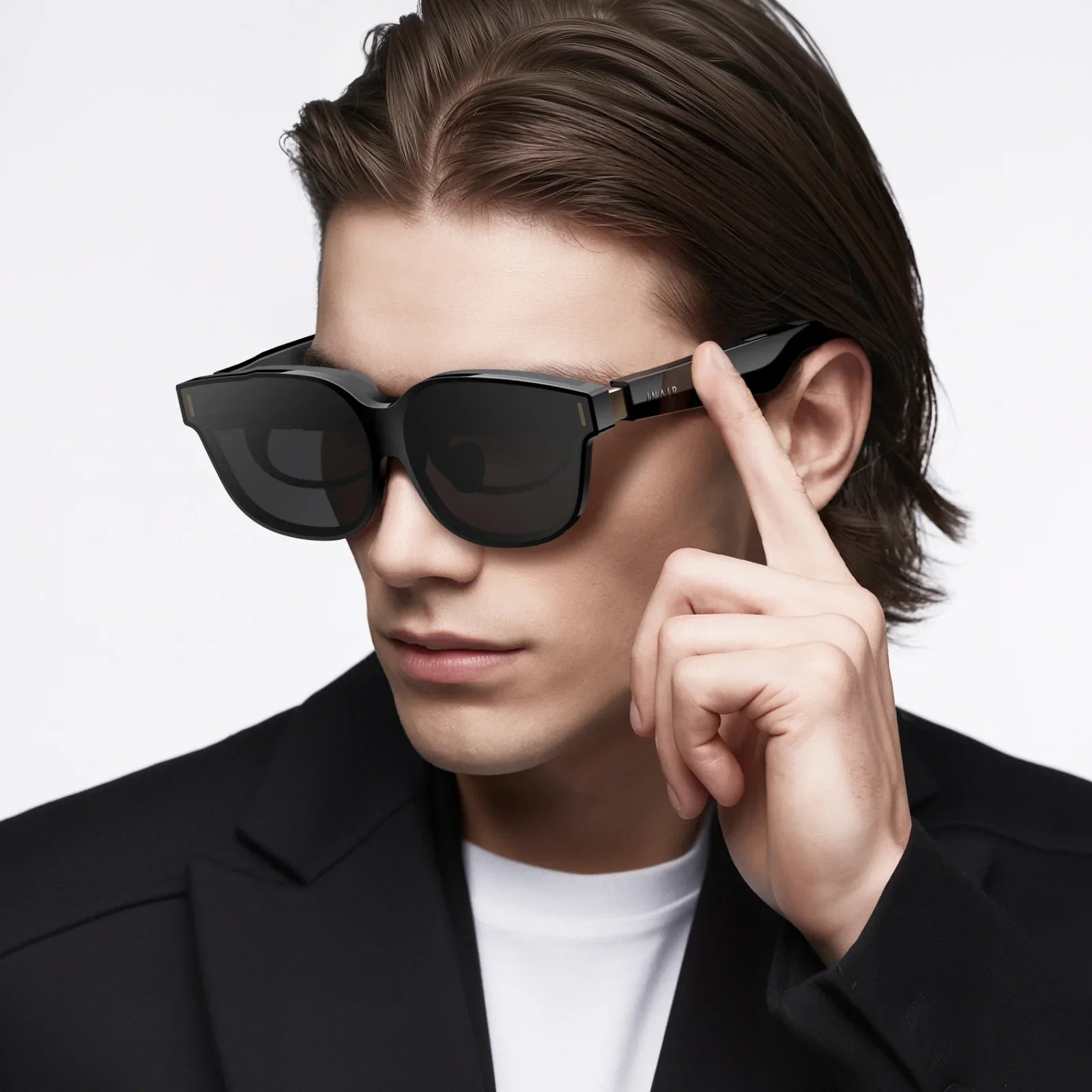
Imagine a world where your digital interface doesn't just live on a screen but is seamlessly integrated into your physical reality, and the tools to customize and perfect that experience are sitting on your desk, ready to be created at a moment's notice. This is not a distant sci-fi fantasy; it's the emerging reality at the thrilling intersection of additive manufacturing and augmented reality. The ability to 3D print AR accessories is fundamentally reshaping how we interact with, personalize, and augment our world, turning every enthusiast, developer, and user into a potential inventor of their own digital-physical ecosystem.
The Convergence of Two Technological Titans
To understand the profound impact of this synergy, one must first appreciate the core strengths of each technology. Augmented reality overlays digital information—images, data, animations—onto the user's view of the real world. This technology promises to revolutionize fields from medicine and engineering to entertainment and social connection. However, a significant hurdle has always been the hardware: achieving a comfortable, secure, and personalized fit for devices that are, by their nature, worn on the body.
Enter 3D printing, or additive manufacturing. This technology builds objects layer by layer from digital models, offering unprecedented freedom in design. Unlike traditional manufacturing, which often relies on costly molds and is economically viable only for mass production, 3D printing excels at creating one-off, highly complex, and customized items with minimal waste. It is the antithesis of one-size-fits-all. The marriage of these two fields is a natural evolution. 3D printing provides the physical bridge—the custom-fit, functional hardware—that allows AR technology to integrate more comfortably and effectively into our daily lives.
Unleashing Creativity: Categories of 3D Printed AR Enhancements
The range of accessories that can be conceived and produced is vast, limited only by imagination and the current boundaries of print technology. These creations generally fall into several key categories.
Ergonomic and Comfort Modifications
Off-the-shelf AR wearables are designed for an average user, but faces and heads are uniquely shaped. A headset that slips, pinches, or feels unbalanced can break immersion and cause discomfort, limiting usage time. 3D printing solves this elegantly.
- Custom Facial Interfaces and Nose Pads: By using smartphone scanning apps or simple caliper measurements, users can create a digital model of their facial structure and print a interface that distributes pressure evenly, eliminating pressure points and providing a perfect light seal.
- Alternative Head Straps: From top straps for better weight distribution to ruggedized straps for industrial environments, users can design and print solutions that cater to their specific activity, whether it's a long gaming session or a walk on a windy day.
- Padding and Cushions: Using flexible, soft-touch materials, printers can create replacement padding that is softer, more breathable, or shaped for a specific user's contours.
Functional Mounts and Practical Solutions
This is where 3D printing truly demonstrates its practical utility. Users are solving real-world problems by creating mounts that bridge AR devices with other tools.
- Protective Cases and Lens Covers: A simple but crucial print, custom hard-shell cases and snap-on lens protectors shield expensive optics from dust, scratches, and impacts during storage or transport.
- Controller Grips and Battery Holders: Ergonomically designed grips can make handheld controllers more comfortable for extended use. Likewise, printed mounts can attach external battery packs to a headset's strap, counterbalancing the front-heavy weight and significantly extending operational life.
- Industrial and Professional Tool Attachments: In field service, manufacturing, or medicine, professionals can print custom brackets to mount thermal cameras, barcode scanners, specialized sensors, or even tools directly onto their AR headset, creating an all-in-one hands-free workstation.
Experimental and Niche Prototypes
The maker and developer community is using 3D printing as a rapid prototyping tool to experiment with concepts that large manufacturers might not yet pursue.
- Alternative Input Devices: Imagine a printed ring that acts as a controller, or a glove that tracks finger movement for more intuitive interaction within the AR space. 3D printing allows for the cheap and fast iteration of these novel input concepts.
- Haptic Feedback Add-ons: Small motor mounts can be printed to add vibrational haptic feedback to different parts of a controller or even the headset itself, enhancing immersion.
- Educational and Accessibility Tools: Teachers and therapists are creating custom attachments that help integrate AR into learning modules for children or develop assistive devices that make AR technology accessible to individuals with specific physical needs.
The Toolkit: From Idea to Physical Reality
Transforming a concept into a tangible, functional accessory involves a streamlined process, accessible to beginners and experts alike.
- Conceptualization and Design (CAD): The journey begins with a 3D model. Software ranges from beginner-friendly options like Tinkercad to professional-grade programs like Fusion 360. A thriving online community also shares thousands of pre-made, open-source design files for common accessories, allowing users to simply download and print.
-
Material Selection: The choice of material is critical and depends on the accessory's purpose.
- PLA: A common, easy-to-print plastic, great for prototypes, cases, and non-structural parts.
- ABS or PETG: These offer higher strength, durability, and heat resistance, suitable for functional parts like mounts and clips that undergo stress.
- TPU (Thermoplastic Polyurethane): A flexible, rubber-like material ideal for grips, protective bumpers, and comfortable padding.
- Printing and Post-Processing: Using a desktop 3D printer, the model is created layer by layer. After printing, support material is removed, and the part might be sanded, painted, or assembled with other components like screws or magnets.
- Iteration: The greatest advantage of 3D printing is the ability to fail cheaply and try again. If a mount breaks or a fit isn't perfect, the design can be adjusted in the software and reprinted within hours, a process infinitely faster and cheaper than traditional manufacturing.
Navigating the Challenges and Considerations
While exciting, this frontier is not without its challenges. Users must be mindful of several factors.
- Precision and Tolerance: Accessories that attach to精密devices require precise measurements. A miscalculation of a fraction of a millimeter can render a mount useless. Learning to design for specific printer tolerances is a key skill.
- Durability and Material Properties: Not all prints are created equal. Layer adhesion, infill density, and print orientation affect strength. A accessory holding a heavy battery must be engineered properly to avoid failure.
- Safety and Responsibility: This is a crucial consideration. Modifying wearable electronics can potentially void warranties. Furthermore, attaching heavy objects to a headset could create a safety hazard if a poorly designed mount fails. Users must exercise common sense and prioritize safety.
- Intellectual Property: As this community grows, questions about the legality of creating accessories for commercial devices will become more prominent. However, most of the current activity resides firmly in the realm of personal, non-commercial use.
The Democratized Future of Wearable Technology
The long-term implications of 3D printed AR accessories are profound. We are moving towards a paradigm of democratized hardware customization. Instead of waiting for a manufacturer to release the accessory we need, we can design it ourselves or download a design from a global community of creators. This accelerates innovation at a grassroots level, allowing the most compelling user-driven ideas to emerge and evolve organically.
This technology empowers a form of hyper-personalization previously unimaginable. Your AR gear will no longer be a mass-produced commodity but a curated toolkit of parts tailored to your face, your job, your hobbies, and your aesthetic preferences. It promises a future where our technology adapts to us, not the other way around.
For professionals, it means bespoke toolkits can be developed on-site for specific tasks. For consumers, it means unparalleled comfort and unique expression. For developers, it provides a rapid, low-cost sandbox for experimenting with the next generation of human-computer interaction. The barrier to entry is falling rapidly, placing the power of creation into the hands of anyone with an idea and a printer.
The fusion of 3D printing and augmented reality is more than a niche hobby; it's the bedrock of a more adaptable, personal, and user-centric technological future. It answers the call for technology that fits not just our hands, but our lives. The next great augmentation of your reality isn't waiting on a store shelf—it's waiting to be designed, shared, and brought to life, one layer at a time.
Share:
2D to 3D VR Converter: The Ultimate Guide to Transforming Your Flat Media into Immersive Worlds
Image to 3D Tool: Transforming Flat Photos into Immersive Digital Worlds