


Imagine pointing your device at a city street and watching historical figures materialize before your eyes, or visualizing a new sofa in your living room before you’ve even left the store. This is no longer the stuff of science fiction; it’s the everyday magic being woven by the rapid evolution of 3D reality apps. This technology, once a niche novelty, is now an invisible thread stitching itself into the fabric of our professional, personal, and creative lives, promising to fundamentally alter our perception of reality itself.
The Core Mechanics: How 3D Reality Apps Perceive Our World
At its heart, a 3D reality app is a sophisticated interpreter of space. It uses a combination of hardware sensors and complex software algorithms to understand and interact with the physical environment. The primary technologies powering this perception are Simultaneous Localization and Mapping (SLAM), computer vision, and depth tracking.
SLAM is the true hero of the experience. It allows the application to simultaneously map an unknown environment while tracking its own position within it. As you move your device through a room, it identifies unique feature points—the corner of a picture frame, the edge of a table, a power outlet—and uses these to construct a sparse point cloud map of the space. This digital twin becomes the canvas upon which the app paints its digital creations.
Complementing SLAM is depth sensing, often achieved through a dedicated time-of-flight sensor or structured light system. This technology projects thousands of invisible infrared dots onto a surface and measures how long they take to bounce back, creating a highly accurate depth map. This is what allows a virtual character to convincingly hide behind your real-world couch or for a digital measurement to be precisely calculated between two physical points.
Finally, machine learning-powered computer vision acts as the brain, identifying and classifying objects within the scene. It can recognize horizontal planes (floors, tables), vertical planes (walls), and specific objects like appliances or furniture. This layered understanding—geometric, spatial, and semantic—is what transforms a simple camera feed into a portal to a blended reality.
Beyond Gaming: The Industrial and Enterprise Revolution
While consumer entertainment provided the initial spark, the true inferno of innovation is burning in enterprise and industrial sectors. Here, 3D reality apps are not for play; they are powerful tools solving critical problems, enhancing safety, and saving millions of dollars.
- Design and Manufacturing: Engineers and designers are using these apps to visualize 3D prototypes at 1:1 scale directly on the factory floor. They can overlay digital schematics onto physical machinery to guide assembly, identify potential design clashes before a single piece of metal is cut, and train workers on complex procedures with interactive, step-by-step instructions superimposed onto the equipment itself.
- Healthcare and Medicine: The impact here is profound. Medical students can explore detailed, life-size holograms of the human body, peeling back layers of musculature, vasculature, and organs. Surgeons are beginning to use these applications for pre-operative planning, overlaying CT or MRI scan data directly onto a patient's body to visualize tumor locations or plan incision paths with unprecedented precision, potentially reducing operation times and improving outcomes.
- Retail and E-Commerce: The dreaded "will it fit?" question is being rendered obsolete. Apps allow consumers to project true-to-scale 3D models of furniture, appliances, and decor into their own homes. They can walk around a virtual table, see how a lamp casts light in the evening, and ensure a new bookshelf fits perfectly in an alcove, drastically reducing return rates and increasing consumer confidence.
- Education and Training: From historical recreations on an ancient battlefield to interactive models of the solar system floating in a classroom, these apps create immersive, engaging learning experiences that boost retention and understanding. For vocational training, technicians can learn to repair complex equipment with digital guides and annotations overlaid on the real machinery, reducing training costs and the risk of errors during the learning process.
The Creative and Social Paradigm Shift
The proliferation of 3D reality technology is democratizing spatial creation. No longer is 3D design confined to experts with powerful desktop computers and expensive software suites. New apps are putting intuitive creation tools into the hands of everyone, enabling a new form of expressive communication.
Artists are painting in three dimensions, creating sculptures of light and animation that exist anchored to specific locations, turning entire cities into potential galleries. Storytellers are crafting narratives that unfold in your own home, with digital characters interacting with your physical environment. Social platforms are experimenting with persistent shared spaces where friends can leave digital notes, drawings, or objects for each other to find, creating a new layer of shared memory and interaction tied to physical locations.
This represents a fundamental shift from consuming content on a screen to inhabiting it. We are moving towards a world where our digital and physical social interactions are no longer separate streams but a single, blended experience.
Navigating the Invisible Challenges: Privacy and the Metaverse
This powerful technology does not arrive without significant questions and concerns. The very act of mapping and understanding our private spaces involves the collection of immense amounts of data. The detailed 3D map of your home created by a furniture app is incredibly valuable data. The questions of who owns this spatial data, how it is stored, and how it might be used or monetized are largely unanswered. The constant scanning of environments also raises the specter of unintended surveillance, where our devices are not just capturing images but deeply understanding the geometry and contents of every room they enter.
Furthermore, as these applications become more advanced, the line between the real and the virtual will blur to the point of invisibility. This presents profound psychological and philosophical challenges. How does our perception of reality change when it can be so easily augmented or altered? How do we maintain a shared sense of truth when everyone can be experiencing a different visual layer over the same physical space? These are not technical hurdles but societal ones that require careful consideration and proactive ethical frameworks.
The Future is Spatially Mapped
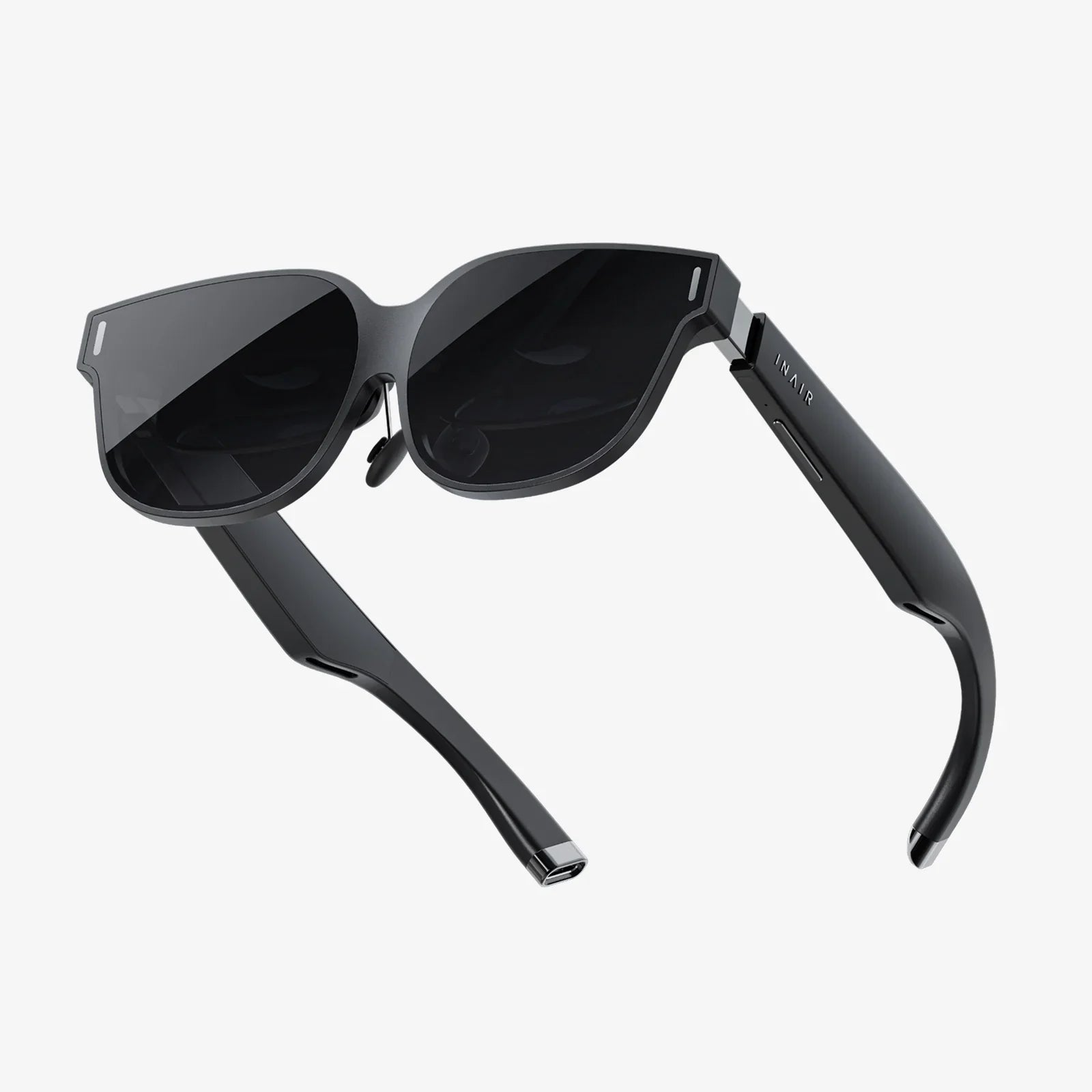
The trajectory of 3D reality apps points toward a future where this technology becomes as ubiquitous and invisible as GPS is today. We won't think of "using an app" but rather of interacting with our environment in a more intelligent way. The next evolution lies in wearable technology like advanced smart glasses, which will free our hands and integrate the digital overlay seamlessly into our field of view, eliminating the intermediary screen.
Artificial intelligence will become even more deeply integrated, moving from recognizing objects to understanding context and intent. An app could not only identify a piece of machinery but also diagnose a problem by comparing its current state to a digital ideal. It could guide a complex repair, highlight the specific tool needed, and warn of potential safety hazards—all in real-time and overlaid on the worker's visual field.
We are standing at the precipice of a new computing paradigm, one that moves beyond the confines of the screen and into the world itself. The 3D reality app is the key that is unlocking this door, transforming our physical surroundings into a dynamic, interactive, and infinitely customizable interface.
The quiet revolution of the 3D reality app is already unfolding in living rooms, operating theaters, and factory floors around the globe, weaving a digital layer over our physical existence that is set to become the most transformative interface since the invention of the touchscreen. The world you see through your camera is about to become the most exciting platform you've ever experienced.
Share:
AI Glasses with Augmented Reality: The Invisible Revolution Reshaping Our World
AI Tool Maker: The Architects Reshaping Our Digital Reality