


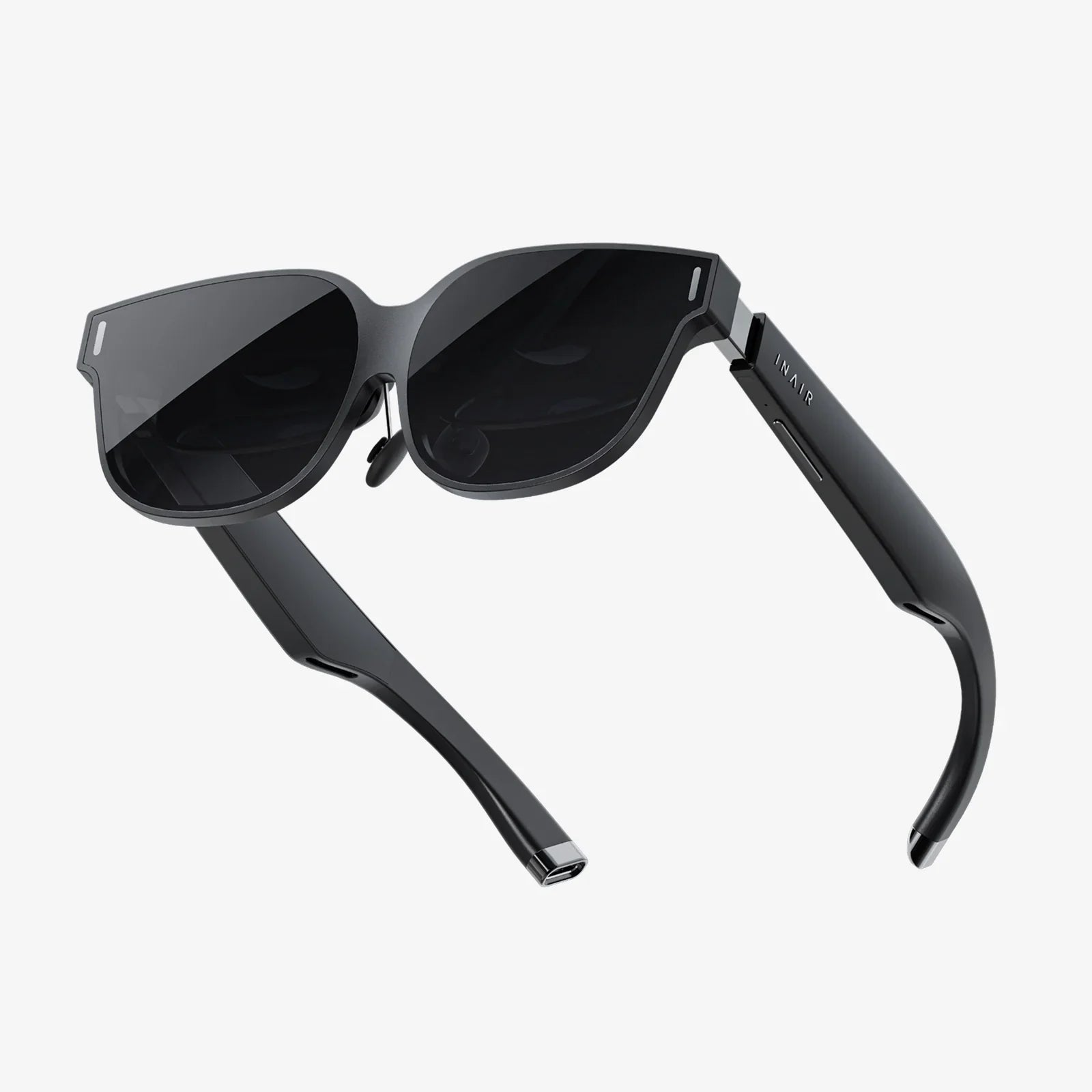
- by wangfred
3D Reality Lenses Are Reshaping Our Perception of the Digital and Physical Worlds
- by wangfred
Imagine a world where the digital and the physical are no longer separate realms, but a single, cohesive experience. Where information doesn't just sit on a screen but is painted onto the very fabric of your environment, and where distant colleagues can appear as lifelike holograms in your living room, ready to collaborate. This is not a distant science fiction fantasy; it is the emerging reality being unlocked by a revolutionary class of technology: 3D reality lenses. These sophisticated optical systems are the critical gateways, the new eyes through which we are beginning to perceive and interact with a deeply augmented world, and their development is poised to redefine everything from how we work and learn to how we connect and create.
At its core, the magic of 3D reality lenses is about solving a fundamental problem computers have long struggled with: understanding and replicating human depth perception. Our biological vision is stereoscopic. We have two eyes, separated by a small distance, each receiving a slightly different two-dimensional image. Our magnificent brain takes these two flat pictures, compares the differences—a process known as stereopsis—and calculates a rich, three-dimensional model of the world around us. This is why we can intuitively judge distances, reach out and grab a cup of coffee without fumbling, and appreciate the grandeur of a vast landscape.
Traditional cameras and displays have been, for the most part, monoscopic. They capture and present a single, flat image, devoid of the depth cues our brains rely on. 3D reality lenses shatter this limitation. They are not merely lenses in the simple sense of glass that focuses light; they are complex systems engineered to either capture depth information from the real world or project digital content into our vision with convincing three-dimensionality.
The term "3D reality lenses" encompasses a range of technologies, each approaching the challenge of depth from a different angle. Understanding these methods is key to appreciating their potential.
This is the most direct mimicry of human vision. A system equipped with two carefully calibrated cameras, spaced similarly to human eyes, captures two simultaneous images. When these images are presented separately to the left and right eyes of a viewer—through a headset or specialized glasses—the brain performs its usual magic, fusing them into a single 3D scene. This technique is powerful for creating immersive experiences but often requires the user to wear hardware to see the effect.
This is a significant leap beyond simple stereoscopy. Instead of capturing just two views of a scene, light field technology, also known as plenoptic imaging, captures information about the intensity and direction of light rays flowing through a space. Imagine it as capturing not just a flat picture, but the entire electromagnetic field of light at a point. This rich dataset allows for incredible post-processing feats: refocusing an image after it's been taken, shifting the perspective slightly to see around objects, and generating highly accurate depth maps. Lenses designed for light field capture are intricate arrays of micro-lenses that make this data acquisition possible.
Many advanced systems forgo trying to see like a human and instead act like a bat or dolphin, using active sensing to map the environment. They project thousands or even millions of invisible points of light (usually infrared) into a scene. A specialized lens and sensor then measure how long it takes for each point to bounce back. By calculating the time-of-flight of these light pulses, the system can build a precise, real-time depth map—a point cloud that defines the exact three-dimensional shape of everything in view. This technology is exceptionally fast and accurate, making it ideal for real-time interaction and spatial mapping.
On the display side, the challenge is different: how to seamlessly overlay digital 3D content onto the real world. This is where waveguide technology comes in. These are incredibly thin, transparent lenses etched with microscopic patterns. Light from a micro-display projecting a digital image is injected into the edge of the waveguide. The etched patterns then act like a complex maze of mirrors, bouncing and bending this light through the lens until it is finally directed into the user's eye. The result is a bright, digital hologram that appears to exist out in the real world, resting on your table or floating in the distance, all while you still see your physical surroundings perfectly through the transparent lens.
The theoretical is impressive, but the practical applications of 3D reality lenses are where they truly capture the imagination. Their impact is being felt across a stunning array of fields.
In the high-stakes world of healthcare, precision is paramount. Surgeons are now using headsets equipped with these lenses to overlay critical patient data—such as MRI or CT scans—directly onto their field of view during procedures. This means a surgeon can "see through" tissue to locate a tumor or a major blood vessel without ever looking away from the operating table. Medical students can practice complex procedures on hyper-realistic 3D holograms of human anatomy, gaining invaluable experience without risk. Furthermore, telemedicine takes on a new meaning when a specialist can beam in as a 3D avatar to consult with a local team, observing the procedure from the surgeon's perspective and offering guidance.
The process of designing and building complex objects, from jet engines to new consumer products, is being radically accelerated. Engineers and designers can collaborate in shared virtual spaces, interacting with life-size 3D models of their creations. They can walk around a virtual prototype, inspect it from every angle, and make changes in real-time, saving millions in physical prototyping costs. On the factory floor, assembly line workers can have digital instructions and diagrams projected directly onto the machinery they are assembling, reducing errors and drastically improving training efficiency.
The flat, fatiguing video calls of today could soon be a relic of the past. Imagine a meeting where remote participants appear as volumetric holograms around a conference table, making eye contact and using natural gestures. The sense of presence and connection would be unparalleled. This technology promises to collapse distance, making meaningful collaboration possible regardless of physical location and adding a rich, human dimension to remote work.
The entertainment industry is poised for its next great disruption. Gaming will evolve from an experience on a screen to an adventure that unfolds in your living room. Movies will become immersive narratives where you are inside the story. Live events, from concerts to sports, could be attended virtually from the best seat in the house, with social interaction that makes it feel like you're there with thousands of other fans. The very art of storytelling will be reinvented for a three-dimensional medium.
Learning by doing is the most effective method, but it's not always feasible. 3D reality lenses change that. Students can take a virtual field trip to ancient Rome, witnessing history unfold around them. They can dissect a virtual frog or explore the solar system in a hands-on way. Mechanics can train on virtual engines, and emergency responders can simulate high-pressure disaster scenarios in complete safety. This technology democratizes access to experiences that were once too expensive, too dangerous, or simply impossible.
As with any powerful technology, the rise of 3D reality lenses is not without its challenges and profound questions. The blending of digital and physical realities raises critical issues that society must grapple with.
The trajectory of 3D reality lenses points toward smaller, lighter, more powerful, and more socially acceptable form factors. We are moving from bulky headsets to sleek glasses and eventually, perhaps, to contact lenses or even direct ocular implants. The resolution will approach and exceed retinal quality, and the field of view will expand to encompass our entire vision. The convergence with artificial intelligence will be particularly powerful, as AI agents will be able to see what we see, understand our context, and present information and assistance before we even ask for it.
This is not merely an incremental improvement in display technology; it is a fundamental shift in the human-computer interface. We are moving away from a paradigm of looking at a device to one of looking through a device into an enhanced world. The goal is an invisible interface—one that feels less like a tool and more like a natural extension of our own cognition and perception.
The journey of 3D reality lenses is just beginning, but its destination is clear: a future where the boundary between the bits of the digital universe and the atoms of our physical world dissolves into irrelevance. We are building the looking-glass, and on the other side awaits a reality limited only by our collective imagination. The question is no longer if this future will arrive, but how we will choose to shape it, ensuring that this powerful technology amplifies our humanity rather than diminishes it, and expands our reality instead of escaping it.
Share:
Why Doesn't My Smart View Work? A Complete Troubleshooting Guide
Best AR Tool Kit: Your Ultimate Guide to Augmented Reality Development