


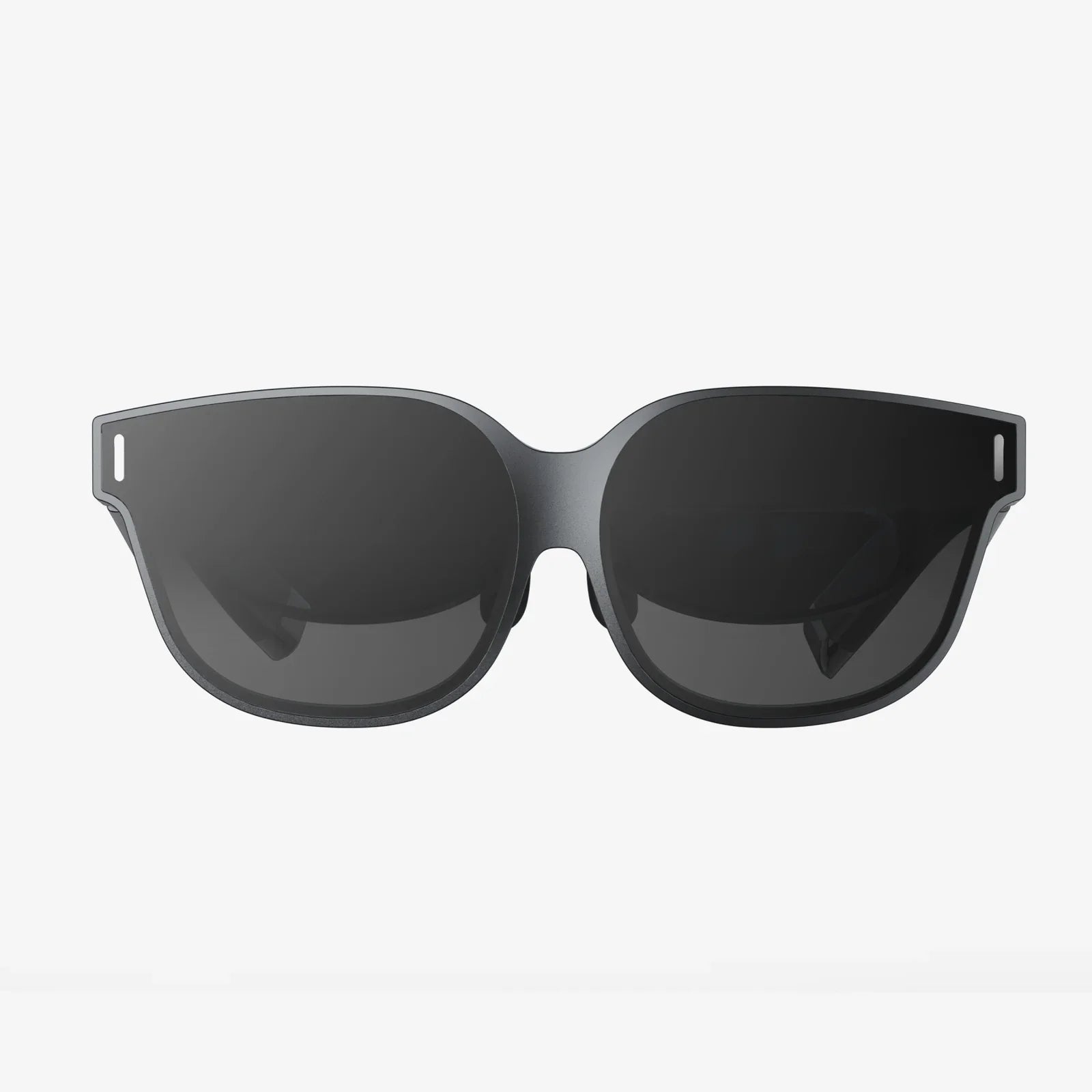
Imagine stepping through a solid wall into a world that doesn’t yet exist. You can reach out and touch the fabric of a sofa that has never been manufactured, feel the warmth of a sunbeam streaming through a window in a building still on the architect’s drafting table, or stand face-to-face with a prehistoric creature whose bones are still buried deep within the earth. This is not a glimpse into a distant sci-fi future; it is the tangible, transformative power of the union between 3D rendering and virtual reality, a technological symbiosis that is fundamentally altering our perception of reality itself.
The Bedrock of Digital Creation: Understanding 3D Rendering
Before one can be immersed, one must first create. 3D rendering is the intricate and computationally intensive process of generating a photorealistic or stylized image from a 3D model. Think of it as the ultimate digital photography studio, but instead of capturing light reflected off a physical subject, it simulates light itself, calculating how every photon would behave as it interacts with every surface, texture, and material in a meticulously constructed digital scene.
The process is a pipeline of creation. It begins with modeling, where artists and engineers construct a wireframe mesh, the digital skeleton of any object. This mesh is then given form and character through texturing, applying images and algorithms to define color, roughness, metallic properties, and detail—making plastic look like plastic and marble look like marble. Next comes lighting, arguably the most critical step in achieving realism. Virtual light sources—mimicking the sun, a softbox, or a simple light bulb—are placed and configured to illuminate the scene. Finally, the rendering engine takes over, performing millions of complex mathematical calculations to produce the final 2D image or sequence of images (animation).
This technology has been the backbone of visual effects in film and television for decades, bringing to life everything of fantastical worlds. But its application has exploded far beyond entertainment. Architects use it to create compelling visualizations for clients. Product designers use it to prototype and market new goods without the cost of physical samples. Automotive engineers use it to conduct virtual crash tests and design reviews. In every case, 3D rendering serves as a powerful tool for visualization, communication, and iteration, saving immense amounts of time and resources.
The Gateway to Experience: The Rise of Virtual Reality
If 3D rendering is about creating a scene, virtual reality is about placing you within it. VR is an immersive technology that uses head-mounted displays (HMDs) to replace a user’s natural environment with a simulated one. This isn't merely watching a screen; it's about embodying a space. Advanced VR systems track a user’s head and, often, hand movements, updating the visual display in real-time to create a convincing sense of presence—the undeniable feeling of "being there."
The magic of VR lies in its ability to hijack our senses. Stereoscopic displays provide depth perception, spatial audio convinces us that sound is coming from a specific point in the virtual room, and haptic feedback controllers allow us to feel a semblance of touch. This multisensory engagement is what separates VR from any other medium. It’s experiential learning, empathetic storytelling, and remote collaboration all rolled into one. A medical student can practice a complex surgical procedure, a factory worker can be trained on dangerous equipment without risk, and a family separated by oceans can feel as if they are sharing a living room. VR’s potential is to dissolve the barriers of distance, scale, and even physics.
The Symbiotic Relationship: Where Rendering Meets Reality
On their own, both technologies are powerful. Together, they are revolutionary. VR provides the canvas of experience, but 3D rendering provides every single brushstroke of paint. The immersive worlds of VR are entirely built upon the principles of 3D computer graphics. Every object you see, every surface you interact with, is a product of the rendering pipeline.
However, this partnership introduces a monumental challenge: the relentless demand for real-time performance. A cinematic render for a movie frame can take hours or even days of computation to achieve perfect photorealism. VR cannot wait. To maintain immersion and prevent user discomfort (like motion sickness), a VR application must render stunningly complex scenes at a minimum of 90 frames per second—one frame every 11 milliseconds. This is the ultimate trial by fire for rendering technology.
This necessity has been the primary driver behind the incredible advances in real-time rendering techniques. Technologies like:
- Powerful Graphics Processing Units (GPUs): The hardware engines dedicated to performing the parallel computations required for rendering.
- Advanced Game Engines: Software platforms that provide the tools and infrastructure to build real-time 3D experiences, complete with physics, lighting, and animation systems.
- Optimized Rendering Algorithms: Techniques like deferred shading and level-of-detail (LOD) management ensure that processing power is focused where the user is looking.
- Ray Tracing and AI Acceleration: The cutting edge, where hardware-accelerated ray tracing simulates light physics in real-time, and AI is used to intelligently upscale images, delivering high fidelity without the full computational cost.
The push for VR has forced the entire 3D industry to innovate at a breakneck pace, making real-time visuals increasingly indistinguishable from offline, pre-rendered imagery.
Transforming Industries: The Practical Applications
The fusion of high-fidelity 3D rendering and immersive VR is already delivering profound value across countless sectors.
Architecture, Engineering, and Construction (AEC)
Gone are the days of clients struggling to interpret 2D blueprints. Now, architects can lead them on a full-scale virtual walkthrough of their unbuilt home or office. They can experience the flow of spaces, test different lighting conditions at different times of day, and make informed decisions about materials and layouts before a single foundation is poured. This not only ensures client satisfaction but also helps identify potential design clashes and construction issues early, saving millions in costly change orders.
Healthcare and Medicine
In medicine, this combination is quite literally saving lives. Surgeons use detailed, rendered anatomical models derived from patient CT and MRI scans to plan complex operations within a VR space, practicing their approach and anticipating challenges. Medical students can dissect virtual cadavers infinitely and explore human physiology in immersive 3D. Furthermore, VR is being used for pain management, physical therapy, and treating phobias and PTSD, with rendered environments providing a safe and controlled setting for exposure therapy.
Retail and E-Commerce
The "try before you buy" paradigm is being completely redefined. Imagine putting on a headset and seeing a new sofa rendered in your actual living room, perfectly scaled and colored. Or virtually trying on a pair of glasses, a watch, or even makeup. This level of experiential retail, powered by accurate 3D assets, reduces purchase uncertainty and product returns while creating a novel and engaging shopping experience that bridges the gap between online and in-store shopping.
Corporate Training and Remote Collaboration
Companies are building virtual headquarters and training facilities. A new employee working from across the globe can be onboarded in a virtual office, and a team of engineers from different countries can collaborate on a 3D model of a new engine as if they were all standing around the same physical prototype. This application saw explosive growth recently, proving that presence and collaboration are not tied to a physical location.
The Horizon: The Future of Rendered Realities
We are standing at the precipice of even greater integration. The concepts of the metaverse—a persistent network of shared, real-time rendered 3D virtual spaces—are entirely predicated on the continued evolution of these two technologies. The future points toward several key developments:
- Photorealism in Real-Time: As ray tracing and AI denoising become standard, the visual gap between real life and virtual life will vanish.
- The Rise of Haptics and Full-Body Immersion: Gloves and suits that provide realistic touch and force feedback will complete the sensory illusion, making digital objects feel tangible.
- Volumetric Capture and Avatars: Moving beyond computer-generated humans, we will see real people scanned and rendered into VR as photorealistic avatars, enabling true face-to-face interaction in virtual spaces.
- AI-Powered Content Creation: Artificial intelligence will assist in and eventually automate the generation of complex 3D worlds and models, making creation faster and more accessible.
The path forward is not without its challenges. Issues of accessibility, user privacy, data security, and the potential for societal disconnection must be addressed thoughtfully and proactively. The hardware must become lighter, more comfortable, and more affordable to achieve mass adoption.
Yet, the trajectory is clear. The partnership between 3D rendering and virtual reality is more than a technical achievement; it is a new form of human expression and connection. It is a tool for empathy, allowing us to see the world through another’s eyes. It is a instrument for innovation, allowing us to prototype the future before it is built. It is a canvas for imagination, limited only by the boundaries of our creativity. This is no longer about viewing a simulation on a screen; it is about stepping inside the image itself and breathing life into the digital dream.
Share:
Augmented Reality Apps: The Invisible Layer Reshaping Our Daily Lives
AI vs Augmented Reality: The Invisible Engine and the Visible Interface