


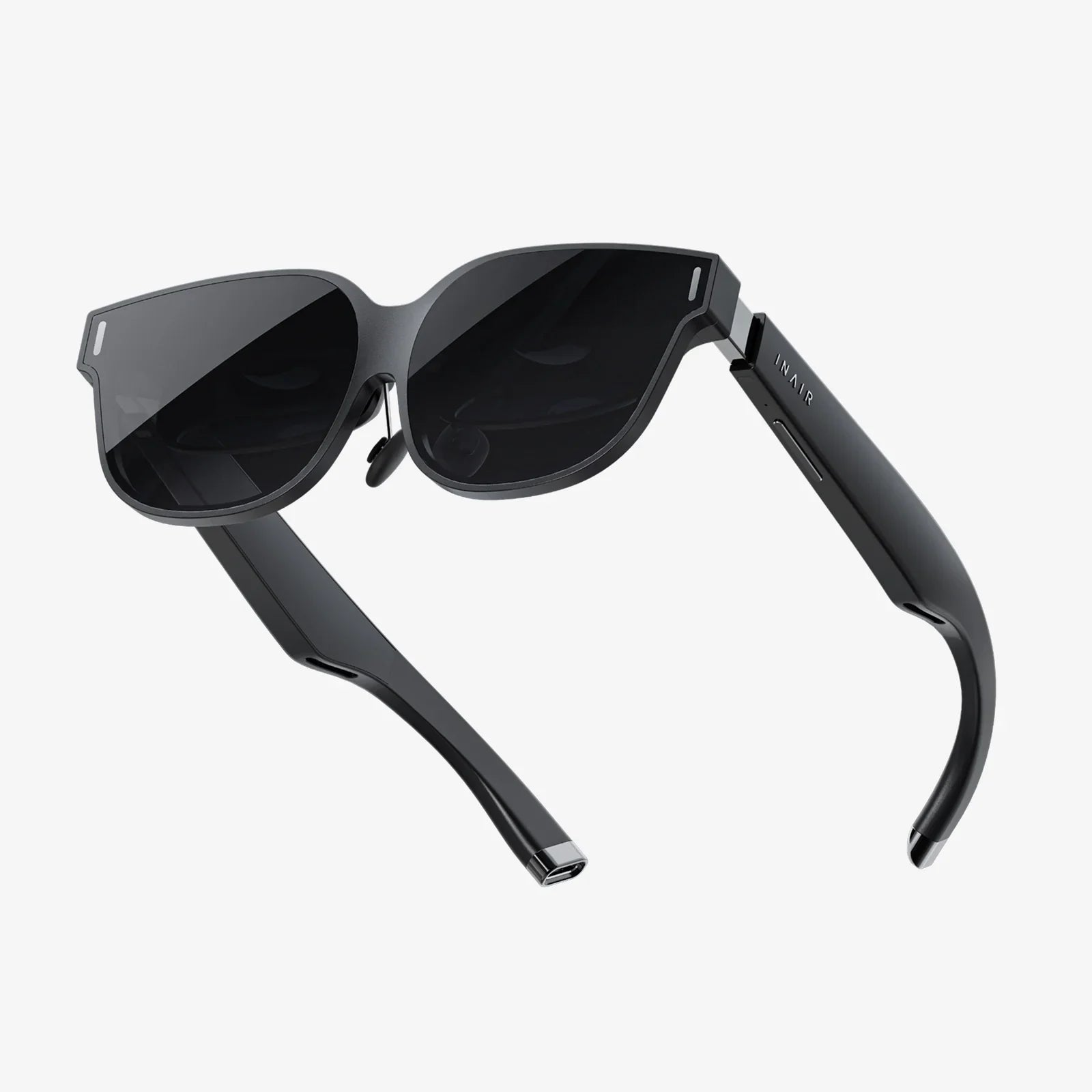
Imagine stepping into a memory, walking around a historical event as if you were there, or examining a newly discovered galaxy from every conceivable angle. This is no longer the stuff of science fiction but the burgeoning reality promised by 3D space video, a technological leap that is poised to redefine the very fabric of digital immersion. This isn't just about watching a story unfold; it's about inhabiting it. The concept moves beyond the flat screen, beyond 360-degree panoramas, and into a voluminous, explorable environment where the viewer becomes an active participant. The potential applications stretch from the deeply personal to the profoundly professional, signaling a paradigm shift in how we capture, share, and experience visual information. The journey into this volumetric frontier is just beginning, and its implications are as vast as the digital spaces it creates.
Beyond the Flat Screen: Defining the Volumetric Revolution
To understand 3D space video, one must first move past conventional video formats. Traditional video captures a two-dimensional representation of light and color, frame by frame. Even 360-degree video, while offering a spherical view, remains a 2D texture mapped onto the inside of a sphere; you can look around, but you cannot move within the space itself. 3D space video, often synonymous with volumetric capture, is fundamentally different. It is a process that captures a three-dimensional space, including the objects and people within it, to create a dynamic, digital twin that can be viewed from any position and angle, just as one would move around a physical object in the real world.
The core principle involves using an array of cameras—sometimes dozens or even hundreds—positioned around a subject to capture it from every possible viewpoint simultaneously. Sophisticated software then analyzes this multi-perspective data, using photogrammetry and neural radiance fields (NeRF) to reconstruct not just the surface appearance but the precise geometry and depth of the scene. The result is not a video file in the traditional sense but a complex dataset representing a dynamic, three-dimensional volume. When played back through a compatible device—be it a virtual reality headset, an augmented reality display, or even a specialized 3D viewer on a standard screen—this data allows the viewer to freely change their perspective within the captured space, creating an unparalleled sense of presence and realism.
The Technological Engine: How We Capture Reality in Volume
The magic of 3D space video is powered by a confluence of several advanced technologies. The capture stage relies on high-resolution, synchronized camera arrays. These systems can be sprawling, room-sized installations for professional-grade volumetric capture or more compact, portable setups for on-the-go scanning. The synchronization is critical; every camera must snap its image at the exact same moment to ensure a coherent 3D model for each frame of the action.
Once the data is captured, the heavy lifting begins in the computational phase. This is where algorithms stitch the thousands of 2D images into a cohesive 3D model. Early methods often produced models that were visually impressive but computationally heavy and lacked fine detail. The recent advent of AI-driven techniques, particularly Neural Radiance Fields (NeRF), has been a game-changer. Instead of building an explicit polygonal mesh, NeRF uses a small neural network to interpolate the continuous volumetric scene from the input images. This results in stunningly photorealistic reconstructions with incredibly detailed lighting, reflections, and translucency, effectively learning how light behaves in the captured space. This shift from discrete geometry to continuous radiance fields represents a monumental leap in fidelity and realism.
A Universe of Applications: Where 3D Space Video Comes to Life
The potential uses for this technology are as diverse as they are transformative. It is catalyzing innovation across numerous fields, creating new forms of expression, communication, and analysis.
Entertainment and Storytelling
In film and gaming, 3D space video is the key to true interactive narrative. Imagine a mystery where you, the viewer, are the detective. You can physically walk around a crime scene, peering under tables or examining clues from inches away, your unique path defining your experience of the story. Live performances and concerts can be captured volumetrically, allowing fans to purchase a virtual ticket that grants them the freedom to stand on stage next to their favorite musician or watch from the best seat in the house—all from their living room. This creates a new, monetizable asset for the entertainment industry: the experiential recording.
Education and Cultural Preservation
History lessons will cease to be passive. Students could don a headset and find themselves standing in the Roman Forum at its peak, able to walk its streets and hear the echoes of the past. Museums can digitize their most fragile artifacts and priceless sculptures in perfect volumetric detail, making them accessible to a global audience who can handle and examine them without risk of damage. This technology offers a powerful tool for preservation, archiving cultural sites threatened by climate change or conflict in a perfect, immutable digital form.
Enterprise and Remote Collaboration
The corporate world stands to gain immensely. Architects and real estate developers can create volumetric walkthroughs of unbuilt properties, far more convincing than any 3D render. Medical students can practice procedures on hyper-realistic volumetric captures of actual surgeries, observing from the surgeon's point of view or from above the operating table. For remote collaboration, volumetric telepresence could be the ultimate solution. Instead of a grid of faces on a screen, meeting participants would be rendered as full 3D avatars in a shared virtual space, enabling natural eye contact, body language, and a tangible sense of shared presence that video calls fundamentally lack.
Social Connection and Memorialization
On a more personal level, this technology could revolutionize how we preserve memories. A family gathering, a child's first steps, or a wedding could be captured not as a flat video but as a full volumetric moment, allowing future generations to literally step into that moment and experience the warmth and joy as if they were there. It presents a profound new way to remember and connect with loved ones, preserving their presence with a fidelity previously unimaginable.
Navigating the Frontier: Challenges and Ethical Considerations
Despite its dazzling potential, the path forward for 3D space video is not without significant obstacles. The first is the sheer data deluge. Capturing and processing volumetric video generates terabytes of data for just minutes of content. Storage, processing power, and bandwidth for streaming such immense files present a colossal infrastructure challenge that the industry is still grappling with.
Secondly, the hardware for both capture and consumption remains a barrier. Professional volumetric studios are expensive, and while consumer-grade solutions are emerging, they are not yet mainstream. On the viewing side, the most immersive experiences still require VR/AR headsets, though progress is being made to enable limited 3D viewing on standard devices.
Perhaps the most critical challenges are ethical. The ability to create a perfect digital replica of a person raises alarming questions about consent, privacy, and deepfakes. The line between reality and digital fiction will blur to near invisibility. Who owns the rights to a volumetric scan of a person? How do we prevent the malicious use of someone's volumetric double? The need for robust ethical frameworks, legal regulations, and digital authentication methods is urgent and paramount to ensuring this technology empowers rather than exploits.
The Future is Volumetric: What Lies on the Horizon
The evolution of 3D space video is inextricably linked to progress in adjacent fields. The rollout of 5G and eventually 6G networks, with their ultra-high bandwidth and low latency, will be essential for streaming volumetric content to mobile devices. Advances in artificial intelligence will continue to streamline the capture and compression process, making it faster, cheaper, and more accessible. We will see the rise of volumetric codecs—specialized algorithms designed to efficiently compress and transmit these complex 3D datasets, much like video codecs did for 2D video.
Looking further ahead, the convergence of 3D space video with the concept of the metaverse—a persistent network of shared 3D virtual spaces—is inevitable. This technology provides the most compelling method yet for populating these digital worlds with realistic representations of ourselves and our environment. It will be the bridge that allows us to bring real-world moments and objects into a shared digital universe, fueling a new era of creativity, social interaction, and human experience.
The screen has been our window to digital worlds for decades, but it is ultimately a barrier—a flat, static pane of glass. 3D space video is the technology that smashes that barrier, offering not a window to look through, but a door to walk through. It promises a future where our digital experiences are not something we observe but something we inhabit, a future where the memories we create and the stories we tell are not confined to a rectangle but can be explored, revisited, and lived in full, breathtaking three dimensions. The door is now open; the first step into this expansive new reality is yours to take.
Share:
2D to 3D Transformation: Reshaping Reality from Flat Images to Immersive Worlds
What Is Artificial Intelligence Software: The Engine of Modern Intelligence